Executive Overview
In the high-stakes ecosystem of Software-as-a-Service (SaaS), startups and scale-ups frequently stumble on a foundational paradox: they spend thousands of hours and millions of dollars innovating breakthrough product features, only to treat pricing as an afterthought—or conversely, an experimental playground. According to insights popularized within the SaaStr community and validated by decades of B2B buying behavior, the most successful companies adhere to a remarkably disciplined rulebook when it comes to monetization.
The core takeaway is deceptively simple: innovate relentlessly on your product, but avoid radical experimentation with your pricing structure.
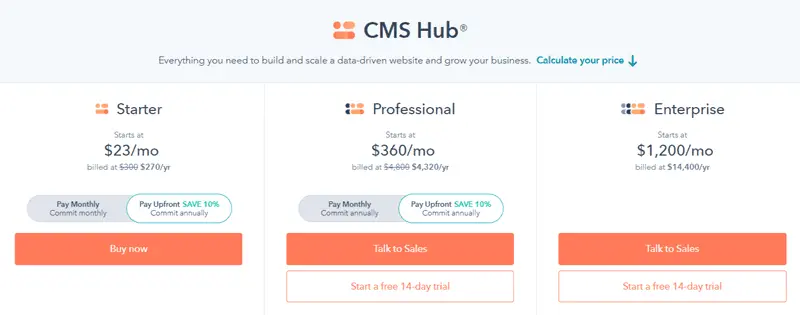
While founders often feel tempted to reinvent the wheel by introducing complex, non-standard pricing metrics to stand out from the competition, enterprise and SMB buyers overwhelmingly prefer predictability. Pricing tiers—those familiar, stepped packages ranging from "Starter" to "Enterprise"—remain the gold standard of SaaS monetization because they reduce cognitive load, align with established purchasing patterns, and systematically capture maximum willingness-to-pay across diverse market segments.
This report explores why pricing tiers continue to reign supreme in the modern software economy. We will dissect the psychology of B2B software purchasing, examine why deviating from established pricing conventions often backfires, and outline a strategic framework for designing tiered packaging that accelerates Annual Recurring Revenue (ARR) growth without alienating prospective customers.
Detailed Chronology: The Evolution of SaaS Monetization
To understand why tiered pricing is so enduringly effective, it is helpful to trace how software monetization has evolved alongside the broader technology sector over the past three decades.
The On-Premises Era (Pre-2010s)
Before cloud computing dominated the enterprise landscape, software was sold via perpetual licenses coupled with annual maintenance fees. Pricing was notoriously opaque, often requiring lengthy negotiations between enterprise procurement teams and enterprise sales reps. Upfront costs were exorbitant, and upgrades were painful, infrequent, and risky.
The Birth of Subscription Software and Early Tiers (Early 2010s)
As cloud infrastructure matured, pioneers like Salesforce and early-stage SaaS companies popularized the monthly or annual subscription model. To lower the barrier to entry, these companies introduced tiered pricing. By breaking software down into functional increments—such as basic, professional, and enterprise packages—vendors allowed smaller companies to adopt tools cheaply while forcing large enterprises to pay for advanced security, compliance, and support.
The Complexity Trap (Mid-2010s to 2020)
As the SaaS market grew hyper-competitive, founders began looking for edge cases to differentiate their offerings. This era saw a wave of experimentation with usage-based billing, consumption metrics, value-based dynamic pricing, and hyper-customized matrix pricing. While some infrastructure and API-first companies (such as Twilio and AWS) successfully mastered pure consumption models, many application-layer SaaS companies found that overly complex pricing models created massive friction in the sales cycle.
The Modern Return to Simplicity (Post-2020 to Present)
Today, the pendulum has swung firmly back toward predictable, standardized pricing tiers. In an economic climate where corporate software budgets face intense scrutiny, Chief Information Officers (CIOs) and procurement officers demand transparency and frictionless buying experiences. Companies that rely on clear, tiered packaging are seeing higher conversion rates and shorter sales cycles compared to those forcing buyers to decipher convoluted pricing algorithms.

Supporting Context & Metrics: The Anatomy of Buyer Psychology
Why do buyers gravitate so strongly toward tiered pricing? The answer lies in human psychology and risk mitigation. When a prospective customer evaluates a software tool, they are not just assessing utility; they are assessing risk.
1. Reducing Cognitive Load
Decision fatigue is real, particularly for modern software buyers who evaluate dozens of tools every quarter. When a pricing page features clear tiers, the buyer’s brain immediately categorizes the options based on company size or maturity:
- “We are a small startup, so the Starter tier is right for us.”
- “We are scaling rapidly, so Professional fits our current operational needs.”
- “We are a Fortune 500 company with strict security requirements, so we need Enterprise.”
By pre-packaging features into logical buckets, the vendor does the cognitive heavy lifting for the buyer. Conversely, when pricing models require buyers to calculate variable costs based on complex usage algorithms, it introduces friction and hesitation, often leading to abandoned sign-up flows.
2. The Anchor Effect and Decoy Pricing
Tiered pricing naturally leverages well-documented behavioral economics principles, most notably the anchor effect and decoy pricing. By presenting three distinct tiers (e.g., Low, Medium, High), companies establish the middle tier as the "sweet spot."
- The lowest tier acts as a loss-leader or accessible entry point, eliminating the excuse of cost.
- The highest tier acts as an anchor, making the middle tier look like an incredible value by comparison.
As a result, the vast majority of self-serve buyers naturally self-select into the middle or upper-middle tiers, optimizing Average Revenue Per User (ARPU).
3. Aligning with Procurement Norms
In mid-market and enterprise sales, purchasing rarely happens in a vacuum. It involves budget holders, legal teams, security officers, and end-users. Standardized pricing tiers fit neatly into corporate procurement workflows. Finance departments understand tiered software subscriptions because they mirror how telecommunications, cloud hosting, and other enterprise utilities are billed. When pricing is standardized, internal approval processes move significantly faster.
Official Industry Perspectives: Innovation vs. Convention
While product leaders are encouraged to push boundaries regarding what software can do, industry veterans consistently warn against getting overly creative with how that software is monetized.
As prominent SaaS investors and operators frequently emphasize in forums like SaaStr, the golden rule of pricing strategy is to respect buyer comfort zones.
"Innovate on product. But generally, don’t innovate so much on pricing per se. Use patterns buyers are already comfortable with."
This sentiment underscores a fundamental truth of go-to-market strategy: your buyers do not want to think about your pricing model; they want to think about solving their business problems.
When a company introduces an eccentric pricing mechanism—such as charging based on unorthodox usage metrics, implementing multi-variable sliding scales that defy intuition, or frequently shifting tier boundaries—it forces the buyer to pause and analyze the financial risk of the pricing structure itself, distracting them from the value of the product.
When Is Pricing Innovation Acceptable?
Pricing innovation is not entirely dead, but it must be applied judiciously. It generally succeeds only under specific conditions:
- Category Creation: If you are inventing an entirely new software category where no legacy budget or purchasing pattern exists (e.g., early infrastructure APIs), you may need to pioneer a consumption-based metric.
- Natural Value Metric Alignment: If your pricing metric scales linearly and intuitively with the customer’s own success (e.g., billing per successful transaction processed for a payment gateway), buyers readily accept it because it feels fair.
For 90% of traditional B2B SaaS application companies, however, sticking to standard tiered packaging based on user seats, feature gates, or basic usage caps remains the most reliable path to scalable revenue.
Future Outlook: Navigating Pricing Strategy in the Years Ahead
As the SaaS landscape matures, what does the future hold for pricing tiers? Several key trends are shaping how companies will package and monetize software moving forward.
1. The Rise of Hybrid Packaging
While traditional tiers will remain dominant, more companies are adopting a hybrid approach: a core tiered subscription structure supplemented by usage-based add-ons for high-consumption features (such as AI token generation, data storage limits, or automated workflows). This allows companies to maintain the psychological comfort of standard tiers while capturing upside revenue from power users.
2. Radical Transparency and Self-Serve Motion
The modern B2B buyer increasingly demands consumer-grade purchasing experiences. Companies are moving away from mandatory "Contact Sales" buttons for mid-tier plans, favoring transparent, public pricing pages that enable frictionless self-serve onboarding. Tiers play a critical role here, allowing users to upgrade seamlessly via self-serve billing portals as their needs expand.
3. AI Monetization Challenges
The integration of generative artificial intelligence into SaaS products has reignited debates over pricing. Many companies are currently grappling with how to charge for AI capabilities without shocking their customer base. While some have attempted to introduce complex token-based pricing models, market leaders are increasingly choosing to bundle AI features into higher-priced tiers or position them as premium enterprise add-ons, reinforcing the lesson that familiar patterns win over experimental pricing hacks.
Conclusion
Pricing is not a creative writing exercise; it is an economic mechanism designed to capture value efficiently while minimizing friction. While the allure of inventing a revolutionary pricing model is strong for many founders, the data and collective wisdom of the SaaS community point to a different reality.
By focusing product innovation on solving deep customer pain points—while relying on established, highly predictable pricing tiers—companies can streamline their sales cycles, respect buyer psychology, and build predictable, scalable revenue engines for the long term.