Executive Overview
The artificial intelligence boom has officially outgrown the physical world’s ability to power it. In its latest blockbuster earnings report, Nvidia shattered expectations once again, posting a staggering 117% year-over-year surge in data center revenue to reach $89 billion. Total quarterly revenue climbed to $96.2 billion—a 106% increase from the previous year—while leadership projected a breathtaking $108 billion for the upcoming quarter.
Yet, beneath the euphoria of record-breaking financial figures lies a sobering reality. The hyper-accelerated timeline of AI hardware development has completely decoupled from the sluggish pace of traditional utility grids, electrical transmission upgrades, and physical real estate construction.
"I’m running out of hyperbole and adjectives," remarked Steven Dickens, CEO and principal analyst at HyperFrame Research, summarizing the sentiment of tech analysts worldwide.
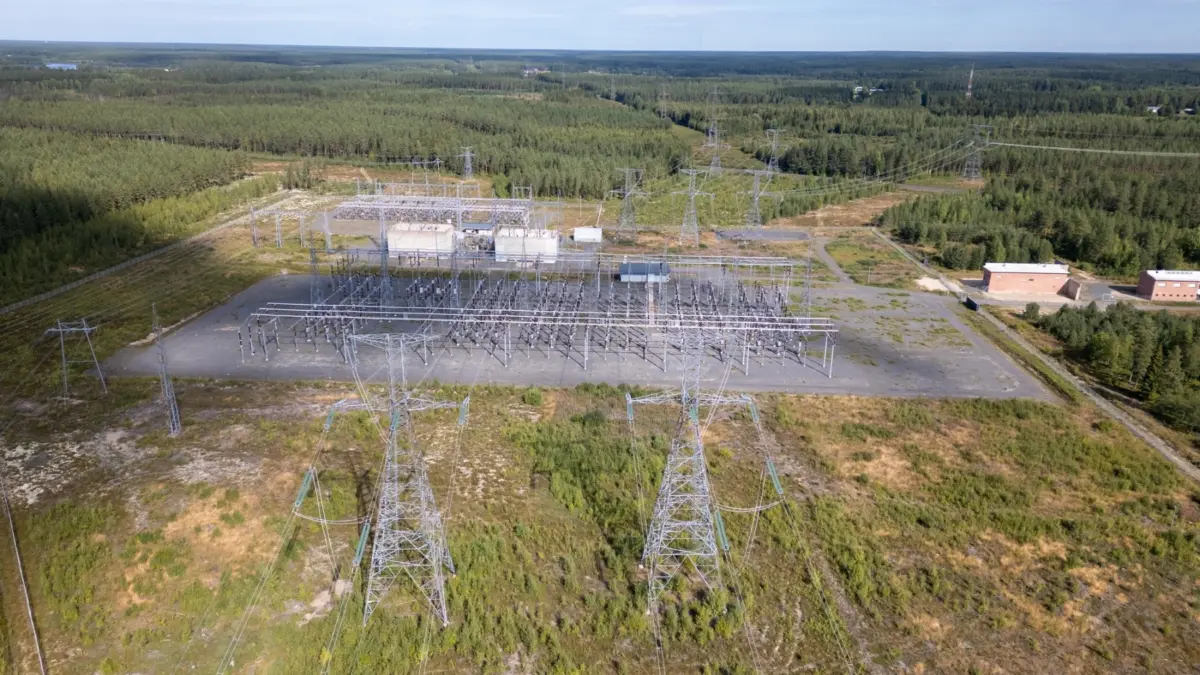
While hyperscalers like Amazon Web Services (AWS) rush to lock down millions of advanced GPUs, and chipmakers pioneer customized silicon like Nvidia’s new Vera CPU, the ultimate chokepoint is no longer access to compute hardware. It is access to executable electrical infrastructure. Grid planners, utility providers, and data center operators are now racing against the clock to bridge the widening chasm between announced computing ambitions and real, energizable megawatt capacity.
Detailed Chronology & Market Evolution
Q2 Earnings and the Acceleration of Compute
Nvidia’s latest financial disclosures for the quarter ending July 26 underscored an insatiable, borderless hunger for AI acceleration hardware. Total revenue reached $96.2 billion—up 106% year-over-year and 18% sequentially. Driving this astronomical growth was the data center segment, which accounted for $89 billion of the total haul, matching an 18% quarterly growth rate.
Far from plateauing, the momentum is rippling broadly across the global technology ecosystem. Nvidia reported that its AI Clouds, Industrial & Enterprise (ACIE) division generated $40.3 billion (up 138% year-over-year), while traditional hyperscale customers contributed $48.7 billion (up 102% year-over-year).
AWS Doubles Down on the Blackwell and Rubin Architectures
The sheer velocity of this demand was crystallized when Amazon Web Services announced a massive expansion of its long-term hardware roadmap. AWS revealed plans to deploy an additional 2 million Nvidia GPUs—spanning the cutting-edge Blackwell Ultra, Rubin, and Rubin Ultra architectures—across its global infrastructure throughout 2027 and 2028.
This multi-million-unit commitment comes on top of an already aggressive deployment schedule that was set to introduce more than 1 million Nvidia GPUs beginning in 2026. According to AWS and Nvidia executives, customer demand for advanced workloads—ranging from agentic AI and scientific computing to enterprise automation and "physical AI"—has profoundly outstripped even the most bullish prior forecasts.
Expanding into Hardware Integration: The Vera CPU Debut
Nvidia is no longer merely a supplier of graphics processors; it is rapidly morphing into a full-stack infrastructure architect. Demonstrating this evolution, AWS received its first delivery of Nvidia’s custom-built Vera CPU servers paired with Vera Rubin GPUs.
Designed specifically to orchestrate complex, multi-step agentic AI workloads, Nvidia’s proprietary Vera CPU features 88 custom cores and an astonishing 1.2 terabytes per second of memory bandwidth, delivering up to 1.8 times faster per-core performance than previous iterations. Oracle Cloud Infrastructure (OCI) is also slated to deploy hundreds of thousands of Vera CPUs beginning in 2026, making it the first cloud provider to integrate Vera at true hyperscale.
Direct Infrastructure Backing: The SB Energy Partnership
In a telling sign of how seriously chipmakers must now take physical deployment constraints, Nvidia has stepped directly into the real estate and energy development arena. This month, Nvidia announced a strategic financial play, offering credit support for land acquisition, power procurement, and structural shell construction at SB Energy’s planned PORTS-Pike Technology Campus in Ohio.
The colossal project is engineered to deliver 8 IT gigawatts of total capacity dedicated to OpenAI. Nvidia has secured an initial 4.25 IT gigawatts, holding an option for the remaining 3.75 IT gigawatts. OpenAI will lease the campus under a 20-year agreement with SB Energy, while Nvidia has committed an additional $1.5 billion direct investment into SB Energy to guarantee that the required physical facilities are brought online.
Supporting Context & Metrics
The numbers defining the current AI infrastructure boom are historic, yet they reveal distinct structural shifts in who is buying hardware and how that hardware translates into resource consumption.

- $89 Billion: Nvidia’s quarterly data center revenue, marking a 117% year-over-year increase.
- $108 Billion: Nvidia’s projected total revenue for the upcoming quarter, excluding any data center compute revenue from mainland China.
- 3 Million+ GPUs: The combined volume of advanced Nvidia chips (Blackwell, Rubin, and variants) slated for deployment by AWS alone between 2026 and 2028.
- 8 IT Gigawatts: The target capacity of SB Energy’s Ohio technology campus backed by Nvidia to power OpenAI’s future workloads.
- 1.2 TB/s: The memory bandwidth of Nvidia’s new custom Vera CPU, engineered to handle the heavy orchestration demands of agentic AI.
Diversification Beyond the Hyperscalers
While tech giants like Microsoft, Google, Meta, and Amazon continue to consume the lion’s share of computing hardware, Nvidia’s revenue breakdown demonstrates that the AI revolution has expanded deep into the enterprise, regional cloud providers (neoclouds), and sovereign national initiatives.
The ACIE segment’s 138% annual growth proves that smaller corporations and governments are aggressively building out sovereign and localized AI clouds. However, this diversification complicates the resource equation. While hyperscaler demand is typically concentrated into massive, highly manageable 1-gigawatt campuses connected directly to major transmission backbones, enterprise and regional deployments create a fragmented, distributed demand profile. Utilities now face the prospect of managing hundreds or thousands of smaller, highly competitive AI electrical loads scattered across disparate municipal and regional grids.
Official Statements and Industry Perspectives
The friction between software-driven hardware demand and physical infrastructure reality has prompted candid warnings from industry leaders and analysts.
-
Steven Dickens, CEO and Principal Analyst, HyperFrame Research:
"I’m running out of hyperbole and adjectives… We’re in a rampant buildout phase from enterprise, small regional cloud provider, [neocloud providers], big-name cloud, hyperscale."
-
Jensen Huang, CEO, Nvidia:
Emphasizing that the expanded partnership with AWS is a direct response to a market where "demand is running ahead of every forecast."
-
Neil Osnato, Founder, Persistence Analytics Group:
Highlighting the dangerous disconnect between chip shipments and grid reality, Osnato noted:
"The physical buildout now has to keep pace with a technology deployment curve that can move much faster than generation, transmission, and interconnection infrastructure."He further urged grid planners to separate announced metrics from execution capabilities:
"Strong chip demand is evidence of strong compute demand. It is not, by itself, proof that every megawatt being planned around that demand will arrive on schedule or persist for the life of the infrastructure built to serve it."
Future Outlook: The Race to Energize the AI Era
As Nvidia charts a course toward fiscal 2028 with expectations of another 70% revenue leap, the industry’s primary bottlenecks are firmly rooted in physics rather than logic gates.
The race to deploy millions of GPUs—exemplified by AWS’s 2-million-unit commitment and Nvidia’s financial backing of the Ohio SB Energy campus—signals that tech titans are willing to spend aggressively to secure their positions in the generative AI hierarchy. Yet, money alone cannot bypass the multi-year timelines required to build electrical substations, upgrade high-voltage transmission lines, and interconnect new energy generation sources.
Ultimately, the defining question for the next half-decade will not be whether companies can afford Nvidia’s latest silicon, but whether data center developers and utility providers can supply the electrons required to bring it to life. Until the physical infrastructure catches up with the silicon design cycle, the true measure of AI progress will be counted not in shipped GPUs, but in energizable megawatts.