Executive Overview
In an era defined by high-stakes internal security anxieties and relentless leaks to the press, the United States Department of Defense is doubling down on one of the most controversial, scientifically fragile technologies in the history of law enforcement and national intelligence: the lie detector.
According to a Department of Defense (DoD) budget request first brought to light by Inside Defense, the federal government is moving forward with a sprawling, five-year, $30.3 million initiative aimed at developing an advanced iteration of the polygraph. Dubbed "Polygraph+" or "Polygraph Next," the program seeks to modernize federal credibility assessment technologies through the integration of artificial intelligence (AI), machine learning (ML), and a sci-fi-adjacent technique known as "standoff sensing"—the ability to capture physiological data without ever attaching a physical sensor or wire to a human subject.
This multi-million-dollar push is spearheaded by the Defense Counterintelligence and Security Agency (DCSA), the division responsible for vetting prospective federal employees and managing insider threat detection. Yet, the timing of the initiative reveals an unmistakable undercurrent of political and operational panic. Under Defense Secretary Pete Hegseth, the Pentagon has leaned heavily on polygraphs in an aggressive hunt for the sources of unauthorized disclosures. The urgency was laid bare in September when The New York Times reported that roughly 50 high-ranking officers on the Joint Staff had been subjected to polygraph testing after news outlets reported on the severe depletion of U.S. weapons stockpiles resulting from ongoing tensions and conflict involving Iran.
While the government pitches Polygraph+ as a necessary leap into the twenty-first century of security vetting, legal scholars, psychologists, and computer scientists are sounding the alarm. Critics argue that marrying artificial intelligence to a fundamentally flawed, century-old diagnostic tool is a "misguided effort to reduce the complex to something that is tangible"—yielding, in the words of legal scholar Kyri Kotsoglou, "the worst of both worlds." Far from being a revolutionary scientific breakthrough, critics contend that Polygraph+ is destined to function less as an objective arbiter of truth and more as an intimidating psychological prop designed to enforce internal loyalty and root out whistleblowers.
Detailed Chronology: From 1920s Punctuation to Pentagon Protypes
To understand the scope and peril of Polygraph+, one must trace the long, troubled history of deception detection—a trajectory that has seen remarkably little fundamental innovation over the past century.
The Stagnant Century of the Polygraph
The modern polygraph was born in the 1920s, built on the premise that emotional and psychological stress triggered by lying causes measurable, involuntary physiological changes. For nearly a hundred years, examiners have relied on a relatively crude triad of physiological indicators: blood pressure, pulse, respiration, and galvanic skin response (sweat).
During a traditional polygraph examination, a subject is asked a series of baseline questions—such as "Is the sky blue?"—designed to establish a physiological norm, followed by target or relevant questions, such as "Have you ever committed espionage?" or "Have you leaked classified information?" The examiner then visually interprets the resulting charts, looking for deviations that supposedly signal deception.
Despite decades of institutional reliance—with the federal government conducting tens of thousands of these tests annually—the scientific community has consistently viewed the polygraph with profound skepticism. In 1983, Congress’s Office of Technology Assessment (OTA) concluded that there was scant scientific evidence to support the use of polygraphs for employee screening. Two decades later, in 2003, the U.S. National Research Council (NRC) delivered an even more damning verdict, declaring that the scientific evidence for the polygraph’s efficacy was "weak at best." Consequently, polygraph results remain almost universally inadmissible in U.S. courts of law.
The Pivot to the DIU and Prototyping Phase
Recognizing the technological stagnation of traditional lie detectors, the Pentagon began laying the groundwork for a digital-age overhaul several years ago. In 2023, the Defense Innovation Unit (DIU)—the Pentagon’s bridge to commercial tech innovators—launched an open solicitation seeking cutting-edge commercial products capable of revolutionizing deception detection.
The DIU ultimately selected two private firms to build and test prototypes for advanced credibility assessment:
- Presage Technologies: A company claiming the proprietary capability to measure heart rate and breathing patterns simply by analyzing standard video feeds of a subject.
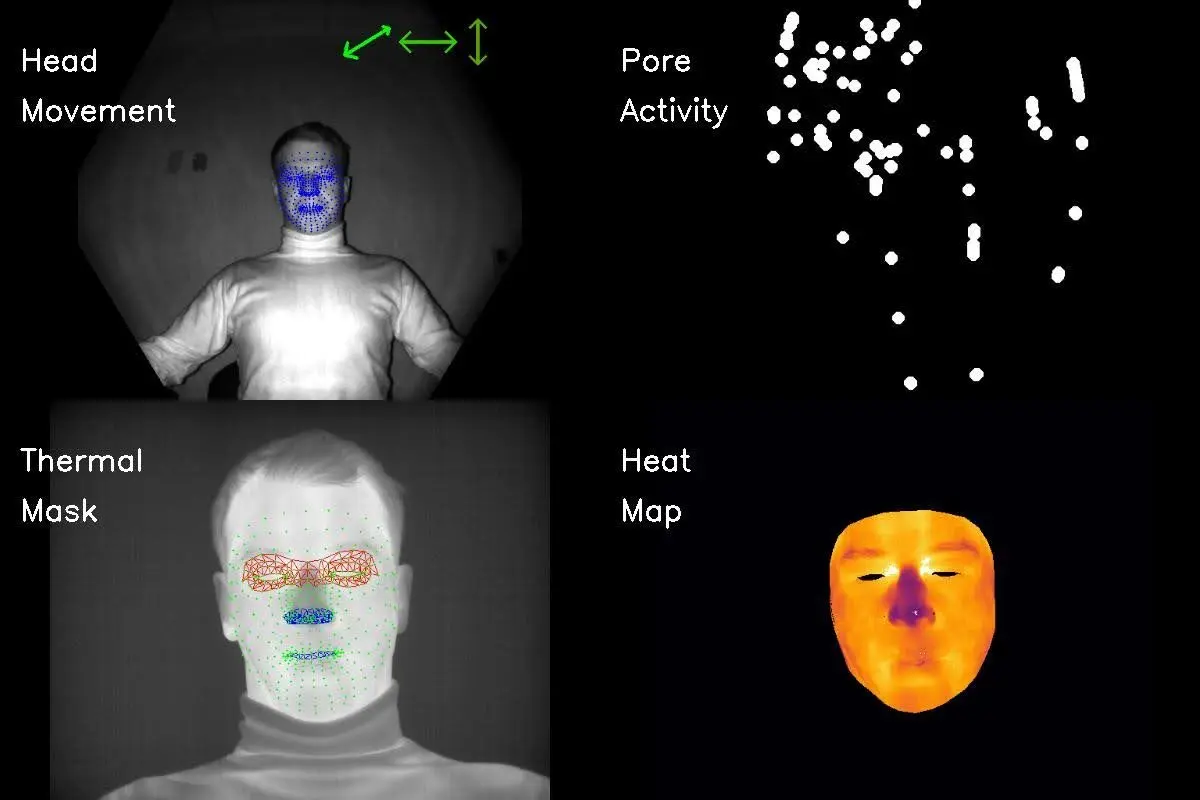
- Altec Research: A medical sensor enterprise pivoting toward non-contact remote sensing. Released screenshots of Altec’s prototype technology reveal an automated system capable of tracking minute head movements, shifts in facial skin temperature, and microscopic pore activity in real time.
While these companies and the DIU have largely kept details close to the vest, declining requests for comment, their prototypes directly foreshadow the core tenets of the newly revealed Polygraph+ budget request: automated multi-modal analysis and contactless sensing.
The Current Crisis: The Joint Staff Leak Probe
The formal $30.3 million budget request for Polygraph+ arrives at a moment of acute institutional friction within the Department of Defense. Under the leadership of Defense Secretary Pete Hegseth, the Pentagon has faced a series of embarrassing leaks regarding military readiness, supply chain strains, and munitions depletions.
The pressure-cooker atmosphere peaked in September, when the New York Times revealed that approximately 50 members of the Joint Staff were ordered to sit for polygraph examinations. The dragnet was an explicit attempt to trace disclosures concerning the dwindling state of U.S. munitions reserves amid the U.S. confrontation with Iran. It is within this climate of paranoia, institutional distrust, and demands for absolute loyalty that the DCSA’s push for Polygraph+ has accelerated, positioning the technology less as a routine human-resources filter and more as an aggressive counterintelligence cudgel.
Supporting Context & Metrics: The Science and Fallacy of Lie Detection
The core premise of Polygraph+ is that introducing artificial intelligence, machine learning algorithms, and contactless multi-modal sensors can eliminate the human subjectivity and error that have plagued lie detectors for generations. However, experts in deception and psychophysiology argue that software cannot fix a problem rooted in faulty foundational logic.
Accuracy Claims vs. Real-World Failure Rates
The American Polygraph Association (APA) staunchly defends the utility of the traditional polygraph, claiming validity rates ranging between 80% and 94%. However, independent academic research and government-commissioned reviews paint a vastly different picture.
The 2003 NRC report highlighted a terrifying statistical reality for any large organization utilizing the tool: even if a screening test boasts a seemingly high accuracy rate of 90%, applying it at scale across a massive workforce inevitably results in catastrophic false-positive rates. The Department of Defense employs roughly 2.8 million military and civilian personnel. If an imperfect vetting or screening system is deployed across an enterprise of that scale, even a small percentage of false readings could result in the wrongful stigmatization, professional blacklisting, or false accusation of tens of thousands of loyal service members.

Furthermore, studies consistently show that untrained humans can spot a lie roughly 54% of the time—barely better than a coin flip. The polygraph, critics argue, gives examiners and administrators an unearned, dangerous sense of epistemic certainty.
The Subjectivity Problem and Countermeasures
Far from being an objective physical reading, traditional polygraph interpretations are profoundly subjective. Studies demonstrate that different examiners reviewing the exact same polygraph charts frequently arrive at wildly divergent conclusions. Moreover, demographic and psychological biases skew results; research indicates that individuals from certain minority groups or those suffering from high baseline anxiety are disproportionately judged as deceptive.
Compounding this subjectivity is the well-documented vulnerability of polygraphs to countermeasures. Because a polygraph measures general autonomic arousal rather than a specific "lie reflex," savvy subjects can learn to manipulate their physiological responses.
- Physical Countermeasures: Interviewees have historically beaten polygraphs by placing a small tack or pin inside their shoe and pressing down on it to artificially spike their heart rate and blood pressure during baseline questions, thereby neutralizing the contrast with target questions.
- Mental Countermeasures: Subjects can engage in deliberate cognitive distraction, such as counting backward by sevens or visualizing intensely stressful or arousing scenarios during control questions.
As Dr. Sophie van der Zee, an associate professor specializing in deception at Erasmus University in Rotterdam, notes: "If you know how it works, you can beat it." According to van der Zee, the polygraph’s primary utility has never been its scientific accuracy; rather, it functions as a psychological deterrent. Subjects frequently confess out of sheer anxiety before the test even begins—a mechanism that only functions as long as the public and prospective employees maintain a superstitious belief in the machine’s infallible omnipotence.
Official Statements and Academic Critiques
The DCSA’s budget justification outlines a straightforward mandate: to "modernize federal polygraph and credibility assessment technologies" in the name of security vetting and insider threat mitigation. Yet, because the agency has declined to field inquiries regarding the precise proprietary technologies or algorithms it intends to fund, the broader scientific and legal community has stepped in to fill the informational void with severe warnings.
The Illusion of "Pinocchio’s Nose"
Researchers have spent decades attempting to automate and refine deception detection using thermal imaging, pupillometry, voice stress analysis, and functional neuroimaging (fMRI). Every single attempt to find a reliable, universal physiological marker for lying outside a tightly controlled laboratory environment has failed.
"There is still no Pinocchio’s nose," says van der Zee, highlighting the core biological truth that human beings do not emit a single, uniform, undeniable signal when they are untruthful.
Deception is an intensely complex cognitive and emotional state driven by three distinct psychological underpinnings:
- Physiological Stress: The autonomic nervous system’s fight-or-flight response.
- Cognitive Load: The immense mental energy required to construct a coherent false narrative and suppress the truth.
- Concealment Effort: The deliberate attempt to mask behavioral and emotional cues.
Traditional polygraphs attempt to gauge only the first of these three pillars. While AI theoretically opens the door to "multi-modal" detection—systems designed to aggregate micro-expressions, vocal modulations, and thermal readings into a holistic deception score—experts argue that software cannot compensate for the absence of a genuine ground truth.
The "Worst of Both Worlds"
Legal scholars Kyri Kotsoglou and Marion Oswald have extensively documented the civil liberties and epistemological dangers of importing automated decision-making systems into the justice and security apparatus.
Kotsoglou characterizes the Pentagon’s investment in AI-driven polygraphs as "the worst of both worlds." The marriage of machine learning to a fundamentally invalid diagnostic practice does not eliminate error; rather, it compounds it by layering computational opacity over underlying scientific fraud.
"Even if you have all the records in the world from polygraph tests, you don’t know whether those polygraph tests are right or not," explains Oswald. Because historical polygraph data is riddled with false positives and human error, training an AI model on that data merely automates and legitimizes historical biases.
Oswald fears that Polygraph+ is destined to be weaponized for political compliance rather than objective security vetting. "It seems very much a response to the concern of the current administration to leaks and perceived lack of loyalty," Oswald observes. "It’s being used as a threat, to intimidate and force people to confess to things, as opposed to anything that’s actually getting valid information."
Future Outlook: Where Do Federal Lie Detectors Go From Here?
As the $30.3 million budget request makes its way through Congressional review, the future of federal credibility assessment hangs in a precarious balance. If approved, the funding will flow into the hands of defense contractors and tech startups tasked with turning science-fiction concepts like standoff sensing and algorithmic lie scoring into operational reality over the next five years.
Several critical questions and systemic challenges will define the trajectory of Polygraph+:
- The Legislative Hurdle: Congress must ultimately authorize and appropriate the funds. While national security budgets frequently clear legislative hurdles with bipartisan support, the mounting body of independent scientific criticism regarding the polygraph’s validity may prompt skeptical lawmakers to demand stringent oversight and independent scientific audits of the DCSA’s procurement process.
- The Civil Liberties and Privacy Battleground: The deployment of "standoff sensing"—technologies that scan federal employees or job applicants for thermal shifts, pore activity, and micro-movements without their physical consent or active participation—opens a terrifying Pandora’s box of civil liberties violations. Privacy advocates are expected to challenge the legality and ethics of passive biometric surveillance inside federal agencies.
- The Perpetuation of Fear-Based Management: Ultimately, technological iterations like Polygraph+ risk entrenching a culture of suspicion within the defense establishment. If the primary function of the machine remains psychological intimidation—a club used by leadership to purge suspected leakers and enforce ideological conformity—then the millions of dollars allocated for AI development will serve only to modernize an ancient form of institutional theater.
As the Pentagon marches forward into its multi-million-dollar quest for algorithmic certainty, it runs the risk of repeating the oldest mistake in the history of security: mistaking high-tech wizardry for objective truth, and weaponizing pseudo-science in the name of national defense.