By Shane Snider
Senior News Writer, Data Center Knowledge
Executive Overview
The explosive global expansion of artificial intelligence, high-performance computing, and localized manufacturing is colliding with the physical realities of the American electrical grid. Across the United States, a systemic timing mismatch has emerged: data center developers can request gigawatts of electrical capacity in a matter of months, whereas modern high-voltage transmission lines require anywhere from five to ten years—and occasionally longer—to navigate the complex labyrinths of routing, environmental permitting, and construction.
This widening temporal chasm is placing unprecedented pressure on grid planners, regional transmission organizations (RTOs), and federal regulators. The dilemma facing utilities is a high-stakes balancing act. If they wait for a data center’s power contracts to be definitively finalized before upgrading or expanding transmission infrastructure, the grid inevitably becomes a severe bottleneck, throttling economic development and technological progress. Conversely, if utilities commit billions of dollars to build transmission infrastructure ahead of firm commitments, they risk saddling everyday ratepayers with stranded capital for industrial loads that may scale back, pivot, or fail to materialize altogether.
Compounding this structural challenge is a growing friction between federal identification of grid needs and regional deployment tools. Even as the US Department of Energy (DOE) issues sweeping assessments declaring an urgent, nationwide need for expanded transmission capacity to serve accelerating loads, federal regulators have simultaneously declined to advance specific geographic designations that could fast-track interstate projects.
This article explores the anatomy of the grid mismatch, examines the lessons learned from proactive transmission planning models like Texas’s Competitive Renewable Energy Zones (CREZ), analyzes the controversial federal decisions surrounding National Interest Electric Transmission Corridors (NIETCs), and outlines a staged, evidence-based approach to capital allocation that could prevent the next generation of digital infrastructure from outstripping the power systems designed to sustain it.
Detailed Chronology & Regulatory Landscape
The convergence of AI-driven compute demand and grid vulnerabilities has accelerated dramatically over the past several years, driven by a series of pivotal regulatory moments, federal studies, and regional stress tests.
The 2026 National Transmission Needs Study and Federal Hesitation
The regulatory landscape was thrown into sharp relief when the US Department of Energy published its draft 2026 National Transmission Needs Study. The study identified an escalating surge in electricity demand driven by hyperscale data centers, domestic semiconductor manufacturing, large industrial loads, and sweeping electrification initiatives. It concluded that the nation faces an urgent, pressing requirement for substantial additions to its transmission capacity.
Yet, in a decision that immediately drew public scrutiny and political debate, the DOE opted not to designate three proposed National Interest Electric Transmission Corridors (NIETCs) that had successfully advanced to Phase 3 of the rigorous federal review process. The three corridors under consideration—the Tribal Energy Access Corridor, the Southwestern Grid Connector Corridor, and the Lake Erie-Canada Corridor—were ultimately denied designation. The agency cited public input, governmental feedback, and the foundational findings of its own transmission research as the basis for declining to move forward.
A NIETC designation is not an automatic permit for a specific construction project; rather, it is a geographic classification that unlocks federal financing tools and, in restricted circumstances, triggers Federal Energy Regulatory Commission (FERC) backstop permitting authority. Former DOE Secretary Jennifer Granholm publicly questioned the logic of the decision in a widely shared LinkedIn post. She argued that it is contradictory to declare an energy emergency, push for maximized domestic power generation, and simultaneously decline tools that make it easier to deliver that electricity to regions experiencing severe supply shortages.
Industry experts, however, note that the two processes serve fundamentally different statutory functions. Neil Osnato, founder of Persistence Analytics Group, points out that while the Needs Study identifies a macro-level national transmission crisis, the NIETC statutory framework asks a much narrower question: whether specific, bounded geographic corridors meet strict legal, evidentiary, and evidentiary thresholds for federal designation. Nevertheless, the episode underscores a persistent structural flaw in American energy policy—the country possesses robust mechanisms for diagnosing transmission deficits, but far fewer effective tools for translating those diagnoses into timely, coordinated interstate construction projects.
The ERCOT Queue Explosion and State-Level Interventions
Nowhere is this transmission-versus-load timeline mismatch more visible than in Texas. Operating within the Electric Reliability Council of Texas (ERCOT) market, developers have flooded the interconnection queue with unprecedented requests for large-scale power.
As of mid-2026, ERCOT was tracking approximately 474.7 gigawatts (GW) of large-load interconnection requests. A staggering 420.8 GW—accounting for roughly 90.2% of the entire pipeline—is directly associated with data center development. These figures represent an astronomical volume of demand, vastly exceeding historical baseline load growth patterns and testing the limits of regional grid architecture.
Recognizing the systemic risk that speculative or uncommitted projects pose to grid stability and consumer electricity rates, Texas leadership intervened. On June 10, Governor Greg Abbott directed the Public Utility Commission of Texas (PUCT) and ERCOT to thoroughly review incoming data center projects to mitigate development risks and prevent infrastructure costs from unfairly shifting onto residential and commercial ratepayers. By August, this directive escalated into a comprehensive statewide audit of all data centers progressing through the ERCOT interconnection queue. The audit aims to filter out speculative placeholders and isolate projects backed by genuine capital, firm technology deployment schedules, and secure financing.
Supporting Context & Metrics: The Anatomy of a Mismatch
To fully grasp the magnitude of the crisis, one must examine the operational disparities between digital infrastructure development and utility-scale grid planning.
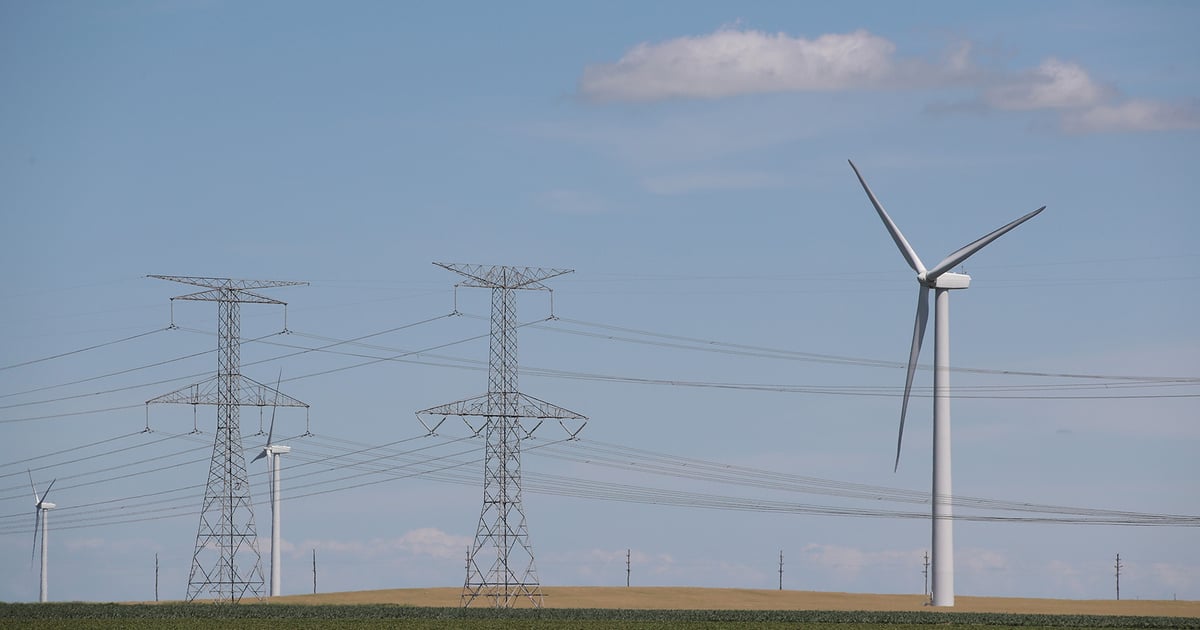
The Speed Disparity
- Data Center Development Cycle: Modern hyperscale and AI data center facilities can be planned, permitted, financed, and constructed in 18 to 36 months. Servers can be racked, liquid-cooling manifolds installed, and IT loads ramped up rapidly once power is secured.
- Transmission Construction Cycle: High-voltage alternating current (HVAC) and high-voltage direct current (HVDC) transmission lines typically require anywhere from 5 to 10 years—and often longer—to complete due to land acquisition, federal and state environmental reviews, litigation, and supply chain constraints for specialized components like large power transformers.
+-------------------------------------------------------------------+
|               THE INFRASTRUCTURE TIMELINE MISMATCH                |
+-------------------------------------------------------------------+
|                                                                   |
|  AI Data Center Planning & Build:                                 |
|  [ 18 - 36 Months ]                                               |
|                                                                   |
|  Transmission Line Permitting & Construction:                     |
|  [ 60 - 120+ Months ]                                             |
|                                                                   |
+-------------------------------------------------------------------+
The Scale of AI Infrastructure Investments
The race to power next-generation AI architecture has triggered multi-billion-dollar corporate realignments across the industrial supply chain. Recent transactions underscore the intensity of this capital deployment:
- Flex completed a $4.4 billion acquisition of EPC Power, positioning itself to capture surging demand as AI data centers rapidly transition toward advanced 800V internal power architectures to reduce conversion losses.
- SLB finalized a $4.1 billion deal to acquire Kelvion, expanding its footprint in thermal management and liquid-cooling infrastructure—vital components as high-density GPU clusters push thermal loads past traditional air-cooling limits.
- Concurrently, innovations in solid-state transformers and high-voltage distribution equipment are being rushed to market to handle the localized multi-hundred-megawatt sub-stations required by modern hyperscale campuses.
The Lessons of Texas CREZ
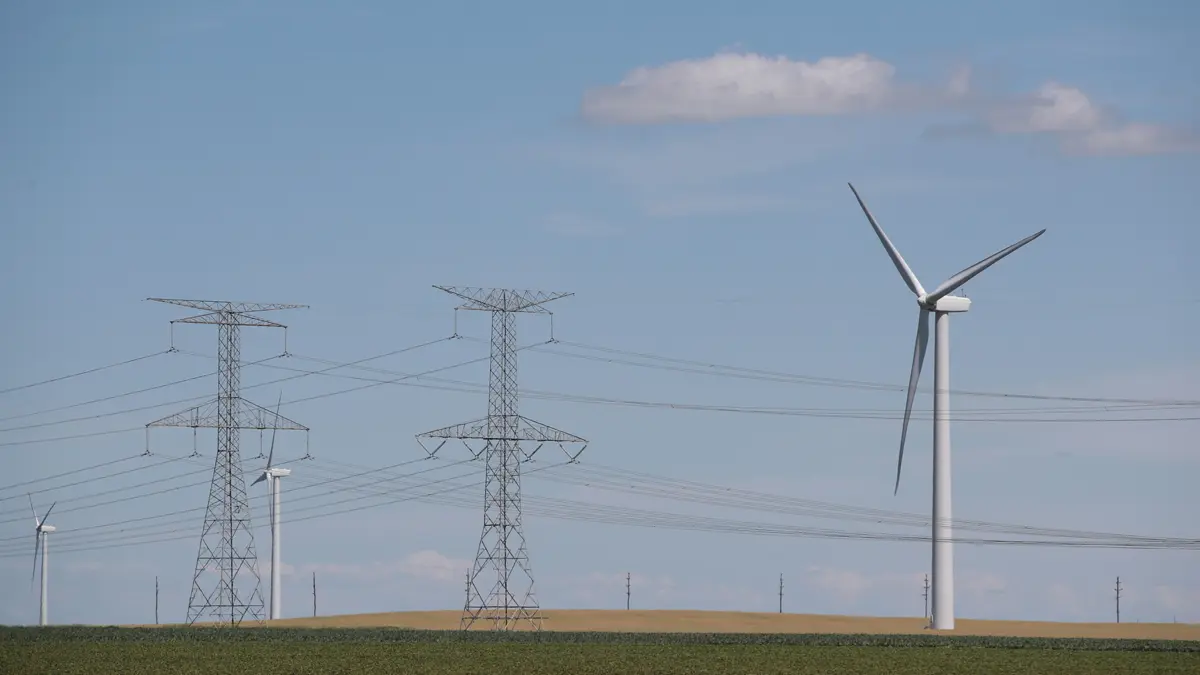
Long before the current AI boom, Texas pioneered a proactive transmission planning model that offers valuable lessons for modern grid planners. The Competitive Renewable Energy Zones (CREZ) program, launched in the late 2000s, was designed to preemptively build high-voltage transmission out of the wind-rich expanses of West Texas to major load centers, building the grid ahead of the full generation buildout.
Nearly two decades later, that foresight has paid unexpected dividends. Modern data center developers are naturally gravitating toward regions serviced by CREZ infrastructure because the necessary transmission capacity and high-voltage corridors already exist. For example, Galaxy Digital’s Helios campus in Dickens County is being developed as a multi-gigawatt computing platform in an area where robust transmission capacity was pre-established.
A July 2026 report from the Energy Systems Integration Group (ESIG) Large Loads Task Force—authored by Brattle Group principal Johannes Pfeifenberger, Warren Lasher, and ESIG’s James Okullo—cites CREZ as the gold standard for planning transmission around expected regional development rather than waiting for individual customer contracts to materialize. The ESIG report advocates for moving past fragmented, project-by-project network upgrades in favor of proactive, multi-value, scenario-based planning frameworks, explicitly pointing to development-zone models like Texas CREZ and the Illinois Renewable Energy Access Plan (REAP).
Official Statements and Expert Perspectives
The friction between national energy goals, regulatory caution, and industry realities has elicited strong commentary from policymakers and energy market analysts alike.
-
Former DOE Secretary Jennifer Granholm, addressing the NIETC denials on professional platforms, emphasized the internal contradiction of federal policy:
"You can’t declare an energy emergency, demand that America pump out more electricity, and then purposefully make it harder to deliver that power where it’s needed."
-
Neil Osnato, Founder of Persistence Analytics Group, offered a nuanced perspective on the distinction between identifying macro-level needs and applying specific regulatory instruments:
"The Needs Study identifies a national transmission problem. The NIETC process asks a different question: whether specific geographic corridors satisfy the statutory and evidentiary basis for federal designation."
-
Addressing the false dichotomy between building too early and waiting too long, Osnato advocated for a rigorous, stage-gated approach to capital commitment:
"In some places, today’s data center pace justifies building transmission ahead of firm commitments. But ‘ahead of firm commitments’ should not mean ‘ahead of evidence.’ The real discipline is not choosing between ‘build early’ and ‘wait.’ It is deciding which decisions are reversible, which are irreversible, and how much evidence should be required before crossing each one."
Future Outlook: A Staged, Evidence-Based Framework for Grid Expansion
As the United States navigates the intersection of the energy transition and the artificial intelligence revolution, traditional utility planning models are no longer fit for purpose. Relying purely on reactive, customer-funded interconnection studies leads to chronic grid congestion, while speculative, unvetted build-ahead strategies risk creating billions of dollars in stranded assets.
To resolve this impasse, energy economists and RTO planners are converging around a staged, evidence-based planning methodology:
- Macro-Scenario Modeling: Planners must utilize probabilistic forecasting to map out multiple potential trajectories for regional load growth, incorporating variables such as domestic manufacturing reshoring, EV adoption rates, and clustered AI data center expansion.
- Corridor Preservation (Reversible Actions): Utilities and state agencies should secure rights-of-way, conduct environmental baseline assessments, and design scalable transmission corridors early in the development cycle. These actions preserve future deployment options without locking in massive capital expenditures.
- Evidence Gates (Irreversible Capital): Full-scale capital deployment—such as stringing high-voltage conductors, purchasing specialized transformers, and energizing new substations—must be tethered to strict, verifiable milestones. Developers must prove that their projects have advanced through financing, site control, and technological maturity before public or ratepayer-backed capital is irreversibly committed.
By adopting this disciplined framework, the energy sector can avoid the pitfalls of regulatory hesitation and speculative overbuilding. Ultimately, bridging the gap between digital ambition and physical power infrastructure will require close collaboration between state regulators, federal agencies, RTOs, and hyperscale operators—ensuring that America’s grid evolves not just to meet the demands of today, but to reliably power the technological horizon of tomorrow.