Executive Overview
The explosive growth of artificial intelligence has collided with an immovable physical wall: local communities do not want the massive, energy-hogging data centers required to feed it. Across the globe, neighborhoods are organizing against the massive hyperscale campuses proposed by Big Tech, citing massive water demands, skyrocketing utility rates, disruptive noise, and sprawling land use. At the same time, the industry’s appetite for raw computing power continues to climb exponentially, leaving developers scrambling for alternatives to hyper-centralized hubs.
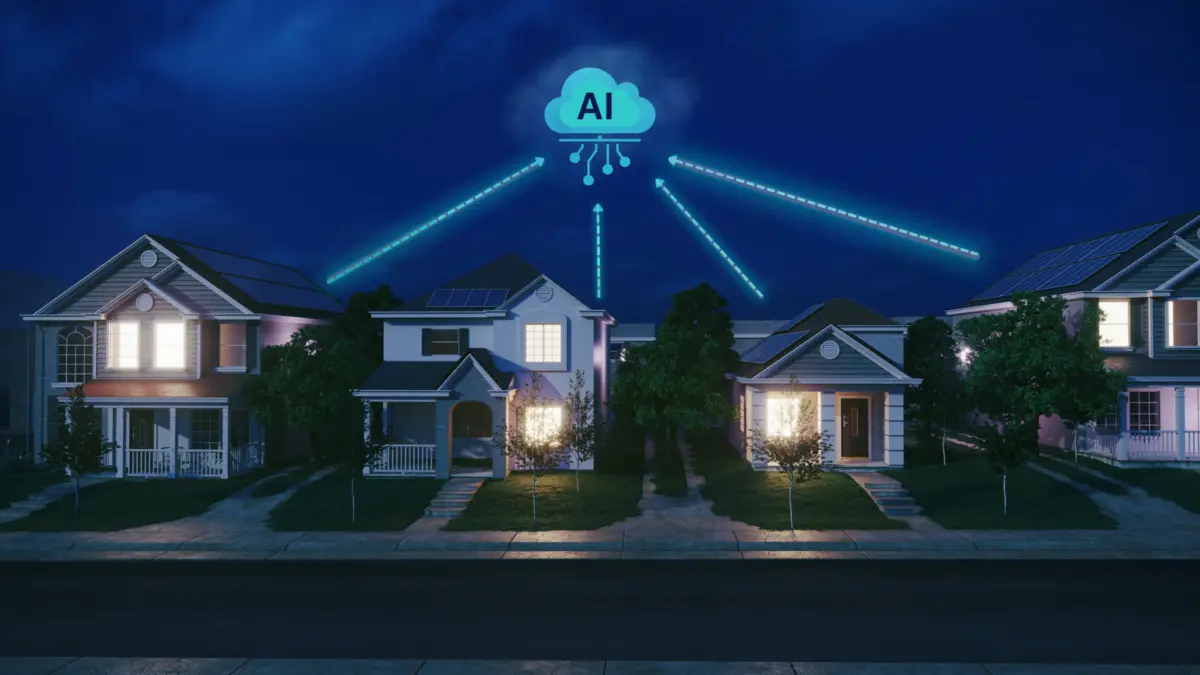
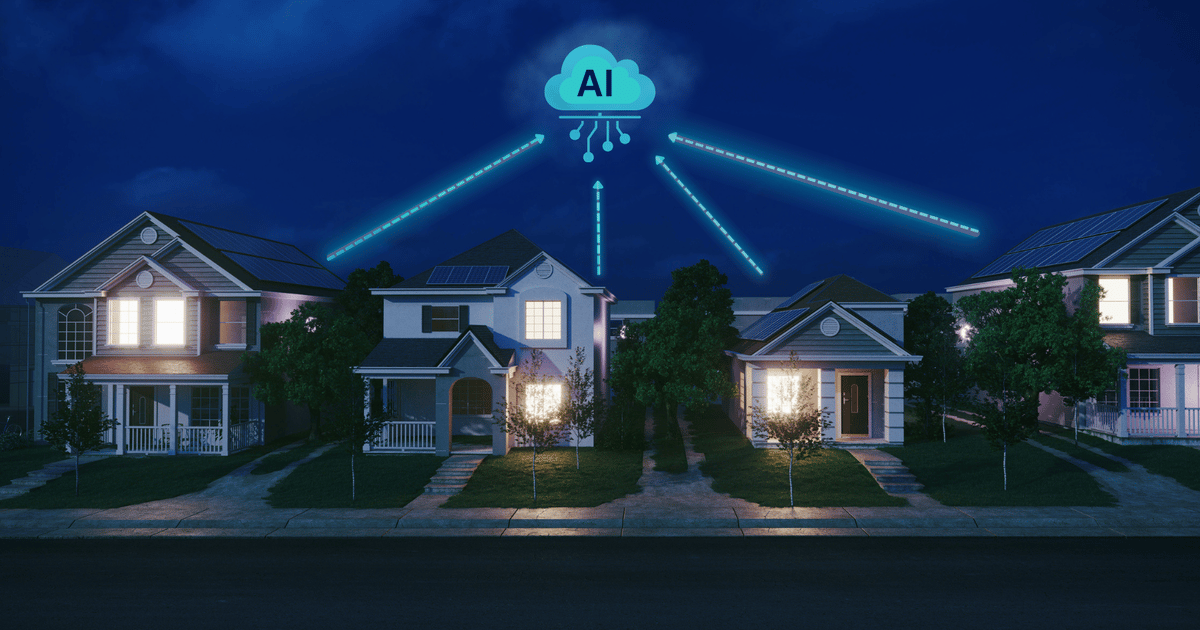
Out of this severe infrastructure bottleneck, a radical concept is rapidly moving from the whiteboard into real-world pilot programs: distributed residential compute. By utilizing thousands—and potentially millions—of homes as localized edge nodes housing enterprise-grade graphics processing units (GPUs), proponents argue that the industry can bypass local zoning battles, utilize excess residential solar power, and monetize everyday homeowners.
Yet, translating a decentralized residential network into a reliable, enterprise-grade AI infrastructure is a monumental engineering challenge. Unlike a pristine data center with redundant power feeds and ultra-low-latency fiber optics, residential environments feature fluctuating internet bandwidths, unpredictable household power loads, and high hardware failure rates. This article investigates the community pressures fueling this movement, the emerging technologies trying to make it work, the stark architectural differences between hyperscale and home nodes, and whether this decentralized vision can truly support the future of AI.
Detailed Chronology: From Backlash to the Rise of Residential Edge Nodes
The trajectory of the AI infrastructure crisis has accelerated dramatically, forcing a structural rethink of where and how computing workloads are processed.
- Early 2026 (The Siting Crisis Peaks): Local resistance to data center construction hardens into a coordinated, national movement. Public pushback transitions from informal complaints to legislative moratoriums and the mobilization of grassroots political campaigns.
- March 2026: A landmark Gallup survey reveals that 71% of Americans actively oppose the construction of AI data centers in their local regions, signaling an unprecedented crisis of social license for the tech sector.
- April to July 2026: Political fallout intensifies. The University of Pennsylvania’s Annenberg Public Policy Center publishes data showing that local opposition to data centers surged from 49% in early spring to 61% by mid-summer, while local midterms see voters ousting municipal incumbents who backed tech developments.
- June 2026 (The Birth of "Solar 2.0"): Recognizing the regulatory gridlock, startups begin deploying consumer-facing alternatives. Nanocenter.ai launches in June 2026, introducing garage-mounted hardware appliances housing Nvidia RTX 6000-class GPUs designed to transform ordinary homeowners into passive infrastructure hosts.
- Mid-2026 (Energy and Grid Integration): Major players in the residential solar and smart-home ecosystem—such as Sunrun and SPAN with its XFRA initiative—launch pilot programs aimed at merging domestic solar-plus-storage assets with distributed AI workloads. This effectively treats households not just as power consumers, but as flexible computational assets.
Supporting Context & Metrics: The Scale of Community Pushback
The push toward home-based computing is not merely an inventive engineering experiment; it is a direct survival tactic born from intense public hostility. The numbers tell a clear story of a technology sector running out of physical space:
- 71% vs. 57%: According to a March 2026 Gallup poll, nearly three-quarters of Americans oppose nearby data centers. A concurrent June 2026 Reuters/Ipsos poll corroborated this trend, placing local opposition at 57% against a meager 14% support rate.
- Surging Resistance: Data from the Annenberg Public Policy Center highlights a rapid hardening of public sentiment, with local disapproval jumping 12 percentage points in a matter of months.
- Core Grievances: Research compiled by the Pew Research Center indicates that public resistance is driven primarily by fears over unsustainable electricity consumption, massive municipal water usage for evaporative cooling, degraded local acoustic environments, and the reality that multi-billion-dollar data centers create very few permanent local jobs.
- Financial Fallout: Billions of dollars in planned data center capital expenditure have faced significant delays, cancellations, or outright rejections by state and local zoning boards via sudden moratoriums.
By distributing processing nodes directly into residential areas, proponents argue they can eliminate the concentrated environmental footprints that trigger these massive public backlashes.
Official Statements and Industry Insights
Deploying high-performance compute hardware into the wild requires navigating unprecedented technical hurdles. Industry experts offer a sobering look at what it truly takes to orchestrate thousands of independent home nodes.
Naman Ahuja, a Meta software engineer specializing in AI infrastructure, distributed systems, and reliability, emphasizes that the concept is best viewed not as a broken-up data center, but as a vast fleet of edge nodes.
"I would think of it less as a traditional data center spread across thousands of homes and more as a large fleet of edge compute nodes," Ahuja explains.
He notes that the fundamental engineering barrier is not stuffing a high-end GPU into a garage, but building the underlying software layer:
"The interesting part isn’t putting a GPU in someone’s house. The hard part is building software that can make thousands of machines, spread across different homes with different power and network conditions, behave like reliable infrastructure."
Aaron Peterson, founder and CEO of Nanocenter.ai, frames the residential model around ease of adoption for the consumer:
"Homeowners aren’t operators; they’re hosts."
Under Nanocenter’s model, garage-mounted appliances use standard residential power outlets (though sustained processing demands a dedicated 220-volt branch circuit) and allow participants to earn up to $2,000 monthly, offset by a five-year equipment financing agreement and a 10% platform fee.
However, veteran systems architects urge caution regarding stability and network overhead. Kadan Stadelmann, CTO and co-founder of Compance.ai, points out the history of decentralized volunteer compute grids:
"Early experiments have had a tough time keeping participants active, and connectivity has proven unreliable."
Jose Prabhu Michael Singarayan, an AI Data Architect and IEEE Senior Member, underscores the critical role of orchestration and security in these fragile networks:
"In a distributed AI environment, orchestration, and not raw compute, is what transforms thousands of independent machines into a usable infrastructure platform."
Singarayan adds: "Networking will become much more dynamic compared to the data center. Internet conditions at residential locations, IP address changes, bandwidth variability, connectivity issues, and latency need to be taken into consideration."
Hyperscale vs. Home Nodes: Architectural Realities
To understand the viability of home-based AI, one must compare it against the gold standard of modern computing: the hyperscale data center.
| Feature | Hyperscale Data Center Campus | Distributed Residential Edge Nodes |
|---|---|---|
| Hardware Density | Tens of thousands of tightly integrated GPUs connected via high-speed InfiniBand or ultra-low-latency fiber. | Dispersed individual GPUs housed in residential garages or basements. |
| Power Stability | Dedicated substation access, N+1 backup generators, and continuous baseline power. | Fluctuating household grids impacted by HVAC systems, EV charging, and domestic appliances. |
| Network Reliability | Enterprise-grade, low-latency, redundant fiber-optic backbones. | Variable consumer broadband connections with fluctuating upload/download speeds. |
| Maintenance & Repairs | On-site technicians capable of hot-swapping failed components in minutes. | High logistics friction; hardware failures require remote diagnostics or technician dispatches. |
| Security & Compliance | Strict physical security, biometric access, and isolation suitable for classified workloads. | Vulnerable to local physical tampering; requires advanced hardware root-of-trust and continuous remote attestation. |
Because home nodes suffer from variable internet speeds, power spikes, and unpredictable downtime, software architectures cannot rely on tightly coupled processing. As Ahuja notes, workloads must be meticulously chosen:
"You want workloads that can be broken into independent pieces and reassigned easily… Inference, batch processing, embeddings, preprocessing, and other jobs that can run fairly independently make much more sense than large-scale AI training."
The Upstream Control Plane and the Infrastructure Stack
A distributed residential compute network cannot function autonomously. It relies entirely on an upstream control plane—a centralized data center that acts as the nervous system for millions of dispersed endpoints.
This upstream coordinator performs heavy administrative lifting, including:
- Device Authentication & Security: Verifying hardware identities using secure boot, signed software updates, and remote attestation to ensure nodes are not compromised.
- Dynamic Workload Scheduling: Monitoring real-time grid conditions, power availability, and network latency to route tasks to active nodes. If a homeowner turns on their central air conditioning or charges an electric vehicle, the scheduler must dynamically shift the workload elsewhere.
- Telemetry and Lifecycle Management: Continuously tracking GPU health, diagnosing remote hardware failures, and executing automated recovery protocols.
- Financial Settlement: Calculating marketplace revenue, processing homeowner payouts, and managing customer billing streams.
Rather than completely replacing hyperscale facilities, industry consensus points toward a hybrid infrastructure stack. Mission-critical, highly confidential, and massive model-training operations will remain secured within centralized campuses. Meanwhile, regional data centers will handle latency-sensitive inference, and distributed residential nodes will absorb flexible, interruptible background workloads.
Future Outlook
The rise of home-based distributed data centers represents a fascinating intersection of grassroots energy activism and cutting-edge systems engineering. While hurdles involving hardware reliability, robust cybersecurity, and consumer connectivity remain formidable, initiatives led by companies like Nanocenter.ai, SPAN, and Sunrun prove that the market is actively searching for decentralized relief valves.
Ultimately, residential nodes will not single-handedly rescue the AI boom from its physical constraints, nor will they render hyperscale mega-campuses obsolete. Instead, they are carving out a permanent, supplementary layer in the modern compute stack—transforming everyday homes into active participants in the digital economy and pointing the way toward a more distributed, community-tolerated future for artificial intelligence.