Executive Overview
The rapid mainstream adoption of generative artificial intelligence has fundamentally altered the economics of software development. Code is no longer written solely by human hands line-by-line; instead, it is synthesized at scale by LLMs, coding assistants, and automated pipelines operating at machine speed. While this unprecedented velocity has unlocked new paradigms in developer productivity, it has simultaneously introduced a severe operational bottleneck at the other end of the software delivery lifecycle: testing, validation, and quality assurance.
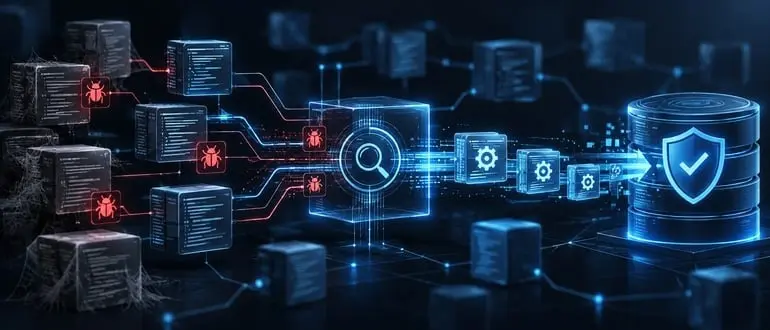
Traditional DevSecOps pipelines, built for human-paced iteration cycles, are currently buckling under the sheer volume of AI-generated code flooding into production environments. The consequences of this velocity mismatch are already manifesting clearly across the enterprise landscape, characterized by an exponential rise in production incidents, critical vulnerabilities, and unpredictable software behavior traceable directly to unvetted or under-tested AI contributions.
Enter Tricentis, a global leader in automated software testing solutions, with its aggressive new initiative: Tricentis Transform. Designed to bridge the widening chasm between rapid code generation and rigorous quality assurance, Tricentis Transform introduces a suite of advanced artificial intelligence capabilities aimed at embedding intelligent testing directly into the fabric of software development.
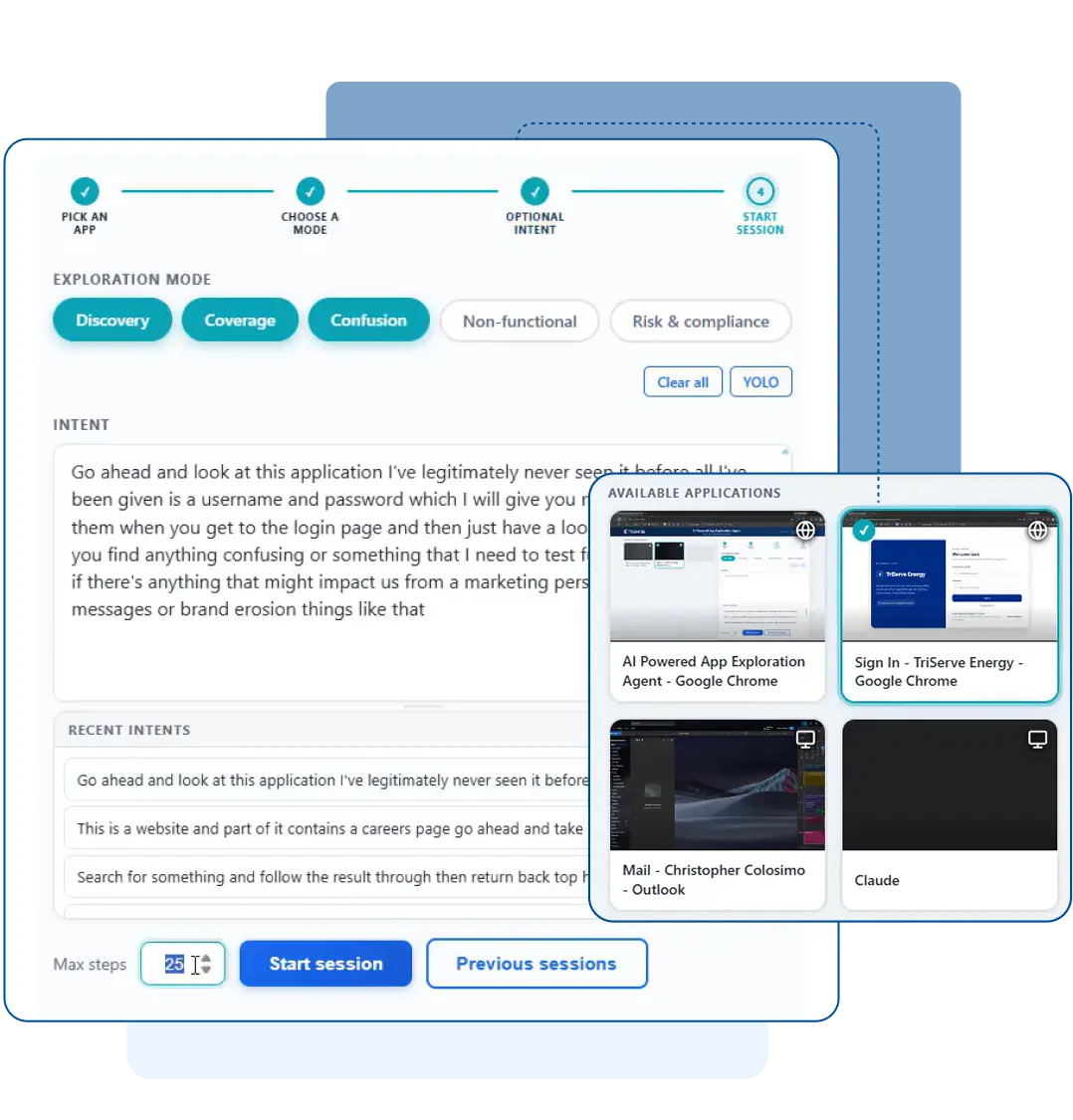
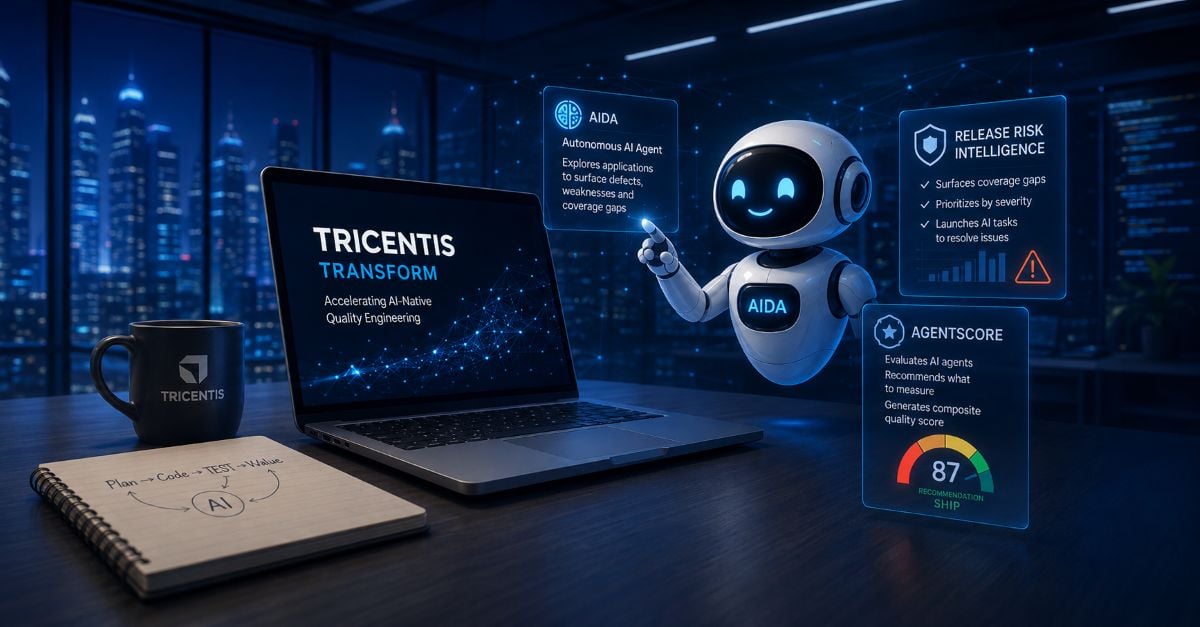
At the center of this initiative is Aida, an autonomous AI agent engineered to navigate web and Windows desktop applications natively, hunting down defects, structural weaknesses, and edge-case coverage gaps without the traditional overhead of manual script creation. Complementing Aida are Release Risk Intelligence, a context-aware risk prioritization engine, and AgentScore, an evaluation framework designed to benchmark and score the real-world behavior of enterprise AI agents.
This strategic technological leap follows closely on the heels of Tricentis’s acquisition of Tabnine—a critical move that integrated a specialized knowledge graph into the Tricentis ecosystem. By marrying rich contextual data from automated testing platforms with advanced graph-based relationship mapping, Tricentis is positioning itself at the forefront of the "agentic enterprise," where AI systems build, review, and test software autonomously. This report provides an in-depth analysis of the Tricentis Transform initiative, the underlying technology driving these innovations, and the broader implications for the future of software engineering.
Detailed Chronology & Technological Breakthroughs
The genesis of the Tricentis Transform initiative represents a natural maturation of Tricentis’s long-term roadmap, accelerating from traditional automated script generation into true autonomous, agent-driven quality assurance.
The Strategic Foundation: The Tabnine Acquisition
To understand the technological sophistication underpinning Aida and the broader Tricentis Transform ecosystem, one must examine the company’s acquisition of Tabnine. Tabnine brought to Tricentis a powerful capability: a sophisticated knowledge graph capable of mapping intricate relationships between disparate application components, libraries, APIs, and runtime environments.
In traditional software testing, AI models often struggle with hallucinations or a lack of contextual awareness, resulting in brittle scripts and false positives. By integrating Tabnine’s knowledge graph framework, Tricentis has equipped its AI agents with a comprehensive, deep-domain understanding of how software architectures are assembled. When an AI agent evaluates an application component, it does not do so in a vacuum. Instead, it leverages the deep contextual insights uniquely provided by an enterprise-grade testing platform. This foundational architecture enables AI agents to execute tasks—such as identifying architectural drift, spotting security vulnerabilities, and running validation routines—with unprecedented reliability.
Meet Aida: The Autonomous Application Explorer
Historically, achieving comprehensive test coverage required DevSecOps teams to spend countless hours authoring, maintaining, and updating automated test scripts. As user interfaces evolved and applications underwent rapid, continuous deployment, these scripts frequently broke, creating a perpetual maintenance debt that drained engineering resources.
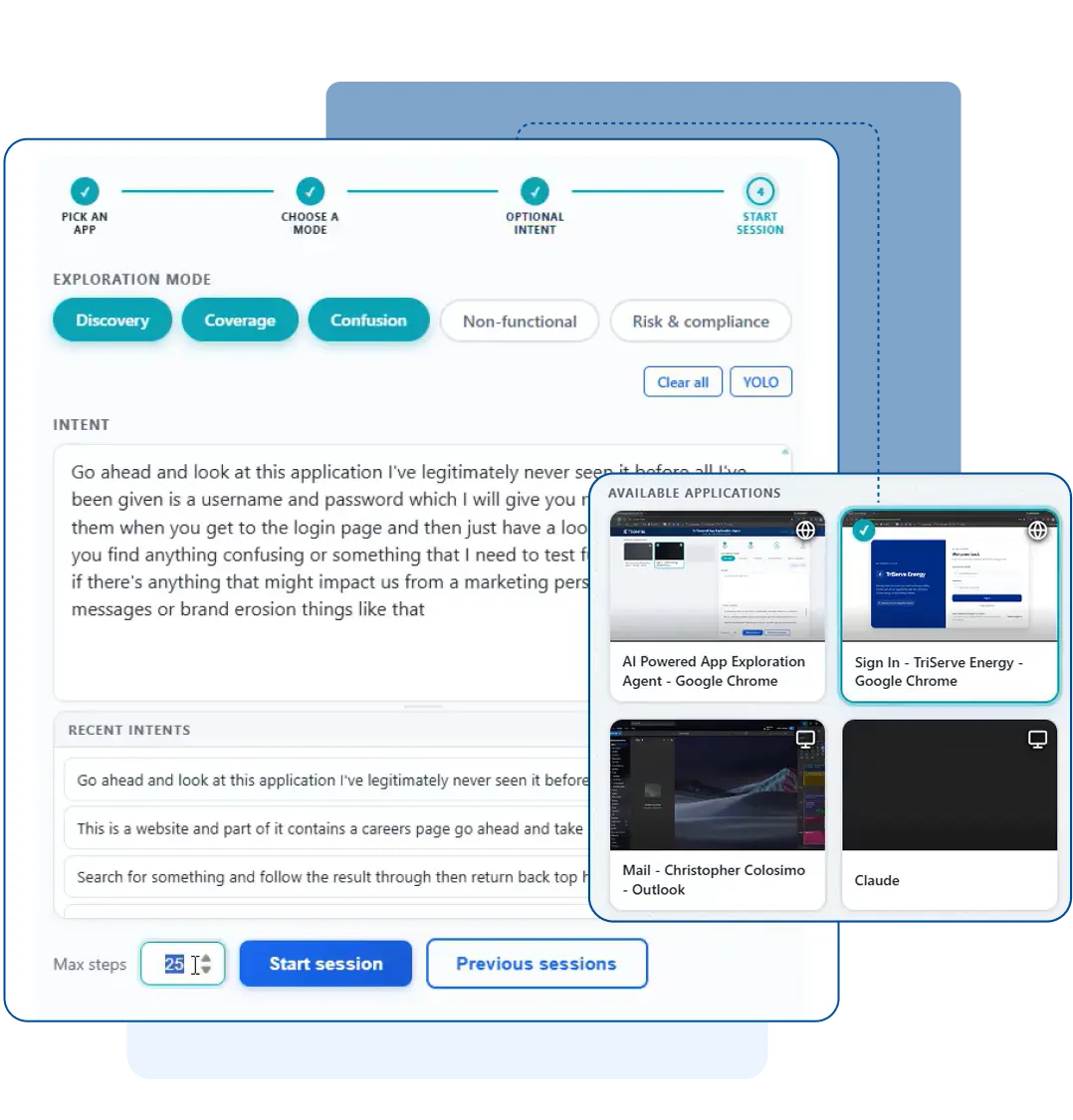
Aida shatters this paradigm. Operating as an autonomous AI agent, Aida actively explores both modern web applications and legacy Windows desktop environments much like a human user or penetration tester would. Crucially, Aida achieves this without requiring engineers to write a single line of test script.
- Autonomous Navigation: Aida interacts dynamically with UI elements, fills out forms, navigates workflows, and probes input fields to map out application behavior.
- Defect Discovery: By observing state changes and response behaviors across complex execution paths, Aida surfaces hidden defects, performance bottlenecks, layout flaws, and potential security weaknesses.
- Frictionless Deployment: Because Aida does not rely on hardcoded script locators, it adapts organically to UI changes, dramatically reducing the test maintenance burden for development teams.
Release Risk Intelligence: Context-Aware Prioritization
As development cycles compress into continuous delivery loops, knowing what to test and when a release is genuinely ready for production has become a monumental challenge. Traditional reporting tools often flood engineering teams with overwhelming volumes of raw test data, obscuring critical signals amidst the noise.
Tricentis addresses this through its upcoming Release Risk Intelligence capability. This tool goes beyond basic pass/fail metrics by actively analyzing release-scoped coverage gaps across the entire project lifecycle.
- Severity-Based Prioritization: The system evaluates discovered flaws and prioritizes risks based on their potential business impact and severity.
- Context-Driven Automation: Informed directly by the rich contextual metadata captured within the automated Tricentis testing platform, Release Risk Intelligence can autonomously launch targeted AI tasks to investigate, isolate, or even remediate specific issues before they escape into staging or production.
AgentScore: Benchmarking the Behavior of Autonomous Agents
As organizations increasingly deploy autonomous AI agents to handle complex workflows—ranging from code generation to automated testing—a new governance challenge emerges: How can enterprises trust the software-writing and software-testing agents they deploy?
To answer this question, Tricentis is introducing AgentScore. Analogous to credit scores or security ratings, AgentScore is an evaluation tool designed to measure, analyze, and grade the behavior of AI agents operating within real-world enterprise workflows.
- Behavioral Observation: AgentScore monitors how AI agents perform under operational stress, analyzing their decision-making processes, accuracy, and error rates.
- Actionable Recommendations: The tool provides organizations with data-backed recommendations on what operational metrics should be actively tracked for specific agent classes.
- Composite Quality Scoring: AgentScore generates comprehensive quality scores accompanied by definitive governance recommendations—whether to review, block, or ship the agent-generated output, thereby providing a vital guardrail for enterprise automation.
Supporting Context & Metrics: The AI Code Deluge
To fully appreciate the urgency behind Tricentis Transform, one must examine the macroeconomic and technical pressures currently reshaping the software development landscape. We are living through an era of exponential code proliferation.
The Metrics of the Code Deluge
According to recent industry telemetry and developer surveys, generative AI tools now account for a staggering percentage of newly committed code across open-source repositories and enterprise codebases alike:
- Studies indicate that developers utilizing AI-assisted coding tools complete tasks up to 55% faster than those relying solely on traditional methods.
- Consequently, over 40% of code in modern enterprise repositories is now either directly generated by or heavily assisted by artificial intelligence.
- However, this hyper-acceleration has not been met with a corresponding expansion in human QA capacity. While code generation velocity has scaled exponentially, human review capacity remains strictly linear.
The Production Incident Spike
This velocity mismatch has created a dangerous operational void. According to insights shared by David Colwell, Vice President of AI and Machine Learning at Tricentis, the industry is witnessing an exponential surge in production incidents, regressions, and critical outages directly traceable back to AI-generated code.
When developers—often under intense pressure to ship features quickly—accept AI-suggested code blocks without rigorous, deep-context validation, subtle bugs, logic flaws, and security vulnerabilities bypass the traditional testing gates. Traditional test automation suites, which were designed to catch known regression patterns rather than novel architectural hallucinations produced by LLMs, frequently fail to intercept these anomalies.
The result is a fragile production environment where software is deployed faster than it can be understood, leading to heightened operational risk, costly downtime, and eroding customer trust. To combat this, enterprise engineering leadership is realizing that the old paradigm of treating testing as a downstream, human-dependent checkpoint is no longer viable.
Official Statements & Industry Perspectives
The introduction of Tricentis Transform reflects a profound philosophical shift in how quality engineering must adapt to the age of autonomous systems. Industry leaders and Tricentis executives emphasize that the ultimate objective is not merely to make testing faster, but to fundamentally redefine its relationship with software creation.
"The overall goal of the Tricentis Transform initiative is to ultimately make AI application testing a more integrated element of building and deploying any application rather than being an entirely separate function. The end result should be higher quality applications that are inherently more secure."
— David Colwell, Vice President of AI and Machine Learning, Tricentis
Colwell elaborates on the technical necessity of context, noting that the integration of Tabnine’s knowledge graph assets has given Tricentis a distinct competitive edge. By feeding rich, platform-native testing data into AI models, Tricentis bridges the gap between raw code generation and structural verification.
"Armed with insights that are uniquely provided by a testing platform, AI agents are provided with the context needed to automate tasks much more reliably."
— David Colwell
Furthermore, industry analysts point out that as AI agents become more prevalent across the software development lifecycle (SDLC), the nature of software engineering oversight is undergoing a structural evolution. We are moving toward a multi-agent ecosystem where AI models generate code, other AI models review and test that code, and human engineers step in exclusively for high-level architectural governance and complex problem resolution.
Future Outlook: The Convergence of Creation and Testing
As we look toward the horizon of software engineering over the next decade, the trajectory of artificial intelligence points toward a fundamental blurring of boundaries between building and testing software.
The Rise of Agentic DevOps Workflows
Re-engineering DevOps pipelines for the age of artificial intelligence will not happen overnight. Organizations must navigate legacy technical debt, cultural resistance, and the steep learning curve associated with managing autonomous agents. However, the directional momentum is unmistakable.
In the future state of enterprise DevOps:
- Autonomous Creation and Validation Loops: Developers will define high-level intent, and teams of collaborative AI agents—some writing code, others executing exploratory testing via tools like Aida, and others verifying security posture—will execute the heavy lifting of development and validation in real time.
- Elimination of the Coverage Gap: By leveraging machine-speed testing agents that scale dynamically with AI code generation, enterprises will finally close the widening coverage gap that currently plagues modern pipelines.
- Redefining the Role of the QA Specialist: The emergence of tools like AgentScore signifies that human specialists will transition from repetitive script execution and manual bug hunting to high-level governance, agent auditing, and architectural oversight. Specialists will intervene only when complex, ambiguous challenges arise that truly warrant human expertise.
Conclusion
Tricentis Transform marks a pivotal milestone in the evolution of enterprise software quality assurance. By moving beyond static script-based automation and introducing autonomous capabilities like Aida, Release Risk Intelligence, and AgentScore, Tricentis is equipping organizations with the vital tooling needed to tame the AI code deluge.
Ultimately, the vision articulated by Tricentis—a future where the distinction between creating and testing code becomes so seamless as to be all but meaningless—represents the holy grail of modern software engineering. By ensuring that code is born secure, resilient, and thoroughly validated at machine speed, Tricentis Transform paves the way for a more reliable, autonomous digital future.