Executive Overview
The global ecommerce landscape is undergoing a structural paradigm shift. No longer defined solely by incremental user-interface updates or minor logistics optimizations, the industry is entering an era driven by autonomous intelligence, deeply integrated supply chains, and borderless transactional infrastructure.
This weekly intelligence briefing unpacks a sweeping wave of new product releases, platform integrations, and strategic acquisitions designed to equip modern merchants with enterprise-grade capabilities. From the rise of agentic AI—artificial intelligence systems capable of executing complex, multi-step workflows with minimal human oversight—to the widespread expansion of Merchant of Record (MoR) models, the rules of digital commerce are being rewritten.
Key highlights from this cycle include:
- The Proliferation of Agentic AI: Platforms like Runable, Ship.com, Helium 10, Atomic One, and LTK are deploying autonomous AI agents that do more than chat; they actively plan marketing campaigns, optimize Amazon store operations, manage supply chain nodes, and recover abandoned carts.
- Cross-Border Expansion & MoR Innovations: Emerging market specialist dLocal has launched dMoRe, while Paysafe has partnered with FastSpring to roll out robust Merchant-of-Record solutions, dismantling historical operational barriers for global enterprises and digital goods sellers alike.
- Logistics & Fulfillment Breakthroughs: ShipStation has bridged the gap between freight and parcel shipping via its new Less-Than-Truckload (LTL) capability, while OneRail and NVIDIA have introduced AI-powered delivery decisioning to minimize last-mile costs.
- Media-to-Commerce Convergence: YouTube Shopping has formally integrated Amazon into its affiliate ecosystem, and Broadpeak’s Click2Cart is turning connected television (CTV) advertising into a native point-of-sale channel.
This report provides a granular analysis of these developments, tracing how technology vendors are altering the daily operations of digital merchants worldwide.

Detailed Chronology of New Tools & Platform Updates
1. Global Payments & Merchant-of-Record (MoR) Frameworks
dLocal Launches dMoRe
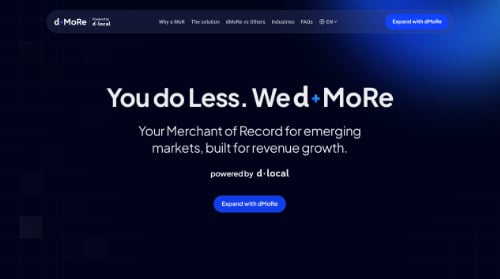
Emerging-market payments pioneer dLocal has officially introduced dMoRe, a dedicated Merchant of Record (MoR) service engineered to streamline global enterprise expansion. Operating across high-growth developing economies often plagued by complex regulatory, tax, and currency hurdles, dMoRe integrates dLocal’s direct payment rails with a comprehensive legal framework. By acting as the local seller of record, dMoRe enables businesses to leverage established banking partnerships, localized alternative payment methods (APMs), and dedicated compliance teams through a single, unified integration.
Paysafe and FastSpring Partner on MoR Solution
In a parallel move highlighting the surging demand for simplified global compliance, Paysafe has teamed up with digital-goods MoR provider FastSpring. This strategic partnership yields a co-branded MoR solution tailored specifically for software, video games, AI applications, and digital-goods businesses. Powered by FastSpring’s robust backend infrastructure, the platform absorbs the administrative burdens of international commerce—including global tax calculation, collection, and remittance, localized payment compliance, and comprehensive chargeback management.
Affirm and Shopify Bring Shop Pay Installments to Australia
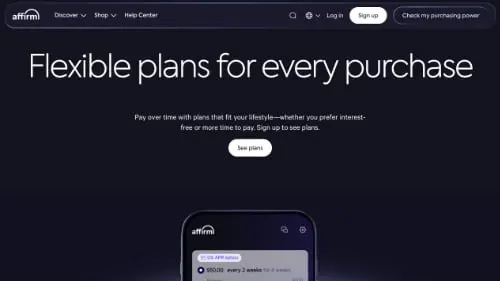
Buy-now-pay-later (BNPL) leader Affirm has deepened its global footprint through an expanded alliance with Shopify, rolling out Shop Pay Installments in the Australian market. Eligible Australian consumers can now seamlessly split their online purchases into manageable fortnightly or monthly payments. For Shopify merchants operating in the region, the feature can be activated directly through the administrative dashboard with minimal technical configuration, promising higher conversion rates and larger average order values.
Cashfree Payments Deploys Relay AI Agents
India-based payments innovator Cashfree Payments has launched Relay, an intelligent application designed to automate complex payment operations. Moving past traditional rule-based transaction routing, Relay utilizes specialized AI agents that operate under merchant supervision. Once authorized, these agents independently audit transaction logs, initiate targeted outreach to abandoned cart buyers, execute intelligent payment retries for failed card charges, and verify cash-on-delivery (COD) orders prior to warehouse dispatch.
2. The Dawn of Agentic AI and Intelligent Automation
LTK Brings Creator Marketing Into the Agentic Era
Creator commerce platform LTK has overhauled its brand marketing experience by introducing native agentic AI capabilities. Rather than forcing brands to manually configure influencer campaigns, the new platform allows marketing teams to converse with the system in natural language. LTK intelligence assists in conceptualizing campaign strategies, identifying high-affinity creators, launching performance programs, and executing iterative optimizations. Operating proactively in the background, the system continuously analyzes market trends to surface emerging opportunities and recommend real-time actions.
Ship.com Introduces AI Shipping Manager and MCP Integration
Logistics provider Ship.com has announced a two-pronged technological release: Ship AI, a proactive shipping manager built for online sellers, and a Model Context Protocol (MCP) integration. While Ship AI autonomously navigates shipping bottlenecks and monitors carrier performance, the Ship.com MCP connector allows developers and merchants to embed enterprise shipping capabilities directly into external AI workspaces like Anthropic’s Claude, effectively ushering in native agentic commerce workflows.
Helium 10 and Atomic One Automate Amazon Storefronts
Amazon seller tools are experiencing a radical shift toward automation. Helium 10 (a Pacvue company) has launched Helium, an AI automation platform that acts as a digital co-pilot for Amazon merchants. The AI agent actively diagnoses listing problems, identifies keyword opportunities, and recommends tactical adjustments in real time. Similarly, Atomic One has debuted an autonomous agent system designed to manage daily Amazon store operations—encompassing automated advertising adjustments, inventory rebalancing, dynamic pricing, and search ranking protection. Both platforms have incorporated MCP connectors, enabling sellers to query their proprietary store metrics using plain language across major generative AI engines.
Runable Raises $21M Series A to Power SMB Autonomous Operations
Runable, an emerging AI agent platform designed to run small businesses, has closed a $21 million Series A funding round co-led by Susquehanna Venture Capital and Nexus Venture Partners. Runable’s software architecture is engineered to autonomously build, operate, and scale business operations. From executing multichannel marketing campaigns and monitoring competitor sentiment to optimizing content for search and AI recommendation engines, Runable aims to function as an autonomous administrative engine for lean business teams.
3. Supply Chain, Logistics, and Fulfillment Innovations
ShipStation Integrates Less-Than-Truckload (LTL) Freight
In its first major product integration since the merger of Auctane and WWEX Group into ShipStation Global, ShipStation has successfully unified parcel and freight logistics within a single dashboard. Small and mid-sized merchants utilizing the platform can now access real-time Less-Than-Truckload (LTL) rate quotes, book heavyweight freight shipments, and track palletized cargo using the exact same workflow previously reserved for lightweight parcels.
OneRail and NVIDIA Launch OmniSTAR
Last-mile orchestration platform OneRail has partnered with NVIDIA to introduce OmniSTAR, an AI-powered delivery decisioning platform. Utilizing NVIDIA’s advanced optimization technology, OmniSTAR empowers enterprise retailers, wholesalers, and distributors to evaluate every available fulfillment channel for every order—spanning owned delivery fleets, crowdsourced couriers, and traditional postal carriers—to select the optimal mix of speed and cost in real time.
Blue Yonder Expands Cognitive Solutions Portfolio
Supply chain technology giant Blue Yonder has unveiled sweeping retail enhancements within its Cognitive Solutions portfolio, directly targeting stockouts and reverse-logistics friction. The updates forge tighter operational alignment across demand forecasting, inventory planning, order management, and customer service desks. By embedding predictive intelligence directly into order management networks, Blue Yonder gives retailers unprecedented visibility to mitigate expensive supply chain disruptions before they impact the end consumer.
Ordoro and TeamCentral Expand Integration Ecosystem
Order management system Ordoro has entered a strategic partnership with software integration specialist TeamCentral. By combining Ordoro’s robust order, inventory, and multi-channel fulfillment engine with TeamCentral’s no-code data automation connectors, merchants gain exceptional flexibility to weave bespoke, legacy, and industry-specific software applications seamlessly into their core technology stack.

4. Marketplace Apps, Retail Media, and Creator Economy
YouTube Shopping Integrates Amazon Affiliate Program
In a monumental development for the creator economy, Amazon has officially joined the YouTube Shopping Affiliate Program. U.S.-based content creators can now natively tag Amazon products within their short-form videos, long-form uploads, and live-streaming sessions, earning direct commissions on resulting transactions. Creators can utilize the product picker tool within YouTube Studio or activate auto-tagging features, allowing YouTube’s algorithms to automatically identify and link eligible Amazon merchandise from recent uploads.
Nitro Commerce Launches Prompt-Based App Builder for Shopify
Ecommerce acceleration platform Nitro Commerce has introduced Nitro Apps, a disruptive tool that enables Shopify merchants to construct private backend applications using simple text prompts. Rather than relying on rigid pre-built plugins or hiring custom development agencies, merchants describe their operational requirements in plain English, and the platform generates, tests, and installs the private application directly onto their Shopify backend while preserving complete code ownership.
Broadpeak Debuts Click2Cart for Shoppable CTV Advertising
Streaming and advertising technology provider Broadpeak has revolutionized connected television (CTV) advertising with the commercial release of Click2Cart. Updating the company’s legacy interactive tool, Click2Cart allows television viewers to add advertised products directly to their digital shopping carts simply by clicking their television remote control during a commercial break. This eliminates the traditional friction of mobile-device second-screen transitions and supplies advertisers with verifiable, real-time conversion metrics.
Supporting Context & Industry Metrics
The convergence of these technologies reflects broader macro-economic and consumer behavior shifts across the global digital economy:

- The Cross-Border Imperative: According to recent market analysis, cross-border ecommerce continues to outpace domestic growth rates, yet operational friction—such as localized tax compliance and localized payment failures—accounts for up to 30% of cart abandonment in emerging regions. The rollout of solutions like dMoRe and FastSpring-Paysafe directly addresses these systemic losses.
- The AI Agent Productivity Multiplier: Venture capital deployment into agentic workflows (exemplified by Runable’s $21M round and Ship.com’s MCP integration) underscores a market-wide weariness with superficial chatbots. Merchants are demanding software that executes work autonomously rather than merely offering advice.
- Omnichannel Media Convergence: The integration of Amazon into YouTube Shopping and the advent of Broadpeak’s Click2Cart demonstrate that traditional boundaries separating entertainment, social media, and transactional checkout are rapidly dissolving. Shoppable media is no longer an experimental channel; it is becoming the default digital storefront.
Official Statements and Industry Commentary
Industry executives emphasized the transformational nature of this product cycle during recent briefings:
- On Emerging Market Scaling: Representatives from dLocal noted that “removing the operational and legal friction between global enterprises and emerging economies requires more than just payment gateways; it demands an integrated, localized legal and compliance architecture that functions invisibly beneath the checkout layer.”
- On Supply Chain Resilience: Discussing the integration of LTL freight within ShipStation, leadership from ShipStation Global stated that “merchants should not have to juggle disparate software stacks to ship a t-shirt versus a pallet of heavy goods. Unifying parcel and freight into a single workflow represents the next evolution of accessible logistics for growing brands.”
- On Agentic Commerce: Commenting on the integration of AI models into daily retail workflows, tech analysts point out that protocols like Model Context Protocol (MCP) are serving as the universal translators that allow proprietary merchant databases to converse fluently with generative AI applications, bridging the gap between unstructured conversation and structured business execution.
Future Outlook: What to Watch in Q4 and Beyond
As the fourth quarter approaches—historically the most critical sales period for global merchants—several forward-looking trends will dictate market winners and losers:
- Mainstream Adoption of Model Context Protocol (MCP): With Ship.com, Helium 10, and Atomic One adopting MCP connectors, expect a rapid proliferation of customized, AI-driven assistants capable of executing inventory adjustments, advertising budget shifts, and customer support interventions across multiple platforms simultaneously.
- Consolidation of Merchant-of-Record Services: As regulatory scrutiny increases around international value-added tax (VAT), digital goods taxation, and cross-border consumer protection, software vendors will increasingly bundle MoR capabilities directly into standard payment gateways and platform subscriptions.
- The Rise of Zero-Click Checkout via CTV: Broadpeak’s Click2Cart points toward a future where passive media consumption is instantaneously actionable. As streaming platforms refine their commerce integrations, advertising budgets will aggressively pivot toward interactive, shoppable video formats.
Digital merchants must remain agile, auditing their current software stacks to evaluate whether their existing vendor ecosystems are leveraging agentic automation and borderless transactional infrastructure. Those who successfully integrate these next-generation tools will be best positioned to capture market share in an increasingly automated, hyper-connected global economy.