Executive Overview
In the high-stakes arena of B2B and SaaS (Software-as-a-Service) entrepreneurship, founders frequently obsess over immediate survival metrics: monthly recurring revenue (MRR) growth, churn rates, and burn multiples. However, looking back from the vantage point of immense commercial success, veteran founders often realize that their most agonizing roadblocks were not unavoidable market failures, but entirely preventable omissions.
Unlike transactional mistakes—which serve as fleeting pedagogical moments before a team pivots and moves on—strategic regrets linger. In a recurring revenue model, a single strategic shortcut taken today compounds negatively over years, quietly shaving millions off a company’s eventual Annual Recurring Revenue (ARR). Whether it is under-hiring for critical leadership roles, failing to secure physical proximity to enterprise clients, or mismanaging venture capital dilution, these sins of omission ultimately cost companies their market dominance.
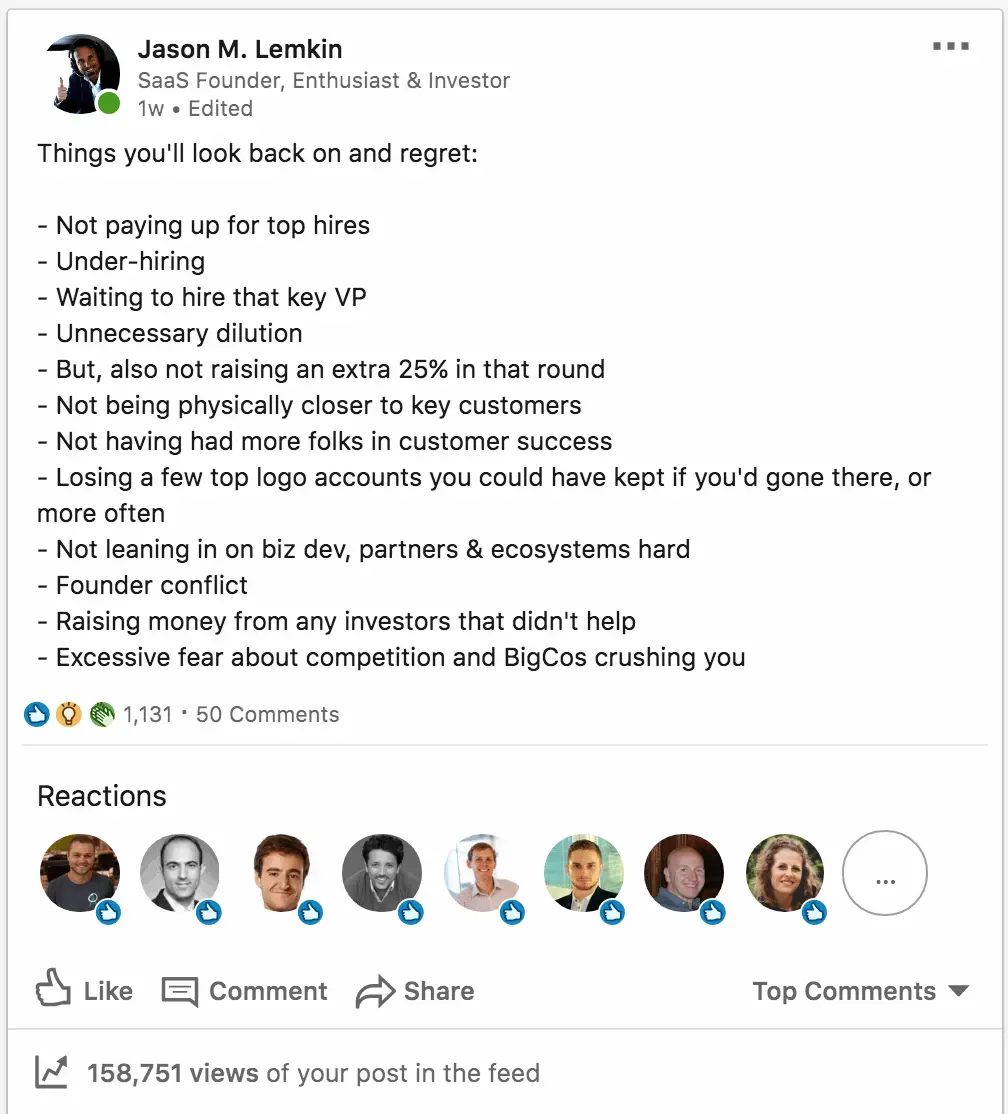
This comprehensive analysis deconstructs the twelve most common regrets haunting successful B2B veterans. By examining these systemic missteps, modern entrepreneurs can pivot from reactive firefighting to proactive, compounding execution—securing a resilient foundation that pays explosive dividends one to five years down the line.
Detailed Chronology: The Anatomy of a SaaS Regret
The lifecycle of a high-growth B2B startup is characterized by distinct developmental phases, each carrying its own unique set of strategic pitfalls. Understanding when these missteps typically occur helps contextualize their long-term damage.
Phase 1: The Foundation and Early Team Building (0–$1M ARR)
During the nascent stages of a startup, founders are often bootstrapping or operating on lean seed funding. This environment breeds a scarcity mindset that frequently contaminates structural decision-making.
- Regret #1 & #2: Not Paying Up for Top Hires and Under-Hiring
The temptation to save capital by hiring junior individual contributors instead of seasoned executives is a classic trap. While a junior content marketer commands a lower direct compensation than a seasoned VP of Demand Generation, the ROI calculation is deeply flawed. A top-tier VP who immediately commands $1 million in pipeline generation is vastly cheaper per unit of value than a junior hire who generates none. Under-hiring for core functions hamstrings the organization right when it needs authoritative ownership. - Regret #3: Waiting to Hire Key VPs
Procrastinating on executive hires under the guise of "conserving runway" creates compounding technical and operational debt. Delaying the hire of a VP of Engineering means technical debt festers unchecked, leading to missed enterprise deals when critical features fail to ship. Postponing a VP of Customer Success risks quietly bleeding enterprise accounts to competitors. Successful founders emphasize that if you can cover a seasoned leader’s base salary, bringing them on early is virtually always accretive. - Regret #10: Unresolved Founder Conflict
While minor friction among co-founders is normal, allowing a toxic or uncommitted founder to remain on the team inflicts systemic damage. Toxic employees erode team morale; toxic founders threaten the entire mission and paralyze company momentum. Failing to address these rifts decisively creates a lost era where the competition surges ahead.
Phase 2: Capital Allocation and Fundraising (The Scale-Up Years)
As startups transition from initial traction to aggressive expansion, managing the cap table and financial runway becomes an exercise in strategic precision.
- Regret #4: Unnecessary Dilution
In booming market cycles, founders frequently raise capital simply because it is available. Taking an unneeded seed round—especially at a suboptimal valuation—results in painful, permanent dilution. Founders often look back and realize those early equity percentages could have been conserved or traded for far greater operational impact. - Regret #5: Being Too Cheap During VC Rounds (Failing to Raise an Extra 25%)
Conversely, the flip side of unnecessary dilution is chronic under-capitalization. Roughly two-thirds of high-growth B2B companies ultimately require 25% more capital than their initial projections suggest. Founders who scrape by on razor-thin runways often find themselves out of time when market conditions tighten. Securing that extra cushion—and treating it as an untouchable emergency reserve—provides the necessary 3 to 9 months of survival runway. - Regret #11: Taking Money from Non-Value-Add Investors
The cap table strictly aggregates to 100%. Accepting capital from investors who offer prestigious branding or clever tweets but zero operational assistance is a squandering of precious equity. Every percentage point on the cap table must actively yield dividends, strategic introductions, or crisis management support.
Phase 3: Market Execution, Customer Retention, and Ecosystems ($1M to $50M+ ARR)
Once product-market fit is established, the battle shifts to customer retention, geographic expansion, and ecosystem dominance.
- Regret #6: Neglecting Physical Proximity to Key Customers and Partners
In an era dominated by Zoom and remote work, first-time founders often abandon the airport. Competitors who consistently jump on jets to conduct face-to-face Quarterly Business Reviews (QBRs) routinely win the enterprise deals. Furthermore, anchoring a physical field office or placing a General Manager next door to a massive "whale" account dramatically increases retention, upsells, and organic referrals. - Regret #7 & #8: Underserving Customer Success and Losing "Logo" Accounts
Many startups over-index on acquisition sales while starving their Customer Success (CS) and Sales Engineering (SE) teams. In B2B recurring revenue models, the initial sale is merely the opening chapter. Losing blue-chip logos like Google, Salesforce, or Shopify inflicts a triple blow: lost revenue, a damaged brand profile, and the forfeiture of a decade’s worth of downstream referrals. These elite accounts demand dedicated overstaffing and executive-level attention. - Regret #9: Slow-Walking Business Development and Partner Ecosystems
Building integrations for major platforms (such as Salesforce, Slack, or Shopify) can feel frustratingly futile when initial lead generation flatlines. However, market winners play the long game. Appointing a dedicated Head of Business Development at the earliest hint of platform traction allows companies to box out competitors and embed themselves permanently into winning ecosystems. - Regret #12: Paralyzing Fear of Big Competitors
Startups frequently obsess over competitor press releases rather than doubling down on their own operational strengths. While brand equity ultimately dominates mass market adoption, agility is a startup’s primary strategic weapon. An agile engineering team capable of shipping rapid iterations, features, and targeted integrations can consistently outmaneuver bureaucratic enterprise incumbents over time.
Supporting Context & Metrics: The Compounding Nature of B2B Regrets
To fully grasp why these twelve regrets carry such devastating long-term weight, one must analyze the mathematical reality of recurring revenue models.

In a transactional business, a missed opportunity is a localized loss. In SaaS, losses compound across multi-year customer lifespans. Consider the following metrics and strategic realities:
- The Cost of Churn vs. Acquisition: Industry benchmarks consistently demonstrate that acquiring a new customer costs anywhere from five to twenty-five times more than retaining an existing one. Failing to staff adequate Customer Success representation (targeting a baseline of roughly one CS professional per $500K in ARR) directly accelerates voluntary churn.
- The Runway Buffer: Empirical data from venture funds like SaaStr indicates that roughly 66% of early-stage B2B startups experience cash crunches that outstrip their initial financial models. A failure to pad a venture round by an additional 25% is the leading structural cause of forced down-rounds or premature liquidations.
- The Value of Enterprise Logos: An enterprise "whale" logo does not merely contribute to top-line ARR; it acts as a primary marketing validation point. Losing a marquee customer dismantles social proof, directly suppressing inbound conversion rates for years.
Official Insights & Industry Perspectives
Prominent venture capitalists and B2B SaaS operators emphasize that scaling a recurring revenue enterprise is fundamentally an exercise in risk mitigation and long-term vision.
Industry veterans note that the transition from a founder-led sales motion to an executive-led organization is the graveyard of many promising startups. Founders who successfully scale point out that delegation is not merely about offloading tasks—it is about installing domain experts who possess the pattern recognition to avoid costly blind spots.
Furthermore, ecosystem strategies require an unwavering commitment. Enterprise platforms do not reward tentative participation. Leaders who have successfully exited multi-million-dollar B2B firms stress that partnership channels take 18 to 24 months to mature; pulling out prematurely guarantees that a more patient competitor will capture the ecosystem’s network effects.
Future Outlook: Building a Regret-Proof SaaS Enterprise
As the technological landscape evolves—accelerated by breakthroughs in artificial intelligence and shifting enterprise procurement habits—the velocity of business will only increase. However, human strategic blind spots remain remarkably consistent.
For modern B2B founders navigating the journey from seed stage to market leadership, the path forward requires radical introspection. Avoid the comfort of superficial cost-cutting. Do not under-hire executive leadership to save short-term cash; do not starve customer success to hit arbitrary quarterly quotas; and refuse to stay tethered to the office while competitors are booking flights to solidify enterprise relationships.
By systematically addressing these twelve historical regrets, entrepreneurs can step away from reactive firefighting and build resilient, agile, and compounding recurring revenue engines designed to dominate their respective markets for decades to come.