Enterprise Database Architecture Strategy: Navigating the Trade-Offs Between Self-Managed PostgreSQL and Managed Cloud Services

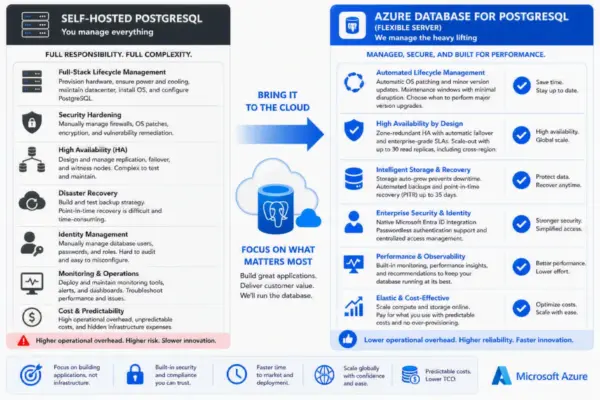
Executive Overview For enterprise technology executives and principal architects, selecting the optimal operating model for production database workloads represents one of the most consequential decisions in modern platform engineering. As organizations increasingly standardize on PostgreSQL—the open-source relational database renowned for its compliance, extensibility, and rich ecosystem—the primary strategic dilemma shifts from which engine to adopt…

Read Full News

Microsoft Broadens Enterprise AI Footprint with General Availability of Next-Gen Foundry Platform and OpenAI’s GPT-5.6 Model Family

Executive Overview The enterprise artificial intelligence landscape is undergoing a structural pivot. The era of speculative experimentation—characterized by standalone chatbots and isolated pilot programs—is rapidly yielding to autonomous, action-oriented "agentic" architecture. Today, Microsoft announced a pivotal operational milestone in this transition: the general availability of major infrastructure updates across its flagship enterprise environment, Microsoft Foundry….

Read Full News

Architectural Synergy Drives Enterprise Value: Independent Study Reveals 331% ROI for Microsoft Azure Databricks

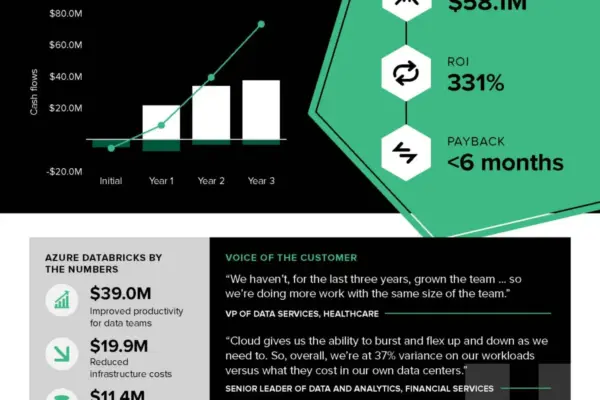
Executive Overview In an era where enterprise data volumes are expanding exponentially and leadership teams face intense pressure to monetize Artificial Intelligence (AI) investments, cloud infrastructure decisions have evolved from technical choices into core financial strategies. Enterprise IT leaders are scrutinizing cloud vendors not merely on feature availability, but on measurable financial returns, system performance,…

Read Full News

Architectural Shift in Domain AI: How AT&T Built Open Telco 2.0 Using Managed Compute, Open Models, and Heterogeneous Silicon

1. Executive Overview The global telecommunications industry faces a unique technological paradox. While standard foundation artificial intelligence models demonstrate impressive general capabilities, they consistently struggle when deployed inside specialized enterprise environments. Modern telecom infrastructure relies on a vast, intricateweb of domain-specific standards, proprietary protocols, legacy hardware operational logs, and strict regulatory frameworks—nuances that generic off-the-shelf…

Read Full News

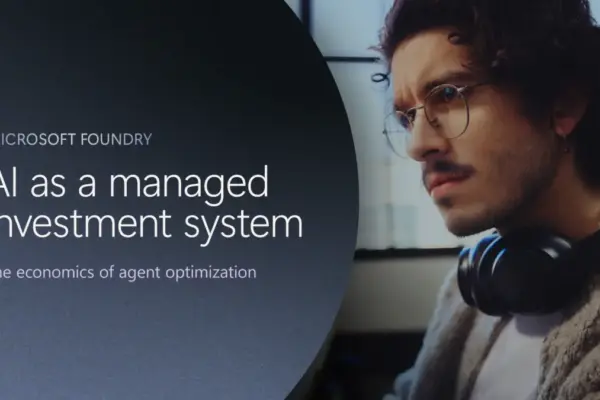
The Microeconomics of Autonomous AI: Enterprise Strategies for Runtime Agent Optimization

Executive Overview As enterprise software transitions from single-turn Large Language Model (LLM) queries to complex autonomous agents, enterprise technology leaders face an unprecedented infrastructure challenge: the silent exponential inflation of artificial intelligence operational expenditure. Unlike early generative AI implementations—which operated on a predictable, linear request-and-response model—modern agentic architectures rely on iterative loops. A single business…

Read Full News

Enterprise Data Architecture in the AI Era: Microsoft Databases Recognized in 2026 PeerSpot Tech Leader Rankings

Executive Overview As enterprise software architectures pivot toward artificial intelligence and high-throughput real-time processing, the underlying data layer has emerged as the critical bottleneck—and differentiator—for modern digital enterprises. PeerSpot, one of the technology industry’s premier peer-to-peer review platforms for enterprise software, officially released its 2026 Customer Choice and Tech Leader recognitions. Microsoft’s core data platform…

Read Full News

The Collapse of the Patch Window: How AI and Cloud Complexity Are Forcing a Paradigm Shift in Enterprise Cybersecurity

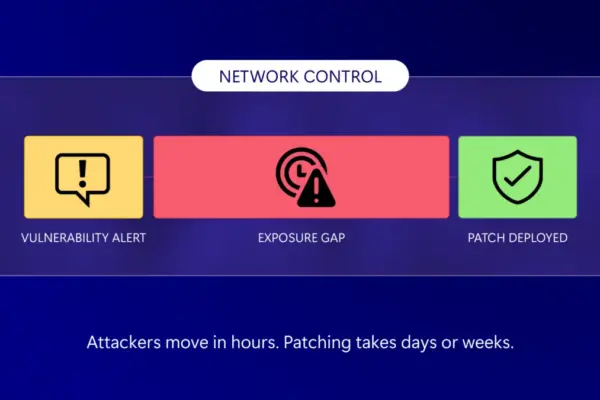
Executive Overview For decades, the foundation of enterprise cybersecurity rested upon a predictable lifecycle: a software vulnerability would be publicly disclosed, enterprise security teams would evaluate their organizational exposure, patches would be regression-tested in staging environments, and system administrators would schedule maintenance windows to deploy fixes into production. This traditional cadence operated under the fundamental…

Read Full News

Enterprise Cloud Strategy Reaches AI Crucible: Analyzing Microsoft’s Leadership in Gartner’s 2026 Cloud-Native Assessment

Executive Overview In an evaluation of enterprise infrastructure capabilities, Gartner® has named Microsoft a Leader in its 2026 Magic Quadrant™ for Cloud-Native Application Platforms (CNAPs). The report—authored by analysts Mukul Saha, Alex Coqueiro, Prasanna Lakshmi Narasimha, and Richard Watson, and published on August 3, 2026—marks Microsoft’s third consecutive year in the Leaders quadrant. While vendor…

Read Full News

The Digital Twin of Global Computing: Inside Azure’s AI-Powered Reliability Intelligence Engine

Executive Overview In the sprawling ecosystem of modern hyperscale computing, the fundamental limit on cloud reliability is no longer a lack of monitoring tools—it is an overwhelming excess of raw data. As public cloud platforms scale to global proportions, the sheer volume of telemetry generated per second has outpaced human cognitive capacity. Operators navigating dozens…

Read Full News

The Agentic Shift: Microsoft Captures Leadership Position in Gartner’s Inaugural 2026 Magic Quadrant for AI-Augmented Code Modernization Tools

Executive Overview In a milestone validation of enterprise software evolution, Gartner, Inc. has named Microsoft a Leader in its inaugural 2026 Magic Quadrant™ for AI-Augmented Code Modernization Tools. Published on August 3, 2026, the landmark report evaluates an emerging market category born out of a critical enterprise necessity: transforming millions of legacy codebases into cloud-native,…

Read Full News