Engineering Hyperscale Resiliency: How Microsoft Unified Its Global Datacenter Security Operations Layer

Executive Overview As global demand for cloud computing and artificial intelligence accelerates, the physical infrastructure underlying the modern digital economy has grown exponentially. At the core of this expansion is Microsoft’s global datacenter footprint, an intricate, hyper-distributed network of facilities housing critical compute, storage, and networking hardware. Securing these physical assets requires an unbroken operational…

Read Full News

Rethinking Cloud Availability: Why the "Three-Zone Default" Is Flawed Architecture in Microsoft Azure

Executive Overview Across enterprise IT organizations, cloud architects face a recurring operational dogma: when deploying mission-critical workloads on Microsoft Azure, production applications must automatically span three Availability Zones (AZs). While rooted in a desire for maximum fault tolerance, this blanket "three-zone everywhere" rule is increasingly recognized by principal engineers and hyperscale reliability teams as an…

Read Full News

Reinventing Enterprise Reliability: How Microsoft Azure is Reshaping Infrastructure Resiliency for the AI Era

Executive Overview In an era dominated by distributed microservices, hyper-scale cloud environments, and mission-critical artificial intelligence (AI) workloads, enterprise IT infrastructure has reached a watershed moment. Digital transformation is no longer a forward-looking strategy; it is an active baseline. However, as business-critical applications transition to hybrid and multicloud ecosystems and foundation models become deeply integrated…

Read Full News

Governing the Autonomous Enterprise: How Microsoft Foundry and AI Gateway Are Redefining the Financial Economics of AI Agents

Executive Overview As enterprise artificial intelligence transitions from isolated pilot programs into deeply integrated operational assets, organizations face an unprecedented operational dilemma: how to govern autonomous, multi-step AI systems that act and consume resources faster than traditional IT management frameworks can monitor them. Unlike legacy applications with deterministic resource footprints, agentic AI workflows make dynamic…

Read Full News

Microsoft Secures Top Positioning in 2026 Gartner Magic Quadrant for Container Management Amid Enterprise AI Shift

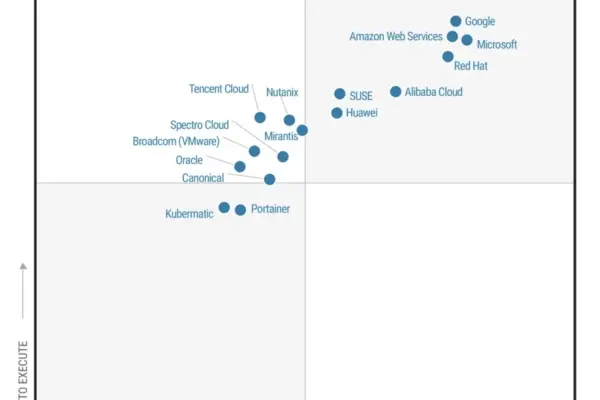
Executive Overview In a landmark recognition that highlights the shifting dynamics of enterprise infrastructure, Microsoft has been named a Leader in the 2026 Gartner® Magic Quadrant™ for Container Management. Notably, the tech giant was positioned furthest to the right on the "Completeness of Vision" axis, a metric evaluating a vendor’s strategic foresight, innovation pipeline, and…

Read Full News

Beyond the Chatbot: Microsoft and OpenAI Launch GPT-6 Astra in Microsoft Foundry to Drive the Next Era of Enterprise Agentic Automation

Executive Overview The landscape of enterprise artificial intelligence is undergoing a fundamental structural transition. The era dominated by basic conversational text generation, retrieval-augmented chatbots, and simple drafting assistants is rapidly yielding to a far more consequential phase: autonomous agentic execution. In a joint milestone that marks a major escalation in the enterprise AI arms race,…

Read Full News

The Systems Architecture of Enterprise AI: How Microsoft Azure’s Integrated Stack Redefines Public Cloud Leadership

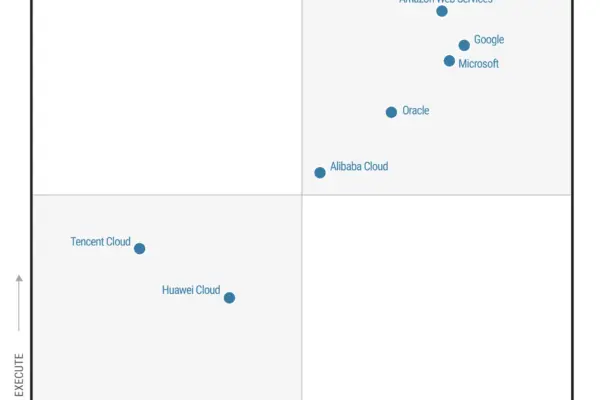
Executive Overview Enterprise artificial intelligence has reached a definitive tipping point. The era of isolated prototype testing, standalone large language model (LLM) benchmarking, and fragmented pilot projects has given way to complex, multi-model production environments. Today’s global organizations no longer evaluate cloud platforms solely on raw compute capacity or isolated model capabilities; instead, they require…

Read Full News

The Death of the Patch Window: How AI and Cloud Complexity Are Forcing a Paradigm Shift in Cybersecurity

Executive Overview For nearly three decades, corporate cybersecurity operated on a predictable, linear model: a software vulnerability was publicly disclosed, security operations teams assessed their exposure, engineers tested vendor-supplied fixes in staging environments, and patches were deployed during scheduled maintenance windows. This traditional workflow relied on a single fundamental premise—that enterprise defenders could move faster…

Read Full News

Strategic Database Architecture: Evaluating Self-Managed vs. Managed PostgreSQL in Enterprise Environments

Executive Overview In the contemporary enterprise software architecture landscape, PostgreSQL has cemented its position as the premier open-source relational database management system. Valued for its strict SQL compliance, extensibility, and robust ecosystem, PostgreSQL powers data platforms ranging from transactional microservices to massive enterprise data warehouses. However, as organizations standardize on PostgreSQL, technology leaders—including Chief Technology…

Read Full News

Enterprise AI’s Hidden Financial Wall: How Microsoft Foundry Rewrites the Economics of Autonomous Agents

Executive Overview As enterprise software transitions from static LLM interactions to complex, multi-turn autonomous agents, a quiet financial crisis is sweeping across corporate engineering teams. The default architecture born in the prototyping lab—routing every query to the largest available frontier model with massively inflated context windows—is colliding with the hard realities of enterprise operating margins….

Read Full News