Executive Overview
As enterprise artificial intelligence transitions from isolated pilot programs into deeply integrated operational assets, organizations face an unprecedented operational dilemma: how to govern autonomous, multi-step AI systems that act and consume resources faster than traditional IT management frameworks can monitor them. Unlike legacy applications with deterministic resource footprints, agentic AI workflows make dynamic runtime decisions. They call secondary tools, execute database queries, chain complex reasoning steps, and self-correct through retry loops—actions that can exponentially multiply token consumption within seconds.
To address the financial risks of ungoverned enterprise AI, Microsoft has detailed the final pillar of its Economics of Agent Optimization framework. Deployed across Microsoft Foundry and the Azure API Management AI Gateway, this enterprise-grade governance architecture shifts AI cost management from reactive, post-hoc billing analysis to proactive, request-path enforcement.
By combining real-time token rate limits, granular telemetry attribution, and an upcoming ROI calculation engine, Microsoft aims to enable IT and FinOps leaders to run enterprise agents not as unconstrained overhead, but as a tightly controlled, accountable investment portfolio.

       THE AGENT COST GOVERNANCE CYCLE

   ┌────────────────────────────────────────┐
   │             1. SEE SPEND               │
   │  Observability Signals & Attribution   │
   └───────────────────┬────────────────────┘
                       │
                       ▼
   ┌────────────────────────────────────────┐
   │            2. BOUND SPEND              │
   │   Request-Path Enforcement & Limits    │
   └───────────────────┬────────────────────┘
                       │
                       ▼
   ┌────────────────────────────────────────┐
   │           3. PROVE RETURN              │
   │  Business Outcome Tracking & ROI Dashboard │
   └───────────────────┬────────────────────┘
                       │
                       ▼
            [ Optimize / Scale / Retire ]
Detailed Chronology: The Evolution of Microsoft’s Agent Optimization Strategy
The release of Microsoft’s continuous governance controls marks the culmination of a four-part strategy designed to help enterprises scale agentic workloads while maintaining fiscal discipline.
+─────────────────────────────────────────────────────────────────────────+
|               THE THREE SPEEDS OF AGENT OPTIMIZATION                    |
+─────────────────────────────────────────────────────────────────────────+
|                                                                         |
|  1. RUNTIME (Milliseconds to Seconds)                                   |
|     • Model Routing & Dynamic Deployment Selection                      |
|     • Prompt Caching & Pay-as-you-go vs. Provisioned Spillovers         |
|                                                                         |
|  2. WORKFLOW (Days to Weeks)                                            |
|     • Context Engineering & State Management                            |
|     • Agent Optimizer & Hosted Tool Refinement                          |
|                                                                         |
|  3. CONTINUOUS GOVERNANCE (Ongoing)                                     |
|     • Real-Time Token Limits & Quotas (429 / 403 Controls)              |
|     • FinOps Tagging & Attribution                                      |
|     • Business Outcome ROI Engine                                       |
|                                                                         |
+─────────────────────────────────────────────────────────────────────────+
Phase 1: Foundational Systemic Decisions
The architecture began with establishing structural system choices on Microsoft Foundry. Organizations were guided through evaluating deployment footprints, balancing provisioned throughput against pay-as-you-go consumption models, and defining the operational boundaries necessary for multi-agent ecosystems.
Phase 2: Runtime Optimization
Focus turned to request-level mechanics. Operating on millisecond-to-second timelines, Microsoft introduced tools for dynamic model routing, load balancing across backends, and aggressive prompt caching. These capabilities reduced per-token unit costs by intercepting requests at runtime and directing them to the most cost-effective model suitable for the task.

Phase 3: Workflow and Context Engineering
Expanding the scope to operational windows of days and weeks, the strategy tackled compound token expansion over extended agent interactions. By optimizing state management, context compression, tool selection, and systemic memory retention, engineering teams minimized prompt bloat across multi-turn reasoning loops.
Phase 4: Continuous Spend Governance
The final phase introduces real-time spend control. Operating continuously in the background, this phase integrates token-level request throttling, tag-based financial allocation, and business-value tracking to ensure that autonomous agents remain within explicit financial boundaries throughout their operational lifespan.
Supporting Context & Metrics: Technical Architecture of Cost Control
Managing the financial footprint of autonomous agents requires a multi-layered infrastructure capable of observing, constraining, and evaluating consumption across heterogeneous AI models and tooling ecosystems.
                 REQUEST-PATH ENFORCEMENT LAYER

Incoming Request  ──► [ Azure API Management / AI Gateway ]
                             │
                             ├─► Check Token Rate / Cumulative Quota
                             │
            ┌────────────────┴────────────────┐
            ▼                                 ▼
   [ Exceeds Rate Limit ]            [ Exceeds Token Quota ]
            │                                 │
            ▼                                 ▼
    HTTP 429 Response                 HTTP 403 Response
  (Too Many Requests)                   (Forbidden)
1. Visibility and Attribution at the Edge
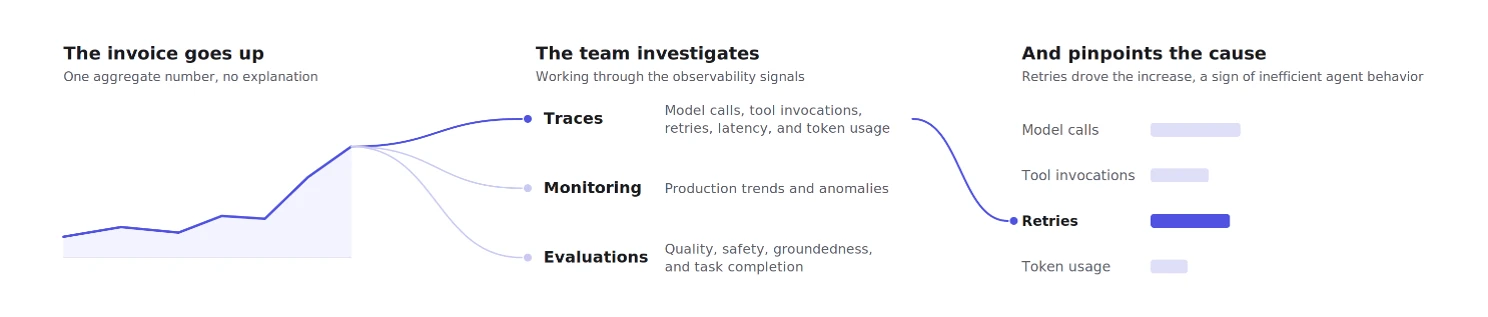
Aggregated enterprise bills obscure the operational context behind AI spend. A single line item on an invoice cannot convey whether cost surges were driven by legitimate customer demand, inefficient prompt engineering, recursive agent loops, or backend fallback triggers.
Microsoft Foundry addresses this opacity by attaching metadata directly to the operational pipeline:
- Project-Level Tagging: Foundry automatically appends project tags to underlying resource consumption. FinOps teams can filter Microsoft Cost Management data by project tags, mapping expenditure back to specific business units, applications, or regional teams. This tagging mechanism is currently available in preview for Azure-sold models, including Azure OpenAI.
- Gateway Telemetry Emission: At the edge, the Azure API Management AI Gateway emits token consumption metrics segmented by API endpoint, product tier, individual user identity, application subscription, gateway instance, and backend target.
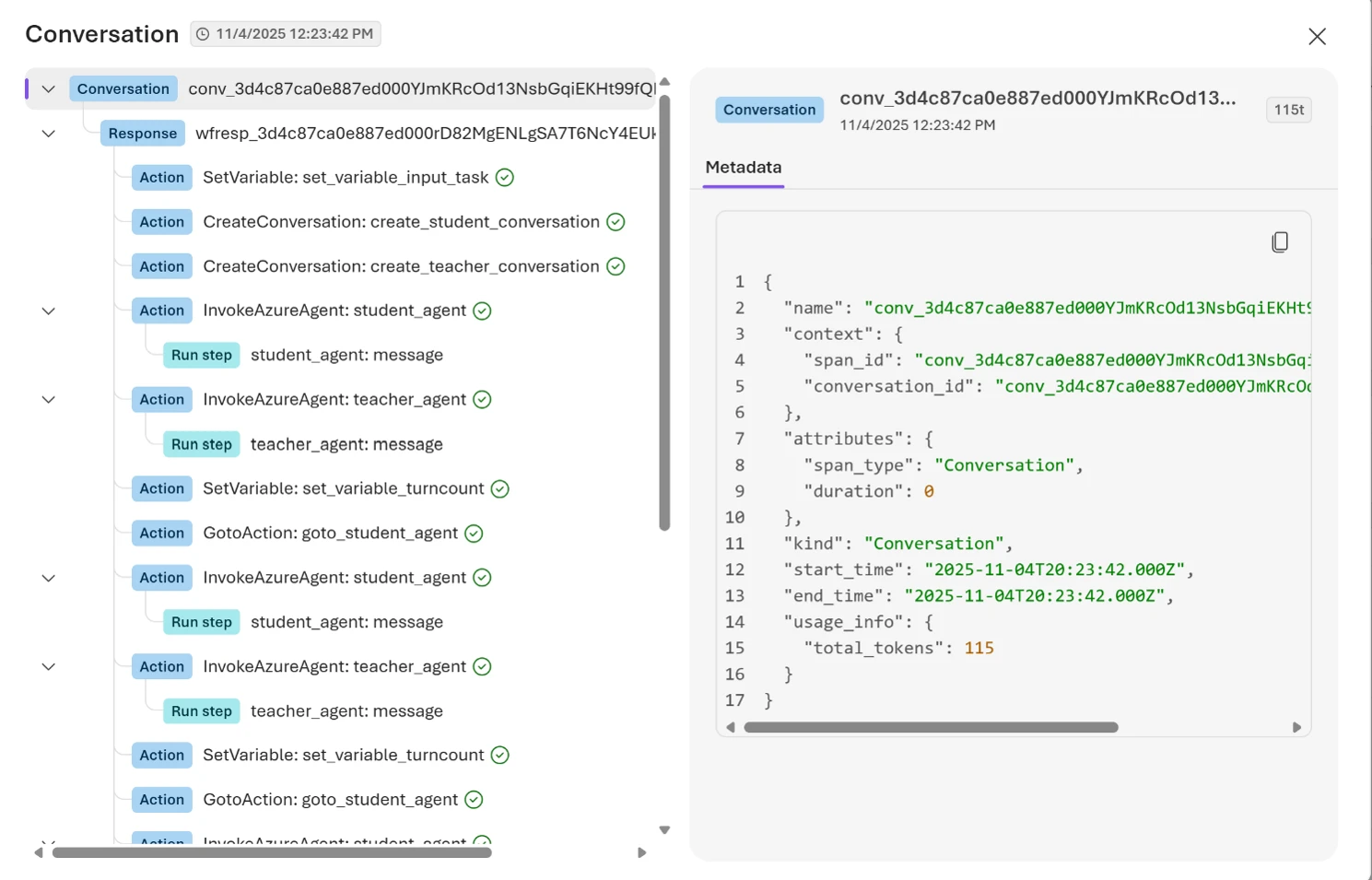
- Agent-Level Tracing: Tracing in Foundry captures fine-grained telemetry per execution run—recording latency, tool invocations, token input/output balances, retry counts, and estimated cost metrics for every conversation turn.
2. Dual-Layer Spend Enforcement: Smoke Detectors vs. Circuit Breakers
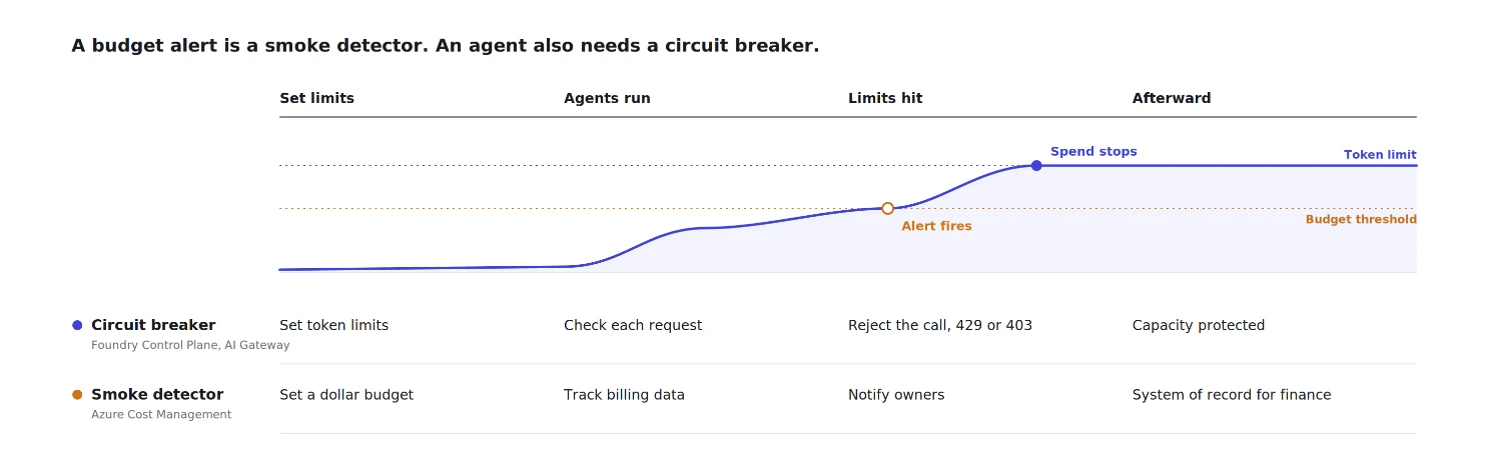
Traditional financial management relies on billing updates that can lag behind real-time execution by hours or days. While suitable for static infrastructure, this lag poses risks for autonomous agents; an agent caught in an infinite self-reflection loop can incur substantial costs before an email alert is triggered.
To mitigate this, Microsoft relies on a dual-layer strategy:
+───────────────────────┬───────────────────────────┬────────────────────────────+
| Control Layer         | Mechanism                 | Operational Purpose        |
+───────────────────────┼───────────────────────────┼────────────────────────────+
| Request-Path          | Foundry Control Plane     | Prevents runaway loops;    |
| Circuit Breaker       | & AI Gateway              | responds with 429/403      |
|                       | (Token Limits & Quotas)   | instantly at runtime.      |
+───────────────────────┼───────────────────────────┼────────────────────────────+
| Financial Budget      | Microsoft Cost            | Triggers alerts, tickets,  |
| Smoke Detector        | Management & Budgets      | and automation runbooks    |
|                       |                           | via Azure Action Groups.   |
+───────────────────────┴───────────────────────────┴────────────────────────────+-
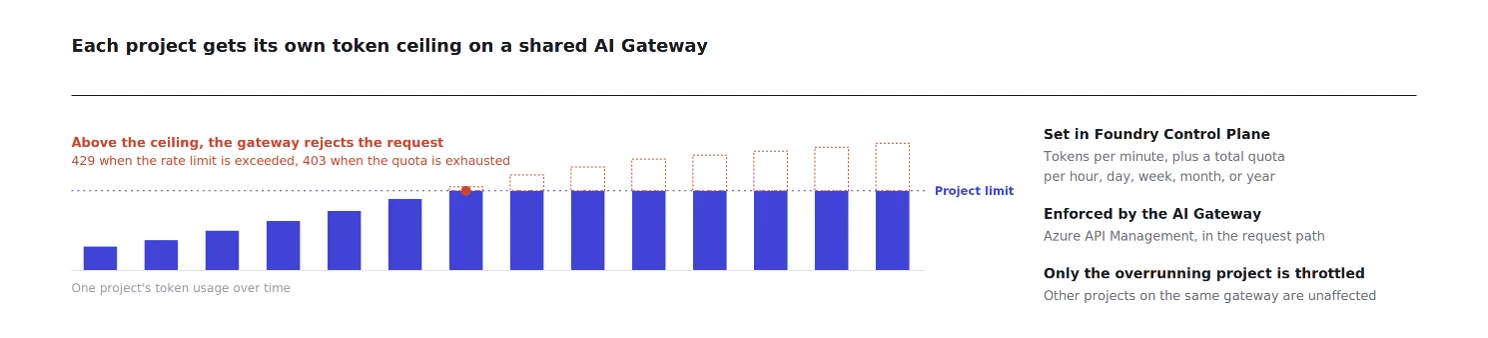
Inline Request Circuit Breakers: Driven by the Foundry Control Plane and AI Gateway, controls enforce rate limits (Tokens-Per-Minute) and cumulative token quotas directly within the request path.
- Exceeding a short-term rate limit returns an HTTP 429 (Too Many Requests) status.
- Exhausting an allocated quota returns an HTTP 403 (Forbidden) response.
- Quotas can be configured over hourly, daily, weekly, monthly, or annual windows.
- Policies like
llm-token-limitapply across diverse interfaces, including OpenAI-compatible endpoints, the Anthropic Messages API, Model Context Protocol (MCP) servers, and inter-agent communication channels.
-
Accountability Budgets (Smoke Detectors): Managed via Microsoft Cost Management, financial budgets evaluate billing records to provide executive oversight. Connected to Azure Monitor Action Groups, these budgets can automatically trigger Logic Apps, launch automation runbooks, or open ITSM tickets when usage departs from forecasted baselines.
3. Measuring Business Return: The ROI Engine
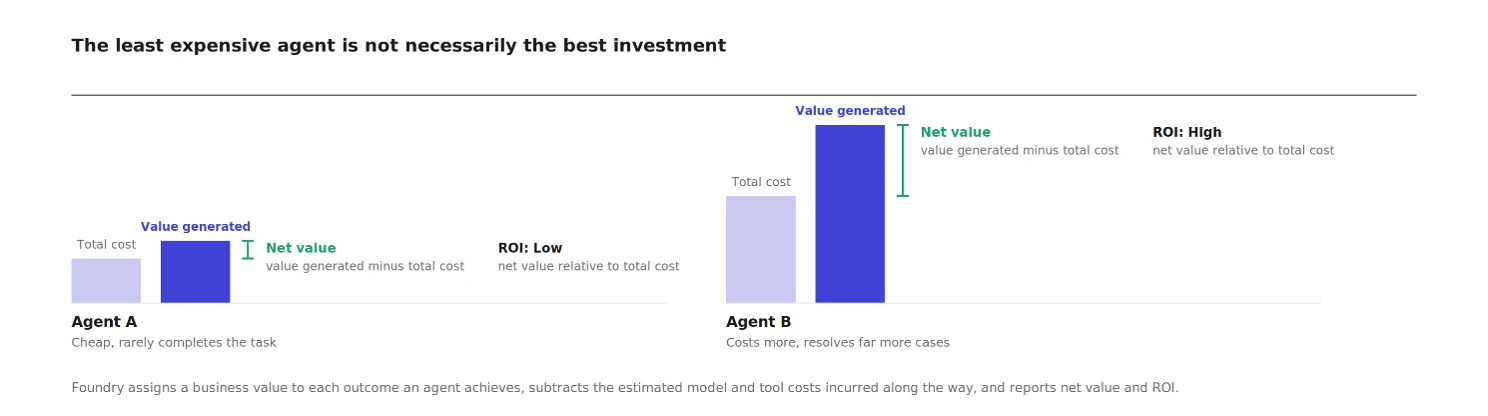
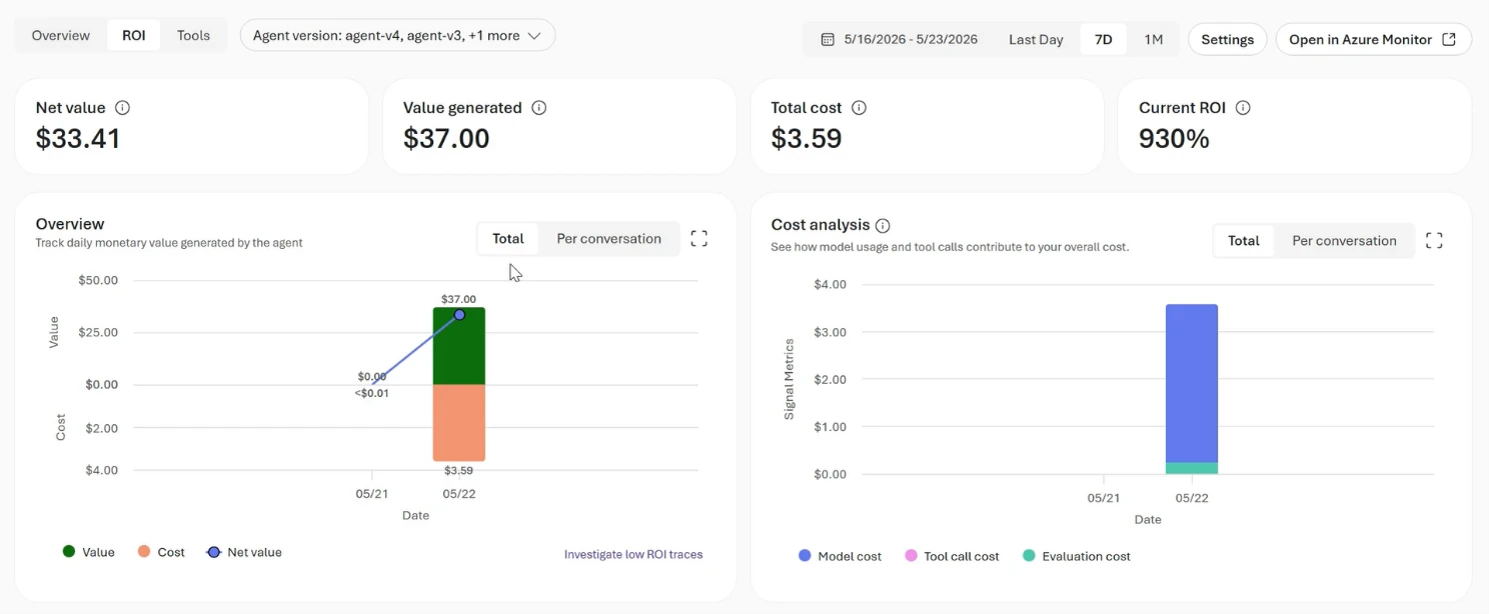
To evaluate whether an agent’s resource consumption is justified, Microsoft introduced an Agent ROI Dashboard within Foundry (currently in private preview).
Rather than treating token reduction as the primary goal, the framework calculates net value using a simple formula:
$$textNet Business Value = textTotal Value Generated – (textModel Costs + textTool Execution Costs)$$
                  FOUNDRY AGENT ROI DASHBOARD
┌─────────────────────────────────────────────────────────────────┐
│ Net Value: $0.41   │ Generated: $1.00 │ Cost: $0.59 │ ROI: 930% │
├─────────────────────────────────────────────────────────────────┤
│ Top Low-ROI Traces Identified:                                  │
│  • Conversation #8492: 14 Tool Retries (Oversized Model Used)   │
│  • Conversation #9102: Redundant RAG Search Steps                │
└─────────────────────────────────────────────────────────────────┘
Teams specify business target outcomes—such as successful support deflection, automated ticket resolution, or customer satisfaction score (CSAT) impact—and assign a monetary value to each outcome. Foundry tracks execution costs alongside completed outcomes, rendering key metrics:
- Average Value per Conversation: The financial benefit returned per agent execution.
- Pass Rate and Quality Improvements: Success rates correlated with iteration changes.
- Trace-Level Cost Diagnostics: Direct navigation from low-ROI aggregate scores down to individual interaction traces, enabling developers to pinpoint redundant tool calls or prompt bloat driving up costs.
Official Perspective and Enterprise Responsibility Boundaries
Enterprise governance requires clear operational boundaries between developer optimization and organizational compliance. Within Microsoft’s framework, spending governance operates alongside enterprise management systems:
              ENTERPRISE RESPONSIBILITY BOUNDARIES

  ┌─────────────────────────────────────────────────────────┐
  │                 MICROSOFT AGENT 365                     │
  │   IT & Security Governance Layer:                       │
  │   • Identity & Lifecycle Management                     │
  │   • Security Boundaries & Organizational Access         │
  │   • Enterprise-Wide Compliance Policy                   │
  └────────────────────────────┬────────────────────────────┘
                               │
                               ▼
  ┌─────────────────────────────────────────────────────────┐
  │                   MICROSOFT FOUNDRY                     │
  │   Developer & FinOps Optimization Layer:                │
  │   • Real-Time Token Limits & Quotas                     │
  │   • Inline Request Circuit Breakers                     │
  │   • Observability, Tracing, and ROI Telemetry           │
  └─────────────────────────────────────────────────────────┘
Microsoft engineering leadership emphasizes that cost management should focus on value maximization rather than arbitrary expense reduction:
"Good governance makes consumption visible, attributable, and bounded… Traditional cost management tools can track spending and alert on actual or forecasted costs, but they typically operate on billing data rather than in the request path. An agent caught in a retry loop does not wait for the next budget evaluation. A budget alert is a smoke detector. An agent also needs a circuit breaker."
The framework establishes a functional division of labor:
- Agent 365 serves as the administrative domain for IT security and corporate compliance. It manages agent identity, enterprise access, data boundaries, and regulatory policy enforcement.
- Microsoft Foundry functions as the execution domain for engineering and FinOps teams. It provides token-level throttling, inline request management, trace telemetry, and cost-allocation mechanisms.
This separation ensures that developer optimization occurs within approved enterprise security and compliance boundaries.
Future Outlook: Bridging the Token-to-Dollar Gap
As autonomous agents become standard infrastructure, governance architectures must adapt to handle dynamic multi-model deployments.
                  THE EVOLVING GOVERNANCE PARADIGM

   CURRENT STATE                            FUTURE STATE
┌──────────────────────────┐             ┌──────────────────────────┐
│ Enforces: Token Volume   │             │ Enforces: Dollar Budgets │
│  (Tokens/Min, Quotas)    │ ──────────► │  (Real-time currency)    │
│                          │             │                          │
│ Pricing Variances via    │             │ Unified Financial        │
│ Heterogeneous Models     │             │ Control at the Gateway   │
└──────────────────────────┘             └──────────────────────────┘
A core challenge in current FinOps implementations is the units gap: infrastructure gateways throttle consumption based on raw token volumes, whereas enterprise finance teams plan in native currency. Because token prices vary across model tiers (e.g., small language models versus high-reasoning frontier models), a static token quota does not convert into a static financial cost.
To address this gap, Microsoft is developing native, dollar-denominated circuit breakers for Microsoft Foundry and the Azure API Management AI Gateway. This capability will allow platform administrators to define real-time currency budgets directly at the API gateway level. Requests will be evaluated against dynamic financial metrics before invocation, bringing financial accountability into the runtime execution path of enterprise AI agents.