Executive Overview
In a significant move poised to redefine how commercial enterprises interact with consumers on social media, social media platform X (formerly Twitter) has officially rolled out a specialized Application Programming Interface (API) dedicated to automated task accounts. This newly introduced infrastructure allows businesses, developers, and global brands to engineer, deploy, and manage bespoke automated response agents tailored specifically for X’s revamped direct messaging framework, known as X Chat.
By bridging the gap between social media engagement and programmatic backend operations, the new API enables brands to construct intelligent, dedicated chatbot accounts. These automated entities are designed to handle an expansive array of customer service functions autonomously—ranging from processing routine order inquiries and managing service updates to executing complex booking requests and submitting real-time transactions straight into workflow pipelines.
While the introduction of this API presents a lucrative, forward-thinking value proposition for brands seeking to provide 24/7 customer support and instant transactional capabilities, it simultaneously introduces complex technological hurdles. Because X provides foundational guidelines and sample frameworks rather than an out-of-the-box turnkey solution, businesses must shoulder the burden of custom development and AI integration. Furthermore, this initiative marks a deeply ironic chapter in the platform’s corporate history. Owner Elon Musk’s famously aggressive historical rhetoric regarding the eradication of platform bots now converges with an officially sanctioned, enterprise-driven surge of automated accounts.
This comprehensive report explores the mechanics of X’s new Chat API, evaluates its practical applications and development challenges, analyzes the broader implications for brand-consumer communication, and examines the philosophical contradictions of officially welcoming automated agents back onto the platform.
Detailed Chronology of the X Chat API Rollout
The Evolution of X Chat and Enterprise Messaging
The deployment of the automated task account API is the latest evolutionary phase in X’s ongoing quest to transform itself into a comprehensive "everything app." Over the past two years, the platform has systematically overhauled its direct messaging infrastructure. The introduction of X Chat earlier in the product lifecycle was designed to modernize the platform’s conversational interface, making it more competitive with established messaging powerhouses like WhatsApp, Telegram, and Facebook Messenger.
However, a messaging platform is only as useful as its utility and user retention metrics. Recognizing that modern consumers increasingly demand instant, frictionless brand interactions, X leadership understood that consumer-to-brand messaging required automated infrastructure to scale effectively. Without automated capabilities, human customer support teams would be overwhelmed, rendering the messaging platform inefficient for high-volume commercial enterprises.
The Official Launch and Technical Mechanics
The rollout of the automated task account API officially commenced when the X Developer platform published documentation and technical guidelines outlining how programmatic accounts operate within the ecosystem.
According to X’s official developer documentation, a bot account created through this framework is not a traditional user profile. Instead, it is defined as a programmatic X account intrinsically tied to a specific developer project:
"A bot is a programmatic X account created and belonging to your project. It is a real account with a user ID, an @handle, and a display name, but it has no password and no login. The only way to act as a bot is its bearer token."
This architecture ensures high levels of security while granting programmatic scripts the authorization needed to read incoming direct messages and dispatch automated payloads in real time. To maintain transparency and prevent deceptive practices, X has mandated that all accounts utilizing this API feature a distinct "automated by @owner" tag. This visual label explicitly directs users to the parent corporate or verified business account responsible for the bot’s operations, extending a labeling philosophy that Twitter first introduced back in 2022 to categorize automated accounts in user streams.
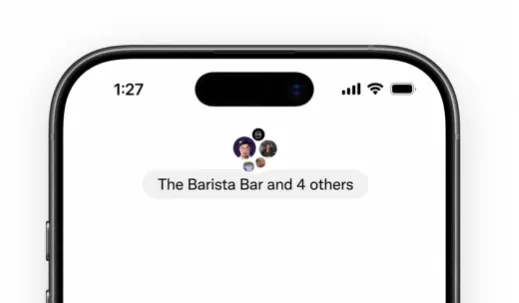
To demonstrate the capability of the system, X released operational blueprints and conceptual demonstrations—such as "The Barista Bar," a hypothetical merchant bot designed to ingest customer order requests via direct message, process the specifications, and push them directly into a point-of-sale workflow for immediate preparation and customer pick-up. Additionally, X published open-source integration skeletons on GitHub, illustrating how businesses can connect these X chat profiles with sophisticated artificial intelligence models to deliver fully conversational, context-aware automated customer service.
Supporting Context & Metrics: The Promise and Pitfalls of Automated Brand Engagement
Bridging the 24/7 Customer Service Gap
In the modern digital economy, consumer expectations are unforgiving. Studies consistently show that the vast majority of consumers expect an immediate response—typically within minutes—when reaching out to a brand with a service query or transactional issue. Traditional social media customer service models, which rely entirely on human agents monitoring inboxes during standard business hours, often fail to meet these expectations, leading to consumer friction and brand abandonment.
By integrating custom chatbots directly into X Chat, businesses can establish an uninterrupted, round-the-clock engagement channel. Whether a customer is checking the status of a delayed shipment at 3:00 AM or attempting to secure a last-minute booking, automated task accounts ensure that inquiries are met with immediate, actionable assistance.
Furthermore, the integration of generative artificial intelligence systems takes this capability a step further. Rather than forcing users to navigate rigid, frustrating decision trees ("Press 1 for billing, Press 2 for technical support"), modern AI-powered bots can parse natural language. A customer can type out a complex, multi-part request, and the chatbot can synthesize the data, execute the backend task, and provide a coherent, human-like confirmation.

The Reality of Development Overhead and Friction
Despite the clear theoretical benefits, enterprise adoption of X’s new API faces significant hurdles. A critical limiting factor in X’s rollout strategy is the absence of a centralized, user-friendly framework or a drag-and-drop builder for chatbot functions.
Unlike competing enterprise platforms that provide comprehensive software-as-a-service (SaaS) dashboards allowing non-technical marketers to construct bots visually, X’s approach is strictly developer-centric. The platform provides code examples and GitHub repositories, but building a fully functioning, reliable chatbot requires substantial manual development, engineering resources, and API maintenance.
For large enterprises with dedicated software engineering teams and pre-existing automation workflows, this integration may be relatively seamless. These businesses can simply map their existing backend logic and CRM integrations to the new X Chat endpoints. However, for small-to-medium-sized businesses (SMBs)—which often form the backbone of X’s advertising and subscription revenue initiatives—the technical barrier to entry remains prohibitively high. Without accessible third-party vendor tools or native platform builders, many smaller brands may bypass X Chat automation entirely.
Official Statements and Strategic Intent
Why X is Betting Big on Messaging Utility
From a corporate strategy perspective, the launch of the automated task account API is an urgent maneuver to enhance the fundamental utility of X Chat. For years, industry analysts have argued that X needed to evolve beyond a public town square for news and discourse into a functional utility platform that retains user attention across multiple verticals.
By transforming X Chat into a viable commercial pipeline where users can chat with businesses, order products, book services, and resolve complaints, X increases user session times and incentivizes daily engagement. In an official communication regarding the feature, platform representatives emphasized that the API is designed to facilitate "a range of tasks including bookings, order queries, and service updates," positioning the tool as an essential component of modern digital commerce.
The Irony of the Bot Economy: Musk’s U-Turn
Perhaps the most culturally significant and heavily scrutinized aspect of this launch is the profound irony surrounding its existence. When Elon Musk acquired the platform in late 2022, one of his most aggressive, foundational crusades was the total eradication of automated accounts, famously declaring on the platform that he would defeat platform bots "or die trying." For months, the platform waged war on scraper bots, crypto spam accounts, and malicious automated rings, implementing strict rate limits and developer fee structures that priced out countless third-party applications.
Yet, with the introduction of the automated task account API, X is actively inviting thousands of new bot profiles back into its ecosystem.
Industry observers have been quick to point out the semantic and practical gymnastics required to reconcile this move. While historical bots were frequently viewed as parasitic entities designed to manipulate discourse, spread misinformation, or inflate metrics, these new enterprise bots are explicitly sanctioned, verified, and commercialized. Nevertheless, they remain automated scripts that post, respond, and interact programmatically.
This development raises complex questions regarding platform metrics. As millions of brand-operated chatbots flood the ecosystem to handle customer service interactions, questions naturally arise as to whether these programmatic accounts will be factored into X’s active user counts, daily active user (DAU) metrics, or engagement reports. X has yet to clarify how these automated task accounts will be categorized in official performance disclosures.
Future Outlook: What Lies Ahead for X Chat and Brand Automation?
Will Enterprises Embrace the Platform?
The ultimate success or failure of X’s automated task account API hinges entirely on market adoption. If major global brands and customer service software providers (such as Zendesk, Salesforce, or Intercom) build native integrations for X Chat, the platform could rapidly evolve into a dominant channel for social commerce and conversational support. Consumers would benefit from a streamlined, unified interface where they can seamlessly transition from viewing a brand’s advertisement to completing a transaction entirely within a direct message thread.
Conversely, if the technical friction proves too high and brands choose to allocate their automation budgets to more mature ecosystems like Meta’s Messenger and WhatsApp, X’s new API risk becoming an underutilized developer novelty.
The Road Ahead: Moderation, AI, and Platform Integrity
As X moves deeper into the realm of enterprise automation, several critical challenges loom on the horizon:
- Security and Vulnerability Management: Branded chatbots connected to backend workflows represent lucrative targets for malicious actors. Vulnerabilities in custom AI integration could lead to prompt-injection attacks, where malicious users trick corporate bots into offering unauthorized discounts, leaking sensitive operational data, or executing fraudulent transactions.
- User Trust and Transparency: While X’s mandatory "automated by @owner" tag is a vital step toward maintaining platform integrity, users must remain vigilant. Ensuring that bad actors do not exploit the API to spin up deceptive, unverified task accounts posing as legitimate customer service agents will require rigorous monitoring and enforcement from X’s trust and safety teams.
- The Evolution of Conversational Commerce: As artificial intelligence models become increasingly sophisticated, the line between human and machine interaction on social media will continue to blur. How consumers react to an ecosystem heavily populated by corporate AI agents will shape the next decade of digital marketing and customer service strategy.
In conclusion, X’s launch of the automated task account API represents a bold, calculated gamble. By officially embracing enterprise automation, the platform is opening new revenue streams and enhancing the practical utility of X Chat. However, navigating the delicate balance between commercial functionality, technical accessibility, and platform integrity will determine whether this initiative successfully redefines social commerce or simply populates the digital town square with a new generation of corporate algorithms.