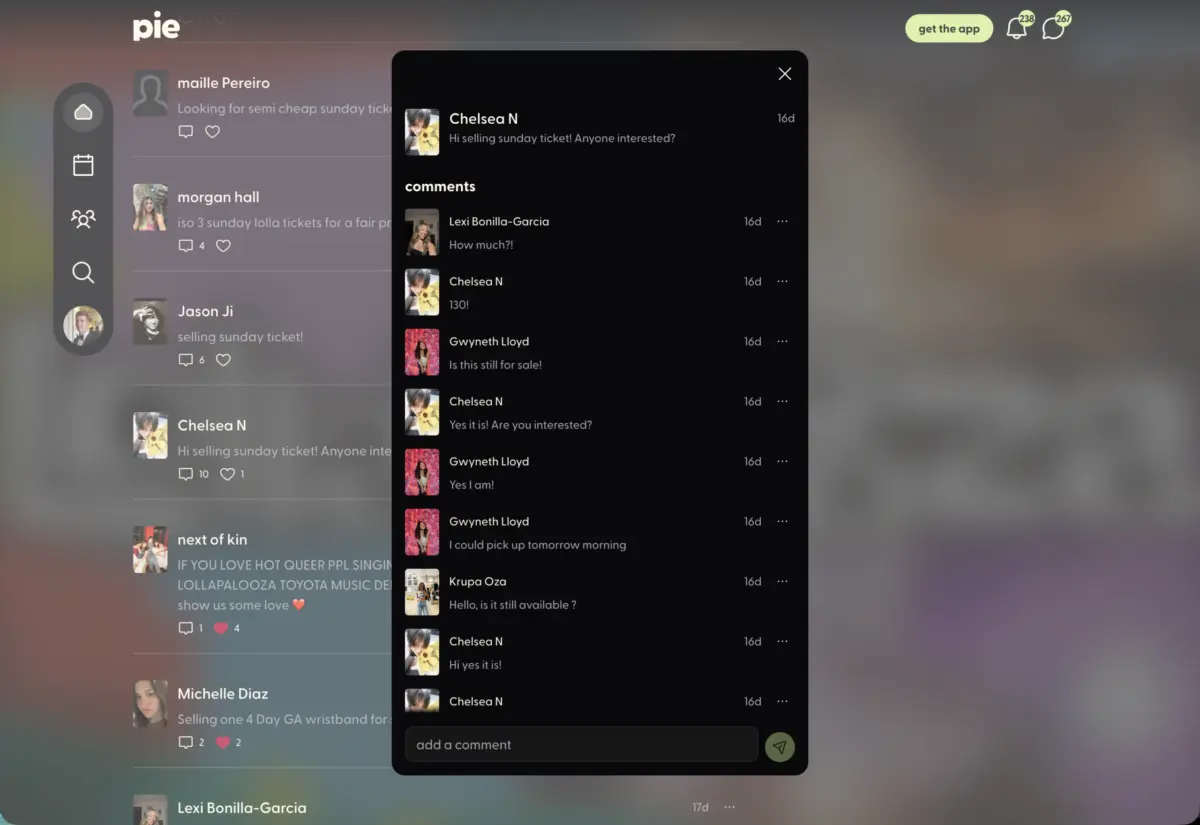
In an era dominated by hyper-curated feeds, algorithmic isolation, and digital fatigue, a new wave of technology is attempting to bridge the gap between pixels and pavement. Pie, the real-world (IRL) social discovery application founded by Bonobos co-founder Andy Dunn, is taking a major stride in its mission to combat modern social isolation. On Tuesday, the startup officially rolled out a robust "communities" feature designed to serve as permanent digital homes for social circles, clubs, and interest-based groups.
Positioned as a modern alternative to fragmented group texts, sprawling Facebook Groups, and toxic online forums, Pie’s new Community Homes feature marks a strategic pivot. Rather than treating events as the primary hook to pull users into the app, Pie is anchoring its ecosystem in enduring communities—where events are a natural byproduct of connection rather than the sole catalyst.
Backed by heavyweight venture capital firms—including Forerunner, Lightspeed, and Accel, alongside prominent angel investors like Twitter co-founder Ev Williams—Pie has quietly amassed a user base of roughly 300,000. As the cultural pendulum swings back toward physical proximity, brick-and-mortar social clubs, and grassroots gatherings, Pie is attempting to position itself as the foundational operating system for Gen Z and millennial real-world socialization.
Detailed Chronology: From Event App to "Reddit for IRL"
Pie’s evolution reflects a trial-and-error journey common among consumer social startups trying to solve a deeply human problem.
The Origins in Chicago
The seed for Pie was planted when Andy Dunn relocated from New York City to Chicago. Finding himself in a new city as an adult, Dunn experienced firsthand the acute, often unspoken difficulty of forging authentic friendships and finding community outside of a structured workplace or university setting. Recognizing a broader cultural shift—particularly among Gen Z, who were spearheading a renaissance of physical social clubs, run clubs, art markets, and neighborhood craft nights—Dunn envisioned software tailored specifically to this offline resurgence.
Originally launched in Chicago as an event-discovery app, Pie quickly drew early-stage institutional backing and began scaling its footprint into cultural hubs like New York City, Los Angeles, and the San Francisco Bay Area.
The Feed Revamp and Engagement Leap
As the app grew, Dunn and his team realized that users were utilizing the platform transactionally—dropping in to browse a calendar of local happenings and leaving immediately after. To counter this, Pie implemented a critical product redesign in December.
Instead of organizing its activity feed around raw, detached event announcements, the app shifted its architecture to spotlight social proximity: users were shown who they knew—or which friends of friends—were attending specific events. The architectural change yielded dramatic results. Average daily time spent on the application surged from a fleeting two minutes to a sticky ten minutes, proving that users craved social validation and peer transparency over anonymous event listings.
Welcoming Zoomies Founder Nadya Okamoto
Pie further cemented its real-world credentials by bringing on Nadya Okamoto—founder of the wildly popular New York-based run club Zoomies—as co-founder and Chief Marketing Officer. Okamoto brought frontline experience in community mobilization, helping steer Pie toward an identity she describes as "the original promise of Facebook and Reddit—if it wasn’t anonymous and toxic."
The Rollout of Community Homes
Tuesday’s launch of Community Homes represents the culmination of these iterative shifts. The feature provides organized groups with dedicated digital landing pages equipped with community feeds, membership controls, admin tools, and event-planning infrastructure. By allowing any member—not just group administrators—to share events to the feed, Pie is fostering a fluid, organic networking environment that mimics the casual cadence of real life.
Supporting Context & Metrics: The Anatomy of Modern Loneliness
To understand Pie’s market positioning, one must examine the socio-technical landscape it aims to disrupt. For over a decade, social media giants prioritized ad-driven engagement metrics, maximizing "screen time" through passive scrolling, algorithmic video feeds, and broadcast-style content. Paradoxically, as total hours spent on screens skyrocketed, rates of clinical loneliness reached unprecedented highs, particularly among younger demographics.
The Gen Z Social Club Phenomenon
Concurrently, a profound behavioral correction has taken root. Younger generations have increasingly rejected traditional, hyper-curated digital networking in favor of localized, tactile communities. Run clubs, climbing collectives, vinyl-listening circles, and craft nights have transformed from fringe hobbies into mainstream cultural infrastructure.
Pie has systematically captured these shifts through a combination of key product metrics:
User Base: Approximately 300,000 registered users, with heavy concentrations in urban centers such as New York, Chicago, and Los Angeles.
Engagement Surge: A 500% increase in session duration (jumping from 2 minutes to 10 minutes) following the December 2024 feed redesign that emphasized peer attendance over impersonal event cards.
Venture Validation: Backing from top-tier venture capital funds including Forerunner Ventures, Lightspeed Venture Partners, and Accel, alongside high-profile tech founders.
A New Class of Digital Infrastructure
Existing tools for organizing groups are notoriously friction-heavy or culturally misaligned:
Group Chats: (e.g., WhatsApp, iMessage) quickly become overwhelming, lack historical permanence for new members, and offer poor event-planning capabilities.
Facebook Groups: While functional, they carry legacy baggage, clunky user interfaces, and an older demographic skew that younger users frequently avoid.
Meetup: Historically built for transactional networking rather than fluid, organic community belonging, often resulting in sterile or intimidating atmospheres.
Pie’s Community Homes attempt to thread the needle: offering the structured organization of a group platform with the spontaneous, interest-driven intimacy of a local club.
Official Statements and Visionary Perspectives
Leadership at Pie has been vocal about the philosophical underpinnings of the app, distancing themselves from the engagement-at-all-costs ethos of traditional social media.
Reflecting on the cultural zeitgeist driving the company, founder Andy Dunn explained the core thesis to industry reporters:
"Run clubs, art markets, watch parties — all these things that we’re hearing about in terms of the cultural movement towards being together again. And I felt like if we build software for those social clubs, we can create an environment and an ecosystem where people can start to run into other people and belong to communities and start to have deeper connections."
Dunn summarizes the overarching vision with a provocative descriptor: "Reddit for IRL."
Co-founder and CMO Nadya Okamoto expanded on this sentiment, drawing a sharp contrast between Pie and the legacy web platforms that preceded it:
"I would say [Pie is] more like the original promise of Facebook and Reddit — if it wasn’t anonymous and toxic. Rather than leading with events, which is what so many other great platforms do, I think events are more a product of having a great community-building ecosystem on the app."
By treating physical gatherings as downstream manifestations of digital belonging rather than top-down marketing items, Pie is attempting to invert the traditional event-discovery funnel.
Future Outlook: What’s Next for Pie
As Pie integrates its Community Homes feature into the wild, the product roadmap points toward even deeper reductions in social friction.
Upcoming Product Iterations
In the immediate pipeline, the startup plans to roll out dedicated group chats embedded directly within Community Homes, allowing members to banter, coordinate logistics, and maintain continuous dialogue between physical meetups.
Furthermore, Pie is developing a casual connection feature designed to solve the perennial hurdle of low-stakes initiation. This upcoming tool will allow users to broadcast casual, unstructured "bids for connection"—such as putting out a digital flare asking if anyone wants to hang out and craft, grab an impromptu coffee, or stream a reality television reunion show—without requiring the overhead of planning a formal event.
The Road Ahead
Scaling an IRL social network carries inherent operational challenges. Geographic density is crucial for real-world apps; a community hub is only as valuable as the physical proximity of its members. While Pie has established strong beachheads in metropolises like Chicago, New York, and Los Angeles, expanding successfully into secondary and tertiary markets will test the viral mechanics of its new community-building tools.
Nevertheless, by shifting the paradigm from algorithmic entertainment to human orchestration, Pie has positioned itself at the vanguard of a necessary technological evolution. If Community Homes succeed in anchoring social groups permanently within the app, Andy Dunn and his team may well have built the definitive digital infrastructure for the physical age.