Executive Overview
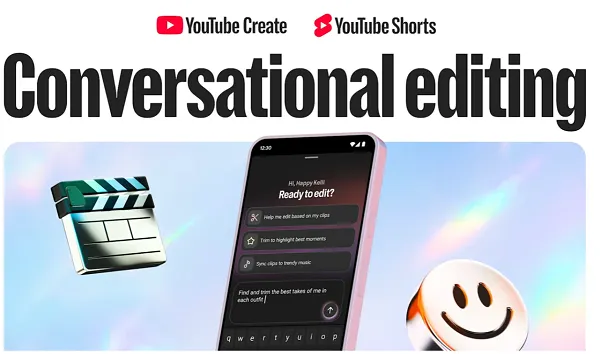
The landscape of digital content creation is undergoing a seismic shift. At its annual "Made On" event, YouTube unveiled a suite of next-generation artificial intelligence and engagement features designed to redefine how creators produce, refine, and publish video content. Among the most transformative announcements was the introduction of Conversational Editing—a groundbreaking tool integrated directly into the YouTube Shorts composer and the standalone YouTube Create application.
For over a decade, video editing has remained a significant barrier to entry for aspiring digital creators. While capture technology has been democratized by high-end smartphone cameras, the post-production pipeline remains notoriously arduous. As prominent creator Kelli Erdmann, widely known as "Happy Kelli," pointed out during the live showcase, editing is an intricate art form. A mere one-hour raw shoot can easily demand ten or more hours in the editing bay to achieve the desired pacing, tone, and visual polish.
Conversational Editing seeks to eliminate this friction. By translating basic, natural-language prompts into complex editing actions, YouTube’s artificial intelligence engine bridges the gap between raw footage and a polished final product. Far from replacing the human touch, this tool is engineered to function as an intuitive digital assistant, handling tedious tasks such as clip assembly, beat-matching, and color grading while allowing creators to retain ultimate artistic control.
This comprehensive report examines the technical mechanics of YouTube’s Conversational Editing suite, explores its practical applications through creator demonstrations, analyzes the broader industry implications for the Creator Economy, and projects the future trajectory of AI-assisted multimedia production.
Detailed Chronology: The Evolution of YouTube’s Creator Suite and the "Made On" Reveal
The road to Conversational Editing has been paved by years of iterative AI developments across the tech sector. To understand the significance of YouTube’s latest announcement, it is essential to trace the chronology of how video editing software has evolved from desktop-bound complexity to cloud-native, generative AI-driven ecosystems.
Phase One: The Desktop Hegemony
In the early days of digital video, editing was restricted to high-end desktop workstations running specialized software like Adobe Premiere Pro, Final Cut Pro, or Avid Media Composer. These platforms required steep learning curves, expensive hardware, and dedicated training, effectively walling off high-production-value video creation behind technical and financial barriers.
Phase Two: Mobile Democratization and the Short-Form Boom
The explosion of mobile-first platforms—ushered in by TikTok, Instagram Reels, and YouTube Shorts—fundamentally altered consumer expectations. Creators needed to produce engaging, vertical video content at an unprecedented volume. In response, platforms introduced native mobile editors with basic trim, cut, and filter capabilities. While this made capture and publishing instantaneous, post-production optimization remained a manual, time-consuming chore. Recognizing this bottleneck, Google and YouTube began heavily investing in machine learning research, experimenting with automated closed captioning, background removal, and smart-crop features.
Phase Three: The "Made On" Breakthrough
The unveiling of Conversational Editing at the YouTube "Made On" event marks a definitive pivot into Generative Post-Production. Rather than forcing creators to navigate deeply nested menus, timelines, and keyframes, YouTube has inverted the interaction model. Users can now speak or type plain-English commands directly into the interface, prompting the AI to execute complex multi-step editing sequences in seconds.
During the live demonstration, YouTube showcased how the feature integrates seamlessly into the workflow of active creators, proving that the technology is ready for real-world deployment rather than remaining a distant research concept.
Technical Mechanics: How Conversational Editing Works in Practice
At its core, Conversational Editing leverages advanced multimodal AI models capable of understanding both natural language and visual media. When a creator inputs a prompt into the YouTube Shorts composer or the YouTube Create app, the system performs a multi-stage cognitive and technical analysis of the project.
1. Natural Language Processing (NLP) and Intent Recognition
When a creator types or speaks a prompt—such as, "Find the funniest moments from this footage, cut out the dead air, and match the pacing to an upbeat pop track"—the system’s NLP engine breaks down the semantic meaning. It identifies key actions (cutting, selecting, syncing), target assets (audio tracks, specific clips), and stylistic parameters (upbeat, funny).
2. Automated Asset Assembly and Timeline Manipulation
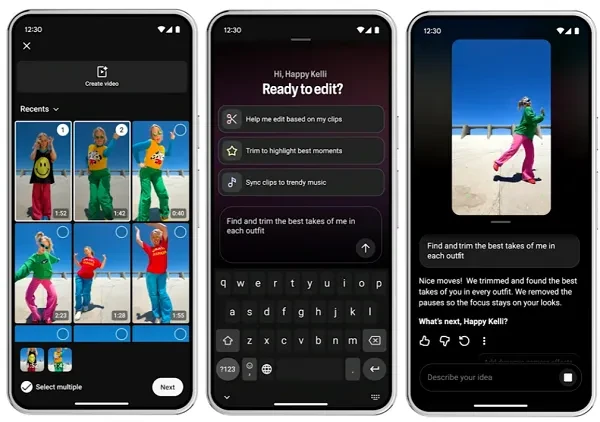
Once the intent is decoded, the AI scans the creator’s camera roll or project timeline. In the demonstration sequences provided by YouTube, the tool demonstrated an advanced ability to ingest multiple raw clips, evaluate their visual content, and intelligently stitch them together based on the creator’s instructions. This streamlines the initial assembly phase—often the most mentally draining part of editing.
3. Contextual Prompts and Dynamic Assistance
Conversational Editing does not rely solely on passive user input; it actively guides the creative process. The system generates contextual prompt suggestions based on the current state of the draft project. For instance, if a creator imports a talking-head video, the AI might surface quick-action suggestions such as:
- "Add background music"
- "Apply color filters"
- "Nail the hook in the first three seconds"
Furthermore, the tool handles complex synchronization tasks with ease. Commands like "match the cuts to the beat of the song" or "find a perfect loop point" translate into precise millisecond-level adjustments that would typically require meticulous manual scrubbing on a timeline.
4. Hybrid Control: AI Speed with Human Mastery
A central concern among professional video editors regarding generative AI tools is the potential loss of creative autonomy. YouTube’s architecture directly addresses this apprehension.
As highlighted by Kelli Erdmann during her presentation, the system is designed to accelerate the workflow without sacrificing creative control. Creators retain the ability to jump back into the manual editing timeline at any given moment. Whether a user wants to tweak a specific transition, adjust typography, or fine-tune audio levels manually, the granular editing timeline remains fully accessible. The AI serves as an accelerator for the tedious foundation work, leaving the nuance and artistic flourishes firmly in human hands.
Supporting Context & Metrics: The Creator Economy and Time-Investment Realities
To fully appreciate the impact of Conversational Editing, one must examine the operational realities facing modern digital creators. The Creator Economy is no longer a cottage industry of hobbyists; it is a multi-billion-dollar global economic engine characterized by intense competition and algorithmic demands for high-frequency publishing.
The Productivity Bottleneck
Industry data consistently highlights post-production as the single largest time sink for content creators. According to recent surveys across digital media platforms:
- Time Allocation: Creators spend an estimated 60% to 70% of their working hours in the editing suite, leaving only 30% to 40% for ideation, shooting, and community engagement.
- The Burnout Factor: The pressure to maintain a consistent posting schedule on platforms like YouTube Shorts frequently leads to creator burnout. The repetitive nature of trimming clips, adjusting aspect ratios, syncing audio, and adding basic visual effects contributes heavily to mental fatigue.
- The Skill Gap: Many brilliant storytellers, educators, and entertainers possess unique domain expertise or charisma but struggle with the technical intricacies of video production software. High barriers to technical proficiency often prevent valuable voices from entering the digital ecosystem.
Bridging the Gap
By compressing a 10-hour editing session into a fraction of the time, Conversational Editing addresses the core economic inefficiencies of content creation. It lowers the technical barrier to entry, enabling domain experts, small business owners, and solo creators to produce professional-grade short-form video content without investing thousands of dollars in specialized training or dedicated editing staff.
Official Statements and Industry Insights
The unveiling of YouTube’s new suite generated significant discussion among industry analysts, tech commentators, and prominent content creators alike.
Kelli Erdmann’s live presentation at the "Made On" event captured the dual sentiment of creative appreciation and operational relief:
"Editing is an art form. It takes a million tiny decisions to shape how a video feels. A 1-hour shoot can be 10 hours or more in the edit. So, what if we could speed that process along without sacrificing any of our creative control?"
Erdmann’s remarks emphasize a crucial paradigm shift: the framing of AI not as a replacement for human creativity, but as a force multiplier. By offloading mechanical execution to machine learning algorithms, creators are liberated to focus on what matters most—storytelling, character development, and authentic engagement with their audience.
Tech analysts tracking the rollout have noted that YouTube’s integration of conversational interfaces into both its mobile app (YouTube Create) and its native Shorts composer represents a strategic masterstroke. While desktop editing suites have increasingly adopted AI features (such as Adobe’s Premiere Pro text-based editing), bringing generative, conversational workflows to the mobile ecosystem democratizes high-end production capabilities for billions of smartphone users worldwide.
Future Outlook: What Conversational Editing Means for the Next Decade of Video
As we look toward the future, the introduction of Conversational Editing on YouTube serves as a harbinger of broader transformations across the digital media landscape. Several key trends are likely to emerge in the wake of this technology:
1. Hyper-Democratization of Video Production
As natural language becomes the primary user interface for creative software, the technical definition of "video editor" will dissolve. In the near future, technical proficiency in timeline manipulation, keyframing, and color grading will no longer be prerequisites for producing compelling visual media. Instead, the currency of success will be conceptual creativity, narrative clarity, and audience understanding.
2. Escalating Quality Baselines Across YouTube Shorts
With AI handling the heavy lifting of pacing, beat-matching, and hook optimization, the overall baseline production quality of short-form video content is poised to rise dramatically. Creators who previously published unedited or poorly paced raw footage will be able to effortlessly apply professional polish, raising viewer expectations across the platform. Consequently, differentiation will rely increasingly on original thought, unique perspectives, and authentic human connection rather than basic production values.
3. Expansion Into Long-Form and Advanced Multimodal Generation
While Conversational Editing is currently rolling out within the Shorts composer and YouTube Create app for short-form workflows, the underlying architecture paves the way for broader integration. It is reasonable to anticipate that conversational AI editing paradigms will eventually scale to long-form YouTube videos, live-streaming post-processing, and multi-camera documentary editing. Furthermore, as generative video models mature, future iterations may allow creators to not only edit existing footage via prompts, but to generate entirely new B-roll, visual effects, and transitional elements on the fly.
4. Ethical, Copyright, and Attribution Considerations
As AI-assisted editing tools become more powerful, platforms will need to navigate complex questions surrounding content provenance, copyright, and stylistic originality. Ensuring that AI models respect intellectual property rights, creator styles, and data privacy will remain a critical governance challenge for YouTube and its parent company, Google, as these features evolve.
Conclusion
YouTube’s introduction of Conversational Editing at the "Made On" event represents a watershed moment for digital content creation. By marrying advanced natural language processing with intuitive mobile and desktop workflows, YouTube is systematically dismantling the technical barriers that have long encumbered creators.
For the millions of individuals striving to make their mark in the Creator Economy, the promise of transforming raw footage into polished, engaging narratives through simple conversation is nothing short of revolutionary. As creators begin testing and integrating these tools into their daily routines, the focus of digital video production will shift away from mechanical tediousness and toward the timeless art of human storytelling.