Executive Overview
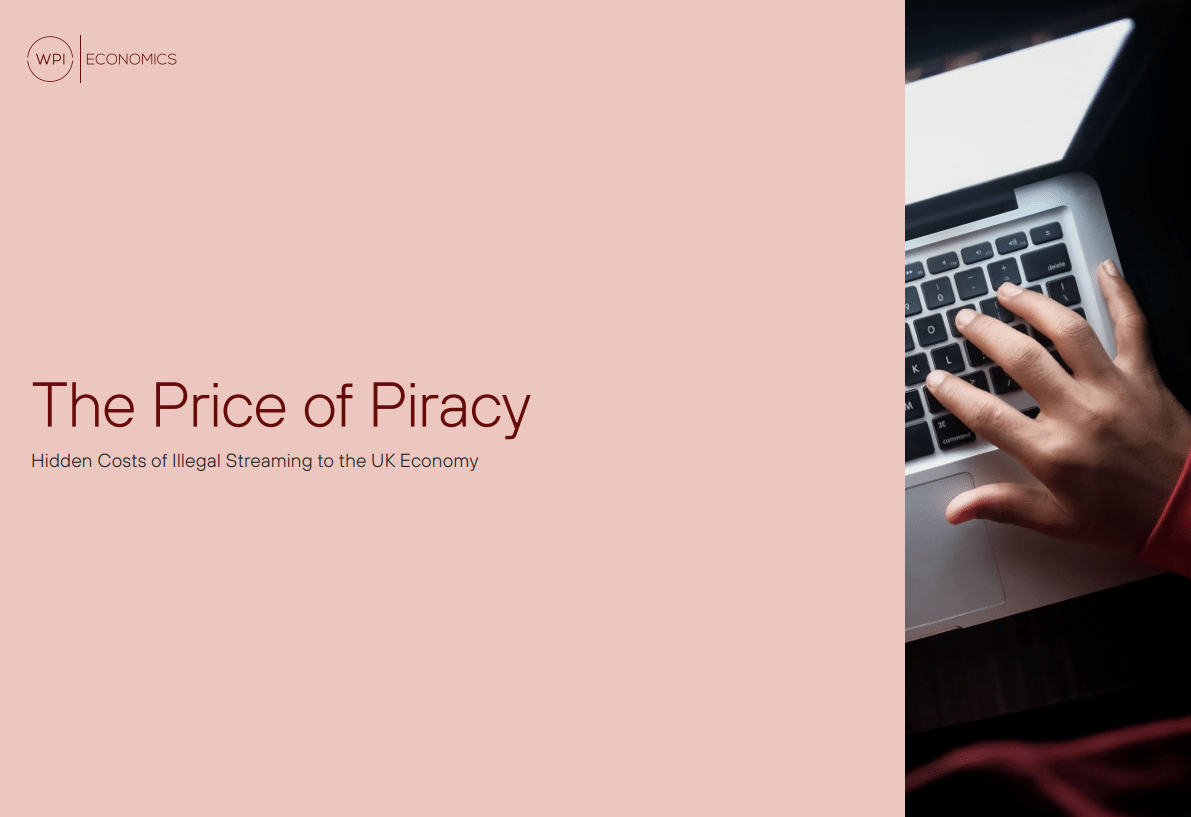
As every new Premier League season kicks off, it arrives accompanied by a familiar, high-stakes ritual: industry warnings detailing the astronomical financial toll of digital piracy. This year, the anti-piracy collective BeStreamWise—backed by heavyweights including Sky, the Premier League, FACT, the BBC, and the UK Intellectual Property Office—has released a fresh economic assessment designed to refocus attention on the ongoing cat-and-mouse game between rightsholders and unauthorized streamers.
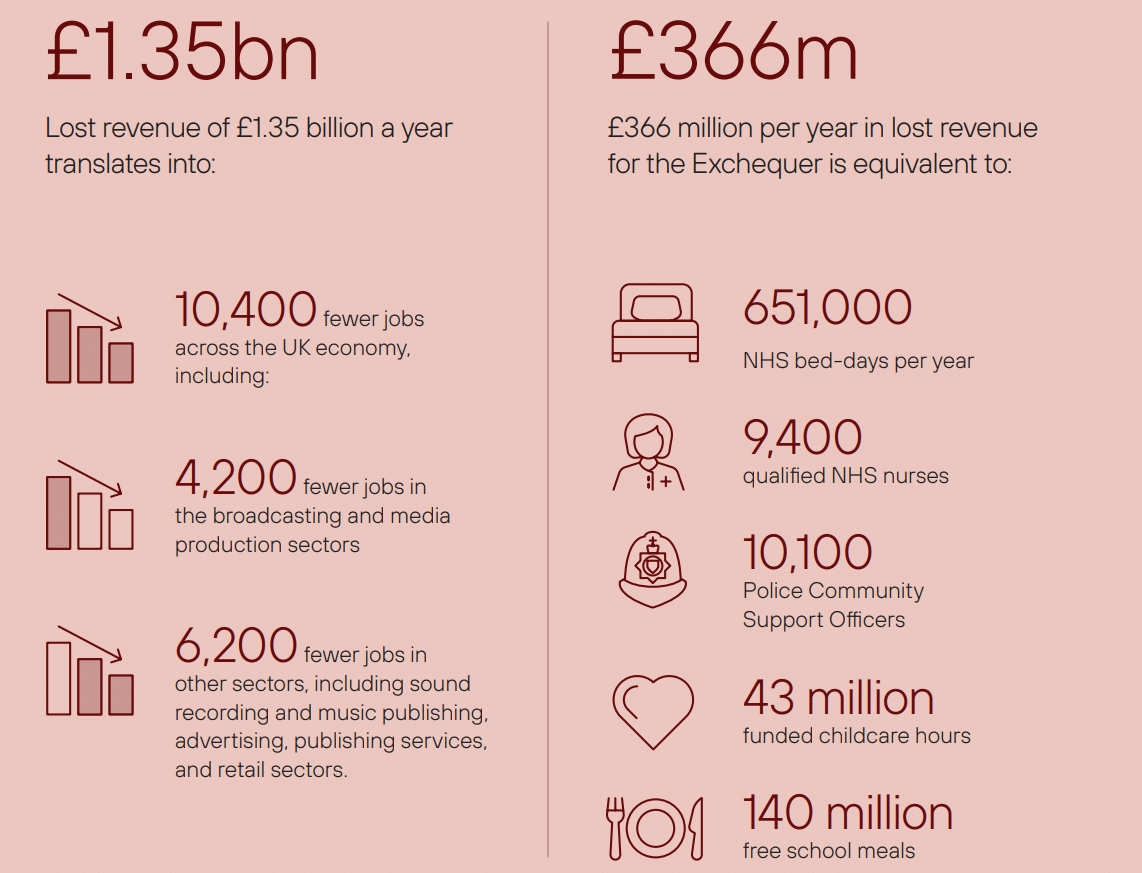
Commissioned to consultancy WPI Economics and titled “The Price of Piracy,” the report drops a staggering headline figure: illegal streaming purportedly costs UK broadcasters an estimated £1.35 billion in missed revenue every year. According to the study’s calculations, this massive monetary deficit cascades down the economic pipeline, resulting in 10,400 lost jobs and £366 million in unrealized tax income for the state.
To make these abstract figures tangible for the public and policymakers alike, the report translates the missing tax revenue into stark human terms. That £366 million, the authors suggest, could alternatively fund the salaries of 9,400 qualified National Health Service (NHS) nurses or provide 140 million free school meals to children across the nation.
Yet, beneath the glossy infographics and high-impact policy recommendations lies a methodology built on hypothetical consumer behavior, broad definitions of piracy, and assumptions that leave ample room for skepticism. While the report provides powerful lobbying ammunition for rightsholders, a closer inspection reveals that the £1.35 billion figure is less a hard measure of lost sales and more an aspirational tally of what pirates claim they might do in a utopian, piracy-free world.
Detailed Chronology & Background: The Evolution of Anti-Piracy Campaigns
The launch of “The Price of Piracy” report is the latest chapter in a decades-long effort by UK media giants and sports conglomerates to curb unauthorized viewing. Over the years, the strategy has shifted from heavy-handed legal threats against individual downloaders to sophisticated public awareness campaigns, dynamic site-blocking injunctions, and public-private intelligence sharing.
The Rise of BeStreamWise
BeStreamWise emerged as a unified front for British copyright holders, consolidating fragmented messaging into a singular, highly coordinated campaign. Last year, the initiative made headlines by launching a deceptive anti-piracy campaign that utilized a mock IPTV pirate site to trick unsuspecting users—a controversial tactic designed to highlight the security risks associated with underground streaming portals.

By commissioning WPI Economics, the campaign sought to transition from anecdotal warnings to rigorous macroeconomic modeling. However, the timing of the report—arriving precisely as millions of households face cost-of-living pressures and soaring subscription prices for legal sports and entertainment packages—places the debate firmly at the intersection of economics, consumer rights, and digital accessibility.
The Survey and the Methodology
At the foundation of the £1.35 billion estimate is a poll of 2,501 UK adults conducted in February. When surveyed, nearly a third (31%) of respondents admitted to engaging with some form of illegal streaming or downloading within the preceding three months. When extrapolated across the entire UK adult population, the report calculates that an astounding 16.8 million people could be classified as video pirates.
To arrive at the £1.35 billion revenue-loss figure, WPI Economics utilized a specific theoretical framework. Rather than tracking actual lost sales or canceled subscriptions, researchers asked survey participants who admitted to pirating a crucial follow-up question: Which legal services would you be willing to pay for if illegal options vanished entirely?
The affirmative responses were then multiplied by the average market cost of those legal services and extrapolated nationwide. Crucially, the campaign confirmed that the study only counted individuals who explicitly stated they would pay in this hypothetical vacuum.
Supporting Context & Metrics: Unpacking the Data and Its Caveats
While the math behind the £1.35 billion figure is clear on paper, economists and digital rights researchers point out significant structural vulnerabilities in how the data was gathered and interpreted.
The "Hypothetical Bias" Trap
In behavioral economics, the gap between what people say they will do in a hypothetical scenario and what they actually do in practice is known as hypothetical bias. Decades of research demonstrate that consumers consistently overstate their willingness to pay for goods when placed in hypothetical frameworks.

Despite this well-documented psychological phenomenon, a BeStreamWise spokesperson confirmed that WPI Economics applied no discount factor to correct for hypothetical bias. The survey answers were accepted at absolute face value. Consequently, the £1.35 billion metric is not a measurement of actual sales captured by pirates, but rather a reflection of good intentions expressed by consumers answering a survey.
Why People Pirate: Cost and Convenience
Paradoxically, data from the exact same poll undermines the likelihood that these billions would ever materialize in broadcaster coffers. When asked about their core motivations, 38% of participating pirates cited cost as the primary driver—stating that unauthorized streams are simply cheaper than legal alternatives. This was followed by 31% who pointed to convenience and 24% who expressed a general desire to avoid binding subscription models.
Most notably, over half (52%) of surveyed pirates stated they were likely to continue their habits regardless of external crackdowns or warnings. This core segment remains price-sensitive or ideologically opposed to traditional subscription stacking, meaning that eliminating pirate sites would likely drive them away from legal ecosystems entirely rather than converting them into paying subscribers.
Social Media as the New Frontier of Piracy
One of the report’s most provocative and debated findings centers on how modern consumers access unauthorized content. Far from the stereotypical image of tech-savvy users configuring complex Kodi boxes or purchasing illicit Fire Sticks from dark-web vendors, the survey points to mainstream platforms as the primary vectors of digital infringement.
According to the report:
- 54% of active illegal streamers access content via social media platforms.
- 28% use unofficial websites to stream or download.
- 26% rely on purchased hardware devices and dedicated illegal IPTV subscription services.
- 15% utilize traditional methods such as torrents or cloud-sharing networks.
- 7% buy compromised login credentials or passwords for legitimate services.
However, these figures must be contextualized by the report’s broad definition of piracy. The survey categorized "watching via social media platforms" alongside niche activities like utilizing a VPN to bypass geoblocks. This means a user scrolling through X (formerly Twitter) or Instagram who pauses to watch a brief, unauthorized clip of a Premier League goal or a television show snippet is officially tallied as an "illegal streamer."
Because BeStreamWise has not publicly released the exact wording of the survey questions or the complete raw dataset, independent verification of these social media metrics remains difficult.
Official Statements and Industry Recommendations
Faced with these expansive metrics, the “Price of Piracy” report does not call for heavy-handed legislation or dramatic expansions of police powers. Instead, it pivots toward two distinct, structural recommendations aimed at the UK Government and digital ecosystem partners.
1. Amplifying Public Awareness Campaigns
The report’s primary recommendation urges the UK Government to leverage its official communication channels to amplify existing consumer awareness campaigns—specifically an expanded version of BeStreamWise.
Proponents argue that government endorsement would serve as an "oven-ready" solution to educate the public not just on intellectual property rights, but on the hidden dangers of piracy. The report estimates that consumers face roughly £270 million in financial harms annually through malware infections, financial fraud, and identity theft originating from malicious pirate portals.
"Amplifying BeStreamWise’s data and insights would be a game-changer in signposting the risks of piracy, including the potential fraud and data security risks," the report asserts, framing consumer safety as a compelling public health and economic defense.
2. A Voluntary Cross-Sector Framework
The second recommendation steps back from statutory enforcement, advocating instead for a voluntary, collaborative framework. This model would bring together online platforms, internet service providers (ISPs), connectivity providers, and content rightsholders to establish cooperative protocols to intercept piracy vectors, all under the soft oversight of the UK government.
By focusing on voluntary cooperation and risk awareness rather than new blocking powers or criminal sanctions, rightsholders acknowledge that technological whack-a-mole—where shutting down one pirate site instantly spawns three mirrors—is an inefficient strategy.
Future Outlook: Bridging the Gap Between Rightsholders and Consumers
As the Premier League season unfolds, the debate sparked by the BeStreamWise report highlights the widening chasm between the media industry’s economic models and modern consumer habits.
While rightsholders will undoubtedly leverage the £1.35 billion figure and the threat of lost NHS nurses to lobby for tighter platform regulations and increased government backing, independent analysts suggest a dose of pragmatism is required. The assumption that every pirate represents a dormant subscriber waiting to be unlocked ignores the fundamental friction of the modern streaming landscape: fragmentation and cost.
In an era where consumers are forced to subscribe to half a dozen competing streaming services—each locking away exclusive sports fixtures, movies, and television series—the structural appeal of cheap, centralized aggregation (whether via illicit IPTV or social media clips) remains potent.
Ultimately, while awareness campaigns and social media crackdowns may successfully nudge marginal users toward legal channels, rightsholders should not pencil those theoretical billions into their financial projections just yet. Until the legal market can match the pricing flexibility and frictionless convenience that consumers clearly demand, the high seas of digital piracy will continue to thrive.