Executive Overview
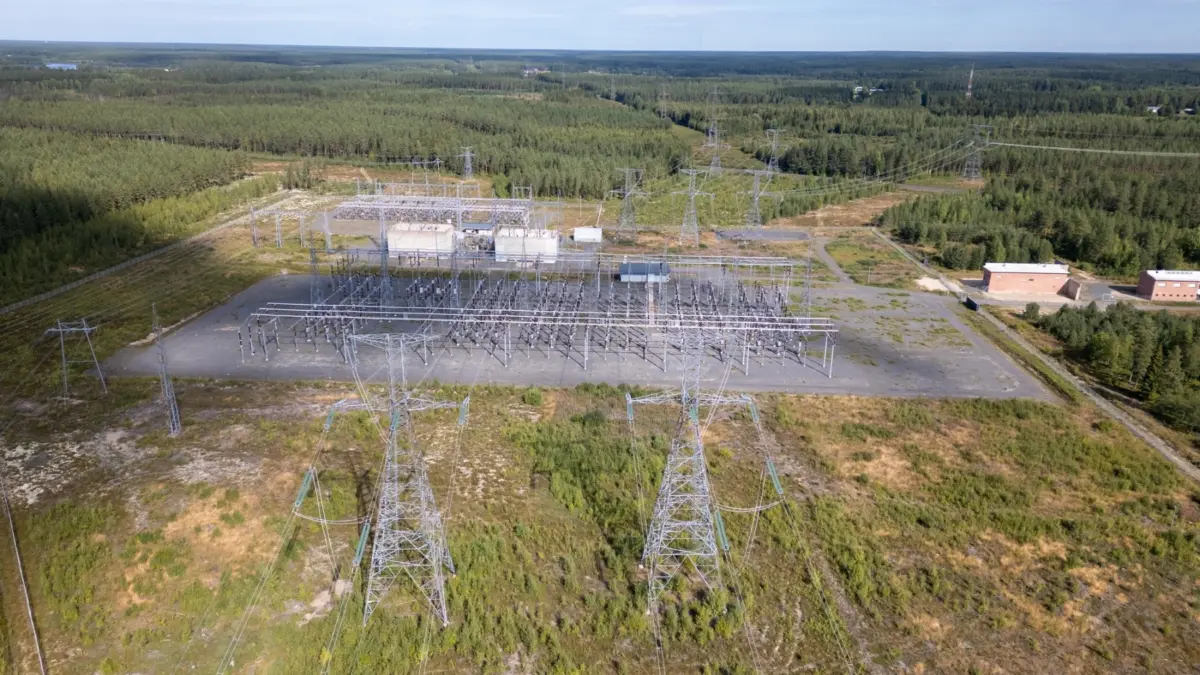
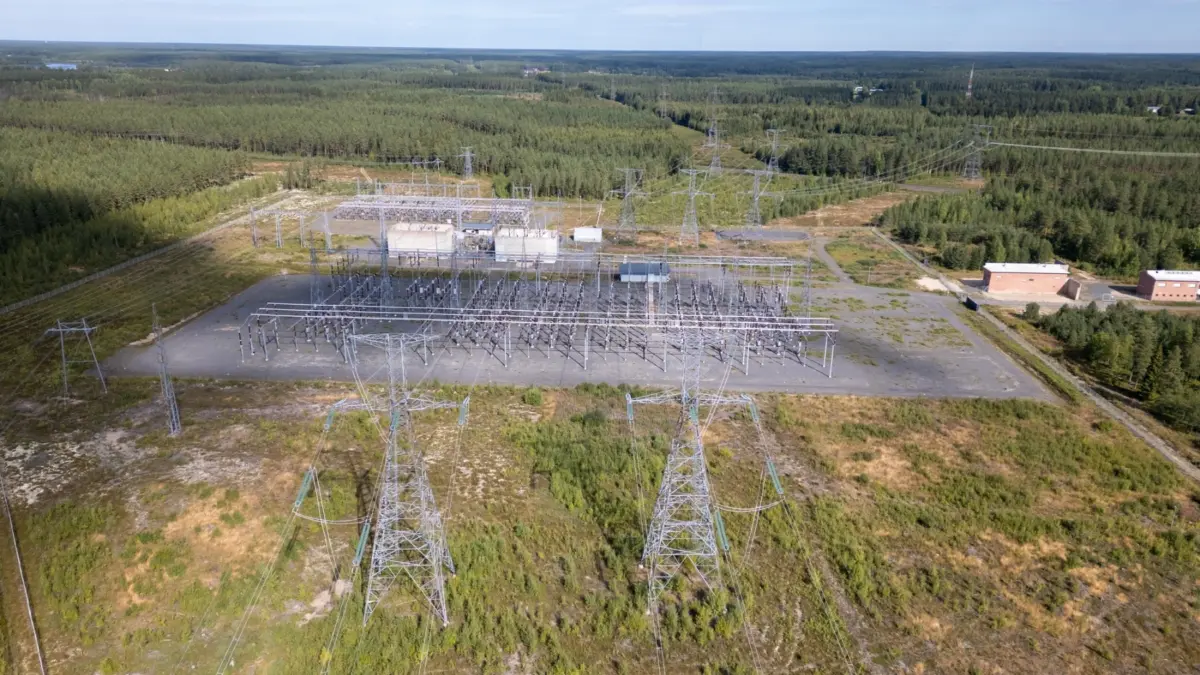
For decades, the standard blueprint for data center development has been defined by horizontal sprawl. Driven by the need for vast expanses of cheap land, heavy electrical grid interconnects, and expansive yards for massive cooling units, developers have consistently built outward, transforming rural and suburban peripheries into vast, low-slung server farms.
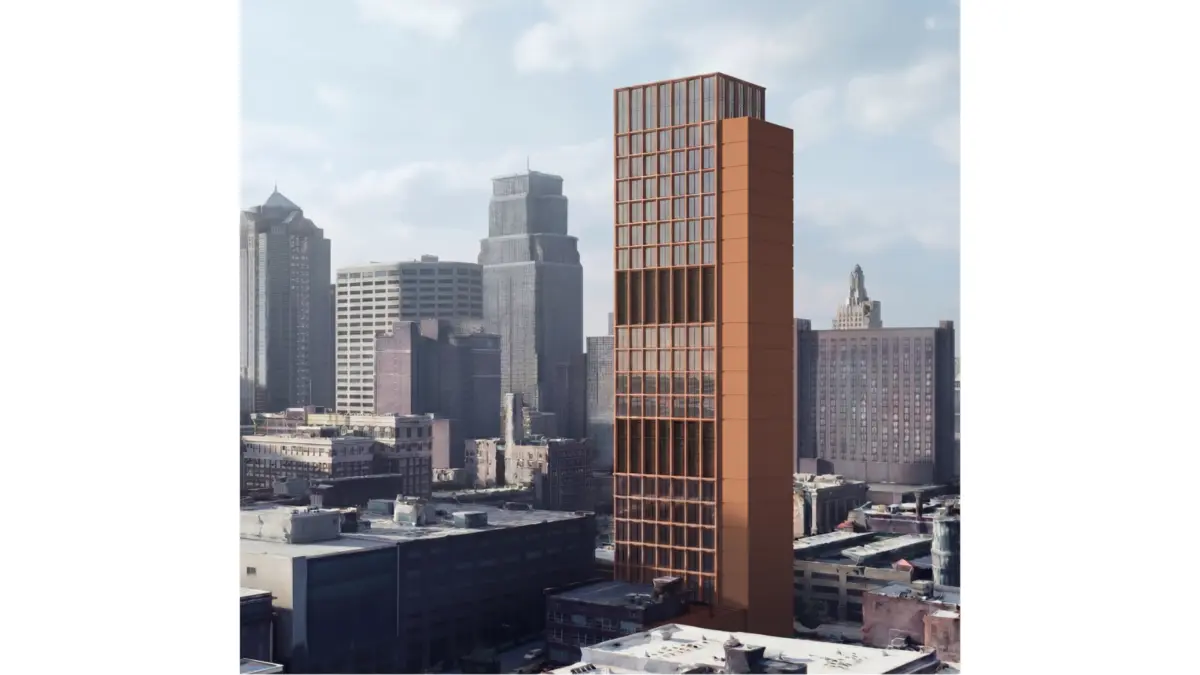
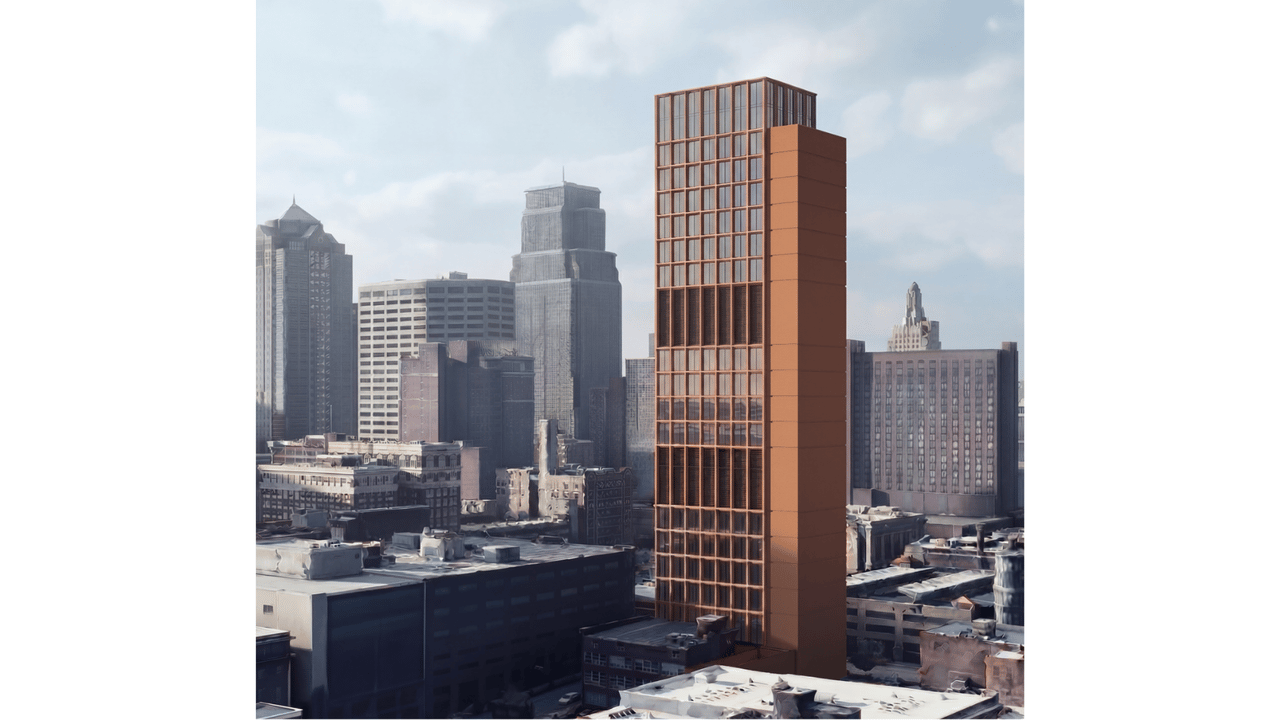
However, a radical counter-proposal in downtown Kansas City, Missouri, challenges this conventional paradigm. Spearheaded by developer Revitalization Unlimited and conceptualized by the legendary Chicago-based architecture firm Skidmore, Owings & Merrill (SOM), the project envisions a bold, 20-story vertical data center tower. Occupying a minuscule 0.23-acre urban parcel, the development attempts to stack computing, power, and cooling infrastructure vertically.
The rationale behind this vertical pivot is grounded in the shifting nature of modern computing workloads. As artificial intelligence (AI) inference—the process where trained models actively answer user queries—demands near-zero latency, proximity to end-users becomes a critical competitive advantage. By establishing a dense, carrier-rich digital hub in the heart of the metro area, Revitalization Unlimited hopes to bridge the gap between urban populations and mission-critical cloud infrastructure.
Yet, rewriting the playbook for data center architecture comes with an extraordinary set of financial, operational, and engineering hurdles. Stacking infrastructure vertically introduces substantial construction premiums, logistical nightmares regarding equipment replacement, and complex mechanical challenges. With an estimated development price tag of $183 million—amounting to an eye-watering $1,300 per square foot—the project is a calculated, high-stakes experiment.
This in-depth investigative report examines the architecture, economics, environmental realities, and community implications of the proposed Kansas City tower, while exploring whether vertical infrastructure can successfully carve out a permanent niche in the modern digital landscape.
Detailed Chronology and Project Status
The journey from a conceptual architectural rendering to a viable urban proposal involves navigating a complex maze of municipal approvals, zoning ordinances, and public scrutiny.
The Genesis of a Skyscraper Data Center
The collaboration between Revitalization Unlimited and Skidmore, Owings & Merrill began with a singular hypothesis: that certain high-performance workloads require a downtown address, and that innovative architecture could solve the spatial constraints of urban real estate. SOM, renowned globally for designing iconic skyscrapers like the Willis Tower (formerly Sears Tower) and the Burj Khalifa, approached the project with an eye toward transforming a traditional infrastructure box into an engaging urban asset.
The proposed 20-story tower is designed to occupy a tight 0.23-acre footprint. However, translating this compact site into a functional 24-megawatt (MW) IT load facility requires a dramatic spatial trade-off. According to Revitalization Unlimited founder and CEO Steve Austin, only two of the building’s 20 floors will actually house computing equipment. The remaining 18 stories—devoted to mechanical, electrical, plumbing (MEP), and fire protection systems—will consume approximately 109,000 of the structure’s 141,000 gross square feet.
Municipal Hurdles and Timeline
As with any major urban intervention, navigating the municipal approval process has required patience and strategic pauses. The project’s progression hit a temporary snag in city hall proceedings, with a related city development plan ordinance listed as officially on hold until October 13.
Despite the regulatory pause, the development team has proactively engaged with city stakeholders. Crucially, Revitalization Unlimited has stated that it is seeking no tax abatements for the project—a stark contrast to the massive tax incentives routinely demanded by suburban hyperscale developments. Furthermore, the developer has expressed a willingness to accept binding conditions covering active ground-floor engagement, strict noise limits, restricted generator operating hours, construction workforce apprenticeships, and rigorous public reporting.
Supporting Context & Metrics: The Economics of Going Vertical
To understand why building upward is such a radical departure from industry norms, one must look closely at the economics and engineering realities of vertical infrastructure.
Financial Breakdown: The Construction Premium
Building a data center in a suburban greenfield site is largely about raw materials and land acquisition. Building a multi-story data center in a dense downtown core is an exercise in complex structural engineering.
Steve Austin estimates the total development cost of the Kansas City project at $183 million, translating to roughly $1,300 per square foot—a figure significantly higher than the standard per-square-foot cost of a traditional suburban facility. A deeper dive into the budget reveals where this capital goes: out of an estimated $167 million in hard construction costs, approximately $107 million is dedicated exclusively to mechanical, electrical, plumbing, and life-safety systems.
Engineering and Logistical Complexities
The physical realities of vertical integration create operational challenges that do not exist in single-story facilities. Luis Fernandes, senior research manager for cloud and data centers within enterprise infrastructure at IDC, highlights the fundamental mismatch between hardware design and vertical architecture.
"Most vendors design power and cooling equipment for horizontal placement, with very little consideration for vertical deployment," Fernandes notes.
In a 20-story tower, every piece of heavy machinery—from massive backup generators to heavy-duty chillers—must be hoisted, positioned, and maintained vertically. Factors such as structural weight distribution, freight elevator weight capacities, and crane access become daily operational concerns. Furthermore, major equipment replacements cannot simply be forklifted across an open field; they require street closures, municipal permits, and delicate coordination with surrounding urban traffic. Pumping cooling water across a 20-story vertical rise also demands specialized hydraulic engineering that differs drastically from standard commercial high-rises.
Energy and Environmental Footprint
Proponents of urban data centers often argue that saving land translates to a smaller environmental footprint. However, industry experts urge caution against such assumptions.
"There is no data to suggest that a vertical build will impact the overall environmental footprint," Fernandes warns.
To address energy independence and efficiency, the Kansas City design targets an ambitious Power Usage Effectiveness (PUE) of 1.25. More notably, the facility proposes utilizing 30 MW of on-site Bloom Energy fuel cells as its primary electricity source. While these advanced fuel cells offer a cleaner alternative to traditional grid power, they rely on natural gas as a fuel supply—meaning that operating expenses will fluctuate with commodity markets, and independence from the electrical grid does not equate to zero emissions.
Water usage is another critical metric that demands scrutiny. While developers often market high-rise towers as self-contained systems, the inclusion of evaporative cooling technologies introduces substantial water consumption demands. Municipalities will require precise, transparent operating figures to evaluate these resource trade-offs before granting final permits.
Official Industry Statements & Perspectives
The proposal has sparked a wider industry debate over the viability, necessity, and true purpose of downtown data centers.
The Case for Proximity: Inference and Latency
According to Steve Austin, the push toward metropolitan locations is driven almost entirely by the explosive growth of AI inference workloads.
"Inference is the model actually answering a user, and it has to happen near that user because latency matters," Austin explained in an interview with Data Center Knowledge.
By integrating into nearby carrier infrastructure, planning diverse fiber entrances, and adopting a carrier-neutral design, the facility aims to offer ultra-fast connections for latency-sensitive applications.
This need for physical proximity is not entirely new. Michael Martin, managing director of data center operations at JLL, points out that certain industries have always valued physical location. However, he notes that clients rarely approach real estate brokers with a blanket request for a "downtown address."
"The reality is that clients don’t come to us asking for a downtown data center," Martin says. "They’re usually trying to solve a business problem."
Martin categorizes the market neatly: while massive, power-hungry AI training clusters will continue to favor sprawling rural campuses with abundant land and cheap power, urban sites present massive opportunities for financial services, telecommunications, content delivery, and edge inference workloads.
Luis Fernandes echoes this sentiment, drawing parallels to high-frequency stock trading. "It is not uncommon for stock traders to seek addresses closest to the actual stock exchange servers where transactions are processed in order to gain a few fractions of a second in any given transaction," Fernandes notes.
Community Integration vs. Closed-Door Infrastructure
Traditional data centers are notorious for being closed-off fortresses—windowless, heavily guarded boxes surrounded by security fencing that contribute very little to the local tax base relative to their vast physical footprints.
Austin emphasizes that the Kansas City project aims to change this narrative by generating substantial tax revenue and continuous local spending, even if its permanent on-site staffing is relatively modest.
"On-site operations staff is a couple of dozen," Austin notes. "The rest are technicians, contractors, and service firms the facility pays continuously, plus the jobs supported by their spending."
However, industry analysts argue that true community integration requires going beyond basic economic metrics. Fernandes suggests that urban data center developers should forge active partnerships with local trade schools, public libraries, or community services.
"[Make] the data center a part of the community instead of something forced upon a community," Fernandes advises, framing social license as a critical component of modern infrastructure development.
Future Outlook: Flexibility, Adaptation, and the Urban Grid
As the digital economy accelerates, the architectural strategies of data center operators must evolve in lockstep. The Kansas City proposal serves as a litmus test for a broader industry question: Can high-density, vertical infrastructure successfully bridge the gap between human population centers and the insatiable demand for computing power?
Adaptive Reuse vs. Ground-Up Towers
Looking beyond greenfield vertical builds, JLL’s Michael Martin sees significant potential in retrofitting existing urban structures. Reusing older downtown commercial buildings, capitalizing on pre-existing utility connections, and repurposing structural cores can drastically reduce waste while dramatically accelerating speed-to-market.
However, whether building from the ground up or retrofitting an existing high-rise, long-term viability boils down to one essential attribute: adaptability.
"The facilities that remain valuable over the long term are the ones that can adapt," Martin concludes. "That means flexibility in power distribution, cooling architecture, structural capacity, and overall building design."
The Verdict on Vertical Data Centers
The proposed 20-story data center tower in downtown Kansas City is undeniably an outlier. It asks architects, engineers, city planners, and financial backers to absorb immense capital costs and operational complexities in exchange for unmatched network proximity and minimal land usage.
Whether the project ultimately breaks ground or remains an ambitious architectural thought experiment, it has already achieved something significant: it has forced the data center industry to rethink the boundaries of what is possible.
As Steve Austin aptly summarizes: "We are not arguing that every data center belongs downtown. We are arguing this one does, and we are paying a construction premium to prove it."
If that proof succeeds, it may well establish a new architectural blueprint for how our digital world intersects with our physical cities.