Executive Overview
The artificial intelligence hardware landscape is undergoing a seismic realignment, and at its epicenter stands Etched, a four-year-old semiconductor startup that has captured the imagination—and checkbooks—of Silicon Valley’s most elite investors. Despite having closed a colossal $700 million funding round at a $21 billion valuation just months ago, Etched is already fielding preliminary acquisition and investment overtures valuing the company between $40 billion and $50 billion.
This staggering acceleration highlights a market starved for viable alternatives to Nvidia’s ironclad monopoly on AI accelerators. Founded by collegiate dropouts who turned academic brilliance into a formidable hardware operation, Etched is not merely designing alternative chips; it is building full AI hardware systems powered by proprietary silicon engineered from the ground up specifically for inference.
While top-tier institutional backers float eye-watering bids that could double or triple the startup’s valuation yet again, Etched’s journey illuminates the immense capital requirements, architectural innovations, and high-stakes talent wars defining the modern AI boom. As the company reviews early-stage proposals that could secure up to three and a half years of financial runway, the broader tech ecosystem is forced to ask a singular question: Can a startup born in a Harvard math class truly break Nvidia’s stranglehold on the future of artificial intelligence?
Detailed Chronology: The Making of a Silicon Phenom
From Harvard Classrooms to Silicon Valley Foundry
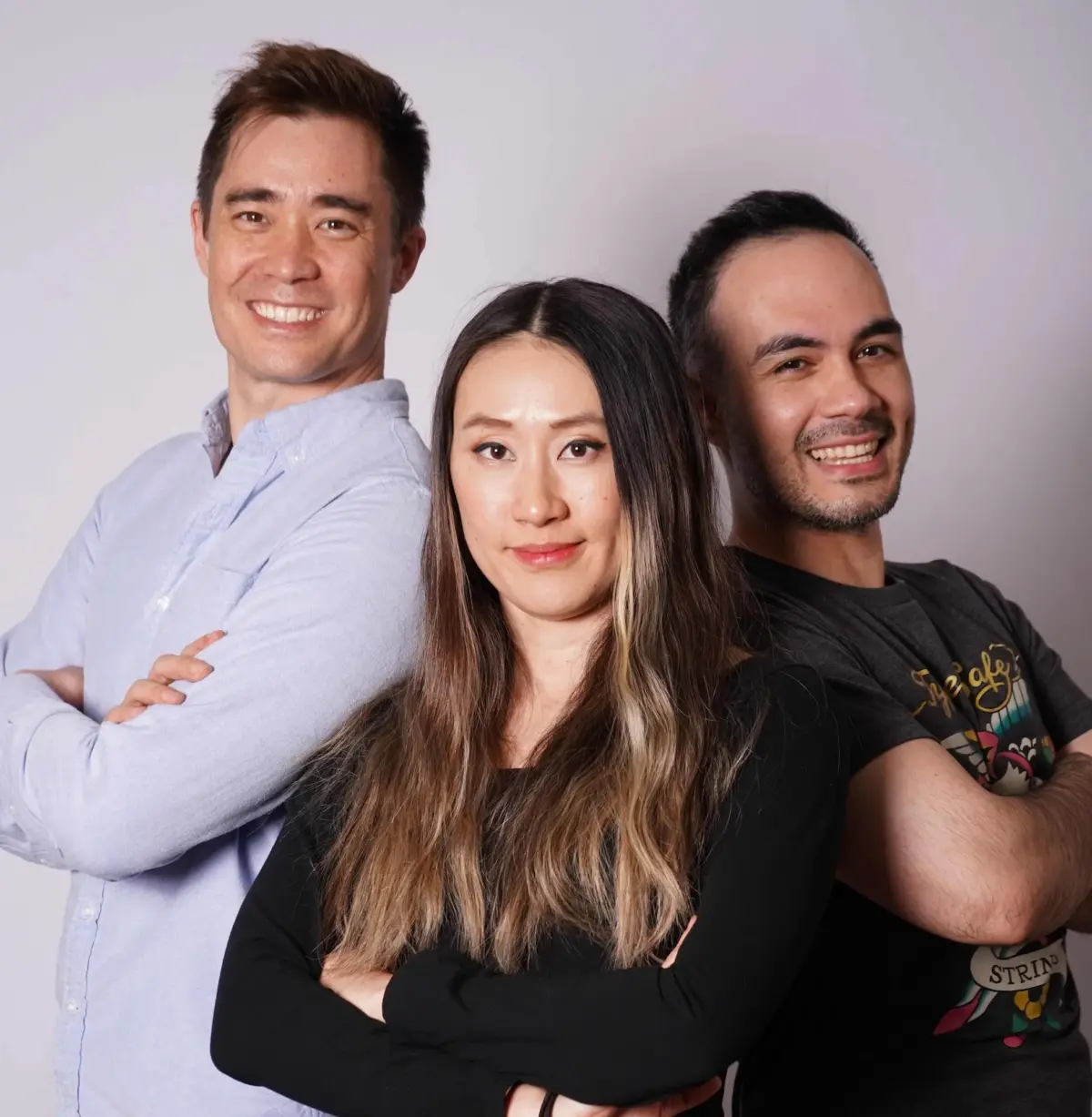
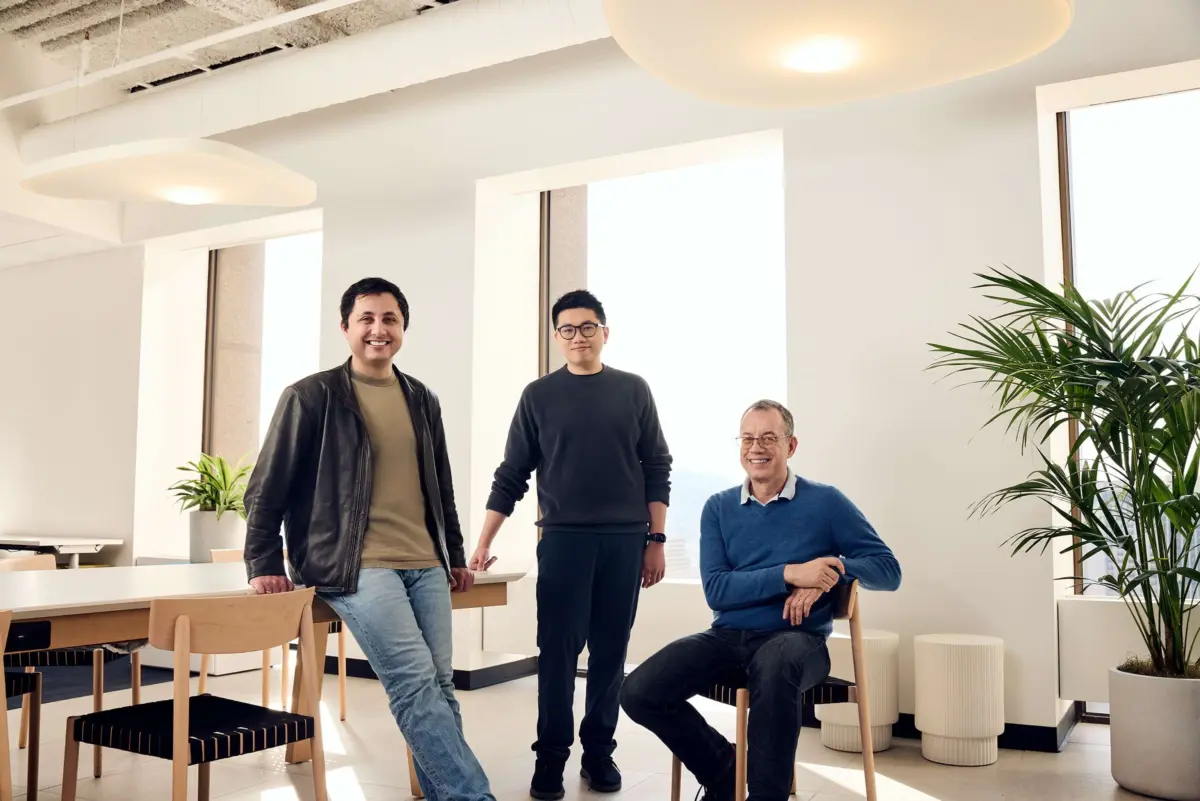
The genesis of Etched traces back to an advanced mathematics course at Harvard University, where co-founders Gavin Uberti and Chris Zhu first crossed paths. Alongside Robert Wachen—who roomed with Uberti—the trio recognized that the computational bottlenecks facing generative AI models would eventually outpace general-purpose hardware.
Rather than finishing their degrees, the founders made the high-stakes decision to drop out and establish a hardware company capable of rethinking processor architecture from the silicon level. In an industry historically dominated by legacy giants with decades of institutional knowledge, the young founders quickly proved they could punch above their weight.
The Back-to-Back Funding Phenomenon
Etched’s fundraising history reads like a masterclass in market timing and aggressive venture momentum. In July, the startup announced a $300 million financing round at a $10.3 billion valuation led by venture capital powerhouse Sequoia Capital. Rather than resting on its laurels, the company immediately rolled that momentum into an even larger tranche. By September, Etched secured an additional $700 million, doubling its valuation to $21 billion in a matter of weeks.
This aggressive pacing—effectively a single massive financing split into two distinct tranches with rapidly escalating valuations—reflects a broader, increasingly common playbook among the world’s most sought-after AI startups. It allows companies to lock in immediate capital while continuously resetting market expectations.
Now, sources close to the company indicate that Etched is reviewing fresh incoming bids ranging from $40 billion submitted by top-tier venture funds to $50 billion offered by lesser-known institutional backers. Although these fundraising discussions remain in their nascent stages and terms remain fluid, the sheer velocity of these valuations underscores an unprecedented appetite for specialized AI infrastructure.
Supporting Context & Metrics: The Anatomy of Etched’s Edge
Targeting the Inference Bottleneck
To understand why venture capitalists are practically battering down Etched’s doors, one must examine the specific computational shift the startup is targeting. While the early days of the generative AI boom were defined by massive model training phases—where Nvidia’s graphics processing units (GPUs) reigned supreme—the industry’s operational center of gravity is shifting toward inference. Inference is the day-to-day computational process that occurs after a user submits a prompt, generating responses in real time.
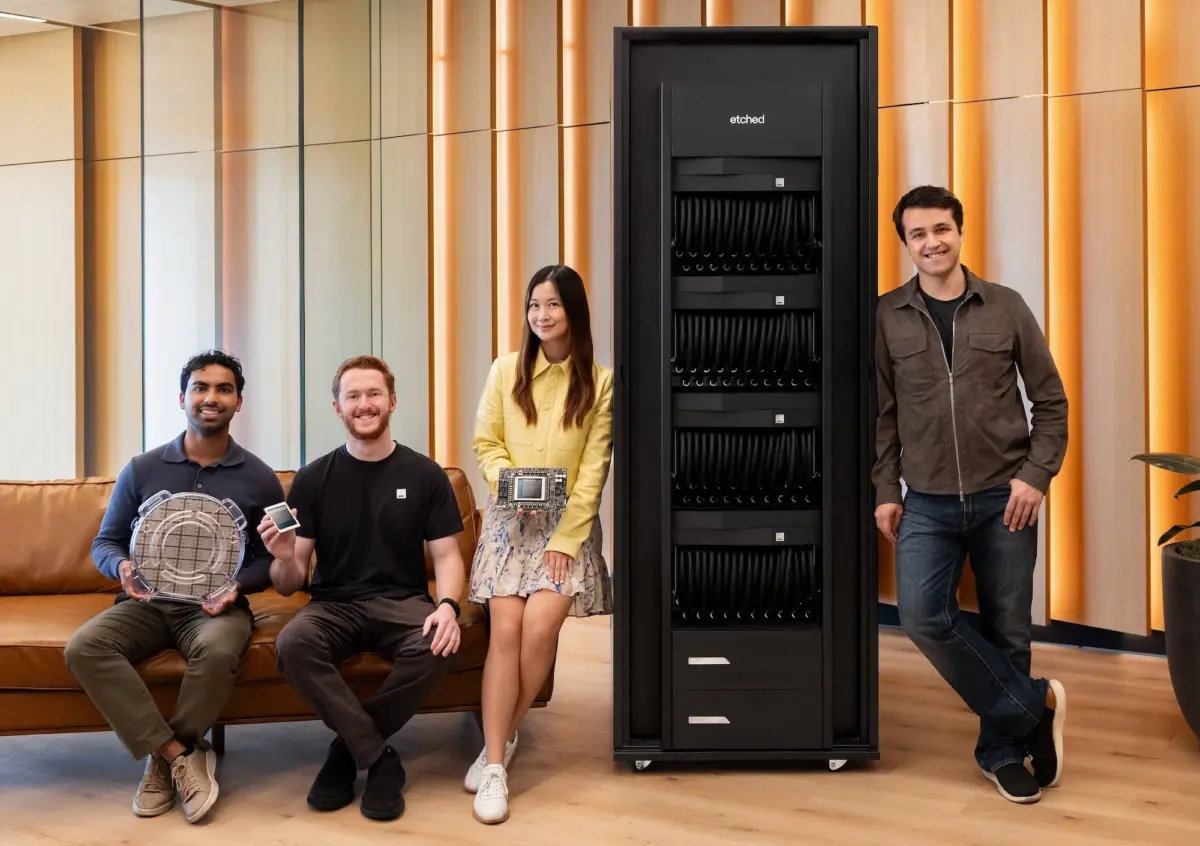
Traditional GPUs are general-purpose processors; while they are exceptionally versatile, they are inherently burdened by overhead when executing transformer-based AI models repetitively. Etched has taken a radically different approach. According to co-founder and Chief Operating Officer Robert Wachen, the company has designed two entirely new components from scratch specifically optimized to accelerate inference.
By tailoring silicon directly to the mathematical structures of large language models, Etched claims its processors can process significantly more tokens per second at a fraction of the cost and energy footprint required by Nvidia’s flagship hardware.
Commercial Validation and Manufacturing Milestones
Architectural claims in the semiconductor industry are dime a dozen, but Etched has backed up its rhetoric with hard commercial traction. Over the summer, the startup successfully taped out and manufactured its test chip at Taiwan Semiconductor Manufacturing Company (TSMC) facilities, proving its designs could transition successfully from digital blueprints to physical silicon.
The market response was immediate. By July, Etched announced it had already secured $1 billion in customer orders. Among those early adopters is Jane Street, the elite quantitative trading firm. For high-frequency trading titans like Jane Street, microscopic advantages in execution speed translate directly into millions of dollars in financial leverage. Jane Street did not merely sign on as a customer; the firm also flexed its financial muscle to lead Etched’s $700 million round, underscoring the critical intersection of high-end finance and advanced AI hardware.
Infrastructure and Talent Acquisition
Building competitive silicon requires more than clever code and foundry partnerships; it demands world-class infrastructure and top-tier human capital. Etched has aggressively scaled on both fronts:
- Physical Infrastructure: The company has brought online a state-of-the-art 10-megawatt data center in Silicon Valley to stress-test its systems at scale. Additionally, Etched has established a dedicated facility in Taiwan to maintain close proximity to TSMC’s production lines, ensuring seamless coordination between design and manufacturing.
- The Nvidia Exodus: In the hyper-competitive talent market for chip designers, Etched has pulled off notable coups by poaching engineering talent from the incumbent giant. According to reports from The Wall Street Journal, roughly 15% of Etched’s 400-person workforce consists of alumni from Nvidia. This influx of battle-tested engineers has given the startup institutional memory and technical depth usually reserved for companies decades older.
Official Statements and Industry Perspectives
While official corporate commentary from Etched remains tightly controlled—the startup declined to comment on the latest round of $40 billion to $50 billion valuation offers—industry stakeholders have been vocal about the underlying market dynamics.
The massive capital injections are fundamentally defensive as much as they are offensive. Building full AI hardware systems is notoriously capital-intensive, requiring astronomical upfront expenditures for mask sets, packaging, testing, and system integration. According to insiders familiar with the current term sheets, raising another round on par with its previous venture influx would afford Etched a financial runway of up to 3.5 years. This extended horizon provides the startup with the breathing room necessary to scale production, deliver on its backlog of customer orders, and iterate on next-generation architectures without the immediate pressure of near-term cash burn.
Venture capitalists observing the round note that Etched represents a rare breed in the current technological landscape: a genuine hardware contender capable of challenging Nvidia’s near-monopoly. As enterprise adoption of AI shifts from experimental deployments to core infrastructure, corporate buyers are actively seeking supply chain diversification to avoid single-vendor lock-in and manage escalating compute costs.
Future Outlook: Can Etched Sustain the Momentum?
The path ahead for Etched is fraught with both extraordinary opportunity and immense execution risk. The semiconductor industry is famously unforgiving; manufacturing delays, supply chain disruptions, or architectural miscalculations can derail even the best-funded startups. Furthermore, Nvidia is not standing still, continuously rolling out architectural upgrades and software optimizations designed to protect its market share.
Yet, the market forces propelling Etched forward show no signs of abating. The insatiable global demand for faster, cheaper inference hardware remains the primary bottleneck for the scaling of enterprise AI. If Etched can successfully convert its $1 billion order book into reliably delivered, high-performing hardware systems, a $40 billion or $50 billion valuation may ultimately look conservative in hindsight.
As venture capitalists continue to circle, dangling transformative sums of capital, Etched stands at the precipice of a new era. Whether the young startup can successfully translate its mathematical origins and engineering talent into a permanent structural dent in Nvidia’s armor will be one of the defining tech storylines of the decade. For now, the race for silicon supremacy has officially entered hyperdrive.