Executive Overview
The rapid, relentless expansion of high-density artificial intelligence (AI) and machine learning (ML) workloads is forcing a massive paradigm shift in data center engineering. For decades, the structural power delivery blueprint of virtually all large-scale data facilities has remained steadfastly anchored in alternating current (AC) distribution architectures.
However, the sheer electrical consumption and raw thermal output of modern graphics processing units (GPUs) and specialized AI accelerators have pushed traditional infrastructure to its absolute physical limits. To circumvent these constraints, engineers and infrastructure designers are increasingly turning to high-voltage direct current (HVDC) architectures—specifically leveraging solid-state transformers (SSTs) to bring medium-voltage (MV) to direct current (DC) conversion directly inside the data center footprint.
This technological evolution is not merely an incremental upgrade; it represents a fundamental reimagining of how electrical energy is captured from the utility grid, transformed, conditioned, and delivered down to the server rack. By replacing bulky, low-frequency iron-core transformers with high-frequency semiconductor-based systems, data center operators can dramatically shrink equipment footprints, reduce structural weight, optimize conversion efficiencies up to 98.5%, and seamlessly integrate intermittent renewable sources like solar arrays alongside heavy battery energy storage systems (BESS).
Nevertheless, transitioning to an MV-to-DC topology powered by SSTs is accompanied by formidable challenges. Supply chain maturity, long-term operational reliability at 34.5 kV scales, and the intricacies of high-voltage component manufacturing mean that widespread adoption will likely follow a measured, phased trajectory.
As hyperscalers and cloud service providers race to build the "AI factories" of tomorrow, the battle between legacy AC paradigms and advanced DC-centric architectures is defining the cutting edge of energy infrastructure engineering.
Detailed Chronology of the Shift to DC and SST Architectures
The journey toward high-voltage direct current and solid-state transformation within enterprise and hyperscale digital infrastructure did not happen overnight. It is the result of a steady accumulation of thermal, spatial, and electrical pressures catalysed by the generative AI boom.
The Pre-AI Baseline: AC Dominance (Late 2000s – Early 2020s)
Historically, data centers relied on medium-voltage utility feeds (typically ranging from 15 kV to 35 kV) being stepped down via traditional oil-filled or dry-type low-frequency transformers to a 480V or 4160V AC distribution system. This power was subsequently routed through uninterruptible power supply (UPS) systems and power distribution units (PDUs) before reaching server power supply units (PSUs), which finally converted the AC power to low-voltage DC (typically 12V) for motherboard components.
Each conversion stage introduced thermal losses, added weight, and consumed valuable floor space. While minor efficiency gains were achieved over the years, the fundamental AC-native topology remained unchallenged because standard IT loads were relatively modest and predictable.
The AI Inflection Point and the 800V DC Standard (2023 – 2024)
As hyperscale operators began deploying clusters containing tens of thousands of power-hungry AI accelerators, power delivery swiftly evolved into a primary performance bottleneck. Racks that previously consumed 5 to 10 kilowatts suddenly demanded 40, 100, or even upwards of 150 kilowatts.
The traditional 12V server rail architecture buckled under the amperage required to move such massive amounts of power through standard copper cabling. In response, industry consortia—most notably driven by the Open Compute Project (OCP) and hardware specifications championed by NVIDIA—began coalescing around an 800V DC facility bus architecture, dropping down to 48V at the rack or sled level. This drastically reduced current, minimized resistive $I^2R$ copper losses, and set the stage for native medium-voltage-to-direct-current (MV-to-DC) transformations.
The Emergence and Piloting of Solid-State Transformers (2025 – Present)
By 2025, the hardware ecosystem matured enough to bridge the gap between theoretical MV-to-DC efficiency and real-world implementation. Silicon carbide (SiC) semiconductors became widely commercially viable, offering the high-voltage tolerance, thermal resilience, and rapid switching speeds necessary for high-power electronics.
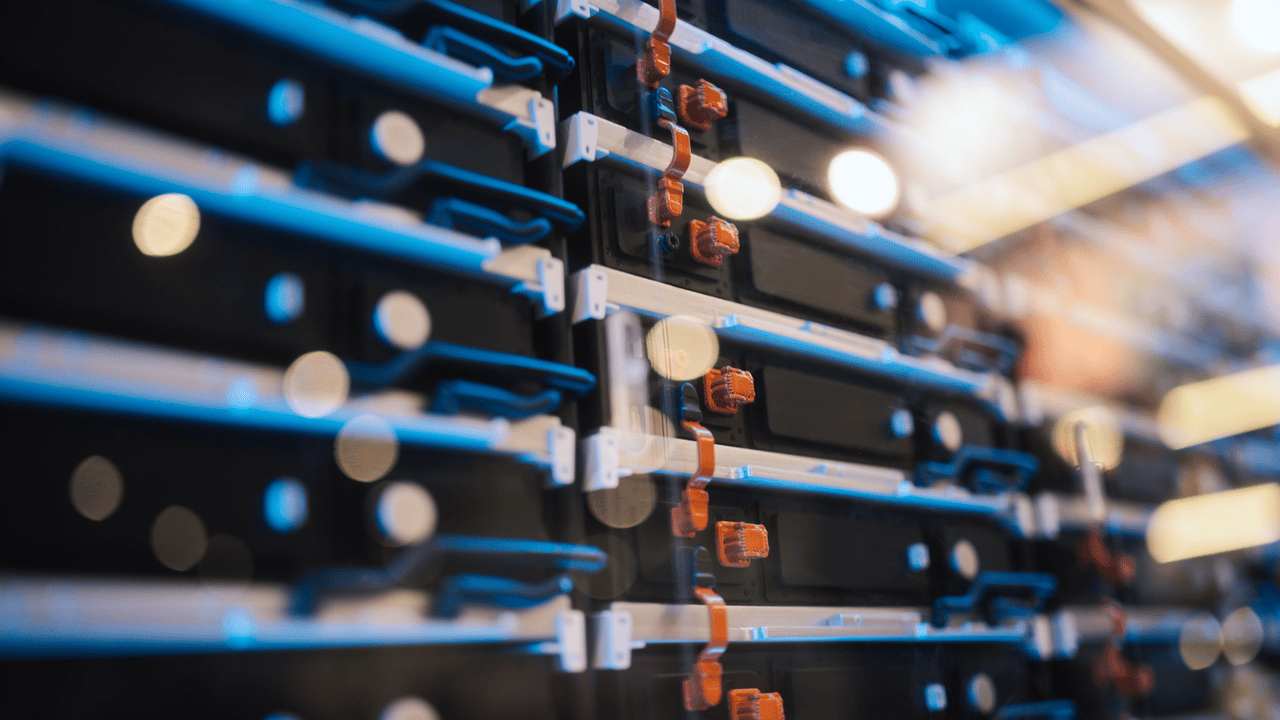
Major power electronics manufacturers, including Delta and specialized innovators like Alderbuck Energy, began showcasing commercial-grade SST platforms at global industry forums such as the OCP Global Summit. Pilot programs were launched globally—most notably marked by installations in Asian facilities and high-profile U.S. academic testbeds like the San Diego Supercomputer Center at UC San Diego—signaling the shift from experimental R&D to active commercial deployment.
Supporting Context & Technical Metrics: How SSTs and SiC Work
To fully appreciate why solid-state transformers are capturing the attention of data center operators, one must examine the underlying engineering differences between legacy magnetic transformers and modern semiconductor-based power units.
Anatomy of a Solid-State Transformer (SST)
Unlike a conventional transformer, which relies on a heavy iron core operating at grid frequencies (50Hz or 60Hz) to step voltage up or down via electromagnetic induction, an SST is an active power electronics system.
[ Utility Grid: Medium-Voltage AC (15kV - 35kV) ]
                        │
                        ▼
       [ Solid-State Transformer (SST) ]
  ┌──────────────────────────────────────────┐
  │ • Silicon Carbide (SiC) Switching Stages │
  │ • High-Frequency Magnetics (Small Cores) │
  │ • Galvanic Isolation & Voltage Shaping   │
  └──────────────────────────────────────────┘
                        │
                        ▼
       [ Facility Distribution: 800V DC Bus ]
                        │
                        ▼
       [ Server Rack / Sled Level: 48V DC ]
An SST performs its work in multiple integrated stages:
- AC-to-DC Rectification: Incoming medium-voltage AC power is rectified into a high-voltage DC link.
- High-Frequency Inversion: The high-voltage DC is inverted into high-frequency AC, allowing the use of dramatically smaller, lighter magnetic transformer cores.
- Isolation and Rectification: The high-frequency AC passes through a high-frequency transformer (maintaining galvanic safety isolation) before being converted into the final output voltage—typically an 800V DC bus designed for direct facility distribution.
This sophisticated multi-stage conversion unlocks several distinct operational advantages:
- Footprint and Weight Reduction: Because high-frequency transformers require vastly less core material, SSTs are significantly lighter and smaller than traditional iron-core transformers, easing structural load requirements on facility floors.
- Bidirectional Power Flow: SSTs natively support two-way power transmission. This makes integrating onsite renewable energy generation (such as solar photovoltaic arrays) and high-capacity battery energy storage systems (BESS) seamless, eliminating the need for separate inverters and rectifiers.
- Power Conditioning and Filtering: SSTs act as active power conditioners, instantly filtering electrical noise, smoothing voltage sags, and mitigating current oscillations before they reach sensitive AI hardware.
The Role of Silicon Carbide (SiC) Semiconductors
The commercial viability of high-voltage SSTs is inextricably linked to advancements in wide-bandgap semiconductor materials, specifically Silicon Carbide (SiC). Traditional silicon-based insulated-gate bipolar transistors (IGBTs) struggle with the switching speeds and thermal thresholds required for direct medium-voltage-to-low-voltage DC conversion at scale.
SiC devices, by contrast, can operate at substantially higher voltages, withstand extreme junction temperatures, and switch at much higher frequencies with drastically reduced switching losses. This material leap is what allows modern SST units to achieve grid-to-bus efficiencies reaching up to 98.5% while maintaining compact form factors that fit smoothly into existing data center layouts.
Official Industry Perspectives and Expert Statements
The data center infrastructure ecosystem is deeply divided regarding the speed and scope of the transition toward solid-state MV-to-DC architectures. Industry leaders offer a spectrum of insights reflecting both boundless optimism and cautious pragmatism.
The Optimistic View: Accelerating the AI Factory
Proponents of the technology view SSTs as an absolute operational necessity for the next generation of computing infrastructure.
"The move from AC to DC can be hastened by the introduction of solid-state transformers that act as a higher-voltage foundation," notes Shen Wang, partner at Fortune Virtue Capital and former practice lead for global data center infrastructure research at Omdia. Wang anticipates that scaled deployments will gain rapid momentum among hyperscalers and major cloud service providers heading toward 2027.
Similarly, manufacturers actively pushing the envelope are seeing strong validation from the market. Waqas Arshad, vice president of product and technology, microgrid solutions at Delta, emphasizes that power delivery has officially transformed into a primary operational bottleneck.
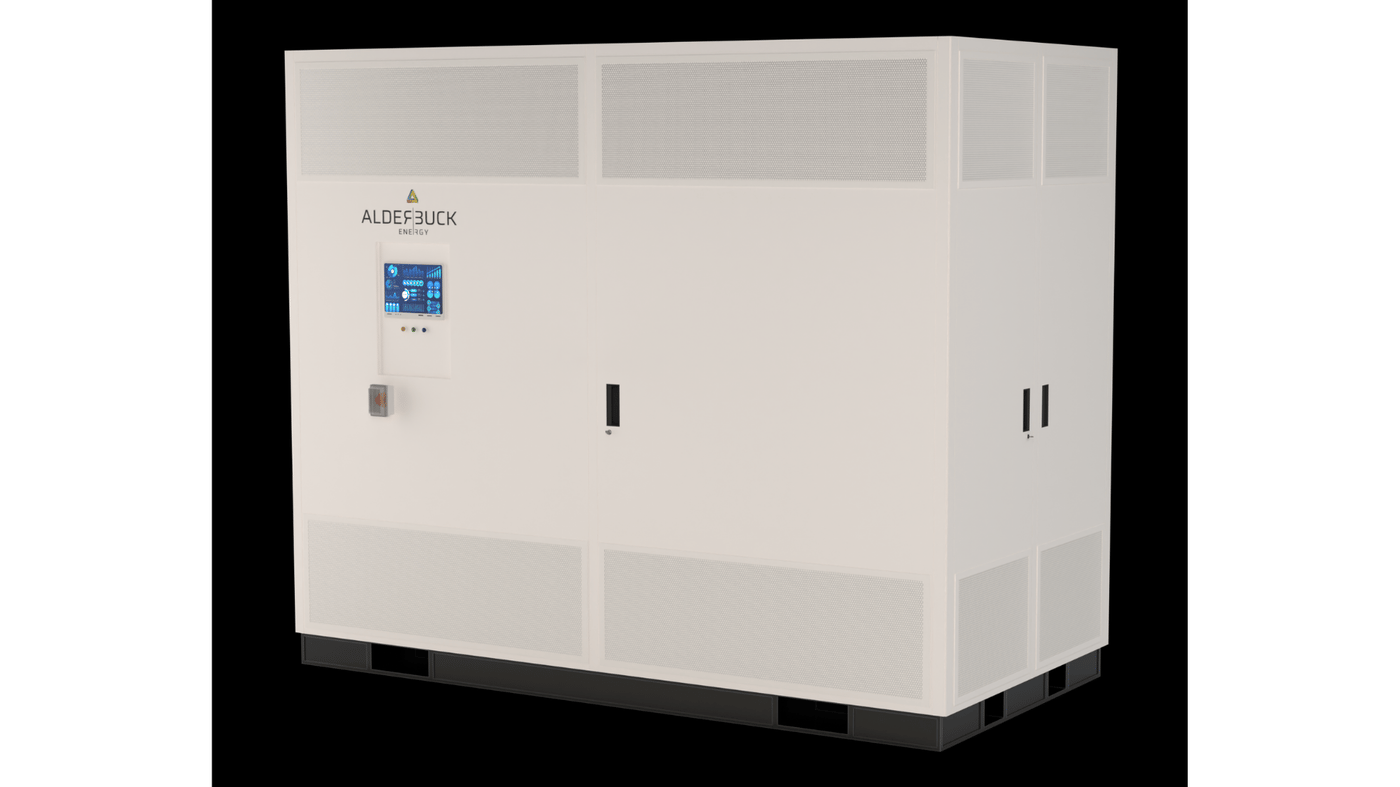
"Power delivery has become a performance bottleneck… fueling conversion to 800 V DC distribution, along with the chips (SiC) and control software finally catching up enough to make this kind of MV-to-DC conversion practical at scale and at the needed reliability," says Arshad. Delta’s newly developed SST platform—showcased at the OCP Global Summit—directly translates medium-voltage AC (6.6 kV to 35 kV) into an 800V DC bus at an impressive 98.5% efficiency rate, with dozens of units already deployed across Asia and active customer pilots underway in the United States.
Echoing this sentiment, Rick Sander, CEO of electrical infrastructure and SST supplier Alderbuck Energy, advocates for the deployment of software-defined power platforms like the company’s Nexus Power Unit. This system replaces a tangled web of traditional gear—transformers, rectifiers, and inverters—with a unified unit managed by PowerVectorAI, a software layer that coordinates energy flows among utility grids, renewables, and batteries in real time.
"If no GPU upgrades are planned, SSTs may not be necessary," Sander explains, qualifying that for high-density AI builds, the technology eliminates massive amounts of energy loss and installation friction. Sander projects that the majority of new installations will incorporate SSTs by 2028, with near-total market saturation anticipated by 2035.
The Cautious Perspective: Maturity, Supply Chains, and Engineering Rigor
Despite the undeniable theoretical benefits, prominent voices within power systems engineering urge caution, pointing out that the technology still faces adoption hurdles.
Clayton Gibbons, head of power systems at power-conversion manufacturer SPOC Energy, argues that solid-state MV-to-DC backbones are not yet fully mature enough for universal, frictionless rollout across all markets. As a pragmatic bridge, Gibbons advocates for hybrid transformer-plus-rectifier approaches. These alternative architectures can achieve approximately 97.3% grid-to-rack efficiency while fully leveraging existing, time-tested medium-voltage transformer supply chains, allowing operators to reap the benefits of DC power immediately without betting the farm on an entirely nascent electronics platform.
This sentiment is echoed by global electrical titan Hitachi Energy. Vishak Gopinath, a spokesperson for the company, notes that operating continuously at 34.5 kV while simultaneously shrinking equipment footprints introduces immense engineering challenges.
"Compact SSTs demand stringent insulation systems and high manufacturing quality to ensure a 20-year service life," Gopinath warns.
While Hitachi Energy continues to invest heavily in SST building blocks—including medium-voltage converters, advanced transformer manufacturing techniques, and MV SiC semiconductors—the organization maintains that the technology must undergo further maturation before it can safely address every conceivable data center use case.
Future Outlook: The Phased Road to 2035
The transformation of data center power grids will not occur overnight. Because capital expenditure cycles in the mission-critical facilities sector operate on multi-year planning horizons, legacy AC infrastructure will coexist with emerging DC architectures for the foreseeable future.
Industry analysts and infrastructure architects generally project a phased, multi-step transition path:
- Near-Term Prototyping (2025 – 2026): Hyperscale operators and premier colocation providers will continue testing HVDC prototypes, relying heavily on initial U.S. and international pilot projects (such as those at the San Diego Supercomputer Center) to validate thermal performance, grid stability, and software-defined energy management under real-world AI workloads.
- Mainstream Hyperscale Adoption (2027 – 2030): As supply chains for silicon carbide semiconductors mature and manufacturing yields stabilize, Tier-1 cloud providers will mandate 800V DC bus architectures for all greenfield AI-dense facilities. Solid-state transformers will transition from early-adopter novelties to standard-spec components for high-capacity builds.
- Broad Enterprise and Retrofit Integration (2030 – 2035+): Driven by mounting regulatory pressures regarding power usage effectiveness (PUE) and the necessity to incorporate localized renewable generation and green microgrids, mainstream enterprise data centers will increasingly embrace SST-based MV-to-DC distribution. By the mid-2030s, industry consensus suggests that solid-state transformers will supplant traditional low-frequency iron-core transformers as the dominant paradigm for high-performance digital infrastructure.
Ultimately, the convergence of artificial intelligence, soaring rack densities, and the global imperative for energy efficiency has turned power architecture into the ultimate competitive differentiator. Whether through the rapid deployment of advanced solid-state transformers or pragmatic hybrid rectification systems, the data center industry is decisively breaking free from decades-old electrical norms to build the high-voltage direct current foundation of the future.