By Shane Snider
Senior News Writer, Data Center Knowledge
August 26, 2026
Executive Overview
In a strategic shift that underscores the tightening intersection of artificial intelligence and global energy grids, OpenAI is moving its core energy planning operations directly inside its data center development organization. This structural reorganization aims to merge power technologies and flexible computing into a unified infrastructure strategy, establishing repeatable pathways for integrating clean power, grid services, and advanced compute scheduling across the company’s expanding project portfolio.
As part of this transition, OpenAI is actively recruiting for a Clean Energy and New Technology Lead within its Industrial Compute organization. This pivotal role will evaluate clean power, advanced storage, grid flexibility, low-carbon backup generation, and efficiency technologies. Rather than treating energy procurement as a siloed, project-by-project decision, the incoming leader will be tasked with shaping an internal capability to determine which power architectures can be practically and repeatedly deployed across OpenAI’s global footprint.
This organizational pivot occurs against a backdrop of rapid scaling, executive shuffling within its data center operations, and unprecedented power commitments—such as the massive 3.2-gigawatt (GW) Project Camellia campus in Georgia. Together, these developments highlight how hyperscale AI operators are evolving from traditional tech tenants into active managers of local and regional electrical grids.
Detailed Chronology & Organizational Shifts
The integration of energy planning into OpenAI’s core data center development arm represents a maturing of the company’s physical infrastructure strategy. Historically, tech companies approached energy procurement reactively—signing power purchase agreements (PPAs) after selecting a site. OpenAI’s new approach integrates energy architecture directly into the earliest phases of data center engineering and site selection.
The Rise of Industrial Compute
The newly created Clean Energy and New Technology Lead position will sit squarely within the Industrial Compute organization. According to industry analysts, this placement is highly significant. Neil Osnato, founder of Persistence Analytics Group, points out that embedding the role within data center development—with direct accountability for execution—signals that OpenAI is building a standardized playbook for energy integration.
"The shift is fundamentally organizational," Osnato explains. "It suggests OpenAI wants an internal mechanism to evaluate and deploy power architectures portfolio-wide, treating energy strategy as a core component of engineering rather than an afterthought handled by procurement teams."
This organization continues to expand rapidly, with specialized teams overseeing powered land, heavy electrical infrastructure, data center construction, and next-generation physical assets.
Executive Transitions
The structural realignment coincides with notable leadership changes inside OpenAI’s data center group. Chris Malone, who joined the company in March 2025 as the head of data centers, recently departed, as first reported by The Wall Street Journal.
Rather than filling Malone’s exact position with a single successor, OpenAI chose to reorganize its infrastructure division to better handle the immense scale and pace of its physical buildout. According to reports from TechCrunch, responsibilities have been distributed among several key executives:
- Uday Ruddarraju, leading the overall data center team;
- Brent Mayo, overseeing data center build and delivery; and
- Spas Lazarov, directing data center engineering.
While the new Clean Energy and New Technology Lead role is not a direct replacement for Malone, it reflects a broader division of labor designed to tackle the complex technical and regulatory hurdles of powering gigawatt-scale AI workloads.
Supporting Context & Metrics: The Power of Flexibility
OpenAI’s heightened emphasis on flexible computing is not merely theoretical; it has tangible precedents in the field.
Project Camellia and Georgia Power
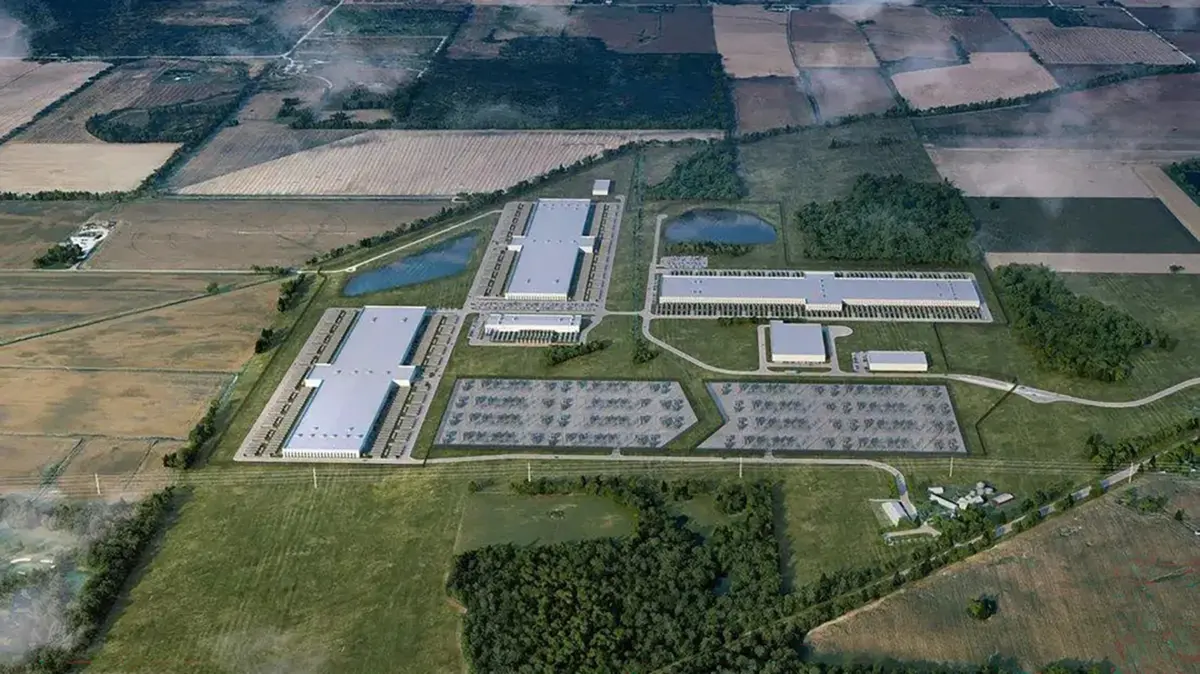
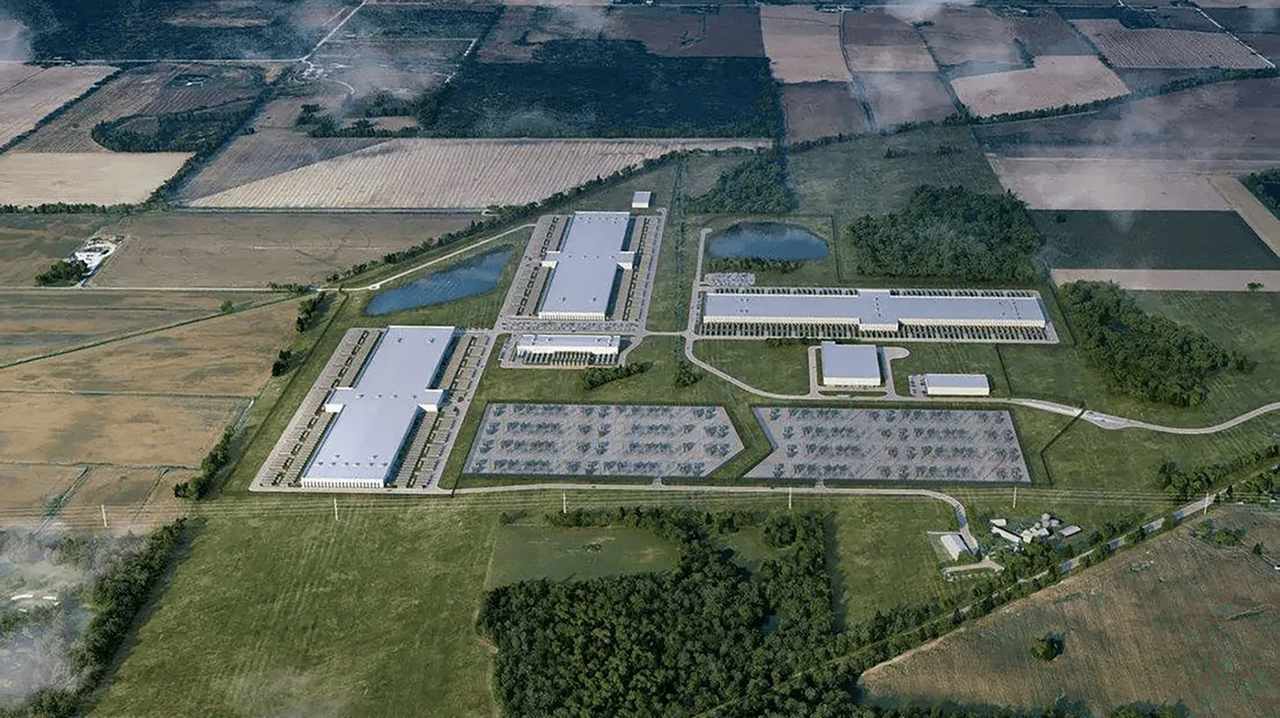
At Project Camellia, a planned 3.2 GW data center campus spanning Effingham County, Georgia, OpenAI has committed to providing Georgia Power with up to 1,000 MW (1 GW) of flexible demand response under a 25-year agreement.
According to OpenAI’s operational framework for the site, the facility is engineered to proactively dial down its power consumption before residential customers experience constraints during periods of peak grid demand. While OpenAI has not explicitly confirmed whether the new Clean Energy and New Technology Lead role will directly manage Project Camellia, the 1 GW commitment serves as a prime archetype for the type of high-stakes demand response the position will evaluate.
The Academic Lens: Quantifying AI Load Flexibility
The broader implications of flexible AI workloads extend far beyond simple load-shedding during heatwaves or cold snaps. Recent academic research sheds light on the untapped capacity sitting dormant inside modern AI data centers.
Chris Dunlap, a researcher at the University of Chicago whose preprint paper on AI data center flexibility is currently undergoing peer review, estimates that large AI facilities could provide grid flexibility equivalent to 25% to 40% of their nameplate capacity, depending on the specific facility design and workload profile.
"Essentially, none of that potential currently counts toward resource adequacy," Dunlap notes.
Dunlap’s modeling evaluates several dynamic mitigation mechanisms:
- Workload Migration: Shifting computational tasks dynamically between regional data centers over high-speed fiber networks.
- Temporal Shifting: Delaying non-urgent training or batch-inference jobs to off-peak hours.
- Modulation: Intentionally slowing or throttling compute intensity during grid stress events.
For a modeled 500-megawatt inference-dominant facility, Dunlap’s baseline yielded a mean commitment depth of approximately 39.8%. He emphasizes that resource adequacy—ensuring enough generation and transmission capacity is available at peak demand—is fundamentally a peak-capacity problem, not strictly an energy-consumption problem.
In a modeled 10 GW hyperscale fleet operating at these flexibility thresholds, the system could yield capacity in the low thousands of megawatts. While this would not single-handedly eliminate regional capacity shortfalls, it offers a distinct advantage: the "virtual capacity" requires no new utility generation plants, no lengthy interconnection queue wait times, and no multi-year construction timelines. However, Dunlap cautions that these estimates remain provisional pending the conclusion of peer review.
Coordination Challenges and Virtual Transmission
While the engineering capability to shed or shift load is well-documented, industry experts warn that scaling this practice introduces complex coordination and logistical hurdles.
The Interregional Coordination Problem
Data centers have repeatedly proven their ability to shed massive amounts of electrical load almost instantaneously. However, if multiple independent hyperscale facilities react autonomously to localized price spikes or emergency grid alerts, the aggregate market response could inadvertently create new imbalances.
Dunlap compares shifting computational loads between regions to an interregional transfer of demand—operating entirely without the formal scheduling, balancing authorities, and physical transmission constraints that govern traditional power flows.
"Power cannot flow from Illinois to Texas in meaningful quantity," Dunlap explains. "But data center load can move there, via fiber rather than transmission lines."
This dynamic necessitates a higher-level coordination entity—such as a Regional Transmission Organization (RTO), an energy aggregator, or a specialized third-party software layer—to manage interregional compute transfers. Without such coordination, 4 gigawatts of nominal commitments might fail to translate into 4 gigawatts of dependable grid capacity if shifted workloads simply overload transmission nodes in another constrained zone.
Siting and Virtual Transmission
Location remains a defining factor in the utility value of flexible data centers. Abhijit Das, a researcher specializing in flexible computing and power-system constraints, notes that renewable energy curtailment—where wind and solar farms are forced to power down because generation exceeds local demand or transmission capacity—typically occurs in remote regions rich in renewable resources. Historically, however, data centers have clustered near population centers and existing fiber backbones.
A flexible training facility strategically sited within a renewable curtailment zone could absorb surplus green energy by dynamically ramping up compute operations during periods of peak generation. Das describes this mechanism as functioning like "transmission without new wires"—moving energy through time via computational scheduling rather than moving electrons across physical high-voltage lines.
+-----------------------------------------------------------------+
                 THE "VIRTUAL TRANSMISSION" MODEL
+-----------------------------------------------------------------+

  [Remote Wind/Solar Farm] ---> (High Curtailment / Surplus Power)
              |
              v  (Absorbed via Temporal Compute Shifting)
  [Sited AI Data Center]  ---> (Runs Training / Batch Jobs on Cheap Power)
              |
              v  (Result: Energy moved through *time*, not new wires)
+-----------------------------------------------------------------+
Nevertheless, Das stresses that this approach has physical limits. "Virtual transmission only works if the flexible load is physically located inside the curtailment zone," Das points out. "A cluster in Virginia isn’t absorbing curtailed Nebraska wind. You still need the wires for that."
Furthermore, acquiring the granular data necessary to identify viable, high-capacity sites remains difficult. While curtailment metrics are generally public, determining whether a specific electrical substation or transmission bus can safely host a massive new AI load requires proprietary power-flow analyses and restricted utility planning documents.
Official Statements & Unresolved Industry Questions
As hyperscalers increasingly act as quasi-utilities, regulators and grid operators are demanding greater accountability, transparency, and formal contractual structures.
Defining Enforceable Commitments
For high-profile projects like Georgia Power’s Project Camellia, while the headline-grabbing 1 gigawatt flexible-load commitment is public, crucial operational details remain undisclosed. Specifically, the duration for which a load reduction can be sustained, the exact triggers for deployment, and the exact methodology for measuring performance will dictate the true value of the asset to the grid.
Dunlap argues that utilities partnering with tech giants must establish rigorous frameworks, including:
- Enforceable Load Ceilings: Strict limits on consumption during peak events.
- Performance Testing & Penalties: Financial and operational penalties for nonperformance.
- Accredited Duration: Factoring the time-bound nature of compute shedding into resource adequacy calculations.
He suggests that a Firm Service Level (FSL) framework—where a data center operator contractually commits to staying at or below a specified kilowatt threshold during a grid reliability emergency—may be far better suited to hyperscale data centers than traditional industrial baseline methods. Furthermore, commitments relying on dynamic workload migration must carefully account for whether the destination data centers have sufficient local capacity to absorb the influx without triggering secondary grid overloads.
As of publication, OpenAI has acknowledged receiving inquiries regarding its emerging energy strategy and organizational restructure, but has not provided formal comment. Data Center Knowledge will continue to update this developing story as new details and official responses become available.
Future Outlook
OpenAI’s decision to embed energy planning directly into its data center development arm marks a watershed moment for the AI infrastructure sector. As grid capacity constraints tighten across North America and Europe, the division between software development and power engineering is officially dissolving.
By institutionalizing flexible computing, advanced storage integration, and clean energy procurement within Industrial Compute, OpenAI is setting a new operational benchmark for the hyperscale industry. Whether other AI leaders will follow suit by centralizing their energy and compute architectures remains to be seen, but one reality is clear: the future of artificial intelligence will be written not just in code, but in kilowatts.