By Shane Snider
Senior News Writer, Data Center Knowledge
August 26, 2026
Executive Overview
In a strategic shift that underscores the tightening nexus between artificial intelligence and national power grids, OpenAI is restructuring its infrastructure organization to centralize energy planning directly within its data center development operations. The artificial intelligence pioneer is establishing a dedicated leadership position—the Clean Energy and New Technology Lead—nested within its Industrial Compute division. This move signals a definitive evolution in how hyperscalers approach infrastructure: rather than treating energy procurement as a secondary, project-by-project utility negotiation, OpenAI is building an internal engine capable of fusing power technologies, advanced storage, and flexible compute scheduling into a single, repeatable deployment strategy.
The organizational overhaul coincides with notable executive departures within OpenAI’s data center leadership team, prompting a broader distribution of operational responsibilities among senior engineering and build executives. Together, these internal adjustments highlight the staggering scale of the physical constraints facing the generative AI boom. As data center power requirements balloon into the gigawatt scale, tech giants are no longer merely consumers of electricity; they are evolving into active grid participants, flexible load operators, and architects of localized micro-energy economies.
Detailed Chronology & Structural Evolution
The Convergence of Compute and Power
For years, the development of artificial intelligence infrastructure followed a bifurcated path. Software engineers scaled models, chipmakers designed denser GPUs, and real estate teams acquired powered land, leaving utilities to figure out how to keep the lights on. However, the unprecedented electricity demands of modern large language models (LLMs) and training clusters have broken this traditional model.
By pulling energy planning directly into its data center development organization, OpenAI is attempting to bridge the historic divide between software provisioning and electrical engineering. According to industry observers, this structural integration allows the company to evaluate power architectures systematically. Instead of evaluating clean power options on a site-by-site basis, the newly created Clean Energy and New Technology Lead will be tasked with standardizing low-carbon backup power, advanced storage configurations, grid flexibility mechanisms, and efficiency protocols across OpenAI’s entire global real estate portfolio.
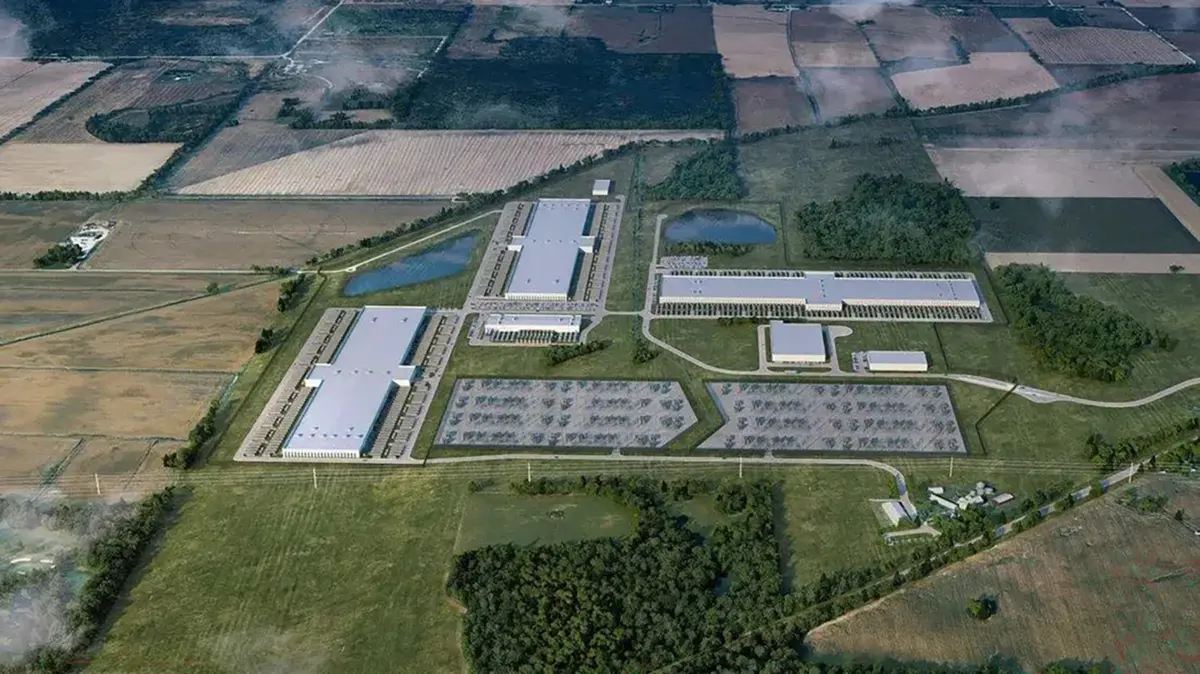
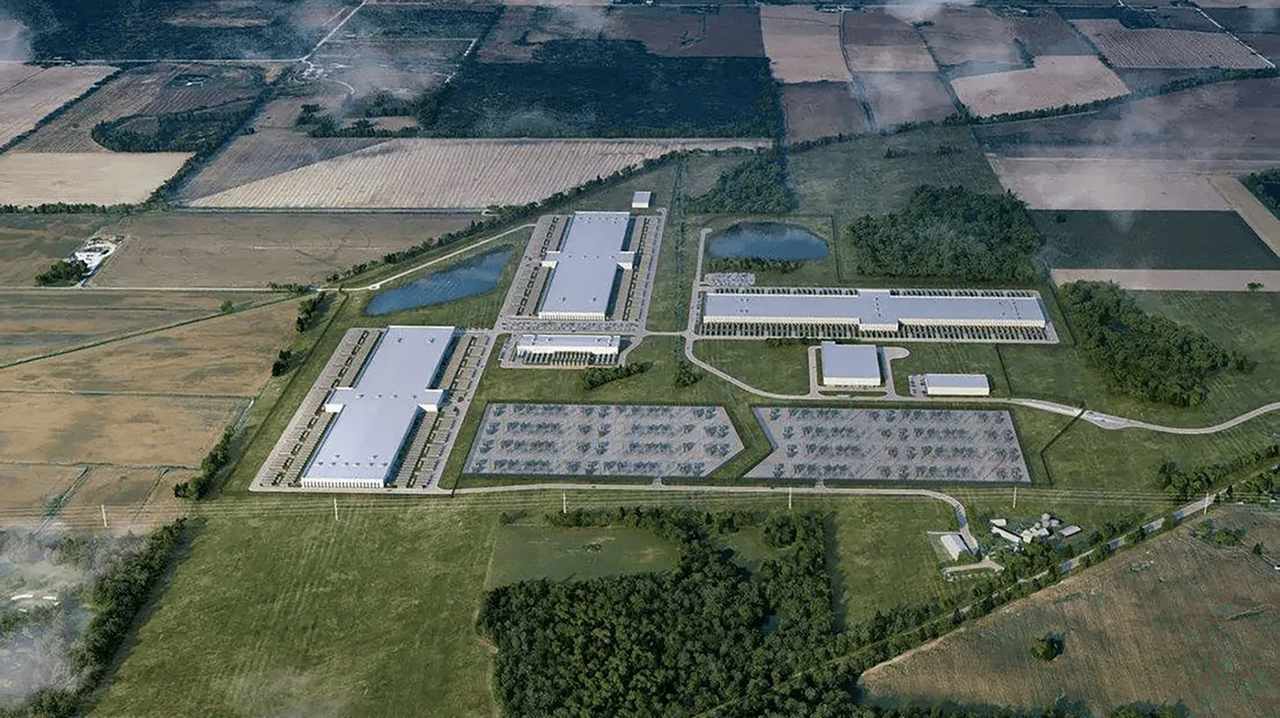
This operational shift follows public-facing commitments that have already set new precedents for hyperscale-utility collaboration. Most notably, at Project Camellia—a planned 3.2-gigawatt (GW) mega-campus spanning Effingham County, Georgia—OpenAI committed to providing Georgia Power with up to 1,000 megawatts (MW) of flexible demand response under a 25-year agreement. Under this framework, the facility is engineered to intelligently curtail or modulate its power consumption during peak regional grid stress, safeguarding residential ratepayers from brownouts or surging capacity costs. While OpenAI has not explicitly linked the new Industrial Compute leadership role to Project Camellia, the 1 GW demand-response agreement serves as a blueprint for the scale of flexibility the company intends to institutionalize.
Leadership Shuffling in the Infrastructure Division
The consolidation of energy strategy occurs amid a broader reshaping of OpenAI’s upper management. Recent reports from the Wall Street Journal and TechCrunch revealed that Chris Malone, who joined OpenAI as head of data centers in March 2025, has departed the company.
Rather than backfilling Malone’s role with a single successor, OpenAI opted to decentralize its infrastructure operations, distributing oversight across several specialized executives to match the frantic pace and multi-billion-dollar scale of its buildouts:
- Uday Ruddarraju oversees the core data center team.
- Brent Mayo manages data center build and delivery pipelines.
- Spas Lazarov directs comprehensive data center engineering.
While the new Clean Energy and New Technology Lead position is distinct from Malone’s former role, it expands the Industrial Compute organization’s footprint into specialized verticals, complementing existing teams dedicated to electrical infrastructure, powered land acquisition, and physical engineering.
Supporting Context & Metrics: The Mechanics of Flexible AI Loads
Unlocking "Virtual Transmission" Through Compute Mobility
The push toward load flexibility is driven by both economic necessity and the physical limitations of existing high-voltage transmission networks. According to emerging research, the unique computational nature of AI workloads allows them to act as a financial and operational shock absorber for stressed electrical grids.
Chris Dunlap, a University of Chicago researcher whose preprint on AI data center flexibility is currently undergoing peer review, estimates that large-scale AI facilities could provide grid flexibility equivalent to roughly 25% to 40% of their nameplate capacity. For a modeled 500 MW inference-dominant facility, Dunlap’s baseline calculations yielded a mean commitment depth of approximately 39.8%.
"Resource adequacy—whether enough generation capacity is available at peak demand—is fundamentally a peak-capacity problem, not an energy-consumption problem," Dunlap explained. In a hypothetical 10 GW hyperscale fleet operating with advanced flexibility protocols, dynamic load management could unlock low-thousands of megawatts of dependable capacity. Crucially, this capacity would not require building a new generation plant, navigating a multi-year interconnection queue, or enduring protracted transmission line construction timelines.
However, Dunlap notes a vital caveat: none of that theoretical flexibility currently counts toward official resource adequacy metrics established by grid operators and Regional Transmission Organizations (RTOs).
The Coordination Challenge: Fiber Versus Wires
While individual data centers have repeatedly proven their ability to shed massive amounts of electrical load on short notice, scaling this behavior across a multi-region fleet introduces complex systemic risks.
If multiple separate data center operators independently react to a regional price signal or an emergency grid notice by curtailing operations, the aggregate result can trigger unintended consequences. Load might vanish instantaneously in one constrained balancing authority while suddenly appearing elsewhere as workloads are dynamically migrated over fiber-optic networks.
"Power cannot flow from Illinois to Texas in meaningful quantities without physical wires," Dunlap noted, "but data center load can move there via fiber rather than transmission lines."
This capability effectively creates a form of "virtual transmission," shifting energy demands through time and space by moving compute rather than electrons. However, without an overarching coordinating body—such as an RTO, an independent energy aggregator, or a centralized internal controller—uncoordinated workload migration could simply shift regional grid congestion from one bottleneck to another.
Location Still Dictates Value
The strategic value of a flexible AI campus is inextricably bound to its geography. Abhijit Das, a researcher specializing in power-system constraints and flexible computing, emphasizes that renewable energy curtailment—where excess wind and solar generation is thrown away because local transmission cannot absorb it—tends to concentrate in specific rural pockets.
A flexible training facility sited deliberately within a renewable curtailment zone can absorb excess green energy by ramping up training intensity when weather conditions produce a surplus. Conversely, when the grid tightens, the facility can throttle back.
"Virtual transmission only works if the flexible load is physically sitting inside the curtailment zone," Das cautioned. "A cluster in Virginia isn’t absorbing curtailed Nebraska wind. You still need the physical wires for that." Furthermore, accessing the granular substation and transmission-bus data required to identify these optimal sites remains a formidable hurdle, as critical power-flow information is frequently locked behind proprietary utility studies and restricted planning documents.
Official Statements & Accountability Frameworks
As utilities and tech companies forge unprecedented multi-decade partnerships, the lack of standardized regulatory frameworks for AI demand response remains a pressing concern.
For projects like Project Camellia in Georgia, while the headline-grabbing 1,000 MW flexible-load commitment is a matter of public record, the granular contractual enforcement mechanisms remain opaque. Utility regulators and grid experts point out that for a data center’s flexible load to be formally accredited as a capacity resource, utilities require enforceable performance metrics. These include:
- Strict, legally binding load ceilings during reliability emergencies.
- Mandatory performance testing and verification protocols.
- Financial penalties for non-performance or failure to curtail.
- Explicit definitions of operational duration (how long a data center can sustain a reduced load state without corrupting training checkpoints or violating enterprise SLAs).
Dunlap suggests that a Firm Service Level (FSL) approach—where an AI operator legally commits to remaining below a specified kilowatt threshold during a grid emergency—may prove far more reliable than traditional industrial baseline reduction methods.
OpenAI has acknowledged receipt of media inquiries regarding the structural changes within its Industrial Compute division and the execution details of its clean energy strategies, but had not provided formal commentary as of publication. Data Center Knowledge will continue to update this developing story as further details emerge.
Future Outlook
OpenAI’s decision to internalize energy strategy within its data center development arm marks a watershed moment for the digital infrastructure sector. It signals that the era of treating electricity as a plug-and-play utility service is officially over.
As gigawatt-scale AI factories continue to proliferate across North America and Europe, the ability to dynamically orchestrate workloads, procure dedicated clean generation, and interface seamlessly with grid operators will separate market winners from those stalled by interconnection gridlocks. By building an internal capability to evaluate and execute complex power architectures, OpenAI is positioning itself not just as a consumer of electrical capacity, but as an active, structural architect of the twenty-first-century power grid.