By Shane Snider | August 19, 2026
4-minute read
Executive Overview
In a monumental development that highlights the shifting financial engineering behind the global artificial intelligence boom, semiconductor titan Nvidia has stepped forward with up to $105 billion in residual-value guarantees to back OpenAI’s sprawling new data center campus in Ohio.
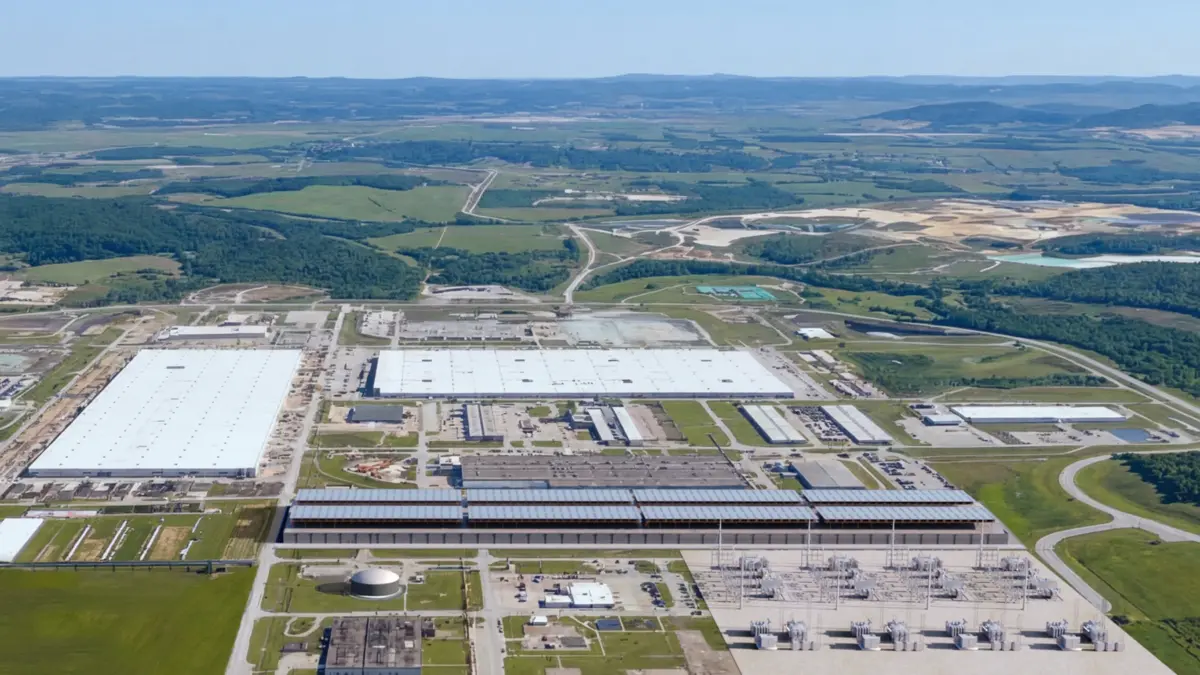
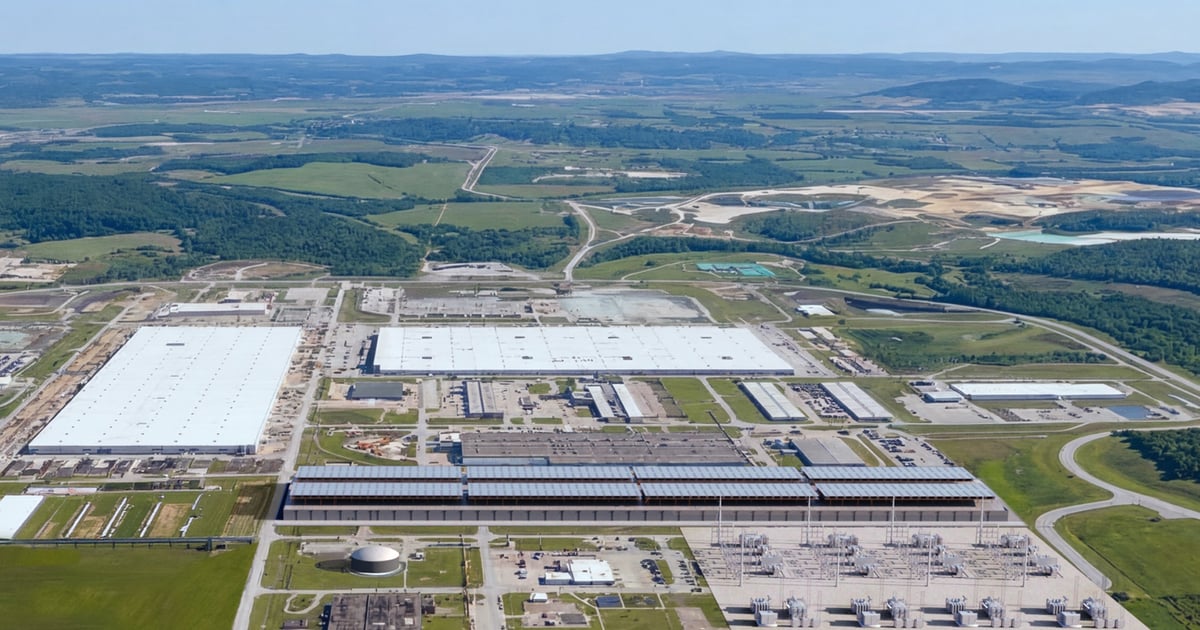
Disclosed via a recent SEC filing, this high-stakes commitment pushes Nvidia’s involvement in the AI infrastructure buildout far beyond its traditional role as a hardware supplier. Rather than representing an upfront, out-of-pocket cash investment of $105 billion, the figure serves as a massive credit and asset-valuation backstop for SB Energy’s premier PORTS-Pike Technology Campus, located in Pike County, Ohio.
The sprawling campus—anchored by an initial 4.25 gigawatts (GW) of IT capacity with an option for an additional 3.75 GW—is projected to reach an staggering 8 GW of total capacity. Under a 20-year lease agreement, SB Energy will build, own, and operate the facility, with OpenAI acting as the primary tenant. By injecting its financial weight into the arrangement, Nvidia is pioneering a novel financing framework that treats advanced GPUs and AI data center infrastructure as long-lived, investable asset classes, effectively unlocking multi-billion-dollar capital channels for the next generation of hyperscale AI factories.
Detailed Chronology: Anatomy of the Ohio Megaproject
The genesis of the PORTS-Pike Technology Campus marks a watershed moment in how foundational AI labs, chip designers, and energy-infrastructure developers collaborate to solve the physical constraints of modern computing.
Laying the Groundwork
Planning for the Ohio initiative has evolved rapidly as OpenAI’s computational demands have scaled to unprecedented levels. In response to skyrocketing power requirements, OpenAI has increasingly brought energy and infrastructure planning directly within its internal data center organization. This structural realignment ensures that long-term power acquisition, real estate development, and computational architecture advance in lockstep.
The SEC Disclosure
The scope of Nvidia’s financial backing came to light on August 17, when the company filed an 8-K form with the U.S. Securities and Exchange Commission. According to the regulatory filing, Nvidia’s aggregate payment obligation for the initial guarantees is capped at $105 billion.
Crucially, these guarantees are conditionally tied to the residual value of the leased infrastructure. Should specified default or insolvency events occur—and assuming SB Energy cannot re-lease or sell the facilities at or above the guaranteed minimum thresholds—Nvidia could be held responsible for the shortfall. To mitigate this exposure, OpenAI has agreed to reimburse and indemnify Nvidia for any actual payouts triggered under the guarantees.
Nvidia has noted that the comprehensive guarantee agreements will be formally exhibited in its upcoming quarterly report for the period ending July 26, which will unpack the granular terms, risk parameters, and exact guaranteed minimum valuations.
Leveraging the GPU as an Investable Asset Class
To truly understand the gravity of Nvidia’s $105 billion guarantee, industry analysts point to a fundamental shift in how physical and digital infrastructure assets are valued. Traditionally, high-performance computing hardware has been depreciated aggressively over short three-year cycles due to the rapid cadence of technological obsolescence.
Nvidia Chief Executive Jensen Huang, however, is framing the Ohio campus around a different paradigm—one that prioritizes the longevity and upgradeability of physical shells and underlying compute layers.
"We are securing long-lived infrastructure for Nvidia compute so OpenAI can deploy the most productive AI factories that can be upgraded repeatedly with each new generation delivering more intelligence and better economics," Huang stated in the company’s announcement.
Drawing Parallels to Automotive Finance
Steven Dickens, CEO and principal analyst at HyperFrame Research, draws a compelling parallel between Nvidia’s strategy and traditional automotive financing models.
"Nvidia is realizing, in the same way that Ford Finance does with Ford’s vehicles, that GPUs have a residual value long after the initial three years of use," Dickens explained.
By recognizing that modern AI hardware and its supporting facilities retain meaningful residual utility over a six- to seven-year lifecycle (or longer), Nvidia is helping engineer a brand-new financial asset class. This mechanism reassures institutional lenders, private equity funds, and energy developers, clearing the path for unprecedented injections of capital into the AI build-out.
At the intersection of this triangular ecosystem sit three core pillars:
- Nvidia’s Hardware & Exclusive Compute Provision: Securing land, power, and shell capacity while serving as the exclusive AI compute infrastructure provider.
- OpenAI’s Long-Term Compute Demand: Consuming massive waves of processing power to train and run frontier models.
- SB Energy’s Physical Development: Constructing, owning, and managing the gigawatt-scale real estate under a 20-year operational lease.
Supporting Context & Financial Metrics
It is vital to distinguish between a conditional credit guarantee and direct equity deployment. Nvidia is directly investing $1.5 billion into SB Energy, while the $105 billion figure functions entirely as a contingent residual-value backing.
- Initial Capacity Phase: 4.25 GW of IT capacity at the PORTS-Pike Technology Campus.
- Expansion Potential: An option for an additional 3.75 GW, driving total campus capacity to approximately 8 GW.
- Energy Generation Plans: SB Energy and SoftBank have concurrently announced plans to develop at least 10 GW of brand-new power generation capacity specifically to feed the project.
- Financial Structure: The guarantee is triggered conditionally upon specific tenant default or lease termination events, with final payouts calculated against the variance between guaranteed baseline minimums and secondary market recovery figures.
The Debate Over Capacity Metrics: Power vs. Compute
Despite the staggering scale of the project, industry experts like Steven Dickens have raised critical questions regarding how the data center sector quantifies its own growth. The heavy reliance on power capacity (measured in gigawatts) rather than computational throughput has become an industry standard, but one that warrants scrutiny.
"What I struggle with is measuring the AI build-out in units of power," Dickens noted. "I would prefer Nvidia and the wider IT infrastructure business stick to IT units such as core, GPU, racks or servers, as it is easier to quantify and visualize."
While the Ohio campus is discussed in terms of its massive 4.25 GW to 8 GW energy envelope, translating that raw electricity into tangible, high-density AI reasoning power remains the true benchmark of operational success.
Official Statements and Industry Implications
The collaboration between Nvidia, OpenAI, and SB Energy underscores a broader trend: the convergence of big tech, semiconductor manufacturers, and energy giants to overcome the physical bottlenecks threatening the AI revolution.
As energy grids strain under the weight of hyper-dense AI factories, traditional utility procurement models are proving insufficient. By partnering directly with energy-focused developers like SB Energy, compute leaders are internalizing power generation and site selection, treating electrons as a core component of the software supply chain.
Furthermore, Nvidia’s willingness to shoulder multi-billion-dollar residual-value risks signals supreme confidence in the enduring market value of its compute architecture. If these AI factories can be systematically upgraded generation after generation without wholesale demolition of the underlying real estate, the economic model of hyperscale computing will be fundamentally transformed.
Future Outlook
As the financial markets await the formal filing of the comprehensive guarantee agreements in Nvidia’s upcoming quarterly report, the broader implications of the Ohio project are already rippling across the digital infrastructure landscape.
- Capital Liberation: The success of residual-value guarantees as an investable asset class could open the floodgates for institutional capital, mitigating the risk profiles of other multi-gigawatt AI campuses currently on the drawing board.
- Energy Integration: With SB Energy and SoftBank committed to delivering at least 10 GW of new generation capacity, the project will serve as a bellwether for how massive data centers integrate with renewable and grid-scale energy assets.
- Hyperscale Evolution: As OpenAI deepens its internal energy and infrastructure planning, the boundary lines between software developer, data center operator, and energy consumer will continue to blur.
For now, the PORTS-Pike Technology Campus stands as the ultimate embodiment of the modern AI arms race—a union of extreme computing, colossal real estate, and innovative financial engineering designed to power the next era of technological intelligence.