Executive Overview
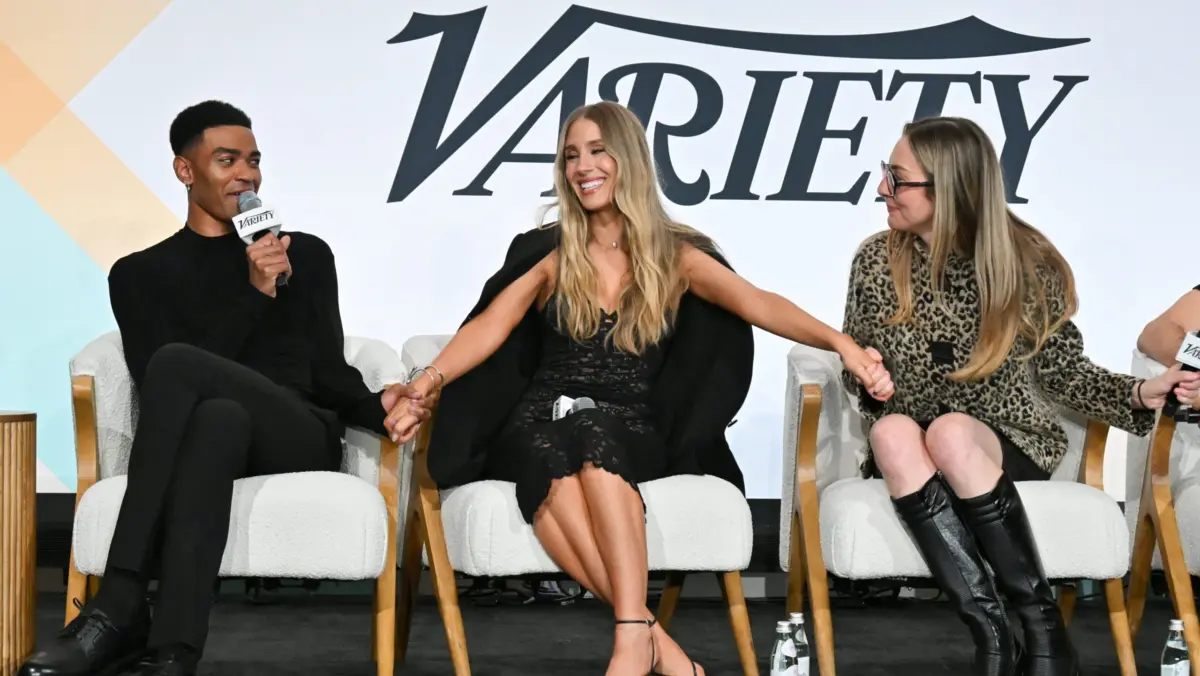
The intersection of silicon and storytelling took center stage on Thursday at the Beverly Hills Four Seasons Hotel, where top-tier executives, visionary marketers, boundary-pushing entrepreneurs, and independent creators converged for the annual Variety Entertainment & Technology Summit, presented by EY. Amid an industry perpetually grappling with structural disruption, the one-day gathering served as a high-stakes crucible for debating the future of modern media.
Conversations spanned the gamut of modern existential challenges for Hollywood: navigating the accelerating integration of artificial intelligence (AI), engineering authentic community engagement, decoding the shifting mechanics of the creator economy, and orchestrating the delicate marriage between traditional television and digital-first ecosystems.
Heavyweights from power-player institutions—including Blumhouse, Sony, Warner Bros., Mattel, Reddit, Netflix, and WPP Media—offered unfiltered insights into how legacy giants and grassroots creators alike are fighting to capture the modern consumer’s fleeting attention. Beneath the glitz of the Beverly Hills venue lay a sober realization: the old playbooks are obsolete. Whether confronting the threat of generative AI "slop," rethinking the economics of brand sponsorships, or realizing that a screen is merely the launchpad rather than the terminal destination for intellectual property (IP), attendees were challenged to build a fundamentally more participatory, risk-tolerant, and agile future.
Detailed Chronology: Keynote Highlights and Industry Dispatches
The summit’s dense programming featured a rapid-fire succession of high-profile keynotes and cross-industry panels, setting an urgent tone from the opening remarks.
Morning Keynotes: Kroll, Hader, Wan, and the Battle for Authentic Production
The morning commenced with a series of high-profile keynote sessions addressing geography, technology, and artistic independence.
- Nick Kroll: In a candid conversation, multihyphenate creator Nick Kroll emphasized the critical need to revitalize local infrastructure by bringing film and television productions back to Los Angeles. Kroll also generated palpable buzz around his upcoming Netflix comedy series, A Hundred Percent.
- Bill Hader: Turning his attention toward the industry’s thorniest technological debate, Emmy-winner Bill Hader discussed his experience voicing the iconic Cat in the Hat. Hader offered a psychological lens on the generational divide regarding generative tech, highlighting why younger demographics remain deeply resistant to unearned, AI-generated content.
- James Wan: Representing Blumhouse Atomic Monster, prolific director, writer, and producer James Wan underscored how democratization of production technology has supercharged the independent pipeline. Pointing to breakout streaming and theatrical successes like Obsession and Backrooms—both projects backed by Atomic Monster—Wan illustrated how nimble YouTube-native filmmakers are upending traditional greenlight processes.
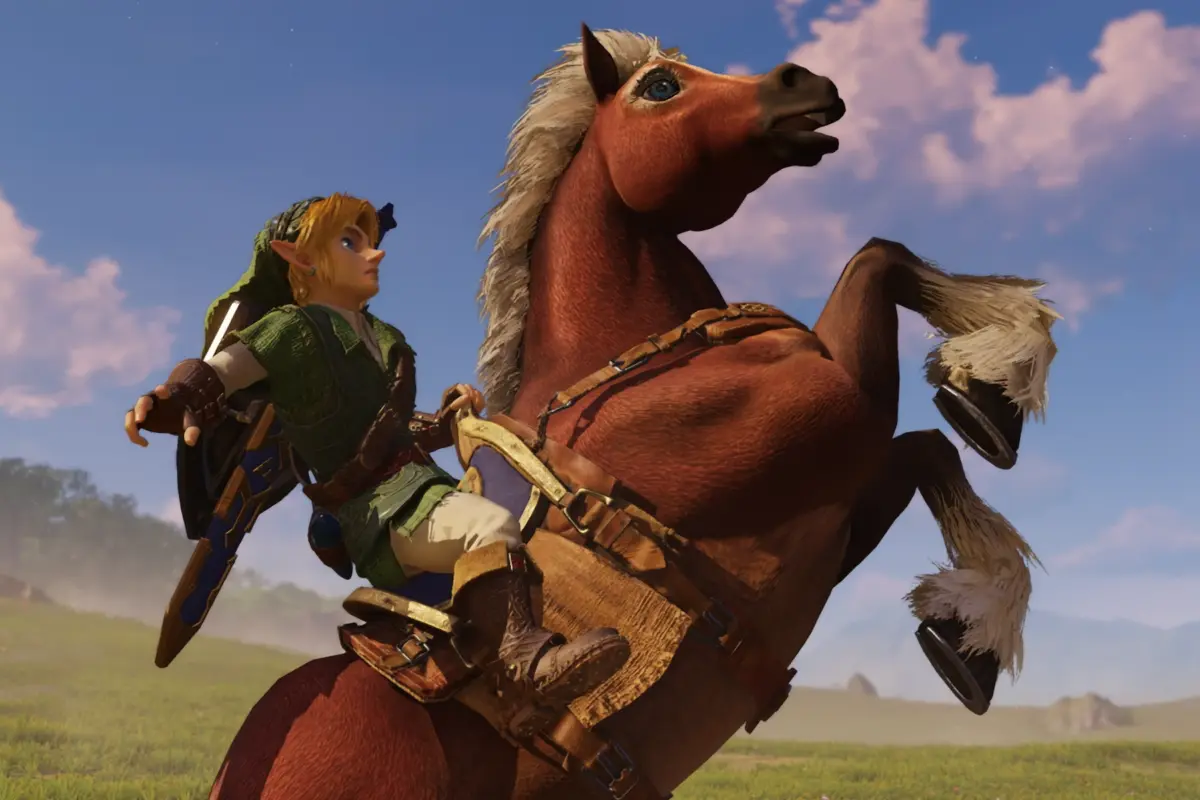
- Gaming Giants and TV Chiefs: Sony’s TV chief Keith Le Goy detailed how the entertainment conglomerate has successfully activated deeply engaged gaming ecosystems to cross-pollinate viewing habits. Meanwhile, Nintendo of America President and COO Devon Pritchard offered strategic updates regarding the highly anticipated Switch 2 hardware rollout and upcoming Legend of Zelda multimedia expansions, prominently highlighting the ongoing live-action film collaboration with Sony Pictures.
Supporting Context & Metrics: Decoding the New Era of Entertainment
Moving past individual studio updates, the summit’s structured panels provided deep dives into audience fragmentation, experiential marketing, and the structural evolution of advertising.
When Stories Speak: Reaching Audiences in the Next Era
In a headline-grabbing session moderated by Variety Editor-in-Chief Cynthia Littleton, WPP Media U.S. CEO Nancy Hall and Audible Global Head of Media, Operations, and Business Development Tom McKenna mapped out how to transition from fleeting digital buzz to enduring business value.
"The red thread of these formats and of telling stories in this way is making them participatory," Hall explained, stressing the need to give consumers avenues to respond, shape, and share narratives. "That’s what makes stories culture and not just content."
Echoing this sentiment, Audible’s Tom McKenna emphasized his company’s brand pivot toward high-resonance narrative design. Highlighting bold experiential marketing maneuvers—such as lifting a TikTok-native campaign directly off a mobile screen and projecting it onto a monumental billboard in Times Square—McKenna argued that media must be treated as a "creative canvas" to pierce through what Hall termed the "sea of sameness."
The Dual Mandate of Modern Marketing
Hall offered a defining metric for contemporary brand strategists, noting the split architectural reality of modern discoverability:
"We have to market today to two different entities. We have to ensure that humans desire us, but that machines recommend us."
Official Statements & Industry Perspectives: Experiential Entertainment and the Creator Revolution
The Expanding Universe of IRL: Paramount, Hallmark, and Mattel
The physical realm is no longer an ancillary revenue stream; it is a vital frontier for audience retention. Marie Marks, Senior Vice President of Global Experiences for Paramount, championed the unique economic engine of experiential hospitality, pointing to branded destination hotels as the ultimate consumer "flywheel."
Detailing Paramount’s expanding Nickelodeon hotel footprint—which commands 1,000 active rooms globally with another 2,000 in development—Marks issued a blunt warning to legacy studios:
"A big learning for us was actually that the IP alone is not enough. The underlying product has to be exceptional. One’s not enough without the other."
This sentiment was mirrored across legacy brands. Darren Abbott, President of Hallmark Media and Chief Brand Officer, detailed how Hallmark has successfully expanded its traditional seasonal dominance into year-round physical touchpoints, including branded cruises and immersive consumer activations. Natalia Premovic, Chief Consumer Products and Experiences Officer at Mattel, recounted the viral community impact of a live-action Uno event in Los Angeles, which successfully fostered strategic interpersonal connections across unexpected demographics.
"No longer does the screen have to be the end of the interaction with the IP," Marks summarized. "Increasingly so, it’s really just becoming the beginning."
The Titans of Innovation and the Broken Agency Model
The summit’s roundtable discussions featured sharp critiques of institutional Hollywood. Billy Parks of FOX Creator Studios and Sean Atkins, CEO of Dhar Mann Studios, didn’t mince words regarding systemic failures in brand partnerships.
"When you have creators who now have the same skill as the Super Bowl, the fact that they get a phone call that says, ‘Hey, would you stand up for 15 seconds and hold a Coca-Cola for $25,000?’ is ridiculous," Atkins asserted.
Christina Kothari, Global Head of Consumer Marketing at Reddit, countered with a blueprint for successful integration. Discussing a partnership for the theatrical release of Resident Evil, Reddit invited members from hyper-engaged communities—r/horror, r/residentevil, and r/movies—to exclusive preview screenings alongside a live Ask Me Anything (AMA) with the director.
"Creators often get invited to these premieres, and that’s important because they’re a media channel and they give you the reach that you need," Kothari noted. "But to pair those creators with the really in-depth fans that have been building these communities on Reddit for years, created a really special environment."
Scaling the Creator Economy: Monoculture Beyond Hollywood
Jarret Myer, CEO of UPROXX Studios, emphasized that the creator economy operates entirely parallel to legacy studio gatekeeping.
"It’s studios, it’s artists, it’s creators that are all happening outside of the traditional Hollywood formation," Myer stated. "More and more these people are creating the monoculture moments that everyone is talking about."
Culture Genesis CEO Shaun Newsum echoed this, drawing parallels between major YouTube live-streamers like IShowSpeed and traditional sports spectacles, labeling their viral cultural hits as "mini Super Bowls."
Future Outlook: Television, Streaming, and the Quest for Purity in Storytelling
As the television landscape hurtles toward hyper-personalization, network and platform executives converged on the necessity of communal viewing experiences.
Jeremy Helfand (Amazon Prime Video), Josh Mattison (Disney Advertising), and Puja Vohra (Fox Corporation) analyzed the delicate balance between digital precision and broadcast scale. Vohra championed the concept of the "virtual couch," arguing that despite algorithmic fragmentation, the psychological urge for mass, synchronized viewing remains the ultimate catalyst for advertising receptivity.
The Netflix Pipeline and the Return of A Different World
On the narrative front, Tracey Pakosta, VP of Comedy Original Series at Netflix, provided a look inside the streamer’s upcoming slate, anchored by the high-profile return of A Different World.
Set to premiere on September 24, the sequel series is helmed by showrunner Felicia Pride, who collaborated closely with television icon Debbie Allen to capture the contemporary texture of young Black America at the fictional Hillman College. Shot on location at historic Atlanta HBCUs, the 10-episode first season represents a calculated move by Netflix to balance narrative depth with the brisk pacing favored by modern streaming audiences.
Guarding Against the "Obsession Effect"
Closing out the summit, a panel of storytelling vanguards—including comedians Joel Kim Booster and Owen Thiele, creator Nick Antosca, and composer Este Haim—warned against the homogenization of independent cinema in the wake of unexpected box office anomalies.
Kim Booster cautioned that studio executives routinely extract the wrong lessons from breakout indie hits. "A lot of the people at the top learn the wrong lessons and make decisions that may seem like they try to replicate the same thing without realizing that at the core of what made Obsession a success was its originality, its purity in idea and story," he warned.
Antosca echoed these concerns, emphasizing that despite viral breakouts, traditional financial gatekeeping remains firmly intact.
As the industry looks ahead to 2026 and beyond, the unified call from the summit’s brightest minds was clear: survival in the modern entertainment landscape requires abandoning assembly-line formulas. To capture an increasingly discerning and fragmented global audience, creators and executives must champion raw originality, respect organic fandoms, and treat technology not as a crutch, but as a canvas for genuine human connection.