Executive Overview
For years, cybersecurity professionals and federal law enforcement agencies have issued warnings regarding cheap, generic Android TV streaming boxes sold online. Frequently marketed with promises of "unlimited content" and "no monthly fees," these grey-market set-top boxes have long been exposed for quietly harvesting home bandwidth to run illicit residential proxy networks.
However, a groundbreaking investigation by cybersecurity research firm Bitsight reveals a far more sophisticated and lucrative threat hidden within these low-cost consumer electronics. Beyond silently renting out household internet connections to third parties, tens of thousands of budget streaming devices—most notably under the popular H96 brand—are operating as automated soldiers in a massive digital ad fraud engine.
The scheme relies on advanced deception: the hijacked TV boxes spoof their hardware identities to present themselves to ad networks as high-end mobile smartphones. Under the cover of darkness—specifically when the attached television set is powered off—the devices quietly launch hidden web browsers, visit sprawling networks of AI-generated content sites, and use advanced computer vision algorithms to click on ads, defrauding online merchants and digital marketing platforms.
Traced back to a mainland Chinese entity known as Zhejiang Fengwo IoT Technology Co., Ltd. (operating as the Fengwo Group), the operation converts thousands of unsuspecting living rooms into a captive audience for automated bot traffic. Conservative estimates indicate that just a single legacy command-and-control server tied to this operation nets approximately $50,000 per day in fraudulent ad revenue, alongside substantial additional profits derived from residential proxy leasing.
Detailed Technical Investigation & Chronology
  +---------------------------------------------------------------------------------+
  |                          GENERIC ANDROID TV BOX (e.g., H96)                     |
  |  Pre-infected firmware / Pre-installed Zhejiang Fengwo IoT telemetry applications |
  +---------------------------------------------------------------------------------+
                                          |
                        [ HDMI Connection State Detection ]
                                          |
            +-----------------------------+-----------------------------+
            |                                                           |
  [ TV ON / HDMI Active ]                                     [ TV OFF / HDMI Inactive ]
            |                                                           |
   RESOURCE-CONSERVING MODE                                   HIGH-INTENSITY FRAUD MODE
            |                                                           |
   Passive Residential Proxy                                  1. Spoof Mobile Phone Fingerprint
   Rents consumer IP address to                                  (Samsung, Vivo, Huawei, Xiaomi)
   third-party proxy buyers                                   2. Receive Blockly Tasks via S3
                                                              3. Render AI-Generated Web Pages
                                                              4. Computer Vision Fusion System
                                                                 identifies & clicks ads
            |                                                           |
            +-----------------------------+-----------------------------+
                                          |
                                [ Fraud Monetization ]
                                          |
  +---------------------------------------------------------------------------------+
  |  Ad Networks Pay Fraudulent Revenue -> Shell Entities (HK, Singapore, Individuals)|
  +---------------------------------------------------------------------------------+
Phase 1: The Domain Takeover and Initial Anomaly
The discovery began when Pedro Falé, a threat researcher with Bitsight’s TRACE team, registered an expired domain name previously observed in network traffic originating from budget streaming sticks. The domain had historically functioned as a telemetry collection node for a popular line of off-brand set-top boxes sold globally under the H96 model label.
Upon acquiring the infrastructure, Falé began analyzing incoming telemetry traffic from thousands of active devices across the globe. The incoming data streams were designed to collect detailed hardware specifications, system configurations, and complete inventories of installed software packages from each streaming stick.

As the data accumulated, an immediate contradiction emerged within the device profiles:
"We noticed something was wildly wrong," Falé noted. "Multiple devices reporting to this factory Android TV Box backdoor were ‘phones.’"
Despite physically existing as stationary TV boxes connected to home displays via HDMI, nearly all the devices sending telemetry data identified themselves as flagship smartphone models manufactured by mobile technology giants, including Samsung, Vivo, Huawei, and Xiaomi.
Phase 2: Unmasking the Fengwo Group Infrastructure
Further forensic analysis of the telemetry payloads revealed that every reporting H96 unit contained two identical, deeply embedded applications. Software metadata and reverse-engineering traced the authoring of these applications directly to Zhejiang Fengwo IoT Technology Co., Ltd., an enterprise established in 2019 in mainland China that manages a broad digital ad-publishing arm known as the Fengwo Group.
A search of public intellectual property filings revealed that Zhejiang Fengwo IoT Technology had registered multiple software patents matching the exact operational logic, device-spoofing routines, and visual parsing mechanisms found within the embedded applications.
                          [ BITSIGHT TELEMETRY ANALYSIS ]
                                         |
     +-----------------------------------+-----------------------------------+
     |                                                                       |
[ Telemetry Payload ]                                               [ Infrastructure ]
  • Device Model Spoofing:                                            • Corporate Domain: fwgcloud[.]com
    - Samsung, Vivo, Huawei, Xiaomi                                   • Shell Operations:
  • Common Software Installed:                                          - Hong Kong, Singapore,
    - Proprietary Zhejiang Fengwo Apps                                  Individual Entities
                                                                      • Developer Framework:
                                                                        - Custom Google Blockly Pipeline
To harvest revenue from the fraudulent ad impressions, Bitsight TRACE identified an intricate web of shell companies spanning Hong Kong and Singapore, alongside single-person legal entities used to open merchant accounts with programmatic ad exchanges.

Phase 3: The Blockly Automation Pipeline
To streamline operations and minimize engineering overhead, the Fengwo Group adapted Blockly—an open-source visual programming framework created by Google originally designed to teach children basic computer coding.
Within the Fengwo ecosystem, low-skilled operators use a custom Blockly drag-and-drop editor to visually construct distinct fraud routines without writing raw JavaScript or handling complex software syntax.
[ Fengwo Custom Blockly Interface ]
        │
        ├── Drag-and-Drop Tasks:
        │     ├── Open Headless Browser
        │     ├── Spoof Mobile User-Agent & Hardware Canvas
        │     ├── Navigate to Target AI-Generated Domain
        │     └── Execute Smart Click Sequence
        │
        └── Exported Execution Unit (.js payload) -> Stored in Amazon S3 Buckets
Bitsight’s analysis uncovered internal documentation from a Fengwo app developer highlighting the economic efficiency of this setup:
- Resource Optimization: Only a small team of highly skilled engineers is required to build core template execution images.
- Cost Reduction: Downstream operators creating individual ad-fraud tasks from these templates operate with minimal technical training, dramatically lowering operating expenditures.
When an H96 device receives a job instruction, the core server pushes the appropriate compiled Blockly module to the target unit. The device then silently executes the instructions: initializing background web browsers, opening tabs, scrolling through target sites, and clicking on rendered advertisements.
Phase 4: AI-Generated Content Platforms & Computer Vision Clicks
The monetization phase of the operation relies on a closely guarded, closed-loop ecosystem maintained by the Fengwo Group:
+-----------------------------------------------------------------------------------+
|                            THE CLOSED-LOOP FRAUD CYCLE                            |
+-----------------------------------------------------------------------------------+
|  1. Content Generation : Automated AI engines generate thousands of content sites |
|                          (Finance, Health, Food, Gaming)                          |
|  2. Targeted Ad Load  : Ads render ONLY if visitor matches a spoofed mobile profile|
|  3. Perception Fusion : Fused Vision AI parses ad coordinates on page layout      |
|  4. Fraudulent Action : H96 device simulates human click, triggering payout       |
+-----------------------------------------------------------------------------------+- AI-Generated Websites: Fengwo operates vast networks of digital properties populated by AI-generated news articles, stock imagery, and automated blogs spanning finance, health, lifestyle, gaming, and education.
- Conditional Ad Rendering: To evade detection by ad quality verification services, these websites do not display commercial ads to ordinary visitors. Ads render only when the visiting device matches the exact spoofed mobile browser profile sent by infected H96 streaming devices.
- Computer Vision Clickers: Clicking programmatic ads on dynamically structured websites normally presents a challenge for automated scripts. To overcome this, the Fengwo Group integrated a hybrid artificial intelligence framework into its software client:
- The framework fuses three distinct computer vision and spatial reasoning systems into a unified interface.
- This multi-layered vision system allows the background process to "see" the rendered web page, identify interactive advertisement elements, calculate natural cursor movement pathways, and execute clicks that mimic human interaction.
Phase 5: The HDMI Toggle State Machine
One of the most tactical technical findings in Bitsight’s analysis is how the H96 firmware manages device resources without alerting the home user.

Running background headless browsers, rendering complex web pages, and processing computer vision algorithms requires substantial CPU and GPU cycles. If this activity occurred while a user was attempting to stream video content, it would cause severe buffering, lag, or system crashes, leading the user to disconnect or return the streaming box.
To prevent detection, the developers programmed an automated hardware state machine tied directly to the device’s HDMI output interface:
+-----------------------------------------------------------------------------------+
|                        HDMI STATE MACHINE LOGIC MATRIX                            |
+-----------------------------------------------------------------------------------+
| HDMI Output State   | Active TV Signal Detected  | Inactive TV Signal / Display Off  |
| Primary System Role | Residential Proxy Relay    | Automated High-Intensity Ad Fraud  |
| System Overhead     | Low CPU / Minimal Bandwidth| High CPU / GPU Vision Rendering   |
| User Visibility     | Active Video Streaming     | Concealed Background Execution    |
+-----------------------------------------------------------------------------------+- TV On (HDMI Signal Active): The unit recognizes that the owner is actively using the display. The ad fraud engines are paused. The box shifts exclusively to acting as a residential proxy relay, quietly routing modest amounts of external third-party internet traffic through the user’s home IP address without disrupting playback.
- TV Off (HDMI Signal Inactive): The unit detects that the display has been turned off or disconnected. The device enters its high-intensity ad fraud mode, initiating background browser sessions, downloading Blockly code modules, parsing AI sites with vision algorithms, and generating fraudulent ad revenue throughout the night.
Supporting Context, Scale, and Financial Metrics
The financial scale of this operation highlights the broader threat posed by unvetted Internet of Things (IoT) hardware supply chains.
+-----------------------------------------------------------------------------------+
|                          OPERATION METRICS & MONETIZATION                         |
+-----------------------------------------------------------------------------------+
| Monitored Active Telemetry Nodes | ~38,000 active devices (Single legacy C2 domain) |
| Estimated Daily Fraud Yield      | ~$50,000 USD / day (~$18.2 Million annualized) |
| Secondary Revenue Streams        | Residential proxy bandwidth monetization       |
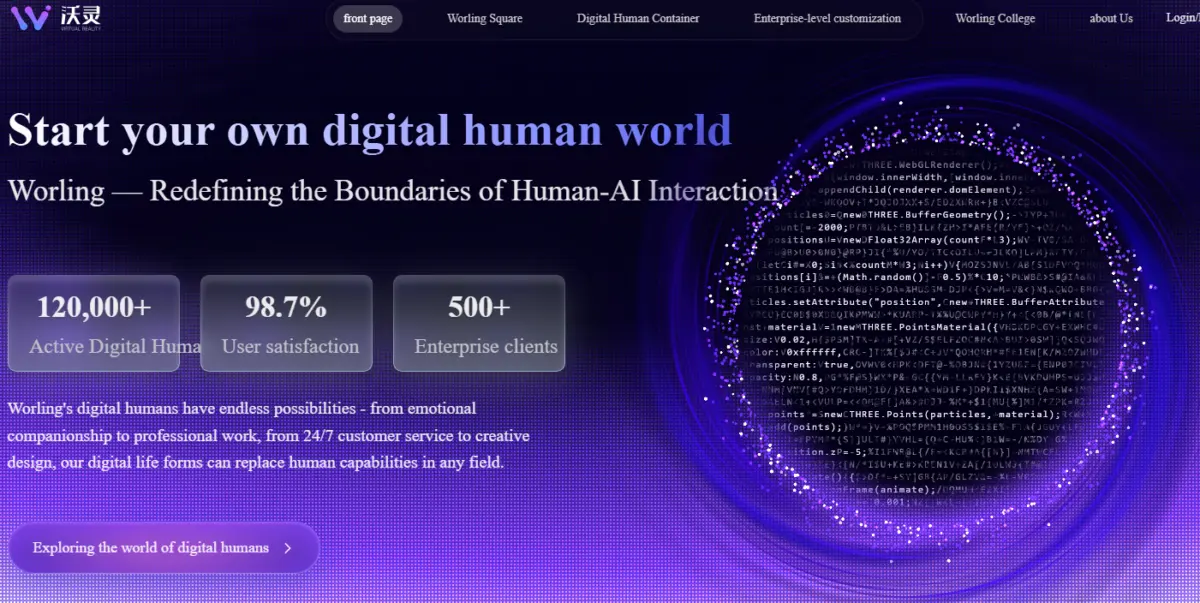
| Primary Public Front             | fwgcloud[.]com ("120,000 AI Digital Humans")   |
+-----------------------------------------------------------------------------------+
Bitsight’s observation of 38,000 concurrently active TV boxes phoning home to a single legacy telemetry domain represents only a fraction of the total infrastructure. Because major operators utilize multiple active command-and-control domains, the actual total footprint is likely significantly larger.
The "Digital Human" Cover Story
The primary corporate domain associated with the infrastructure—fwgcloud[.]com—presents itself as an advanced artificial intelligence development firm. The website claims the enterprise has created over 120,000 "AI digital humans" available for commercial lease, offering services ranging from 24/7 customer support to "emotional companionship."
Bitsight researchers assess that this narrative likely serves as a public facade:

"Historically, when dealing with proxy services or DDoS, we sometimes see these websites undertake inconspicuous facades, so as not to advertise their DDoS capability or botnet size," Falé stated. "This could also be the case here."
Official Statements, Warnings, and Industry Context
The findings come amid heightened scrutiny from federal law enforcement and cyber defense authorities regarding grey-market IoT devices.
+-----------------------------------------------------------------------------------+
|                             REGULATORY & INDUSTRY ADVISORY                        |
+-----------------------------------------------------------------------------------+
| FBI Cyber Division  | Warns against non-certified consumer IoT streaming hardware  |
| Google Play Protect | Recommends verifying official Android TV OS certification    |
| Synthient Research  | Tracks active supply-chain botnets (e.g., Kimwolf ecosystem)  |
+-----------------------------------------------------------------------------------+
Federal Bureau of Investigation (FBI) Warning
The FBI’s Cyber Division has repeatedly issued public alerts regarding non-certified smart home electronics and set-top boxes:
"Home internet-connected devices, particularly low-cost or uncertified streaming hardware, are routinely leveraged by criminal syndicates to facilitate large-scale ad fraud, network proxying, and malicious traffic anonymization without consumer knowledge."
Industry Contact Response
Attempts to establish communication with the target entity were unsuccessful. Automated inquiries submitted to the official corporate contact address listed on fwgcloud[.]com bounced back with delivery failures:
Delivery Status Notification (Failure)
To: postmaster@fwgcloud[.]com
Status: Undeliverable
Reason: The recipient's mailbox is full or currently receiving too much traffic.
Supply Chain Realities
Despite clear warnings, off-brand streaming boxes running modified, uncertified forks of the open-source Android platform remain widely available across major online marketplaces, including Amazon, Best Buy, and Newegg.

These listings are frequently bolstered by third-party social media influencers promoting "jailbroken" or "fully loaded" media players capable of circumventing paid subscription services. In reality, these platforms ship with factory-level backdoors, embedded proxy software, and unauthorized device-management profiles pre-installed at the factory level.
Earlier cybersecurity tracking by proxy intelligence group Synthient documented how millions of generic Android TV units were rapidly co-opted by secondary botnets (such as the Kimwolf network). These operations exploit a combination of built-in proxy software vulnerabilities and open local network administration ports to map, penetrate, and compromise adjacent devices on the user’s local Wi-Fi network.
Future Outlook & Consumer Advisory
The integration of generative AI content, computer vision systems, drag-and-drop orchestration tools, and hardware-level concealment logic represents a significant shift in the scale and sophistication of digital ad fraud.
As digital marketing networks deploy increasingly complex anti-bot defenses, threat actors are leveraging physical, hardware-backed residential footprints to bypass network checks. Cheap consumer electronics are no longer merely endpoints for consuming media—they have become prime infrastructure for high-density computational fraud.
+-----------------------------------------------------------------------------------+
|                        CONSUMER RISK MITIGATION CHECKLIST                         |
+-----------------------------------------------------------------------------------+
| 1. Verify Certification : Check device against official Android TV / Play Protect  |
|                           certified partner lists before purchase.                |
| 2. Avoid Off-Brand Hardware: Refrain from buying low-cost streaming media boxes   |
|                           promoted with pre-loaded or "jailbroken" software.       |
| 3. Consult Threat Index : Audit home IoT hardware against public exposure databases|
|                           such as Synthient's Malicious IoT Product List.         |
| 4. Network Isolation    : Place secondary smart appliances and streaming media    |
|                           devices on an isolated Guest Wi-Fi Network segment.     |
+-----------------------------------------------------------------------------------+
Actionable Guidance for Consumers and Enterprise Network Administrators
- Verify Official Certification: Ensure streaming media hardware runs an officially licensed distribution of Android TV OS with verified Google Play Protect certification. Certified models can be verified directly through Google’s official support directory.
- Audit IoT Hardware Deployments: Inspect home and corporate guest networks for white-label set-top boxes, generic smart digital photo frames, and unbranded streaming sticks.
- Reference Malicious Hardware Blocklists: Cross-reference active network equipment against publicly maintained threat repositories, such as Synthient’s tracking registry of pre-infected IoT product models.
- Implement Network Segmentation: Isolate legacy IoT equipment, smart televisions, and secondary media players onto a separate virtual local area network (VLAN) or dedicated guest Wi-Fi network to prevent unauthorized lateral movement across primary local network devices.