Executive Overview
Meta is doubling down on its strategy to reshape how communities interact across its ecosystem, rolling out a fresh suite of features for its dedicated group chat and discussion app, Forum. Originally launched in May as a direct evolution of traditional Facebook Groups, Forum is designed to pivot the social media giant’s massive, decentralized networking architecture away from casual, endless social scrolls and toward a structured, highly interactive question-and-answer (Q&A) format.
The latest round of updates introduces a tactical ecosystem of recognition badges for top contributors, cross-group answer aggregation, and granulating topic labels crafted to optimize content discovery. On the surface, Meta presents these rollouts as a pure value-add for human users—a way to tap into collective wisdom, surface niche expertise, and derive deeper satisfaction from online communities.
However, beneath the veneer of community-centric empowerment lies a more strategic, machine-driven imperative. By fostering structured, vetted, and direct Q&A exchanges reminiscent of platforms like Quora and Reddit, Meta is systematically building a proprietary knowledge graph. This high-intent, conversational data is uniquely suited to power and refine Meta’s expanding ecosystem of artificial intelligence tools and chatbots. In the grand chess match of generative AI development, data is the ultimate currency, and Meta is rapidly transforming its billions of global users into an automated training ground.
Detailed Chronology: The Evolution of Meta’s Forum App
To understand where Forum is heading, it is vital to trace its trajectory from a nascent experimental project to an increasingly central pillar of Meta’s platform strategy.

May: The Quiet Launch of Forum
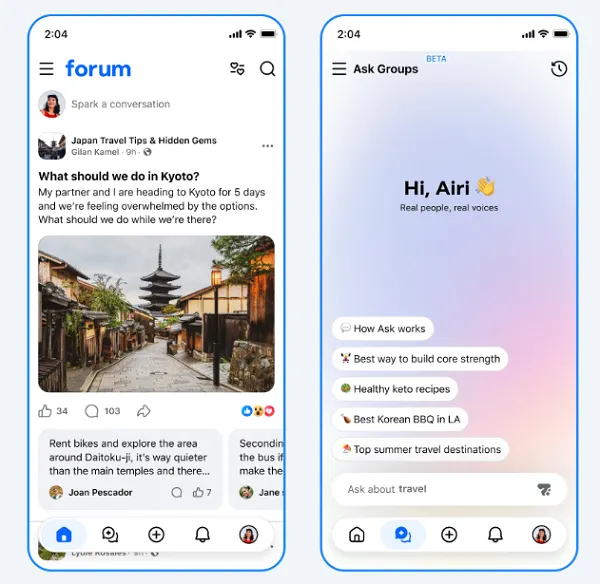
When Meta quietly introduced the Forum app earlier this year, it flew somewhat under the radar compared to blockbuster announcements like Meta AI integrations or hardware releases. Yet, industry insiders immediately recognized its significance. Forum was engineered to take the chaotic, unstructured environment of standard Facebook Groups—where valuable troubleshooting tips, local recommendations, and expert advice often get buried beneath memes, updates, and algorithmic noise—and channel it into a streamlined, thread-based architecture.
By emulating the layout and utility of dedicated Q&A powerhouses like Reddit and Quora, Meta sought to solve a persistent usability problem: while Facebook Groups house immense pools of collective human knowledge, retrieving that knowledge dynamically has historically been a friction-heavy user experience.
September: The Feature Expansion Phase
Moving swiftly past its initial rollout phase, Meta announced a significant feature expansion for Forum, focusing heavily on incentives, cross-pollination of content, and information architecture. The updates are designed to grease the wheels of engagement and ensure that high-value information rises rapidly to the top.
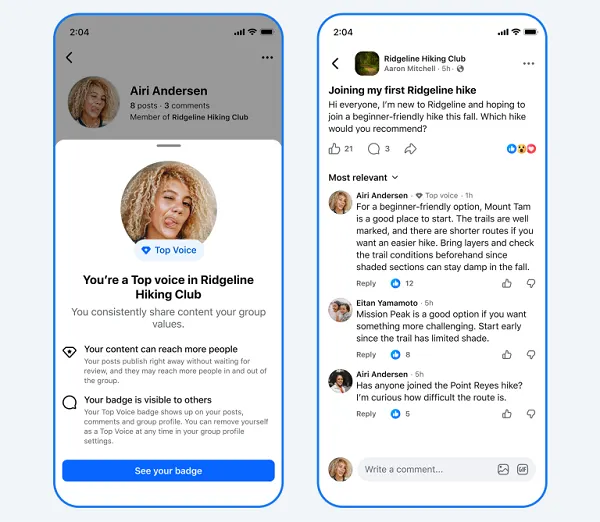
- Top Contributor Badges and Accelerated Publishing: To combat the apathy that often plagues online forums, Meta introduced earned recognition badges. These badges are granted exclusively to community members who demonstrate sustained, high-value engagement—answering questions, sharing lived experiences, offering practical advice, and serving as connective tissue for the group. In exchange for their labor, these vetted experts receive not only digital clout via a specialized badge but also practical platform privileges, such as having their posts published faster.
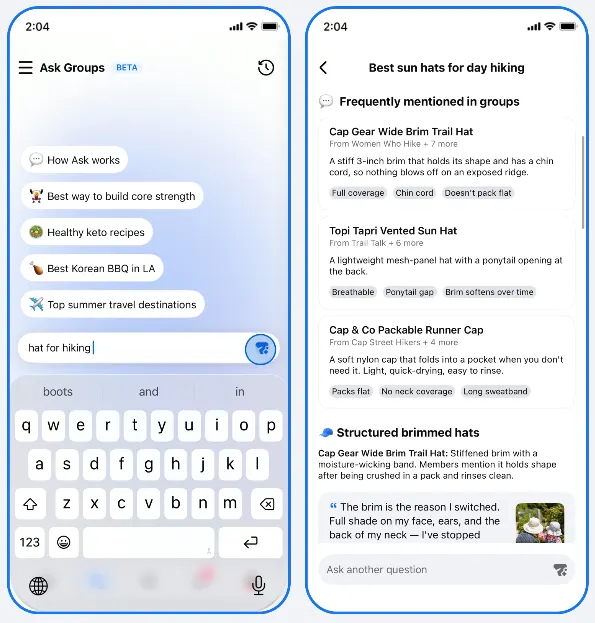
- Cross-Group Answer Aggregation: In a major shift toward centralized discovery, Meta began testing a cross-functional display mechanism. When a user submits a query, Forum does not merely pull from a single community; it can source and display relevant answers gathered from multiple distinct groups. Users are then empowered to evaluate and select the optimal response from a rich tapestry of perspectives.
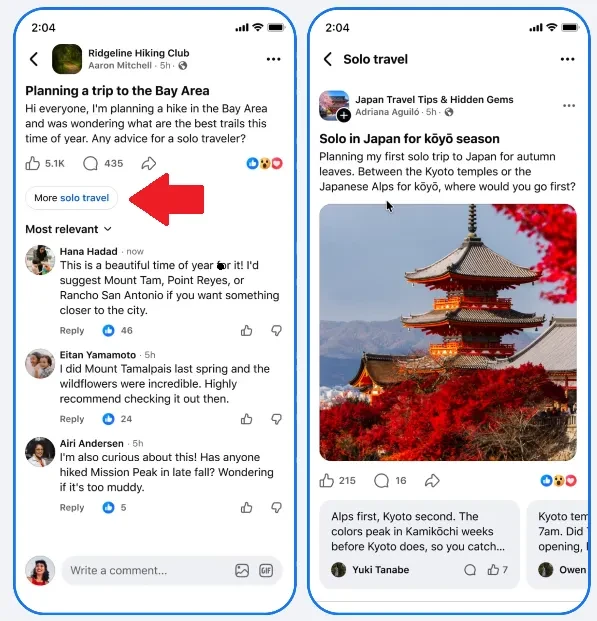
- Granular Topic Labels: To streamline navigation and content classification, Meta introduced dynamic topic labels. These tags serve as architectural signposts, allowing users to drill down instantly into specific subject areas, thereby accelerating the discovery of niche information without relying solely on traditional search bars.
Supporting Context & Metrics: The AI Data Gold Rush
To fully contextualize Meta’s aggressive push into structured Q&A formats, one must look outward at the broader landscape of generative artificial intelligence and natural language processing (NLP).

The Reddit Precedent
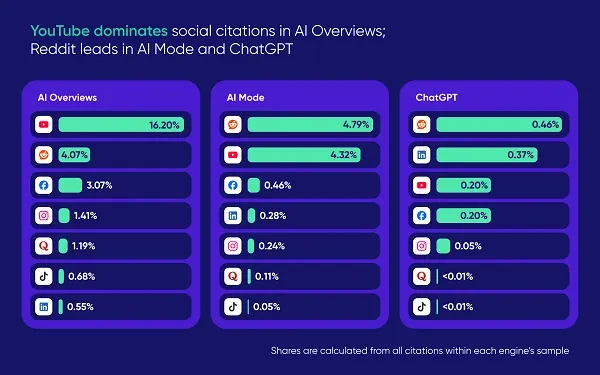
Over the past several years, platforms like Reddit have transitioned from niche internet subcultures to crown jewels of the AI era. Major tech conglomerates—including Google and OpenAI—have struck multi-million-dollar licensing deals with Reddit to ingest its massive archives of human-to-human Q&A data. Why? Because conversational data found on Reddit is structured in a way that AI models desperately need:
- Intent-Driven Questions: Users state specific, real-world problems.
- Peer-Vetted Solutions: Upvoting and downvoting mechanisms create an organic consensus layer, filtering out misinformation.
- Nuanced Context: Real human experiences provide emotional and practical context that synthetic data generation struggles to replicate.
Recognizing this dynamic, Meta found itself at a structural disadvantage. While Facebook and Instagram are treasure troves of visual media, personal updates, and brand marketing, they historically lacked the clean, indexable, conversational Q&A architecture required to effectively train advanced reasoning models.
Bridging the Data Gap via Forum
This is where the true genesis of the Forum app lies. By restructuring Facebook Groups into a Q&A-first paradigm, Meta is engineering its own proprietary version of Reddit.
Every time a user posts a precise query about home repair, software troubleshooting, or regional travel, and every time a "top contributor" answers it, they are inadvertently generating premium, clean training data. Meta’s algorithms can ingest these question-and-answer pairs to fine-tune its native AI assistant. When a user queries Meta AI in the future, the system will not have to guess or scrape external web pages as aggressively; it can draw directly from the verified, human-vetted knowledge base cultivated within Forum.
Official Statements and Industry Perspectives
Meta has carefully framed these updates through the lens of community empowerment, emphasizing user utility above all else.
In official documentation outlining the new top contributor role, Meta stated:
"The role is earned through contributions that genuinely help a community, such as answering questions, sharing firsthand experiences, offering practical tips and recommendations, and starting conversations that bring people together. The role comes with a new badge and new benefits, including posts that publish faster."
By gamifying participation through faster publishing speeds and exclusive badges, Meta is successfully outsourcing content moderation and expertise generation to its user base for free.
Independent tech analysts and digital sociologists, however, offer a more pragmatic critique of the platform’s underlying motivations. While acknowledging that Forum genuinely improves the user experience by making information easier to find and groups more functional, analysts point out the glaring asymmetry of value creation.
As one industry observer noted: "Meta is dressing this up as a value-add, but really, it seems that the real value of the app is for machines, not humans." Users invest their cognitive labor, personal expertise, and time to build comprehensive knowledge repositories, while Meta captures the structural byproduct: high-intent conversational data designed to bulletproof its AI monetization strategy.
Future Outlook: What Next for Meta and Forum?
As Meta continues to scale Forum and refine its AI integration pipelines, several key trends and trajectory markers are bound to shape the platform’s future over the coming years:
1. Monetization of Expert Networks
As top contributor badges gain social currency within Meta’s ecosystem, we may see the introduction of specialized expert tiers. Could verified domain experts eventually monetize their advice directly through the app? Introducing micro-transactions, consultation fees, or brand sponsorships within Forum could incentivize even higher-tier professionals to migrate from platforms like Quora, LinkedIn, or Stack Overflow.
2. Deep Integration with Meta AI
Expect to see the barrier between Forum and Meta AI dissolve entirely. In the near future, when a user types a question into the main Facebook search bar or chats directly with the Meta AI assistant, the system will likely pull live, context-aware answers directly from active Forum threads, complete with attribution to the top contributors who authored them.
3. Anti-Spam and Algorithmic Moderation Challenges
As Forum gains traction, it will inevitably attract bad actors, automated bot farms, and SEO-driven marketers trying to game topic labels and top-contributor badges for commercial gain. Meta’s ability to maintain the integrity of its Q&A knowledge graph will depend entirely on its capacity to deploy robust, proactive moderation tools alongside human oversight.
Conclusion
Meta’s ongoing evolution of the Forum app is a masterclass in platform engineering. By cleverly masking infrastructural AI data collection as a community-first feature update, Meta is solving two problems at once: enhancing the stagnant utility of Facebook Groups and capturing the conversational data required to remain competitive in the global AI race. Whether users mind that they are building the brain of Meta’s next-generation artificial intelligence remains to be seen, but one thing is certain—the architecture of online communities is changing, and machines are reaping the rewards.