Executive Overview
For software sales teams across the globe, the word pilot often evokes a collective, weary sigh. In the traditional enterprise sales motion, requesting a pilot is frequently viewed as a stalling tactic—a bureaucratic hurdle designed to slow momentum, stretch resources, and force account executives to essentially sell the exact same deal twice. First, the sales team must convince the client to commit to a limited, often discounted or short-term trial. Then, once that trial concludes, they have to re-engage stakeholders, re-prove the value proposition, and negotiate the actual long-term contract.
Yet, according to recent insights from SaaS industry veteran and SaaStr founder Jason Lemkin, treating pilots as a burden is a critical strategic error—particularly in the fast-evolving landscape of enterprise artificial intelligence. Far from being a mere administrative nuisance, the enterprise pilot has become the definitive battleground for market dominance.
Startups and scale-ups that stubbornly fight against pilot programs often find themselves locked out of lucrative enterprise accounts. Conversely, organizations that lean into the pilot motion, institutionalize best practices, and master the art of execution are turning trial periods into predictable, scalable revenue engines.
This deep-dive analysis examines why enterprise buyers fundamentally insist on pilots, the structural mechanics of managing them effectively, how the paradigm shifts in the era of generative AI, and why leaning into the "double sale" is the hidden key to unlocking hyper-growth.
Detailed Chronology: The Evolution of the Enterprise Trial
To understand why enterprise buyers demand pilots today, it is helpful to look back at how software procurement has transformed over the past two decades.
Era 1: The On-Premises Era and Proof of Concepts (PoCs)
In the early days of enterprise software, deployment required massive capital expenditures on physical servers, database architecture, and IT infrastructure. Vendors didn’t offer "pilots" in the modern sense; instead, they conducted grueling, months-long Proof of Concepts (PoCs). These exercises were designed to prove that the software could integrate with legacy systems without crashing the corporate network. Security, compatibility, and uptime were the primary success metrics. The cost of failure was extraordinarily high, making rigorous testing non-negotiable.
Era 2: The SaaS Explosion and the Rise of "Freemium"
With the advent of cloud computing and Software-as-a-Service (SaaS), deployment friction plummeted. Suddenly, business units could bypass centralized IT departments simply by swiping a corporate credit card. During this period, the "freemium" model and self-serve product-led growth (PLG) took center stage. Buyers expected to test software instantly via self-service sign-ups. However, as SaaS solutions crept further up-market—handling core enterprise workflows, compliance, and multi-departmental data—traditional enterprise buyers pushed back. They realized that self-service trials weren’t enough for complex, mission-critical deployments.
Era 3: The Modern Enterprise and the AI Paradigm Shift
Today, we have entered the Age of AI. Enterprise buyers are inundated with pitches from hundreds of generative AI startups, all claiming to revolutionize productivity, automate workflows, and deliver miraculous ROI.
In this climate of immense vendor noise and technological uncertainty, enterprise buyers face severe risks: hallucinations, data privacy breaches, integration nightmares, and user rejection. Consequently, the demand for structured, rigorous pilots has skyrocketed. Buyers simply will not trust unproven AI startups without seeing the technology perform in their own controlled environment, using their proprietary data.
As Jason Lemkin noted in a recent commentary:
"Sales hates pilots. Why? It has to be sold twice. Once to start the pilot. And again after it finishes. But pilots are an even bigger deal in the Age of AI. Get good at them, when the competition isn’t… and you win."
Supporting Context & Metrics: Why Enterprise Customers Insist on Pilots
Enterprise buyers do not ask for pilots out of malice or a desire to create extra work for account executives. Their insistence is rooted in risk mitigation, organizational dynamics, and financial prudence. Examining the core drivers reveals why this mechanism benefits both buyers and forward-thinking vendors.
1. Risk Mitigation in Complex Environments
Enterprise architecture is messy. A new software solution must coexist with legacy databases, custom internal tools, strict security protocols, and compliance frameworks (such as GDPR, HIPAA, and SOC 2). An enterprise buyer cannot afford to purchase software based solely on a slick product demo, only to discover during deployment that the tool breaks their workflow or creates vulnerabilities. A pilot serves as a live stress test under real-world conditions.
2. Internal Political Alignment
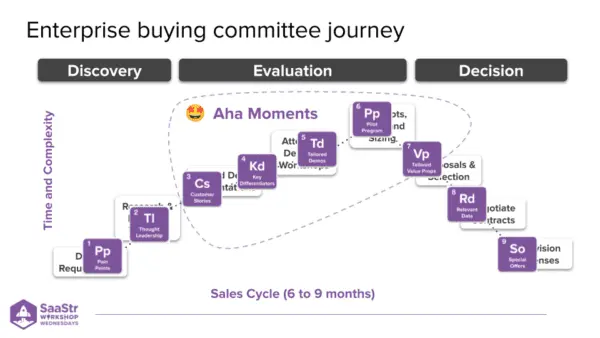
In a modern enterprise, software purchases are rarely made by a single decision-maker. Buying committees typically include budget holders, IT security leads, legal counsel, end-user representatives, and executive sponsors.
- Getting buy-in for a low-risk, short-term pilot is exponentially easier than securing approval for a multi-year, six-figure enterprise contract.
- By championing a pilot, internal advocates can build an internal coalition, gather qualitative user feedback, and compile hard data to present to the C-suite for final budget allocation.
3. Proof of Value (PoV) Over Promises
Sales pitches are inherently aspirational. Vendors highlight their best-case scenarios, highest performance benchmarks, and most satisfied customers. Enterprise buyers, having been burned by over-promising vendors in the past, trust empirical evidence over marketing copy. A pilot allows the buying organization to measure real-world user adoption, time-savings, and operational impact within their own unique ecosystem.
Official Industry Insights and Strategic Frameworks
While the "double sale" dynamic requires additional effort from sales and customer success teams, net-net, it often reduces total sales friction. By embracing the pilot as a core component of the go-to-market (GTM) strategy, organizations can systematically de-risk the purchase for the customer.
However, a poorly managed pilot can easily spiral into an endless, unproductive limbo. Industry experts emphasize that the differentiator between a winning sales motion and a wasted trial lies in structural rigor.
The Anatomy of a High-Converting Enterprise Pilot
To transform pilots from a time-sink into a predictable revenue driver, revenue leaders must enforce specific operational disciplines:
A. Define Clear, Measurable Success Criteria Upfront
The single most common failure mode in pilot management is the lack of a mutually agreed-upon definition of success. If both the vendor and the client do not establish explicit metrics before kick-off, the pilot risks becoming an open-ended evaluation with no clear destination.
- Quantitative Metrics: Specific ROI targets, percentage reductions in processing time, API response speeds, or precise user adoption thresholds (e.g., “70% of the designated team must log in and complete at least three workflows per week”).
- Qualitative Metrics: User satisfaction scores, reduction in reported friction points, and stakeholder qualitative feedback.
B. Secure Executive Sponsorship Prior to Kick-Off
A pilot should never be run solely with low-level individual contributors who lack the authority to sign a contract. Even during a trial, the sales team must maintain a line of sight to the economic buyer. If the end-users love the product during the pilot, but the executive sponsor was never engaged, converting the pilot into a paid contract becomes an uphill battle.
C. Timebox the Evaluation Period
Urgency is critical in sales. Enterprise pilots should typically run between 30 to 60 days. Anything shorter may not provide enough data to prove value; anything longer often results in organizational fatigue, shifting priorities, and lost momentum. A strict timeline creates natural accountability for both the customer’s team and your customer success engineers.
D. Implement "Opt-Out" vs. "Opt-In" Commercial Terms
Whenever possible, sales leaders advocate for structuring pilots with automated conversion clauses. For example, the customer signs an agreement covering both the paid contract and the initial pilot phase, featuring an explicit "opt-out" window (e.g., “The customer may terminate the agreement within 7 days of the pilot conclusion if predefined success criteria are not met”). This subtle shift moves the psychological burden: instead of having to convince the customer to buy after the pilot, you only have to keep them from actively canceling.
Future Outlook: The Competitive Edge in the AI Era
As artificial intelligence deepens its footprint across enterprise tech stacks, the traditional software evaluation model is undergoing a permanent transformation.
In past decades, buyers evaluated software based on feature checklists: Does it have module X? Can it generate report Y? In the Age of AI, features are commoditized, and intelligence is paramount. Because AI models and agentic workflows behave probabilistically rather than deterministically, static demonstrations are entirely inadequate. An AI tool that performs brilliantly in a sandbox environment may struggle when confronted with the messy, unstructured data of a Fortune 500 corporation.
Consequently, the ability to execute fast, frictionless, and high-converting pilots will separate market leaders from also-rans.
Organizations that view pilots as an annoying chore will drag their feet, lose deals to more agile competitors, and struggle to build trust with skeptical enterprise buyers. Conversely, companies that build world-class pilot operations—complete with automated provisioning, clear success metrics, dedicated AI implementation engineers, and seamless conversion playbooks—will weaponize the pilot motion.
By treating the pilot not as a hurdle, but as an accelerated masterclass in customer value delivery, revenue teams can shorten sales cycles, build unbreakable trust, and turn the dreaded "double sale" into their most reliable engine for exponential enterprise growth.