










Executive Overview
In a unprecedented setback for the commercial data broker industry, the prominent people-search platform Radaris.com has been forced to surrender its primary domain name—along with more than a dozen affiliated websites—following a high-stakes legal battle in New Jersey. Long notorious among privacy advocates for ignoring opt-out requests and maintaining an elusive corporate structure, Radaris was targeted in a lawsuit alleging systematic violations of New Jersey’s privacy statute, known as Daniel’s Law.
The lawsuit, spearheaded by data privacy enforcement firm Atlas Data Privacy Corp, exposed a complex network of offshore shell companies, fictitious executive identities, and persistent legal delay tactics designed to evade regulatory accountability. Faced with repeated non-appearances, evasive maneuvers, and procedural delays from the defense, the presiding judge ordered the immediate court-ordered transfer of radaris.com and 13 other associated data broker domains directly to the plaintiffs.
Today, visitors attempting to access radaris.com no longer find a searchable database of personal dossiers containing addresses, phone numbers, and relative histories of millions of Americans. Instead, the domain lands on an official notice detailing the court-mandated seizure. The ruling marks one of the most severe judicial penalties ever levied against a commercial data broker and highlights a growing aggressive legal push to enforce statutory privacy protections for public officials and citizens alike.
Detailed Chronology
[2017] Huebner v. Radaris Class Action
       └── $7.5M Default Judgment issued against Radaris.
       └── Defense halts domain transfer by citing offshore owner "Bitseller Expert Ltd" (Cyprus).
       └── Corporate operator subsequently shifts to "Andtop Company" (Marshall Islands).

[Feb 2024] Atlas Data Privacy Corp Files Suit
       └── Atlas sues Radaris under NJ "Daniel's Law" ($1,000/violation penalty).
       └── KrebsOnSecurity exposes co-founders Igor & Dmitry Lubarsky and fake CEO "Gary Norden".

[June 2025] Lawsuit Refiled and Expanded
       └── Atlas refiles after defense claims proper corporate entities were not served.
       └── Defendants engage in "island-hopping" strategy (Marshall Islands, BVI, Seychelles).

[August 2025] West Virginia Precedent
       └── Federal court strikes down West Virginia’s version of Daniel's Law as unconstitutional.

[August 26, 2026] Judicial Seizure Ordered
       └── NJ Judge finds persistent failure to defend; orders transfer of 14 domains to Atlas.
       └── Defense moves to vacate, arguing domain is a "non-entity".
Origins and the "Gary Norden" Deception
The operational model of Radaris has drawn scrutiny from legal experts and cybersecurity journalists for nearly a decade. In 2017, Radaris faced a major class-action lawsuit (Huebner v. Radaris, LLC) in which plaintiffs were initially awarded a $7.5 million default judgment after the company failed to respond in court. When the court attempted to enforce the judgment by ordering domain registry Verisign to turn over radaris.com, defense attorney Val Gurvits of the Boston Law Group intervened. Gurvits successfully argued that the true owner of the domain—a Cyprus-based corporate entity named Bitseller Expert Limited—had not been properly named in the complaint, thereby halting the transfer on due process grounds. Shortly thereafter, control of the site was quietly reassigned to Andtop Company, an entity registered in the Marshall Islands, while the original plaintiffs abandoned further litigation.
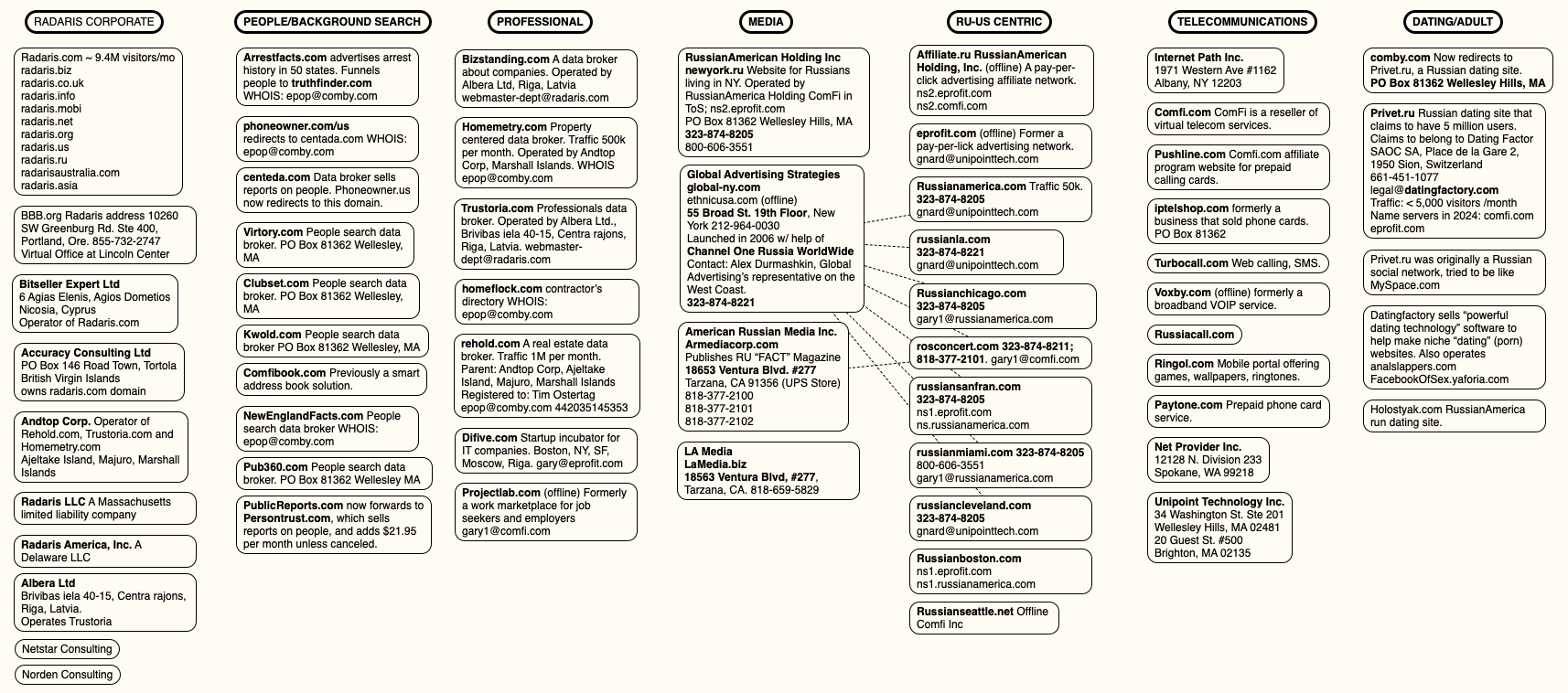
Investigative reporting by KrebsOnSecurity in early 2024 uncovered the human operators behind this corporate labyrinth: Igor and Dmitry (Dan) Lubarsky (also spelled Lybarsky), two Russian-born brothers operating out of Massachusetts. The Lubarskys managed an expansive portfolio of consumer data brokers, Russian-language online dating portals, and affiliate marketing networks.
When challenged by legal representatives, defense counsel originally threatened defamation lawsuits, claiming the true operators were Ukrainian nationals residing in Ukraine. However, follow-up investigations revealed that the brothers had fabricated a fictional chief executive officer named "Gary Norden." Gurvits later conceded that "Gary Norden" was an invented pseudonym, despite the name having appeared across numerous corporate press releases and investment solicitations over several years.
                              [ Igor & Dmitry Lubarsky ]
                                (Massachusetts, USA)
                                         │
                   ┌─────────────────────┴─────────────────────┐
                   ▼                                           ▼
         [ difive.com Infrastructure ]              [ Fictional Executive ]
       (Centralized Admin / Billing)                   "Gary Norden"
                   │                                           │
 ┌─────────────────┼─────────────────┐                         │
 ▼                 ▼                 ▼                         │
Radaris.com   Veripages.com   24+ Sister Sites <───────────────┘
The 2024–2025 Legal Assault Under Daniel’s Law
In February 2024, Atlas Data Privacy Corp initiated legal action against Radaris in New Jersey. Atlas has emerged as a primary litigator enforcing Daniel’s Law, a state statute enacted to protect law enforcement personnel, judicial officers, government officials, and their immediate family members. The law permits covered individuals to demand the complete removal of their personal identification information from commercial people-search engines, establishing statutory damages of $1,000 per violation against non-compliant vendors.
Following initial filings, Radaris’s legal team employed procedural maneuvers designed to avoid a default judgment while disclaiming liability. Counsel argued that Atlas had failed to serve the legitimate operational entities behind the brand. In response, Atlas refiled an expanded complaint in June 2025, targeting a far broader web of corporate entities tied to the Radaris network.
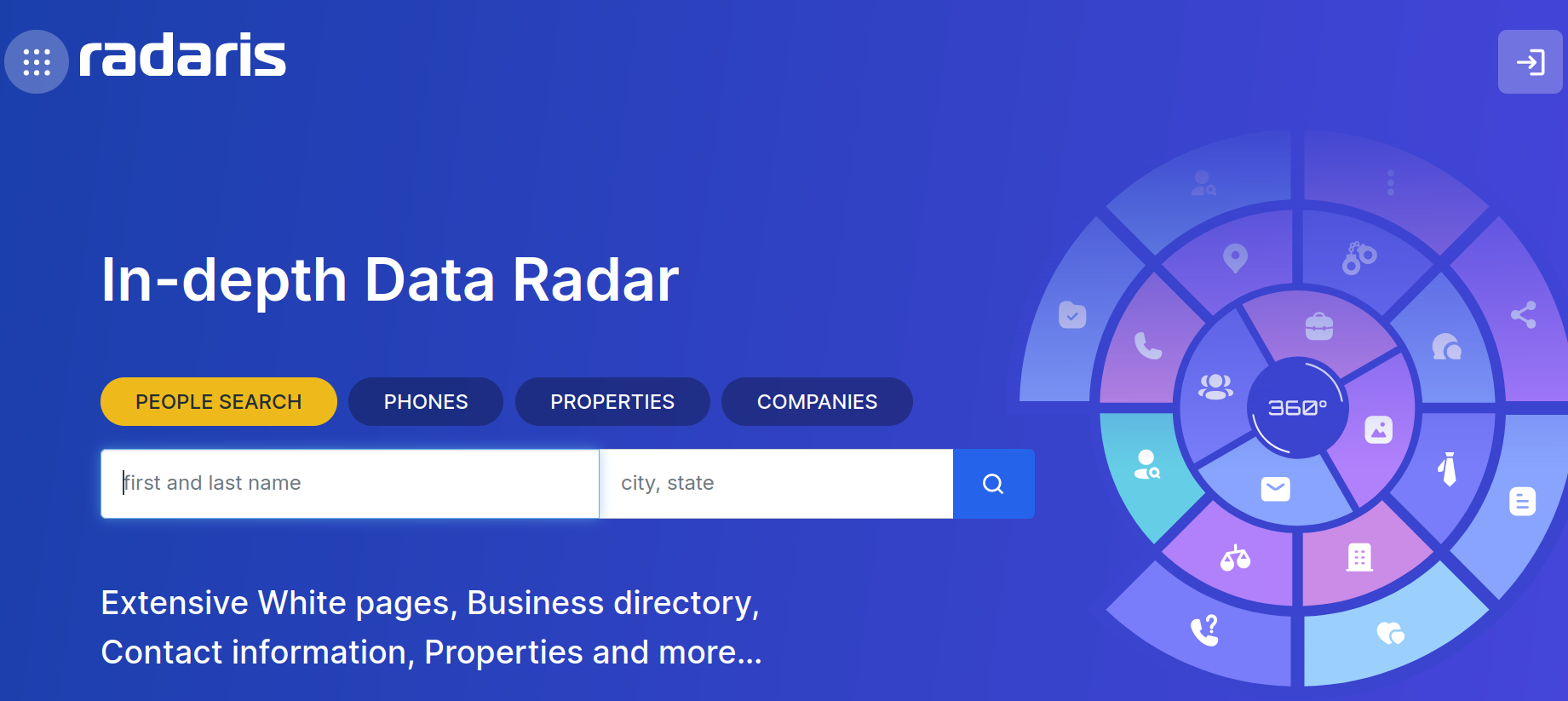
During this phase, Radaris adopted what litigants described as an "island-hopping" corporate strategy. Terms of service and privacy disclosures on radaris.com were repeatedly updated to introduce newly registered holding companies located in offshore jurisdictions, including the Marshall Islands, the British Virgin Islands, and Seychelles. When Radaris updated its site terms to claim management by a newly formed Marshall Islands firm, investigators retained by Atlas in the region discovered that the entity in question had not yet been legally incorporated at the time the claim was made online.
The Court Order and Domain Seizure
By late August, the presiding judge in the New Jersey state court determined that the defendants had been afforded exhaustive opportunities to enter formal appearances and defend against the substantive claims, yet had consistently engaged in prevarication and delay tactics.
On August 26, the court issued an order granting relief to the plaintiffs. Rather than relying solely on monetary judgments—which offshore corporate entities historically evade—the court ordered the immediate operational transfer of radaris.com and 13 other interconnected data broker domain names directly to Atlas Data Privacy Corp.
Supporting Context & Metrics
Unmasking the Administrative Web
In the course of discovery and related proceedings, Atlas acquired more than 10,000 internal emails, financial logs, and operational records. The document corpus provided incontrovertible evidence regarding the centralized control of the Radaris enterprise.
Despite maintaining a bewildering array of distinct corporate facades—including Radaris America, Inc., Bitseller Expert Limited, Digital Orbit Corp, Core Solutions Group Inc, Lucky Solutions Inc, Virtura Corp, Veripages Inc., Nuform Solutions Inc., Growth Data Advisors Inc., and Property Experts, Inc.—the underlying infrastructure was unified.
| Corporate/Technical Metric | Operational Reality Established by Court Discovery |
|---|---|
| Administrative Staffing | Managed entirely by a core group of 3 to 4 individuals |
| Communication Channels | Centralized under the difive.com mail domain and successor domains (centerex.com, e-profit.com, scienteco.com, realmo.com, pub360.com) |
| Financial Routing | Unified banking instruments and shared payment processor accounts |
| Physical Footprint | Consolidated under a single virtual office address |
| Network Scale | A minimum of 25 distinct people-search websites operating as a single entity |
Revenue Models and Unholy Alliances
The seized records offered rare insight into the financial mechanics and monetization channels of middle-tier consumer data brokers:
+-----------------------------------------------------------------------+
|                       ESTIMATED MONTHLY REVENUE                       |
+-----------------------------------------------------------------------+
|  [Radaris.com Primary Dossier Sales]                  ~ $42,000 / mo   |
|                                                                       |
|  [Veripages.com via Lifetime Value Co Partnership]    ~ $45,000 / mo   |
|  (Includes PeopleLooker, PeopleSmart, NumberGuru)                     |
|                                                                       |
|  [Data Broker Syndicate via Onerep Partnership]        ~ $25,000 / mo   |
+-----------------------------------------------------------------------+- Radaris.com: Generated approximately $42,000 per month through direct consumer subscriptions and report purchases.
- Veripages.com: Generated roughly $45,000 per month through an monetization agreement with The Lifetime Value Company, a digital marketing group that operates brand properties such as PeopleLooker, PeopleSmart, NumberGuru, and the automotive history platform Bumper.
- Privacy Removal Monetization: The Radaris network accumulated up to $25,000 per month through a commercial partnership with Onerep, a company marketed to consumers as a privacy tool designed to remove personal data from data brokers.
This financial relationship highlights a severe conflict of interest within the privacy sector: Onerep’s Belarusian founder was previously revealed to have established and operated dozens of people-search domains (including Nuwber), effectively extracting revenue from consumers on both sides of the privacy spectrum—charging fees to host personal records while simultaneously charging fees to remove them.
Official Statements
The Defense Arguments
Following the court-ordered transfer of the domains, legal representation for Radaris signaled an intent to challenge the order. Attorney Victor Worms, who assumed management of the defense from Val Gurvits, issued a statement contesting the procedural validity of the judgment:

"We have made a motion to vacate that default judgment on the grounds that it is void since a non-entity has no legal capacity to sue or be sued. We also intend to pursue all appropriate appeals because we believe the transfer of Radaris.com amounts to a forfeiture in violation of various constitutional principles."
Worms argued that the New Jersey tribunal had improperly issued a judgment against Radaris.com as a web domain rather than a properly served legal corporate entity, framing the seizure as an unconstitutional taking of property.
The Plaintiffs’ Perspective
Representatives for Atlas and their litigation team framed the court order as a necessary breakthrough against bad-faith procedural abuse. Matt Adkisson, President and CEO of Atlas Data Privacy Corp, described the operational tactics utilized by the defense:
"We refer to this period as their island-hopping phase. Privacy policies changed constantly, and new entities kept appearing from places like the Marshall Islands, the British Virgin Islands, and Seychelles. Behind the scenes, it felt like a shell game. Defense lawyers told the court that certain entities merely operated the domains and were the proper parties to sue. But by the time a judgment neared, those entities would be discarded and new entities would appear."
Raj Parikh, a partner at PEM Law who represents Atlas in Daniel’s Law actions, emphasized the deliberate choice to pursue domain seizure over conventional monetary damages:
"In the past, they won by attrition. Plaintiffs’ attorneys tired of the procedural games and just gave up. That strategy worked for a decade, and it probably would have worked in this case too, since any financial recovery from foreign actors will be difficult. But we were acutely aware of the threat this website posed to law enforcement officers and other public officials in New Jersey, and decided early on to commit whatever time and resources were necessary to remove that threat."
Future Outlook
The Constitutional Battleground Over State Privacy Laws
While the seizure of radaris.com marks a major tactical victory for enforcement actions under Daniel’s Law, the broader legal foundation of state-level privacy enactments remains under intense judicial challenge.
More than 150 lawsuits initiated by Atlas against various data brokers have prompted an industry-wide counteroffensive. Defense attorneys representing major industry players have successfully moved at least 70 cases to federal courts, mounting sweeping challenges grounded in the First Amendment. Industry trade groups argue that statutory restrictions on publishing public record data constitute unconstitutional content-based restraints on speech.
State Enforcement Push                  Industry Legal Defense
┌──────────────────────────────┐        ┌──────────────────────────────┐
│ • 14+ States Pass Laws       │        │ • 70+ Cases Moved to Federal │
│ • Statutory Fine Violations  │ VS.    │ • First Amendment Challenges │
│ • Direct Domain Enforcement  │        │ • WV Precedent (Aug 2025)    │
└──────────────────────────────┘        └──────────────────────────────┘
               │                                       │
               └───────────────────┬───────────────────┘
                                   ▼
                   [ U.S. Court of Appeals / SCOTUS ]
The U.S. Court of Appeals for the Third Circuit is currently evaluating these constitutional challenges. The ultimate ruling is widely anticipated to reach the U.S. Supreme Court, given the escalating conflict between state-level privacy mandates and First Amendment protections for information brokers.
The legal landscape is further complicated by conflicting regional rulings. Although more than 14 states have enacted legislation modeled after New Jersey’s Daniel’s Law, a federal district court in August 2025 struck down West Virginia’s statute, ruling it facially unconstitutional under the First Amendment. This split creates an unpredictable regulatory environment for both data subjects and commercial publishers.
The Federal Privacy Vacuum
Privacy experts emphasize that state-level, targeted statutes like Daniel’s Law are an incomplete defense against a multi-billion-dollar global surveillance economy. Justin Sherman, a prominent data privacy scholar and author of The Middlemen, notes that systemic change remains stymied by broad institutional lobbying at the national level:
"These days at the federal level, add in the intense amount of lobbying against these laws from social media companies, big tech, cryptocurrency firms, and now AI proponents in the mix who claim that limiting their data scraping is somehow going to collapse the whole U.S. economy under Chinese rule."
Sherman stresses that existing state privacy laws almost universally contain exemptions for "public records" or "government documents"—including property registration files, voter rolls, marriage certificates, court dockets, criminal histories, and motor vehicle records. Because commercial data brokers build their core products by aggregating these exempt public feeds, consumer-search platforms will continue to proliferate in the absence of comprehensive federal legislation.
The risks inherent in this regulatory vacuum extend beyond targeted harassment of public officials to wide-scale identity theft. Recent law enforcement actions—such as the FBI investigation into a major breach at IDScan.net, which exposed the driver’s license details of over 153 million Americans—demonstrate the vulnerabilities created by unregulated third-party data collection.
As long as statutory carve-outs exist and federal comprehensive privacy legislation remains stalled, enforcement entities like Atlas will likely continue relying on aggressive judicial remedies—including direct domain transfers—to disrupt non-compliant networks one domain at a time.