Executive Overview
In the history of television production, few environments present as volatile a mix of logistical, environmental, and psychological challenges as a remote tropical shoot featuring a massive cast of child actors. When production companies Eleven and Sony Pictures Television set out to adapt William Golding’s seminal 1954 novel Lord of the Flies as a high-end limited series for the BBC, Stan, and Netflix, they chose the dense, humid rainforests and isolated coastlines of Malaysia as their canvas. To capture the complex creative alchemy behind this ambitious adaptation, award-winning documentary filmmaker Lisa Marie Russo was brought on set.
Initially contracted to shoot standard electronic press kit (EPK) promotional material, Russo quickly realized that the real-world drama of the production—mirroring the intense emotional arcs of the source material—demanded a full-length, cinematic documentary. The resulting hour-long feature, Making of Lord of the Flies, compiled from more than 100 hours of intimate behind-the-scenes (BTS) footage and candid interviews, stands as a testament to both guerrilla filmmaking techniques and technological democratization.
Armed with a highly portable Blackmagic Design Pocket Cinema Camera 6K Pro and a modest selection of adapted lenses, Russo navigated extreme weather, tight child-labor schedules, and claustrophobic physical spaces. Her documentary offers an unprecedented look at how director Marc Munden, screenwriter Jack Thorne, and a cast of over thirty young British actors brought Golding’s harrowing vision of societal collapse to the screen, earning the main series two Primetime Emmy nominations in the process.
Detailed Chronology
[Summer 2024] -------------------> [Production Start + 2 Weeks] ----------> [14-Week Shoot in Malaysia] ------------> [Post-Production]
Russo acquires Pocket 6K Pro       Russo arrives on set;                Navigates extreme weather,               Distilling 100+ hours
in Philadelphia on DoP advice      shifts from EPK to full documentary  tight child labor hours, tight spaces    into a 1-hour feature
Conception and Gear Acquisition
The journey of the documentary began in the summer of 2024 in Philadelphia. Russo, an accomplished documentary producer and director with a career spanning back to her early days at WHYY in Philadelphia and later in London’s independent film scene, was preparing to join the production of Lord of the Flies. Despite her extensive production background, this project would mark her first major credit handling principal cinematography herself.
On the recommendation of several trusted Directors of Photography (DoPs), Russo purchased a Blackmagic Pocket Cinema Camera 6K Pro. The decision was driven by the need for a camera package that combined professional-grade color science and high-resolution acquisition with a form factor small enough to remain inconspicuous on a highly sensitive, fast-moving set.
Arrival on Set
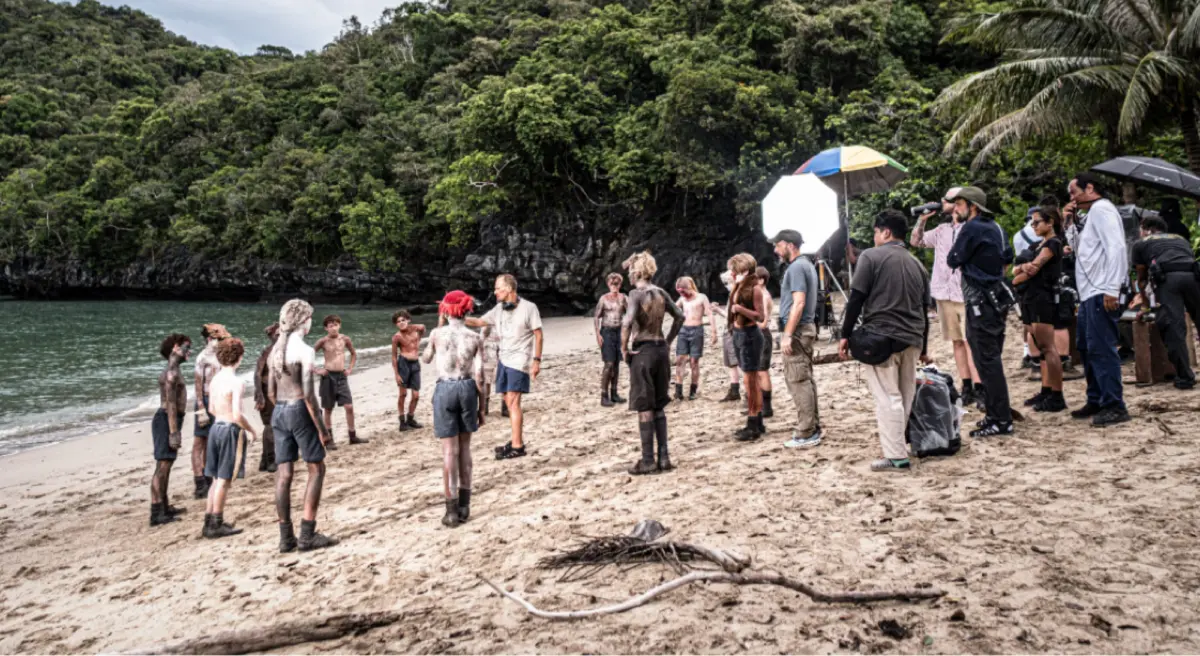
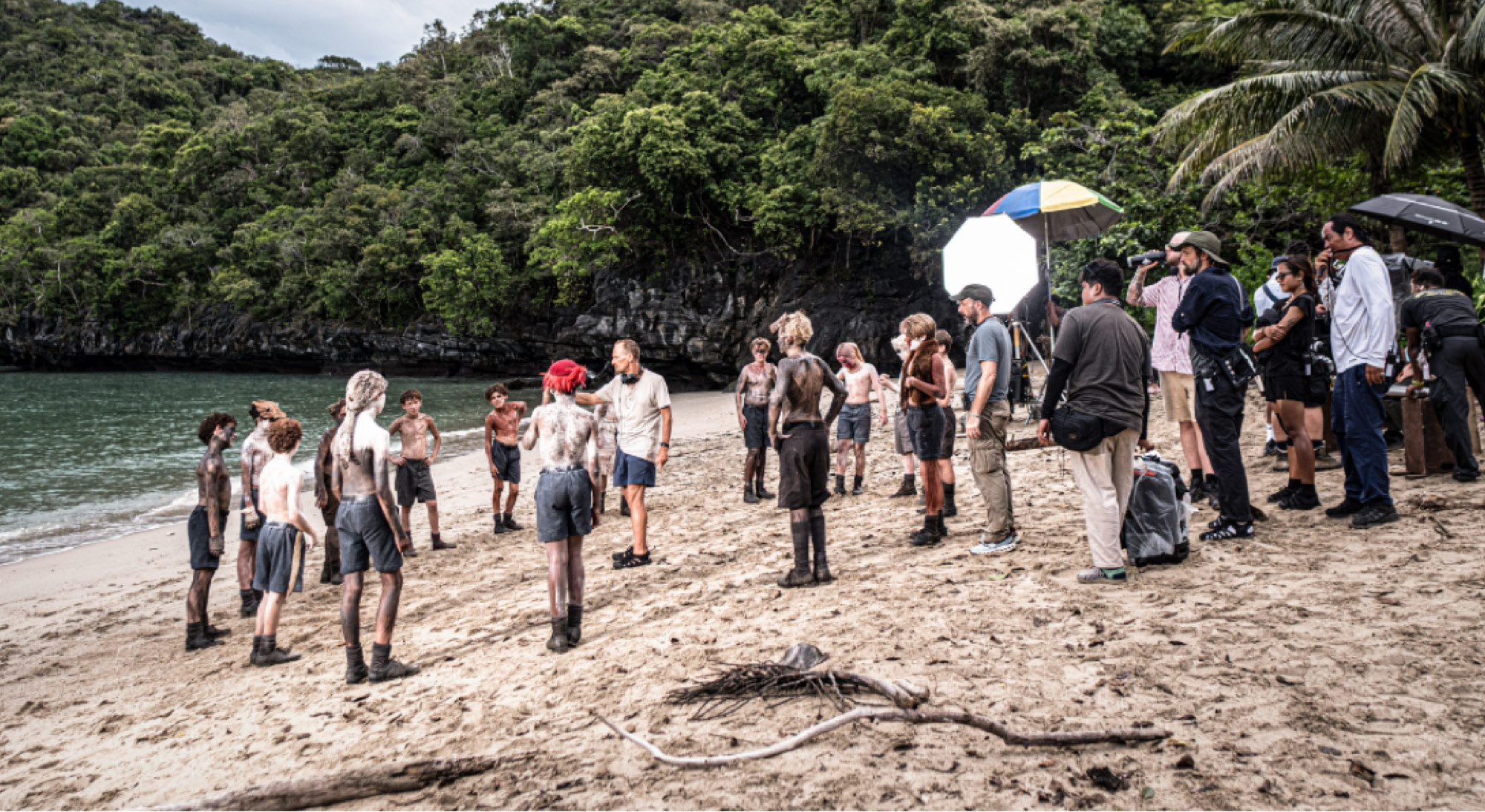
Russo arrived on location in Malaysia two weeks after principal photography had commenced. The production, directed by her husband Marc Munden and executive produced by Joel Wilson for Eleven, was already operating at a feverish pace. The set was populated by more than thirty young, mostly non-professional British actors who were experiencing the double shock of a grueling shooting schedule and the intense tropical climate of Southeast Asia.
The 14-Week Malaysian Expedition
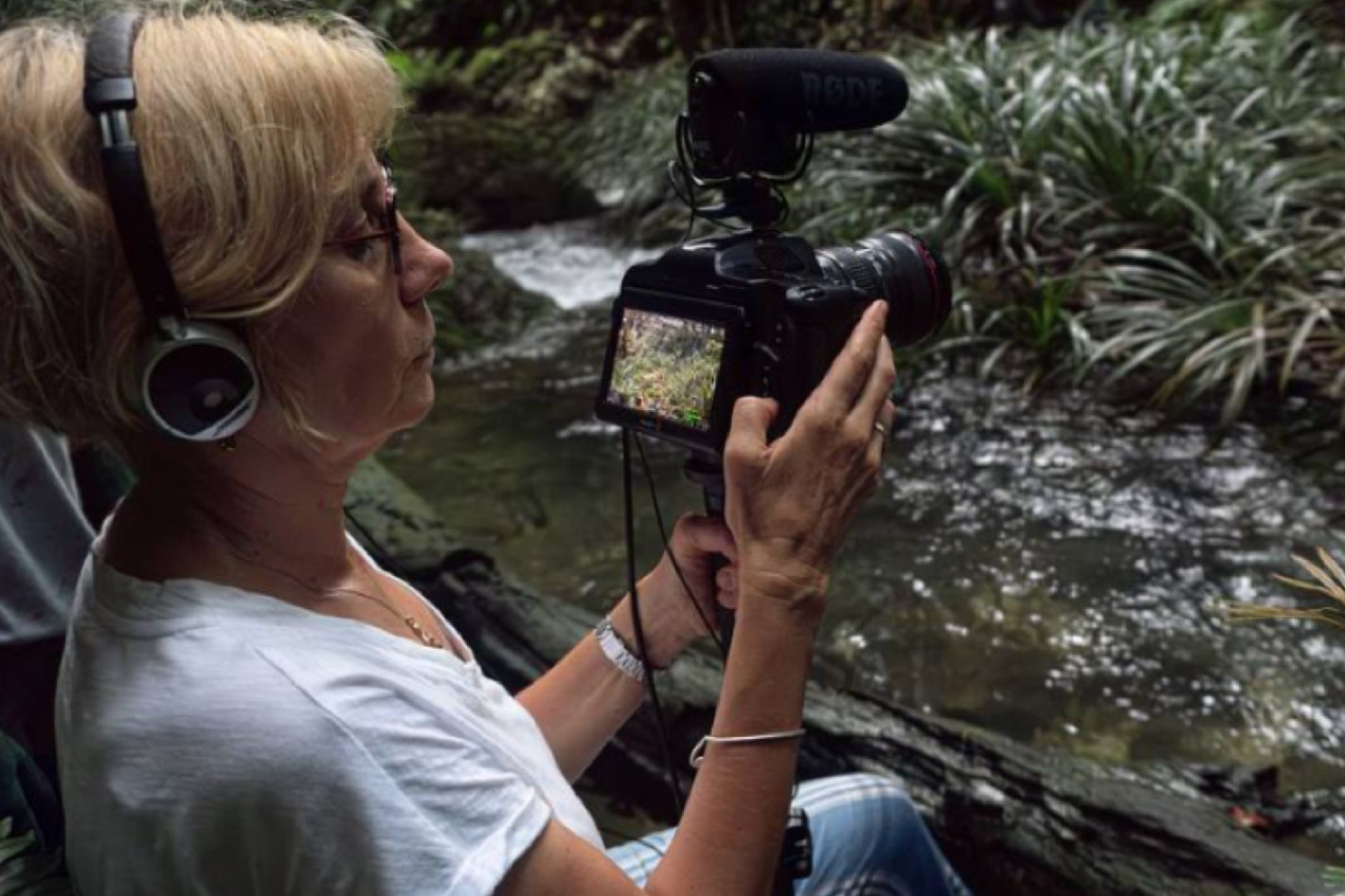
Over the course of the next 14 weeks, Russo embedded herself within the crew. Her daily routine required constant vigilance, navigating muddy swamps, slippery coastal rocks, and dense jungle canopies. Rather than sticking to a rigid shooting schedule, Russo adopted an observational, cinéma vérité approach.
+-------------------------------------------------------------------------+
|                       DAILY PRODUCTION WORKFLOW                         |
+-------------------------------------------------------------------------+
|                                                                         |
|  [Main Unit Setup] ----> [Russo Observes & Identifies Key Moments]      |
|                                   |                                     |
|                                   v                                     |
|  [Capture BTS & Interviews during setups/breaks (Pocket 6K Pro)]         |
|                                   |                                     |
|                                   v                                     |
|  [Daily Footage Offload & Metadata Sync with DIT Mark Kozlowski]        |
|                                                                         |
+-------------------------------------------------------------------------+
Working in tandem with Digital Imaging Technician (DIT) Mark Kozlowski, Russo established a streamlined workflow. Because child labor laws strictly limited the hours the young cast could work, the main production unit had to move with extreme efficiency. Russo had to operate in the margins—capturing crucial character-building moments, director-actor huddles, and candid interactions during lighting setups or in the brief moments between takes, all without ever becoming a distraction to the cast or the main unit crew.
Supporting Context & Metrics
The Scale of the Adaptation
William Golding’s Lord of the Flies is a cornerstone of modern literature, detailing the rapid descent into savagery of a group of schoolboys marooned on an uninhabited island. Translating this psychological descent to television required a delicate touch, executed by screenwriter Jack Thorne (His Dark Materials, National Treasure) and director Marc Munden (The Third Day, Utopia).
The production’s scale was massive:
- Cast: Over 30 young British actors, many of whom had never been on a professional film set before.
- Locations: Remote beaches, coastal swamps, and interior rainforests of Malaysia, posing severe humidity and temperature challenges.
- Footage Accumulated for BTS: Over 100 hours of raw documentary footage, B-roll, and interviews.
- Final Cut: A tightly edited 60-minute documentary combining behind-the-scenes footage with polished clips from the final drama.
Technical Specifications of the Documentary Rig
The choice of the Blackmagic Pocket Cinema Camera 6K Pro was central to the documentary’s visual success. Russo’s configuration was optimized for speed, mobility, and cost-effectiveness:
| Feature | Specification / Detail | Operational Benefit in Malaysia |
|---|---|---|
| Sensor Size | Super 35 (6144 x 3456) | Allowed Russo to match the cinematic depth of field of the main unit’s large-format cameras. |
| Lens Mount | Active EF Mount | Enabled the use of lightweight, widely available Canon EF lenses. |
| Built-in ND Filters | 2, 4, and 6-stop motorized NDs | Crucial for transitioning instantly from dark jungle undergrowth to blinding equatorial beach sunlight. |
| Monitoring | Tilting HDR LCD Screen (1500 nits) | Allowed for accurate framing from high or low angles without needing heavy external monitors or viewfinders. |
| Color Science | Generation 5 Color Science | Provided high dynamic range and latitude, allowing for seamless color matching in post-production. |
The "Hearts of Darkness" Paradigm
Russo drew heavy thematic and stylistic inspiration from Eleanor Coppola’s landmark 1991 documentary Hearts of Darkness: A Filmmaker’s Apocalypse, which chronicled the chaotic, near-disastrous production of Francis Ford Coppola’s Apocalypse Now in the jungles of the Philippines. Like Eleanor Coppola, Russo was uniquely positioned as both an insider (being married to the director) and an independent observer. This dual perspective allowed her to capture the raw, unfiltered realities of the production while maintaining a deeply empathetic lens.
Additionally, Russo was influenced by the mid-century portrait photography of Diane Arbus. Arbus’s ability to capture children in ways that were simultaneously otherworldly, psychological, and deeply human provided a visual template for how Russo framed the young cast when they were out of character—capturing the transition from ordinary British schoolboys to the feral tribalism demanded by their roles.
Official Statements
Reflecting on her experience, Lisa Marie Russo emphasized how the physical and operational limitations of the shoot dictated her creative choices, and how the compact technology at her disposal made the project possible.
"The children were a total revelation," Russo stated. "They worked intensely with Marc to discover and realize their characters, and really enjoyed sharing their experiences for the documentary. There is a big difference between filming them acting and when they were just being kids. They enjoyed talking about what they were learning at the moment and were curious about what the camera could do. The camera was just a part of me to the kids."
This intimacy was put to the test during one of the series’ most physically confined and emotionally dark sequences, featuring the characters Ralph and a gravely injured Piggy hiding from their pursuers in a makeshift shelter.
"We shot for several hours in a tiny shelter made of palm leaves, which were falling in around us," Russo recalled. "The space had to fit the DoP Mark Wolf, two actors, the sound recordist, and an assistant. Then I snuck in… There is no way I could have done that without the Pocket being so flexible, lightweight, and quiet. The tilting HDR screen meant I could see the whole image and didn’t need to fuss with a viewfinder."
+-------------------------------------------------------------+
|               MICRO-SET SPACE CONSTRAINTS                  |
+-------------------------------------------------------------+
|                                                             |
|   +-----------------------------------------------------+   |
|   |             Tiny Palm-Leaf Shelter                  |   |
|   |                                                     |   |
|   |  [Actor: Ralph]                      [Actor: Piggy] |   |
|   |                                                     |   |
|   |  [DoP: Mark Wolf]                 [Sound Recordist] |   |
|   |  (Main Camera Rig)                (Boom / Lavs)     |   |
|   |                                                     |   |
|   |                 [Camera Assistant]                  |   |
|   |                                                     |   |
|   |               >> [Russo & Pocket 6K] <<             |   |
|   |                  (Squeezed in corner)               |   |
|   +-----------------------------------------------------+   |
|                                                             |
+-------------------------------------------------------------+
Russo also praised the camera’s forgiving sensor and internal processing, which allowed her to focus on storytelling over technical perfection in high-pressure situations:
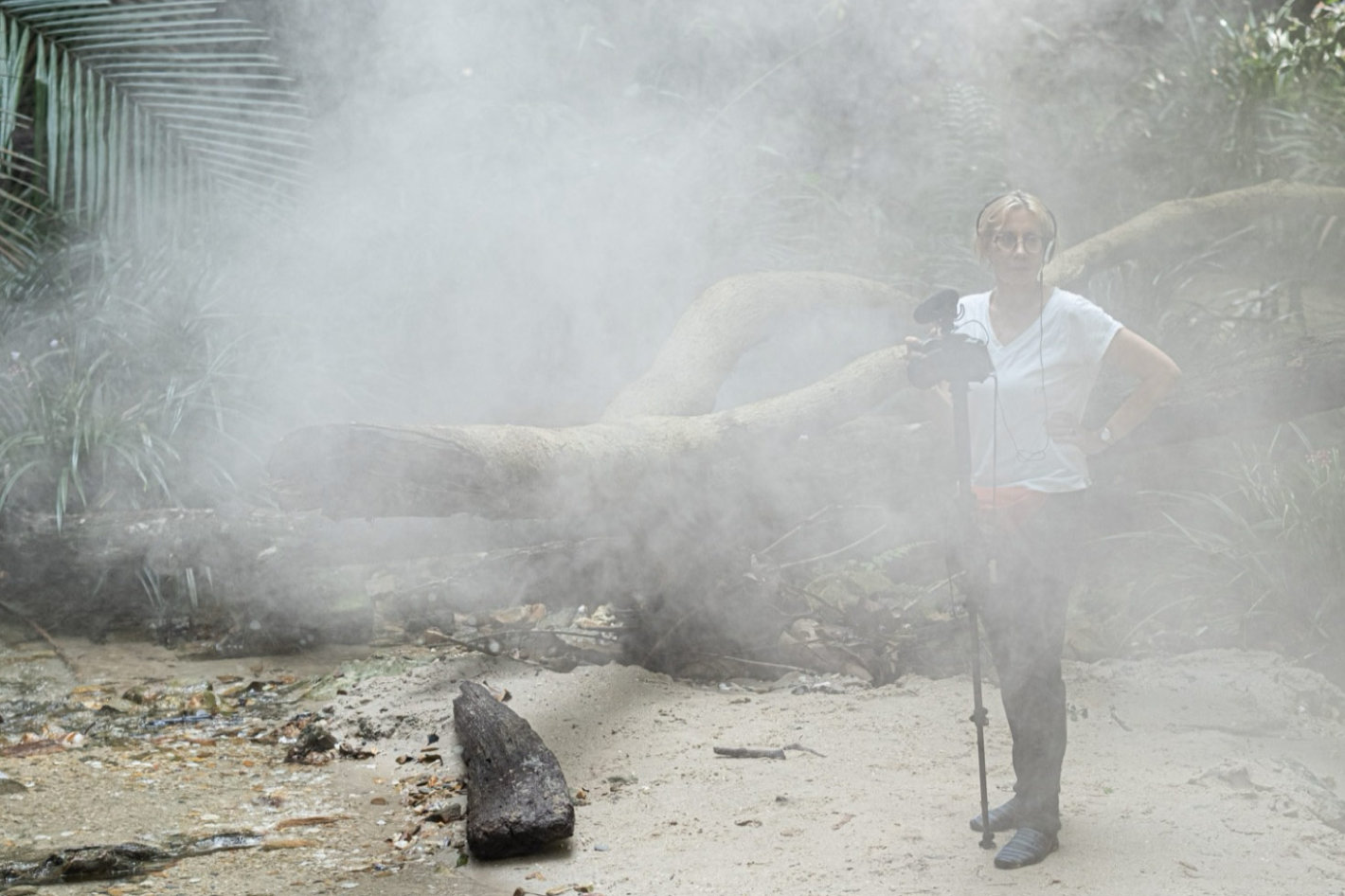
"I had to be ready to shoot at any moment. I couldn’t worry about getting a perfect shot, which was fine because the camera gave me the confidence to make mistakes as it is so flexible. It gives a lot of latitude in the image to push in, adjust, and correct later. It was totally magnificent, especially filming in such difficult locations. The image is gorgeous in both harsh sunlight and in the lush rainforest. The camera allowed me to capture the warmth of both the environment and the people, and it has such a cinematic feel. It was rewarding to have BTS footage which illustrated Marc Munden’s bold vision and shows how the series was brought to life."
Future Outlook
The Evolution of the Behind-the-Scenes Format
The success of Making of Lord of the Flies highlights a broader shift in the television industry. Behind-the-scenes content is no longer viewed merely as throwaway marketing material for social media. In the streaming era, high-concept companion documentaries are increasingly treated as prestigious, standalone pieces of filmmaking that deepen viewer engagement and provide valuable contextual framing for complex literary adaptations.
The Democratization of Cinematography
Russo’s successful transition from producer to cinematographer using a sub-$3,000 camera body underscores the ongoing democratization of high-end filmmaking tools. As compact cameras continue to close the gap in dynamic range, color science, and low-light performance with their larger, multi-thousand-dollar counterparts, the barriers to entry for documentary filmmakers are crumbling. This allows a single operator to capture broadcast-ready, theatrical-quality footage in environments that would be entirely inaccessible to traditional camera crews.
Legacy of the Project
As the limited series of Lord of the Flies continues to garner critical acclaim—anchored by its two Primetime Emmy nominations for Outstanding Sound Mixing and Outstanding Sound Editing—Russo’s documentary will serve as a vital historical record of the production. It stands as a masterclass in independent, run-and-gun filmmaking, proving that with the right creative vision and a highly adaptable camera package, filmmakers can capture cinematic magic under the most challenging conditions on Earth. For Russo, the project remains a definitive milestone:
"Honestly, filming this doc with the Pocket has been a career highlight for me. I climbed out on a limb to pull this off, and the camera totally delivered!"