







Executive Overview
The landscape of modern mirrorless photography and videography has undergone a dramatic transformation over the past decade. While full-frame sensors often dominate industry marketing, the crop-sensor (APS-C) market remains a vital battleground for manufacturers. This segment appeals directly to travel photographers, independent filmmakers, documentary creators, and budget-conscious professionals who demand high performance without the physical and financial burdens of full-frame systems.
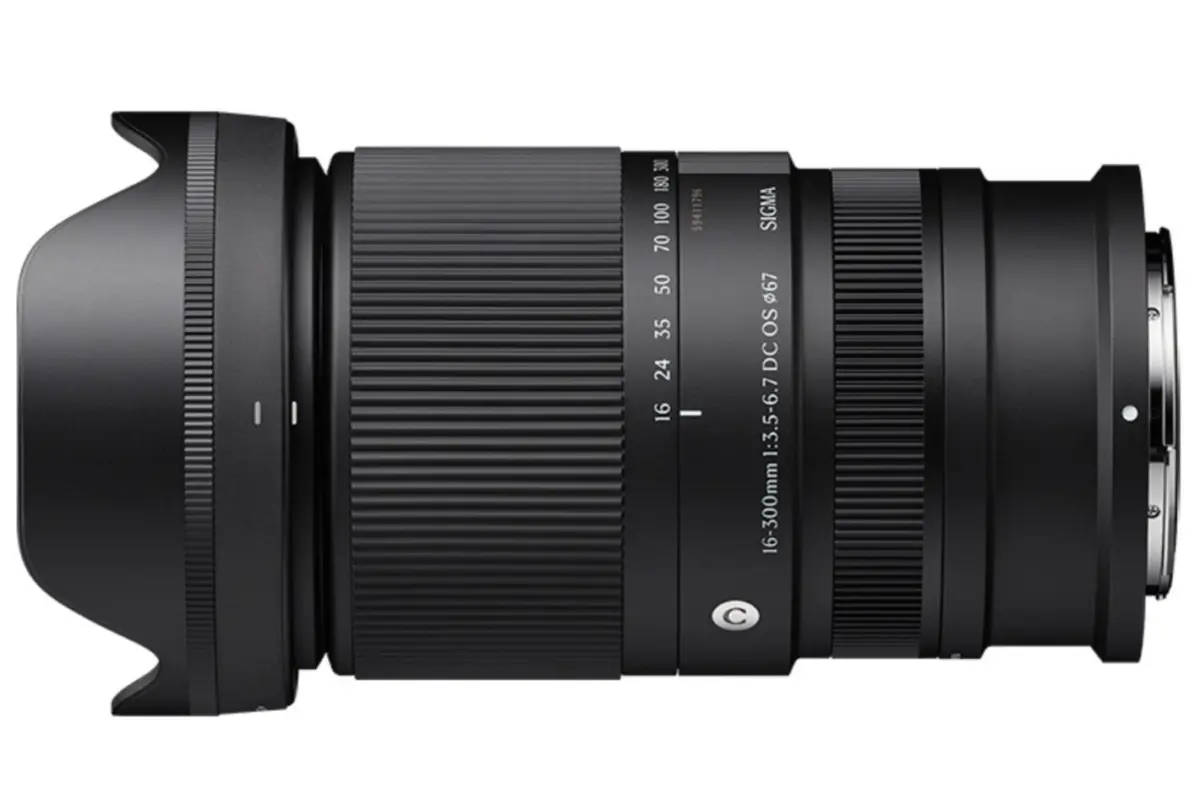
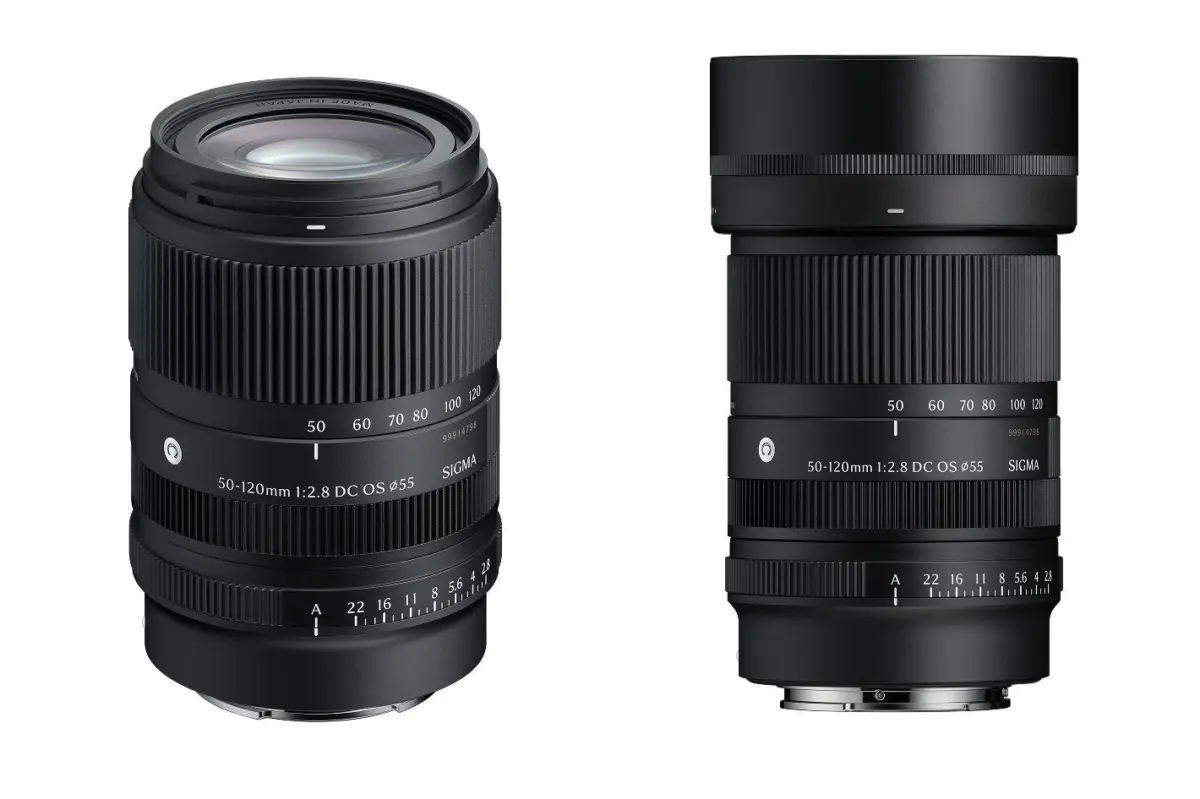
In a move that solidifies its dominance in the crop-sensor space, Sigma Corporation has announced the release of the Sigma 50-120mm F2.8 DC OS | Contemporary lens. Priced at $799 USD and scheduled for release on Thursday, October 22, 2026, this lens represents a significant milestone. It is the first APS-C zoom lens in Sigma’s popular Contemporary lineup to feature a dedicated physical aperture ring—a design choice long requested by hybrid shooters who prioritize manual exposure control.
Offering a 35mm equivalent focal range of approximately 75-180mm with a constant F2.8 maximum aperture, the 50-120mm completes Sigma’s highly regarded "F2.8 Contemporary Trinity." Alongside the existing 10-18mm F2.8 DC DN and the 18-50mm F2.8 DC DN, this trio provides crop-sensor operators with seamless coverage from ultra-wide to telephoto focal lengths. Remarkably, all three lenses combined weigh less than a standard ultra-portable laptop, offering an unprecedented balance of mobility, optical performance, and versatility.
Detailed Chronology: The Evolution of Sigma’s APS-C Trinity
To understand the strategic importance of the 50-120mm F2.8 DC OS | Contemporary, one must examine the timeline of Sigma’s mirrorless lens development. For years, APS-C users were caught in a frustrating dilemma: opt for compact but optically compromised variable-aperture kit lenses, or adapt heavy, expensive full-frame lenses that negated the size advantage of their compact camera bodies.
Sigma systematically dismantled this dilemma through a multi-stage product rollout:
   [Phase 1: Standard Zoom]
   Sigma 18-50mm F2.8 DC DN | Contemporary
   - Established the baseline for ultra-compact F2.8 zooms.
   - Target: Everyday shooting, street, and travel.
              │
              ▼
   [Phase 2: Ultra-Wide Zoom]
   Sigma 10-18mm F2.8 DC DN | Contemporary
   - Focused on vlogging, landscape, and architectural work.
   - Set records for minimal weight and size in its class.
              │
              ▼
   [Phase 3: Telephoto Zoom]
   Sigma 50-120mm F2.8 DC OS | Contemporary (Oct 2026)
   - Introduces Optical Stabilization (OS) and a physical aperture ring.
   - Completes the ultra-lightweight professional trio.
Phase 1: The Standard Zoom Pioneer (18-50mm F2.8 DC DN)
Sigma began its modern crop-sensor offensive with the launch of the 18-50mm F2.8 DC DN | Contemporary. This lens redefined expectations by packing a constant F2.8 aperture into a chassis that weighed a mere 290 grams. It quickly became the gold standard for daily shooting, replacing kit lenses globally.
Phase 2: Expanding the Field of View (10-18mm F2.8 DC DN)
Recognizing the rise of content creators, vloggers, and landscape photographers who require wide-angle perspectives, Sigma introduced the 10-18mm F2.8 DC DN | Contemporary. By keeping the weight down to 260 grams, Sigma delivered an ultra-wide zoom that could be easily balanced on compact travel gimbals or handheld setups.
Phase 3: The Missing Link (50-120mm F2.8 DC OS)
The final piece of the puzzle remained: a fast, constant-aperture telephoto zoom. Historically, telephoto zooms have been bulky, heavy, and difficult to handhold without substantial optical stabilization. The announcement of the 50-120mm F2.8 DC OS | Contemporary on October 22, 2026, marks the culmination of this trilogy. By engineering a lens that handles the classic 70-200mm equivalent range while maintaining the physical philosophy of the Contemporary line, Sigma has successfully delivered a complete, high-performance ecosystem for APS-C shooters.
Supporting Context & Technical Metrics
The Sigma 50-120mm F2.8 DC OS | Contemporary is not merely a downsized telephoto lens; it is a highly engineered optical tool designed to address the specific challenges of crop-sensor shooting. Below, we break down the core technical metrics and features that distinguish this lens from its competitors.
1. Optical Stabilization (OS) and Handheld Usability
Telephoto focal lengths naturally amplify camera shake, making optical stabilization an absolute necessity—especially when shooting on camera bodies that lack In-Body Image Stabilization (IBIS).
Sigma has integrated an advanced Optical Stabilizer system capable of delivering up to 6.5 stops of compensation (based on CIPA standards). This high level of stabilization allows photographers to shoot at slower shutter speeds in low-light environments without requiring a tripod, making it an exceptional tool for indoor sports, theater photography, and evening events.
2. The Physical Aperture Ring: A Contemporary First
For years, physical aperture rings were reserved almost exclusively for Sigma’s premium "Art" series or vintage-inspired prime lenses. The inclusion of a dedicated aperture ring on the 50-120mm F2.8 is a major nod to the needs of the modern videographer.
- Tactile Control: Operators can quickly adjust exposure on the fly without diving into camera menus or using small, fiddly command dials on the camera body.
- Video Integration: This feature allows for seamless transitions of depth of field during live recording, bridging the gap between traditional photography and professional cinema workflows.
3. Autofocus and Video Optimization
At the heart of the lens’s focusing mechanism is a fast, linear autofocus motor. Unlike traditional stepping motors, linear motors move optical groups with incredible speed, precision, and near-silent operation. This is crucial for:
- Tracking Fast-Moving Subjects: Ensuring sharp focus during sports, wildlife, and event photography.
- Silent Video Capture: Eliminating motor noise that could otherwise ruin onboard audio recordings.
Furthermore, Sigma has prioritized the minimization of focus breathing—the distracting optical phenomenon where the focal length appears to change slightly when shifting focus from near to far. By minimizing focus breathing, the 50-120mm ensures that cinematographers can perform rack focuses without altering the framing of their shot.
4. Build Quality and Weather Sealing
Despite its compact, lightweight design, the lens is built to withstand challenging outdoor environments.
- Sealing: It features a dust- and splash-resistant structure, with rubber sealing at the mount and critical joints.
- Front Element Protection: The front glass element is treated with a water- and oil-repellent coating, making it easy to clean in dusty, humid, or rainy conditions.
Comparative Weight & Portability Matrix
To fully appreciate the portability of the completed Sigma F2.8 Contemporary Trinity, it is helpful to compare its collective weight against traditional full-frame counterparts.
| Lens Configuration | Focal Range Covered (Equivalent) | Constant Aperture | Combined Weight (Approx.) |
|---|---|---|---|
| Sigma APS-C Trinity (10-18mm + 18-50mm + 50-120mm) |
15mm to 180mm | F2.8 | Under 1.2 kg (2.6 lbs) |
| Traditional Full-Frame Trinity (16-35mm + 24-70mm + 70-200mm) |
16mm to 200mm | F2.8 | Over 2.5 kg (5.5 lbs) |
By opting for the Sigma APS-C Trinity, a creator can slash their gear weight by more than half while retaining a constant F2.8 aperture and comprehensive focal coverage.
Official Statements & Strategic Analysis
The launch of the 50-120mm F2.8 represents a calculated step forward for Sigma, balancing the company’s reputation for optical excellence with its commitment to ergonomic design.
In an official statement, Mark Amir-Hamzeh, President of Sigma Corporation of America, highlighted this design philosophy:
"Sigma’s Contemporary line has always emphasized an exceedingly compact form factor and reduced weight without compromising our standard for image quality. The 50-120mm F2.8 meets that benchmark while pushing the line forward in build and handling, including an aperture ring not found on its sister lenses."
Strategic Takeaways from Sigma’s Leadership
Amir-Hamzeh’s statement underscores a broader shift in Sigma’s product positioning. Historically, the "Contemporary" line was viewed as a consumer-grade alternative to the uncompromising, professional-tier "Art" line. However, by equipping a Contemporary lens with a physical aperture ring, a linear AF motor, advanced weather sealing, and 6.5 stops of optical stabilization, Sigma is blurring the lines between these categories.
This strategy suggests that Sigma recognizes a growing market segment: professionals who do not want to sacrifice premium handling features and build quality just because they choose to shoot on more compact APS-C camera bodies.
Future Outlook: The Impact on the Mirrorless Ecosystem
The release of the Sigma 50-120mm F2.8 DC OS | Contemporary at $799 USD is poised to shake up the mirrorless market in several key areas.
1. Pressure on First-Party Manufacturers
First-party manufacturers (such as Sony, Fujifilm, and Nikon) have historically struggled to maintain a consistent, high-performance lineup of dedicated crop-sensor lenses, often steering advanced users toward their more expensive full-frame ecosystems. Sigma’s completed F2.8 Trinity offers a compelling alternative. For the price of a single high-end full-frame telephoto zoom, a creator can purchase almost the entire Sigma F2.8 APS-C trio, posing a direct challenge to first-party pricing structures.
2. The Rise of Hybrid and Solo Creators
As solo content creators, travel vloggers, and independent documentarians continue to dominate the media landscape, the demand for "backpack-friendly" production gear is at an all-time high. The ability to pack a complete ultra-wide, standard, and telephoto F2.8 kit into a small shoulder bag—without sacrificing optical stabilization or manual aperture control—will likely make this trinity the default choice for run-and-gun filmmakers.
3. Longevity of the APS-C Format
Many industry analysts have predicted the slow decline of the APS-C format in the face of falling full-frame camera prices. However, releases like the 50-120mm F2.8 prove that when paired with dedicated, high-quality, and compact glass, the APS-C format offers a distinct physical advantage that full-frame simply cannot match. Rather than fading away, the crop-sensor ecosystem is evolving into a specialized, ultra-mobile powerhouse for creators who value agility above all else.
With its competitive pricing, innovative feature set, and strategic positioning, the Sigma 50-120mm F2.8 DC OS | Contemporary is set to become an essential tool for crop-sensor photographers and videographers worldwide when it hits shelves on October 22, 2026.