Executive Overview
As global retail giants scramble for market share in increasingly saturated Western economies, smart strategists are training their sights on Southeast Asia. At the vanguard of this regional boom stands Indonesia—an archipelago of 288 million people that currently commands the title of the world’s fourth most populous nation. Trailing only India, China, and the United States, Indonesia presents a paradoxical economic landscape: a massive, digitally connected populace with retail consumption figures that remain surprisingly modest relative to its demographic weight.
This stark contrast between high internet penetration and relatively low total retail sales paints a vivid picture of a market poised for explosive growth. With over 230 million internet users navigating the digital ecosystem, the country represents one of the final massive, untapped frontiers for international brands and e-commerce enterprises. However, capturing this potential is far from straightforward. Navigating Indonesia requires threading the needle through a labyrinth of strict foreign ownership regulations, geographical barriers, complex logistical hurdles, and stringent local-language requirements.
For brands willing to master the nuances of local marketplaces, social commerce, and omnichannel distribution, the rewards could be transformative. This report delivers an exhaustive, authoritative breakdown of Indonesia’s economic metrics, digital consumption habits, regulatory hurdles, and strategic entry pathways for foreign brands looking to stake their claim in the world’s next great e-commerce growth story.
Detailed Chronology and Market Evolution
To understand how Indonesia arrived at its current status as a digital retail hotspot, one must look at the rapid evolution of its connectivity, infrastructure, and regulatory frameworks over the past decade.
Phase I: The Mobile-First Leap (Pre-2018)
Long before the global pandemic reshaped consumer habits, Indonesia bypassed the traditional desktop computer era entirely. Much like its neighbor to the north, the country made a wholesale leap straight into mobile-first internet consumption. Driven by affordable smartphones and rapidly expanding telecommunications infrastructure across thousands of inhabited islands, millions of Indonesians experienced the internet for the first time via mobile applications. During this foundational period, early homegrown e-commerce pioneers and regional players laid the groundwork for digital trade, though logistics remained a severe bottleneck across the world’s largest island nation.
Phase II: The Marketplace Consolidation (2018–2022)
As venture capital flooded Southeast Asia, the Indonesian e-commerce market consolidated rapidly around a few dominant platforms. Regional powerhouse Shopee and local titan Tokopedia engaged in fierce competition for consumer loyalty, backed by aggressive marketing, heavy subsidization of shipping fees, and gamified shopping experiences. Foreign brands began recognizing that traditional brick-and-mortar entry was too slow for a market of this scale. Major multinationals—ranging from consumer goods giants like Unilever and L’Oréal to tech heavyweights like Samsung—began establishing official flagship stores on these dominant marketplaces, fundamentally shifting the retail balance of power away from traditional distributors.
Phase III: The Rise of Social Commerce and Regulatory Realignment (2023–Present)
Most recently, the market has witnessed the explosive convergence of social media and retail. Platforms like TikTok Shop, Instagram, and WhatsApp transformed how consumers discover and purchase goods, integrating entertainment and checkout into a seamless loop. This rapid transformation triggered a regulatory response. The Indonesian government, eager to protect domestic micro, small, and medium enterprises (MSMEs) from being overwhelmed by cheap foreign imports, implemented stringent regulations. These measures included stricter rules on social-media-integrated retail, compliance frameworks for foreign entities, and minimum wholesale price thresholds for cross-border shipments. Today, foreign brands operating in Indonesia must navigate a mature yet heavily regulated digital ecosystem that rewards localized strategy and penalized casual, cross-border experimentation.
Supporting Context & Metrics: The Numbers Behind the Growth
Evaluating the true potential of the Indonesian market requires looking closely at macroeconomic data, population statistics, and digital adoption rates provided by leading global aggregators.
Demographic Weight and Consumption Metrics
According to United Nations projections, Indonesia’s population reached 288 million residents in 2026, solidifying its position directly behind the United States (345 million), China (1.41 billion), and India (1.46 billion).
Comparing retail sales across global superpowers can be notoriously difficult due to varying definitions, tax structures, and data collection methodologies. To establish a reliable baseline, economists frequently turn to the World Bank’s annual Household Final Consumption Expenditure metric, which measures the market value of all goods and services purchased by households.
The latest comprehensive global datasets paint a striking picture of Indonesia’s current consumption relative to its peers:
- United States: $19.8 trillion
- China: $7.48 trillion
- India: $2.4 trillion
- Indonesia: $773.6 billion
While Indonesia’s total consumption expenditure sits well below that of the global giants, its massive population base combined with a surging middle class means the headroom for expansion is immense.
Digital Penetration and Internet Usage
While macroeconomic retail sales figures tell one side of the story, digital indicators reveal the velocity at which the population is moving online. DataReportal’s comprehensive global digital overview highlights robust internet adoption across major global markets:
- China: 1.3 billion internet users (92% penetration)
- United States: 323.9 million internet users (94% penetration)
- India: 1.0 billion internet users (68% penetration)
- Indonesia: 230.4 million internet users (80% penetration)
With 80% of its massive populace online, Indonesia boasts high digital engagement coupled with retail sales that have yet to fully catch up to mature Western or East Asian markets. This discrepancy is the hallmark of a market prime for rapid, compounding e-commerce acceleration.
Geographic and Urban Concentration
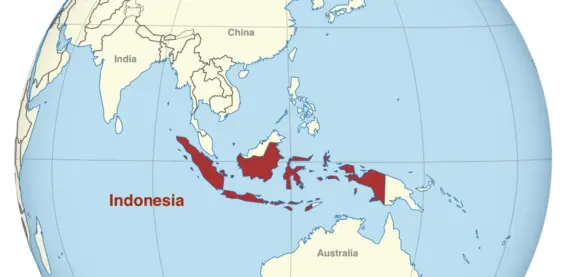
Indonesia is an archipelago comprising over 17,000 islands, presenting unique logistical challenges for retailers. However, demand is heavily concentrated in key urban centers. Most notably, Greater Jakarta—home to roughly 32 million residents—serves as the country’s economic and cultural powerhouse. This dense metropolitan concentration allows brands to test products, execute rapid fulfillment, and build brand awareness efficiently before expanding outward to secondary and tertiary cities across the island chain.
Market Dynamics: Marketplaces, Social Commerce, and Consumer Habits
Foreign brands entering Indonesia quickly discover that consumer behavior diverges sharply from Western norms. Understanding where and how Indonesians shop is vital for survival.
The Marketplace Monoliths
Online consumers in Indonesia shop primarily through localized digital marketplaces. According to insights from Australia-based consultancy Asialink, three platforms capture an astounding 76% of all online sales in the country:
- Shopee Indonesia
- Tokopedia
- Lazada
Both Shopee and Lazada operate hybrid models that include first-party retail alongside third-party seller ecosystems. International powerhouses have established a formidable presence across these platforms. Beauty and personal care giants such as L’Oréal Paris, Nivea, Garnier, La Roche-Posay, and Maybelline sit alongside sportswear icons like Adidas and Puma, electronics leaders Samsung and Xiaomi, household appliance brands Philips and Tefal, and food giants Nestlé and Kellogg’s.
The Social Commerce Revolution
Beyond traditional marketplaces, social commerce is deeply ingrained in the Indonesian consumer psyche. Platforms like WhatsApp, Instagram, Facebook, and TikTok Shop play a monumental role in discovery, community engagement, and direct-to-consumer sales. Social commerce capitalizes on Indonesia’s highly communal culture, where peer recommendations, influencer endorsements, and live-stream shopping events heavily influence purchasing decisions. For brands, failing to integrate social channels into their marketing and sales funnel means missing out on a vast segment of daily consumer engagement.
Official Statements and Expert Perspectives
Trade authorities and market analysts consistently emphasize both the immense promise and the structural complexities of the Indonesian digital economy.
The United States International Trade Administration (ITA) highlights Indonesia as a prime target for foreign expansion, noting in its Country Commercial Guides that the market is "poised for online growth." The ITA points to the rapid expansion of digital financial services, mobile wallet adoption, and a young, tech-savvy demographic as the primary catalysts driving this trajectory.
At the same time, trade experts warn against treating Indonesia as a casual export destination. Regulatory bodies and international business advisors emphasize that navigating the legal landscape requires rigorous preparation. Local compliance experts frequently note that while cross-border shipping may seem like an easy entry point, Indonesia’s regulatory framework—particularly regarding minimum wholesale price thresholds, mandatory local language labeling, and corporate structuring—is explicitly designed to favor localized operations and domestic job creation.
Furthermore, supply chain specialists underscore that logistics in an island nation cannot be managed remotely. As logistics analysts frequently observe, successful entry demands a hybrid approach: leveraging established local distributors for nationwide physical reach while deploying specialized "e-commerce enablers" to manage high-volume digital storefronts on platforms like Shopee and Tokopedia.
Future Outlook and Strategic Entry Pathways
For international brands eyeing the Indonesian market, success hinges on choosing the right corporate structure and operational model. The market rewards commitment, localization, and omnichannel agility.
Corporate Structures: The PT PMA Route
Foreign brands have three primary pathways to sell in Indonesia: cross-border shipping, partnering with local distributors, or establishing an independent corporate presence.
While cross-border and distributor models lower initial barriers, they limit direct control and customer data access. For brands seeking independent, long-term control, establishing a PT PMA (Penanaman Modal Asing)—a foreign-owned limited liability company—is the definitive corporate structure. Governed by strict requirements, a PT PMA mandates:
- A minimum of two shareholders, at least one of whom must be a foreign entity or individual.
- A substantial minimum paid-up capital requirement of $150,000.
- Compliance with various sector-specific negative investment lists and licensing rules.
Securing a PT PMA grants the business an NIB (Nomor Induk Berusaha), or Business Identification Number, which is legally required to operate an e-commerce enterprise and import goods for commercial sale.
The Omnichannel Playbook: Distributors vs. Enablers
Because of Indonesia’s complex geography and unique consumer behavior, foreign brands routinely adopt an omnichannel strategy that divides responsibilities between specialized local partners:
- Local Distributors: Traditional distributors purchase sector-specific inventory wholesale and manage nationwide physical retail and B2B distribution. Established players such as DKSH Indonesia and Enseval provide deep market access and handle complex customs compliance.
- E-Commerce Enablers: Distinct from traditional distributors, e-commerce enablers manage a brand’s official digital storefront, marketing campaigns, customer service, and digital fulfillment on marketplaces. Companies like Jet Commerce and SCI Group act as operational engines for brands navigating platforms like Shopee and Tokopedia.
Critical Compliance Obligations
Brands entering the market must remain acutely aware of strict regulatory mandates:
- Language Laws: Under Indonesian law, Bahasa Indonesia is strictly mandatory for all product descriptions, manuals, and labeling in e-commerce. Failing to localize product copy can result in severe penalties or delisting.
- Cross-Border Barriers: A critical obligation for foreign brands is the enforcement of a minimum wholesale value of $100 per unit on goods entering the country via cross-border channels. This regulation effectively makes low-cost, direct-to-consumer cross-border e-commerce impractical, forcing brands to hold inventory locally within Indonesia.
Conclusion
Indonesia is no longer an overlooked market; it is an economic powerhouse in the making. With 288 million citizens, 230 million internet users, and a burgeoning middle class, the archipelago offers unprecedented potential for brands that approach it with patience, capital, and localized precision. By establishing the right corporate framework, partnering with seasoned local enablers and distributors, and respecting cultural and linguistic nuances, international enterprises can turn Indonesia’s digital promise into a cornerstone of their global growth for decades to come.