By Shane Snider, Senior News Writer, Data Center Knowledge
September 4, 2026
Executive Overview
In a landmark transaction reshaping the digital infrastructure landscape, global manufacturing and technology solutions provider Flex has announced a definitive agreement to acquire EPC Power for $4.4 billion. The blockbuster deal, slated to close in the fourth quarter of 2026 pending customary regulatory approvals, injects advanced 800V DC power-conversion, grid-forming, and microgrid capabilities directly into Flex’s data center infrastructure portfolio.
The acquisition serves a dual strategic purpose. Initially, EPC Power will be integrated into Flex’s Cloud and Power Infrastructure segment. Following this integration, Flex intends to execute a bold corporate maneuver: spinning off this combined cloud and power division into an independent, publicly traded entity during the first quarter of 2027.
Valued at $4.4 billion—backed by EPC Power’s projected $800 million in revenue for calendar year 2026, an expected 40% organic revenue growth rate in 2027, and a robust 30% EBITDA margin—the acquisition highlights a fundamental paradigm shift. Power conversion is no longer viewed merely as a behind-the-scenes utility function; it is rapidly emerging as the strategic control point for the next generation of artificial intelligence (AI) data centers. As rack densities soar to unprecedented heights and utilities grapple with unprecedented demand spikes, the technologies championed by EPC Power—ranging from solid-state transformer roadmaps to sub-millisecond grid-forming platforms—are moving to the absolute forefront of hyperscale engineering.
Detailed Chronology and Transaction Architecture
The road to this multi-billion-dollar deal has been paved by years of targeted investment and rapid industrial scaling.
The Private Equity Backing and Upward Trajectory
EPC Power’s ascent into the upper echelons of energy technology did not happen overnight. Following initial investments in 2021, Goldman Sachs Alternatives and Cleanhill Partners acquired a majority stake in the company in 2022, providing the financial runway necessary to scale operations ahead of the generative AI boom. Under private equity stewardship, EPC Power positioned itself as a critical enabler for utility-scale energy storage, microgrids, and high-density computing architectures.
Manufacturing Muscle: The South Carolina Expansion
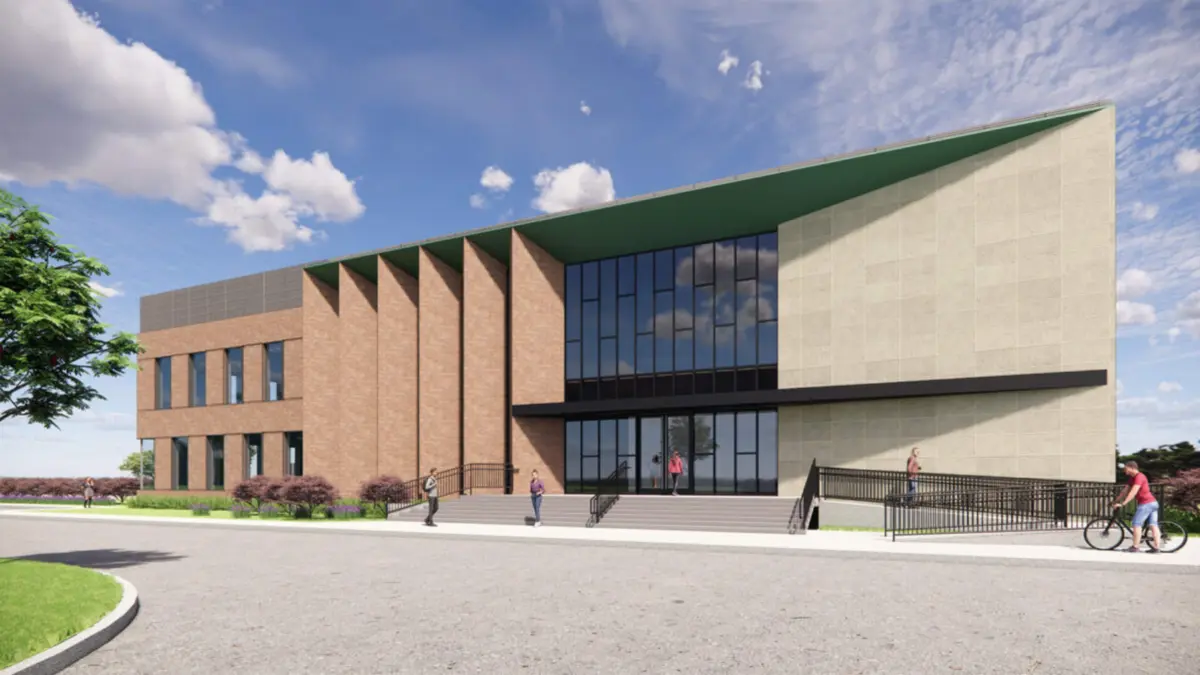
The acquisition announcement directly follows a major industrial milestone for EPC Power. In July 2026, the company officially opened a massive 167,000-square-foot manufacturing facility in Fountain Inn, South Carolina. This plant nearly tripled EPC Power’s production capacity, establishing an initial annual output of 27 GW with a clear, scalable roadmap to reach 40 GW. Producing the company’s signature M and MRACK series power inverters for grid, storage, and AI applications, the facility added approximately 275 local jobs. Industry analysts project that EPC Power’s total annual U.S. manufacturing capacity will comfortably exceed 30 GW by 2027, providing the domestic supply chain security required by hyperscalers operating under strict federal and corporate mandates.
Transaction Mechanics and the 2027 Spin-Off
Under the terms of the agreement announced on Friday, Flex will finance the $4.4 billion acquisition through a strategic blend of debt and equity. Subject to regulatory clearances and standard closing conditions, the deal is expected to be finalized in Q4 2026.
Rather than absorbing EPC Power into its massive general electronics ecosystem indefinitely, Flex has laid out a clear timeline to unlock shareholder value. EPC Power will first be folded into Flex’s Cloud and Power Infrastructure business unit. In Q1 2027, Flex plans to carve out this entire segment, floating it as an independent public company. This structural execution gives institutional investors a pure-play investment vehicle focused squarely on AI data center power systems, cloud architecture, and grid-edge conversion technologies.
Supporting Context & Metrics: The 800V DC Revolution
To understand why Flex is willing to deploy $4.4 billion for a power-conversion specialist, one must examine the physical and electrical realities confronting modern AI facilities.
The Physics of High-Density AI Racks
Traditional data centers have relied heavily on low-voltage AC architectures that, while reliable for standard enterprise computing, are increasingly straining under the immense power requirements of high-density AI clusters. As accelerators draw hundreds of kilowatts per rack, traditional systems face severe limitations related to high electrical currents, massive copper conductor requirements, and cumulative thermal and resistive losses.
EPC Power’s technological platform addresses these bottlenecks through an advanced 800V DC architecture. By elevating the voltage distribution tier inside the facility, operators can transmit significantly more power at a much lower current. This drastically reduces conductor size requirements, minimizes electrical resistance losses, and streamlines the complex web of conversion equipment historically required to step down grid power to the rack. Furthermore, EPC’s systems are designed to consolidate functions traditionally split between Uninterruptible Power Supply (UPS) systems and traditional AC power distribution units, creating a streamlined, highly efficient electrical topology tailor-made for next-gen AI compute clusters.
Financial and Operational Metrics at a Glance
- Acquisition Valuation: $4.4 billion (financed via debt and equity).
- Expected Closing: Q4 2026 (pending regulatory approvals).
- Target Integration: Flex Cloud and Power Infrastructure segment, followed by a planned public spin-off in Q1 2027.
- EPC Power 2026 Revenue Projection: Approximately $800 million.
- Projected 2027 Organic Revenue Growth: ~40%.
- Projected EBITDA Margin: ~30%.
- Manufacturing Footprint: 167,000-sq.-ft. facility in Fountain Inn, South Carolina, delivering an initial 27 GW of capacity scaling to 40 GW.
Official Statements and Industry Perspectives
The transaction has sent ripples through the energy and technology sectors, drawing sharp commentary from market analysts and industry observers who view the deal as a watershed moment for digital infrastructure.
Neil Osnato, founder of Persistence Analytics Group, noted that the steep valuation underscores a fundamental shift in how markets evaluate infrastructure risk and capability.
"The $4.4 billion price itself is a signal that power conversion is moving from a supporting component to a strategic control point in AI infrastructure," Osnato said. "AI infrastructure is becoming as much a power-systems problem as a compute problem."
Osnato emphasized that as campus power densities scale into hundreds of megawatts—and in some cases, gigawatt-scale campuses—the interface between the power grid, on-site generation, energy storage, and server racks becomes infinitely more complex.
EPC Power’s Agile Grid-Forming platform targets this exact vulnerability. Capable of responding to volatile compute-load shifts in milliseconds, the technology allows facilities to integrate on-site energy storage and generation while maintaining grid stability.
However, Osnato offered a cautionary note regarding the limitations of technological mitigation, reminding stakeholders that smoothing out demand spikes does not equate to eliminating the base load.
"Load smoothing is not load elimination," Osnato cautioned.
He urged utility providers evaluating massive AI data center applications to look past initial marketing claims and examine comprehensive electrical performance parameters. According to Osnato, utilities must rigorously evaluate ramp characteristics, power-electronic controls, ride-through behavior, grid-forming versus grid-following modes, harmonics, and complex fault behaviors during the interconnection process.
"Declared capability is not demonstrated capability," Osnato added. If a campus developer asserts that their facility can dynamically smooth loads, provide grid support, or ride through severe electrical disturbances, utilities must demand empirical validation detailing operational conditions, sustained duration limits, and the exact triggers that would require system revalidation.
Future Outlook: Power Conversion as the AI Bottleneck
As the technology sector looks toward late 2026 and 2027, the success of Flex’s acquisition and subsequent spin-off will serve as a bellwether for the entire data center industry.
The race for AI supremacy is no longer constrained solely by the availability of advanced silicon chips like GPUs and TPUs. Instead, the physical bottleneck has decisively shifted to the power grid, electrical conversion efficiency, and land access. By securing EPC Power’s state-of-the-art 800V DC and solid-state transformer roadmap, Flex is positioning itself at the absolute nexus of this industrial transformation.
For operators, the mandate is clear: the architecture of power delivery must evolve in tandem with compute capabilities. As power conversion transitions from a mechanical afterthought into an intelligent, software-defined strategic asset, transactions like Flex’s acquisition of EPC Power establish a new blueprint for how the digital economy will power its future. When the newly independent power infrastructure company debuts on the public markets in early 2027, it will do so not just as a parts manufacturer, but as an indispensable architect of the global AI grid.