Executive Overview
In a strategic convergence of subsea cable engineering and modern data center architecture, Digital Realty has announced plans to construct a cutting-edge Cable Landing Station (CLS) directly within its LAX12 data center in El Segundo, California. Unveiled on September 22, the project represents a major paradigm shift in how international submarine communication cables interface with terrestrial networks. Developed in strategic partnership with Assured Communications—an industry leader renowned for subsea infrastructure design and delivery—the LAX12 CLS is purposefully engineered to optimize high-capacity routes traversing the Pacific Ocean between the Asia-Pacific (APAC) region and North America.
Traditionally, submarine cables have terminated at isolated, standalone landing facilities situated along coastlines, requiring complex, costly, and physically disconnected backhaul links to transport data to inland data centers. By integrating the landing station directly into an active, enterprise-grade carrier-neutral data center, Digital Realty and Assured Communications are dismantling historical silos. The facility, slated to begin supporting live subsea traffic by 2028, provides a seamless, turnkey on-ramp that bridges ocean-spanning trans-Pacific pathways with domestic terrestrial ecosystems, cloud platforms, and enterprise networks.
This development reflects a broader, rapidly accelerating transformation within the global telecommunications and digital infrastructure markets. As hyperscale cloud computing, artificial intelligence (AI) training workloads, and massive content delivery networks place unprecedented demands on global bandwidth, the architecture of international connectivity is evolving. Operators are increasingly favoring deep data center integration to minimize latency, eliminate unnecessary points of failure, and streamline capacity distribution. The LAX12 project stands as a bellwether for this next generation of digital infrastructure, redefining the lifecycle of subsea cable deployment.
Detailed Chronology of the LAX12 Initiative
The genesis of the LAX12 Cable Landing Station project is the result of meticulous planning, strategic alignment, and engineering feasibility studies designed to address bottlenecks in coastal metropolitan connectivity. While the formal announcement was made public on September 22, the groundwork for this venture has been quietly taking shape amidst explosive growth in trans-Pacific data traffic.
Phase One: Strategic Conception and Engineering Alignment
In the years leading up to the announcement, industry stakeholders recognized that traditional coastal landing stations were struggling to keep pace with the massive throughput requirements of modern cloud providers. Digital Realty, seeking to expand the interconnection capabilities of its global platform (PlatformDIGITAL®), identified its existing LAX12 facility in El Segundo as an ideal nexus.
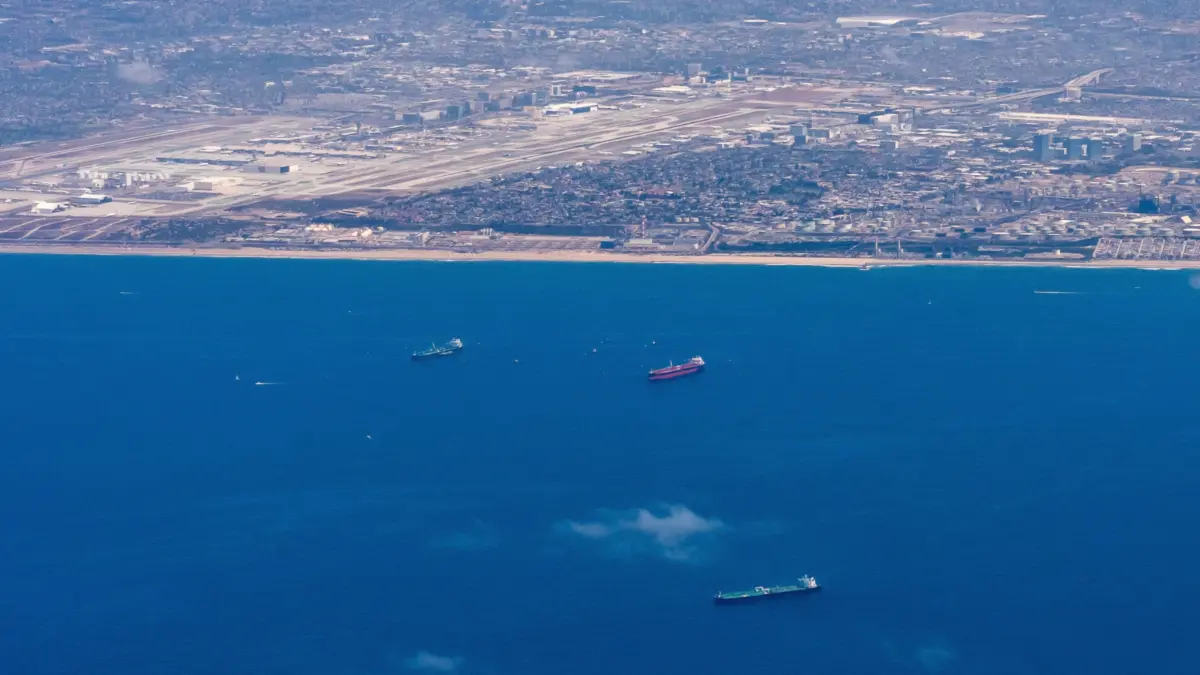
El Segundo’s geographic advantages—specifically the short physical distance between local beach landing sites and established terrestrial conduit routes—provided a compelling engineering foundation. To bring this vision to life, Digital Realty partnered with Assured Communications, leveraging the firm’s deep domain expertise in subsea cable engineering, marine route optimization, and landing station architecture. Assured Communications brings valuable industry pedigree to the table, having previously served as a strategic partner for high-profile initiatives such as AWS’s Sta‘O‘Nuk trans-Pacific cable system.
Phase Two: Integration and Design Finalization
Throughout 2024, engineering teams from both companies worked to integrate marine infrastructure specifications with standard data center mechanical and electrical ecosystems. Designing a CLS inside an operational data center requires meticulous attention to power redundancy, security partitioning, cable protection systems, and environmental controls. Unlike standard data halls, a CLS must house specialized Power Feed Equipment (PFE) that delivers high-voltage direct current (HVDC) across thousands of miles of submarine fiber repeaters, alongside cable termination equipment (CTE) and optical line terminating equipment (OLTE).
Phase Three: Construction and the 2028 Horizon
With project details finalized and official partnerships locked in, the initiative has moved firmly into its development and construction phase. The timeline targets full operational readiness by 2028, aligning with projected activation windows for next-generation trans-Pacific cable consortia and private systems. As construction progresses over the coming years, the El Segundo site will transform into a dual-purpose hub capable of receiving multi-terabit subsea fibers off the coast and instantly routing them into the heart of the Los Angeles digital economy.
Why Put the Landing Station Inside the Data Center?
The architectural decision to embed a Cable Landing Station directly within the LAX12 data center challenges decades of conventional telecommunications design, offering profound technical and economic advantages to cable owners and enterprise customers alike.
[Subsea Cable]
      │
      ▼
[Beach Landing (El Segundo)]
      │
      ▼ (Direct Terrestrial Path)
[LAX12 Data Center - Integrated CLS]
      ├─► [Carrier-Neutral Interconnection Platform]
      ├─► [Hyperscale Cloud Providers (AWS, Azure, GCP)]
      └─► [Enterprise & Content Delivery Networks]
Eliminating the "Middleman" Backhaul Penalty
In a legacy deployment, a submarine cable lands at a standalone coastal station. From there, the data must be lit, aggregated, and transported via local fiber backhaul networks across congested metropolitan areas to reach major data centers where cloud and content providers reside. This intermediate journey introduces multiple points of vulnerability, adds operational latency, and incurs significant recurring dark fiber or wavelength leasing costs.
By bringing the landing point directly into an established interconnection environment, Digital Realty eradicates the backhaul penalty. Craig Waldrop, Vice President of Strategy and Business Development at Digital Realty, emphasized the directness of the architecture:
"By bringing the landing point directly into an established interconnection environment, rather than treating the cable landing station as a standalone piece of infrastructure, the project creates a more direct bridge between subsea capacity arriving from Asia-Pacific and the broader digital ecosystem in Los Angeles."
The Power of the Carrier-Neutral Model
A critical differentiator for the LAX12 project is its adherence to a carrier-neutral operational model. Traditional subsea landing stations were frequently owned and operated by monopolistic telecommunications consortia or single dominant carriers, which could limit how freely cable owners distributed their capacity.
In contrast, hosting the CLS within a carrier-neutral data center grants cable operators unprecedented operational flexibility. Operators are not tethered to a single proprietary network or cloud provider. Instead, they gain access to a rich ecosystem of multiple carriers, internet exchanges, and cloud on-ramps under one roof. This environment fosters competitive pricing, rapid cross-connect provisioning, and diverse routing options for downstream consumers.
Streamlining Regulatory and Real Estate Complexities
Building standalone infrastructure near coastlines exposes operators to complex zoning laws, environmental regulations, coastal commission oversight, and exorbitant real estate costs. By retrofitting and expanding capabilities within an existing, master-planned data center campus like LAX12, project developers streamline regulatory approvals and anchor the landing facility within a hardened, secure, and highly scalable environment designed for continuous mission-critical operations.
Supporting Context & Market Metrics: The Trans-Pacific Boom
The investment in the LAX12 Cable Landing Station does not occur in a vacuum; it is anchored within a rapidly expanding global subsea cable market driven by structural shifts in how human society and automated systems consume data.
The Trans-Pacific Corridor
The trans-Pacific route is one of the world’s most vital economic and digital arteries, connecting the massive technology and manufacturing hubs of East Asia—including Japan, South Korea, Taiwan, and Singapore—with the massive consumer markets and cloud regions of the United States West Coast. Los Angeles serves as the primary gateway for these digital highways. As data consumption surges, older subsea cables are approaching their end-of-life or hitting maximum spectral efficiency limits, necessitating a wave of next-generation, high-fiber-count submarine cable systems.
What’s Fueling Investment in Subsea Connectivity?
While artificial intelligence frequently dominates technology headlines, industry leaders stress that AI is merely one powerful catalyst among a diversified matrix of demand drivers. Craig Waldrop contextualized the macroeconomic environment shaping these investment decisions:
"AI is contributing to demand for high-capacity and resilient connectivity, but this extends beyond any single workload. As traffic patterns evolve and infrastructure requirements grow, Digital Realty sees subsea infrastructure as an important part of the underlying infrastructure customers need to connect globally."
The contemporary digital economy relies on a confluence of expansionary forces:
- Hyperscale Cloud Adoption: Global enterprises continue migrating core infrastructure, databases, and enterprise resource planning (ERP) systems to public cloud platforms, requiring uninterrupted, low-latency inter-continental pipes.
- Content Delivery and Streaming: High-definition video streaming, immersive virtual and augmented reality (AR/VR) environments, and real-time gaming demand distributed caching and massive trans-oceanic bandwidth.
- Network Expansion and Route Diversity: Telecommunications carriers and enterprises increasingly prioritize geographic redundancy. To protect against seismic disruptions, cable cuts, and geopolitical friction, operators are investing in new landing hubs and alternative routing corridors.
- AI and Machine Learning Workloads: Distributed AI training models often require massive datasets to be synchronized across international research facilities and GPU clusters, placing unprecedented demands on peak trans-Pacific throughput.
Official Statements and Industry Perspectives
The collaboration between Digital Realty and Assured Communications signals a maturing relationship between traditional real estate providers and specialized marine engineering firms. Both organizations view LAX12 as a blueprint for future infrastructure deployments.
Reflecting on the strategic importance of the collaboration, Digital Realty highlighted that this project redefines how interconnection platforms can capture international value. Waldrop noted:
"Digital Realty sees cable landing infrastructure as an increasingly important part of the broader connectivity ecosystem. Subsea cables provide international capacity, but that capacity is most valuable when it can connect efficiently into the data centers, networks, cloud providers, and customers that need it."
For Digital Realty, LAX12 is a foundational milestone. It transitions the company from a provider of downstream interconnection to an active participant in the physical landing of international oceanic cables.
"LAX12 represents Digital Realty’s first turnkey cable landing solution and marks an important evolution in the company’s broader interconnection platform," Waldrop stated.
By offering a turnkey solution—where design, marine engineering, power systems, and terrestrial interconnection are bundled into a cohesive offering—Digital Realty and Assured Communications are significantly lowering the friction for trans-Pacific cable consortia looking to land in North America.
Future Outlook: The Next Generation of Global Interconnection
As the telecommunications industry looks ahead to 2028 and beyond, the integration of Cable Landing Stations directly into enterprise data centers is expected to transition from an innovative novelty to an industry standard.
The convergence of subsea and terrestrial engineering solves long-standing operational pain points, offering cable owners superior economic efficiency, reduced latency, and unmatched flexibility in capacity distribution. For the Los Angeles metropolitan area, projects like LAX12 reinforce the region’s status as a preeminent global gateway for international data traffic.
As the physical boundaries between ocean cables and inland data centers continue to dissolve, initiatives like the Digital Realty and Assured Communications partnership lay the groundwork for a more interconnected, resilient, and responsive global digital economy. In an era where data velocity dictates business competitiveness, the ability to seamlessly bridge the deepest oceans with the densest cloud ecosystems will remain a definitive competitive advantage for decades to come.