Executive Overview
For software-as-a-service (SaaS) founders and revenue leaders, few strategic decisions carry as much immediate friction—or long-term consequence—as the decision to publish pricing on a website. In the early stages of building a business, every conversion barrier feels existential. Founders constantly grapple with a fundamental question: Should we lay our pricing cards face up on the table, or should we hide them behind a "Contact Sales" wall?
According to insights from the B2B authority platform SaaStr, the baseline answer is a resounding yes—at least initially. For approximately 9.5 out of 10 early-stage startups, publishing transparent, upfront pricing is the optimal default strategy. It removes a critical layer of friction from the sales funnel, builds immediate trust with budget-conscious buyers, and accelerates velocity when velocity is the lifeblood of survival.
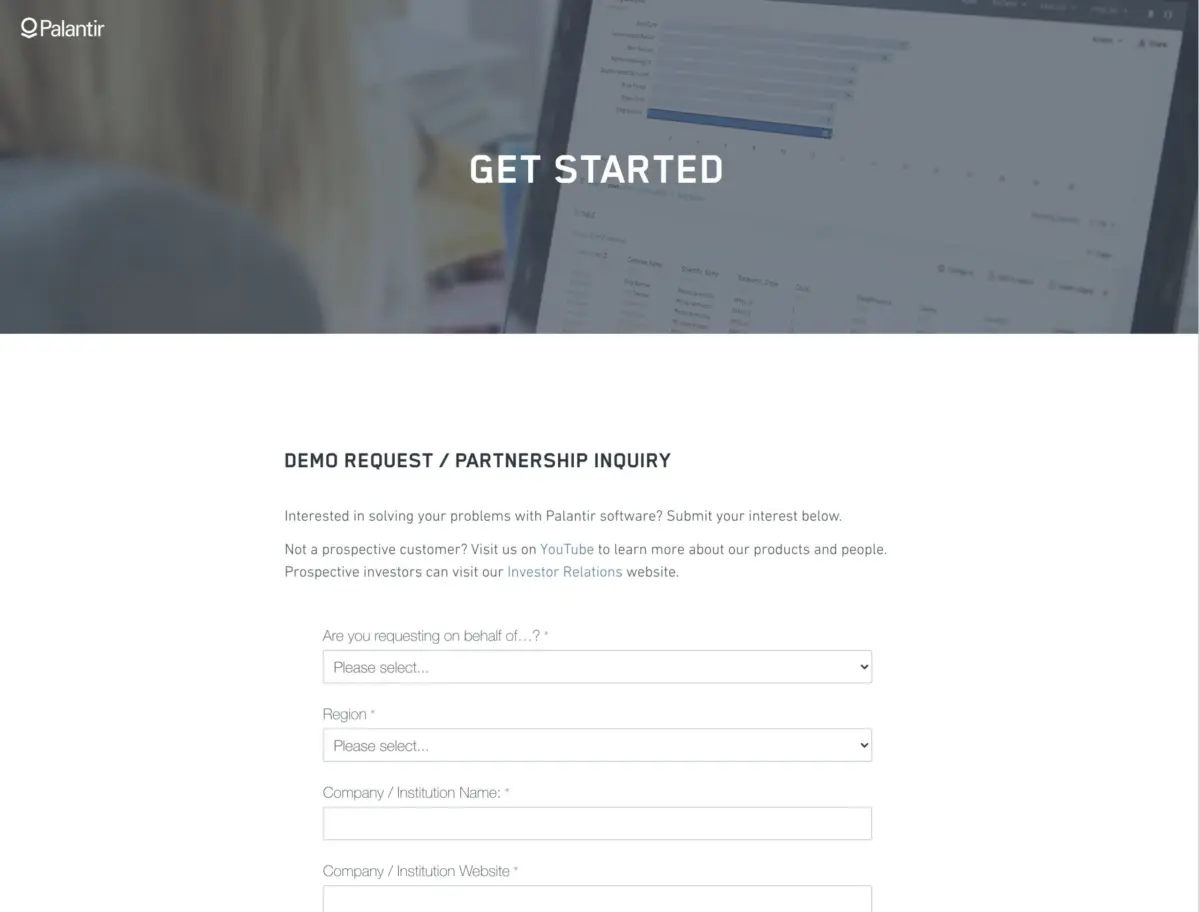
However, the plot thickens as a company scales. Transparent pricing is not a universal panacea. As organizations mature, move upmarket, and transition into complex enterprise sales cycles, the calculus shifts dramatically. Fully transparent pricing models almost invariably leave money on the table, particularly in high-value, multi-product deals. Giants of the enterprise software world—such as Palantir and Veeva—routinely command seven- and eight-figure contracts without a single public pricing tier on their websites.
This article explores the nuanced journey of SaaS pricing transparency, examining the strategic inflection points where startups must transition from open books to customized, opaque enterprise pricing architectures. By analyzing sales velocity, buyer psychology, discounting logic, and enterprise maturation, we provide a comprehensive blueprint for when to show your hand—and when to hold your cards close to your chest.
Detailed Chronology: The Evolution of SaaS Pricing Strategies
To understand where SaaS pricing transparency stands today, it is helpful to trace how pricing strategies have evolved alongside the broader software industry over the past two decades.
Phase I: The Wild West of Enterprise Licensing (Late 1990s – Late 2000s)
In the era of on-premise enterprise software, public pricing was virtually non-existent. Software was sold through arduous, highly customized negotiations involving lengthy Request for Proposals (RFPs), complex hardware dependencies, and armies of implementation consultants. Pricing was inextricably linked to perceived enterprise value, corporate size, and sheer negotiating leverage. The default assumption was that every deal was unique.
Phase II: The Rise of Self-Serve and Freemium (2010s)
With the advent of cloud computing and the modern SaaS revolution championed by pioneers like Salesforce, Box, and eventually Atlassian and Slack, the "bottom-up" adoption model was born. Companies realized that developers, department heads, and individual contributors wanted to try software instantly without talking to a salesperson.
To facilitate this frictionless self-serve motion, public pricing pages became mandatory. If a user could not see how much a tool cost within 10 seconds of landing on a website, bounce rates skyrocketed. Transparent pricing democratized software adoption, making low-cost entry points standard practice for startups targeting small-to-medium businesses (SMBs).
Phase III: The Hybrid Enterprise Playbook (Present Day)
Today, mature SaaS organizations operate in a hybrid reality. They deploy product-led growth (PLG) engines to capture low-end market share through transparent, credit-card-ready pricing tiers, while simultaneously maintaining dedicated outbound enterprise sales teams that completely bypass public pricing for large-scale deployments. The modern SaaS challenge is no longer choosing between transparency and opacity, but rather mastering the delicate art of transitioning between the two as a company scales.
Supporting Context & Metrics: The Pros and Cons of Transparent Pricing
To make an informed decision about publishing pricing, leadership teams must weigh the distinct advantages of transparency against its inherent strategic limitations.
The Clear Advantages of Transparent Pricing
- Reduction of Top-of-Funnel Friction: In the early days of a startup, you cannot afford to introduce unnecessary hurdles. Requiring potential users to schedule a discovery call just to learn that your product costs $50 a month will cause massive drop-offs. Published pricing acts as an efficient filter, attracting qualified buyers while deterring those whose budgets simply do not align.
- Accelerated Sales Velocity: Self-qualification shortens the sales cycle. When buyers know the cost upfront, they enter sales conversations with realistic expectations, allowing deals to move swiftly from discovery to closure.
- Building Early Trust: Modern buyers appreciate candor. In a crowded software marketplace, publishing prices signals confidence, honesty, and customer-centricity, establishing immediate credibility for early-stage brands.
The Hidden Costs and Limitations
- Leaving Money on the Table: Transparent pricing relies on fixed tiers. If an enterprise buyer with a massive budget and complex requirements lands on a page where the highest tier is priced at $500 per month, they will default to that tier—even if their actual willingness to pay is ten times higher. You effectively cap your revenue potential for high-value accounts.
- Oversimplification of Complex Solutions: Enterprise software is rarely monolithic. Modern B2B platforms often encompass multiple modules, custom integrations, dedicated support level agreements (SLAs), and tailored security compliance frameworks. Trying to cram a rich, multi-faceted enterprise solution into a neat, three-column pricing grid can confuse buyers and misrepresent the true value of the technology.
- The Enterprise Negotiation Reality: Large enterprise customers expect to negotiate. They rarely buy software off-the-shelf at face value. Consequently, providing upfront public pricing for enterprise-grade tiers yields virtually zero tangible benefits, as those prices will invariably be discounted, bundled, or restructured during procurement reviews.
Official Insights & Industry Case Studies
When evaluating how top-tier software companies handle pricing visibility, industry benchmarks reveal a clear divergence based on target market and deal size.

The Veeva and Palantir Paradigm
Consider enterprise titans like Veeva Systems (specialized cloud solutions for the life sciences industry) and Palantir Technologies (builders of massive data integration and analytics platforms for governments and Fortune 500 enterprises). Neither company features a public pricing page.
[Early-Stage Startup] ──> Publish Pricing (Removes Friction, Drives SMB Velocity)
          │
          ▼
[Scale-Up / Mid-Market] ──> Introduce Hybrid Tiers & Sales-Assisted Models
          │
          ▼
[Enterprise / Upmarket] ──> "Contact Sales" / Custom Packaging (Maximizes Deal Value)
For companies executing seven- and eight-figure deals, a pricing page is not only useless; it is actively counterproductive. An enterprise contract involves bespoke data security agreements, custom service-level guarantees, deployment timelines, and user-license scaling structures that defy standard web-based calculators. For these firms, pricing is an outcome of a deep consultative discovery process rather than a static digital sticker.
The 9.5 Out of 10 Rule for Early-Stage Founders
Conversely, for the overwhelming majority of early-stage SaaS companies—those navigating seed rounds, Series A growth, and initial product-market fit—the calculus looks entirely different.
Industry veterans emphasize that 9.5 times out of 10, startups should start with transparent, published pricing. In the early days, customer acquisition cost (CAC) efficiency and brand trust are paramount. The last thing an early-stage team needs is self-inflicted sales friction. By starting with clear public numbers, founders can establish baseline market demand and refine their packaging before tackling the complexities of upmarket enterprise sales.
Future Outlook: The Next Frontier of SaaS Pricing Architecture
As the software landscape continues to evolve, the binary debate of "transparent versus opaque" is giving way to more sophisticated, dynamic pricing strategies. What can revenue leaders expect in the coming years?
1. Dynamic, Usage-Based Transparency
The rise of consumption-based and usage-based pricing (UBP) models has transformed how transparency is implemented. Instead of static per-seat pricing tables, modern SaaS leaders are publishing interactive calculators that allow prospective buyers to input their exact projected usage—whether measured in API calls, data gigabytes, or active workflows—and receive real-time cost estimates. This approach blends the frictionless appeal of transparency with the revenue optimization of customized scaling.
2. AI-Driven Personalized Packaging
Artificial intelligence is beginning to influence how software is packaged and priced in real time. Rather than relying on a static pricing page or a blunt "Contact Sales" form, upcoming B2B platforms are experimenting with AI-driven intake wizards. These intelligent agents assess a prospect’s organizational size, industry, and specific technical requirements during an initial web visit, dynamically generating a tailored pricing proposal and instantly scheduling targeted follow-ups.
3. The Enduring Value of Simplicity
Despite technological advancements, the core psychological drivers of B2B buyers remain remarkably consistent. Buyers want clarity, predictability, and a clear return on investment (ROI). Even as companies scale upmarket and adopt custom enterprise contracting, maintaining clear messaging around value creation will remain the ultimate differentiator.
Conclusion
Deciding whether to publish your SaaS pricing is not a permanent ideological commitment; it is a strategic lever that must evolve alongside your company.
For early-stage operators, clarity and transparency win. By publishing your prices, you eliminate unnecessary hurdles, build trust, and accelerate sales velocity when you need it most. However, as your product matures, your target market expands, and your deal sizes climb into the mid-market and enterprise tiers, transitioning toward a more customized, sales-assisted pricing motion becomes essential to capture your software’s true market value.
Analyze your target buyer, evaluate your current deal sizes, and choose the strategy that minimizes friction while maximizing long-term revenue potential.