By Shane Snider
Senior News Writer, Data Center Knowledge
Published: September 2, 2026 | 4 Min Read
Executive Overview
As the global race to scale artificial intelligence infrastructure accelerates, the physical bottlenecks of the digital economy are shifting outward from the data center floor. While power generation, high-voltage transmission, and next-generation chip availability have dominated headlines, a less visible but equally critical crisis is brewing beneath the waves: network capacity and inter-region interconnectivity.
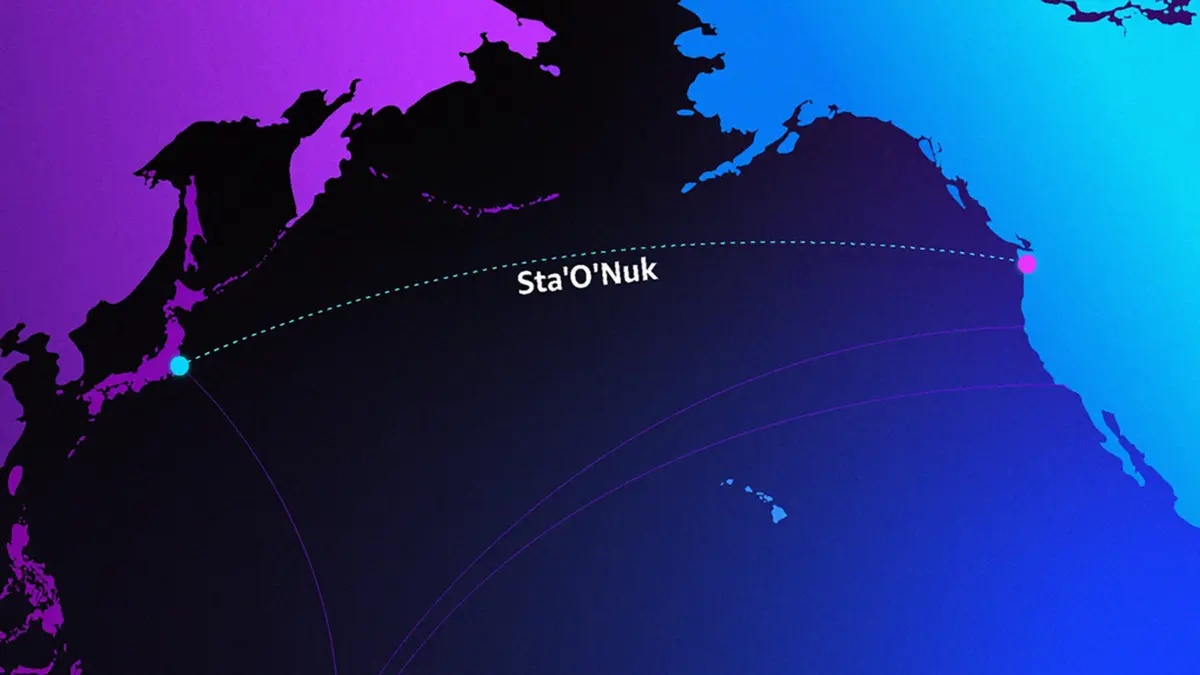
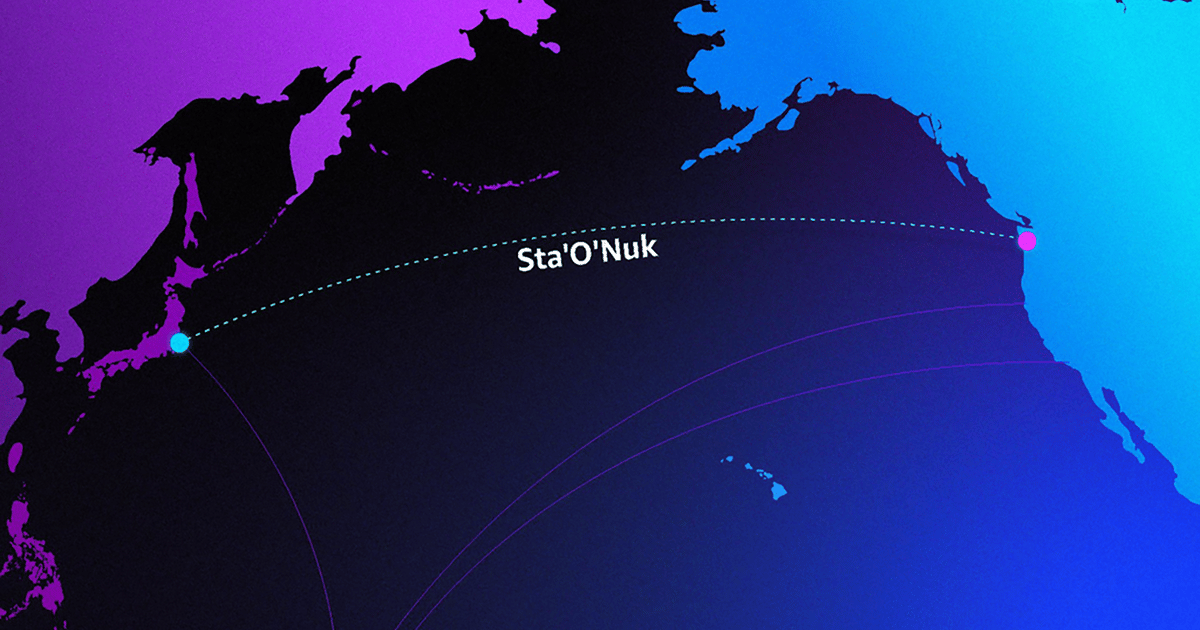
In response to this escalating infrastructure crunch, Amazon Web Services (AWS) has announced a massive multi-year telecommunications initiative. The cloud titan is constructing the Sta’O’Nuk subsea cable—a staggering 420 Terabits-per-second (Tbps) trans-Pacific conduit linking Japan to Washington State. Scheduled to enter service in 2029, the 20-fiber-pair cable is designed to support the voracious bandwidth demands of distributed large-scale language model (LLM) training, low-latency financial transactions, real-time edge computing, and high-definition video streaming.
Crucially, the project marks a historic milestone for the Pacific Northwest: the first new cable landing station built in the state of Washington in more than 25 years. Developed in partnership with Toptana Technologies—an Indigenous-owned telecommunications infrastructure facility owned by the Quinault Indian Nation—the Ocean Shores landing station and its accompanying terrestrial backhaul routes promise to reshape trans-Pacific data routing. By breaking away from traditional, congested landing corridors in California and Oregon, AWS is engineering a resilient, high-speed maritime highway directly into the heart of major U.S. data center hubs.
Detailed Chronology & Project Architecture
The architecture of the Sta’O’Nuk project reflects a meticulous, end-to-end approach to modern network design, blending subsea engineering, sovereign Indigenous infrastructure development, and advanced terrestrial routing.
The Trans-Pacific Maritime Route
Spanning thousands of miles of ocean floor, the Sta’O’Nuk system will utilize 20 fiber pairs to achieve its record-setting 420 Tbps capacity. To safeguard this vital asset against the roughly 200 annual global subsea cable cuts—predominantly caused by commercial fishing activities and dragging ship anchors—AWS has integrated robust physical security measures.
In vulnerable shallow waters and near landing sites, the cable will be heavily armored, buried at depths of up to 1,500 meters, and deployed using advanced horizontal directional drilling (HDD). Furthermore, the system will embed cutting-edge cryptographic protocols to secure data in transit, including quantum-safe optical encryption at Layer 1, MACsec at Layer 2, and TLS, SSL, or QUIC at Layer 4.
The Ocean Shores Landing Station
International subsea capacity is rendered useless if operators cannot efficiently haul heavy data volumes from the coast inland. To solve this, Toptana Technologies is developing a state-of-the-art cable landing station in Ocean Shores, Washington.
Designed to initially accommodate up to four subsea cable systems with scalable infrastructure capable of expanding to 16 cable vaults, the facility will bridge international submarine cables with robust domestic terrestrial networks. Toptana has mapped out a high-capacity backhaul corridor along the Interstate 5 highway, linking the coastal landing point directly into major cloud and data center markets in Seattle, Washington, and Hillsboro, Oregon.
Supporting Context & Metrics: The AI-Driven Network Boom
While the current infrastructure boom is frequently framed around mega-campuses and liquid-cooled server racks, industry analysts emphasize that networks are expanding at a parallel, unprecedented scale.
"Even before the rise of AI investments, hyperscalers were among the primary consumers of subsea cables and capacity," noted Jimmy Yu, vice president at Dell’Oro Group. "The surge in AI demand should further drive demand for both terrestrial and submarine networks."
Yu points out that AWS’s strategic choice of Washington state highlights the absolute necessity of tying subsea infrastructure directly into major data center ecosystems. Doing so not only enhances raw connectivity but fundamentally improves route diversity and network resilience.
The Mathematics of AI Data Transport
Large-scale AI models do not live in a vacuum. Training a frontier foundational model requires massive, continuous exchanges of parameters across distributed clusters scattered across different global regions.
According to Ron Westfall, vice president and practice lead for networking and infrastructure at HyperFrame Research, these workloads demand terabit-scale data transport between training clusters and inference locations.
"As hyperscalers spread computing across regions, network backhaul and interconnect capacity could become a constraint alongside power availability," Westfall warned. While power constraints dictate where operators break ground on multi-gigawatt AI campuses, the underlying network dictates how effectively those distributed resources communicate with one another and deliver outputs to global end-users.
Official Statements & Strategic Partnerships
The Sta’O’Nuk project is as notable for its socio-economic model as it is for its technical specifications. As a project spearheaded by the Quinault Indian Nation through Toptana Technologies—with strategic guidance and operational execution managed by Assured Communications—the facility represents a landmark collaboration between Indigenous enterprise and big tech.
By establishing a Washington landing point, AWS is directly mitigating geographical concentration risks. Currently, more than 30 trans-Pacific subsea cables connect North America and Asia, with U.S. landing sites heavily clustered along the California and Oregon coasts. Washington’s last commercial subsea cables—Pacific Crossing-1 at Harbour Pointe and Alaska United East—were laid back in 1999, according to data from Data Center Dynamics.
By reintroducing Washington to the trans-Pacific map, AWS diversifies its physical pathways, ensuring that a regional weather event, seismic activity, or cable fault in California or Oregon will not hamstring trans-Pacific traffic flows. This initiative complements AWS’s sprawling global network footprint, which already spans more than 20 million kilometers of fiber.
Future Outlook: The Total Infrastructure Stack
As the technology sector looks toward the remainder of the decade, the narrative surrounding AI infrastructure is maturing. It is no longer just about chips, servers, and power plants; it is about the entire, holistic infrastructure stack.
Power generation, high-voltage transmission, localized data center campuses, terrestrial fiber-optic backhauls, and international subsea cables must operate as a singular, synchronized organism to support the next generation of AI services.
For network architects and cloud providers, the central question is no longer whether demand will outstrip supply, but how quickly operators can deploy redundant, high-capacity corridors to keep pace with hyper-scaling workloads. With the 420 Tbps Sta’O’Nuk cable and its pioneering Washington landing station, AWS has signaled that it is building not just for today’s cloud, but for the hyper-connected, AI-dominated horizons of 2029 and beyond.
About the Author
Shane Snider is Senior News Writer at Data Center Knowledge, covering AI infrastructure, hyperscale data centers, cloud platforms, and the power and energy systems driving modern compute expansion. His reporting focuses on the operational, economic, and environmental forces reshaping digital infrastructure, including AI factories, utility constraints, liquid cooling, renewable energy procurement, and next-generation data center architectures. He is an award-winning journalist based in Raleigh, North Carolina.
Contact Shane at [email protected] or connect with him on LinkedIn.