Executive Overview
The modern professional landscape is undergoing a monumental demographic shift. As Generation Z steps firmly into the workforce, they are no longer just entry-level assistants or interns; they are rapidly ascending to become key business decision-makers, budget holders, and influencers within their organizations. However, a profound paradox defines this transition. While Gen Z professionals possess unprecedented digital fluency and ambition, a staggering majority are struggling to cross the threshold from digital presence to meaningful career-accelerating relationships.
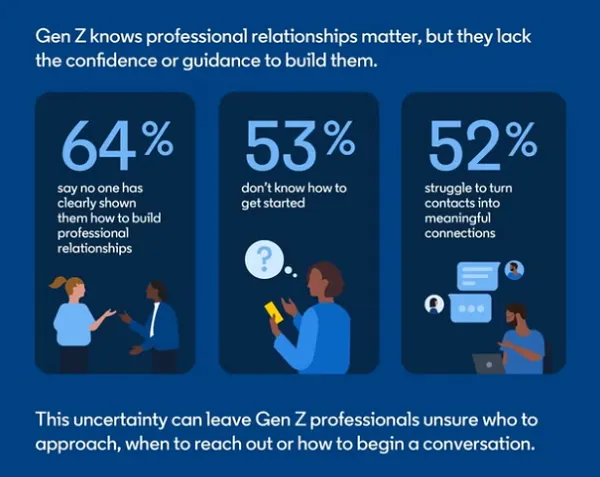
According to comprehensive new research published by LinkedIn—spanning a global survey of more than 18,000 professionals—nearly three-quarters (72%) of Gen Z workers lack the confidence required to turn everyday contacts into tangible career opportunities. Caught in a psychological loop of hesitation, this generation routinely misses out on critical mentorship, job leads, and professional growth. Their reluctance is largely driven by internal barriers: the fear of bothering established professionals, the anxiety of being judged, and a deep-seated desire to avoid sounding inauthentic or transactional. Furthermore, over half (53%) admit they simply do not know how to initiate professional networking in the first place.
This friction point holds massive implications not only for human resources departments and corporate recruitment strategies, but also for B2B and B2C marketers. As traditional networking playbooks lose their efficacy with younger demographics, businesses must fundamentally rethink how they communicate, connect, and build trust. LinkedIn’s data reveals a parallel evolution in consumer behavior: younger audiences are shifting their loyalties away from loud, high-visibility brands in favor of hyper-credible entities that align with their personal values.
This in-depth report explores the core findings of LinkedIn’s landmark study, examining the psychological barriers holding back the newest wave of talent, the immense value of internal connections in modern hiring, the changing priorities of young consumers, and actionable strategies for companies, marketers, and leaders looking to bridge the generational divide.
Detailed Chronology: The Evolution of the Gen Z Workforce Crisis
To understand how we arrived at the current state of professional networking, it is necessary to trace the trajectory of Generation Z’s entry into the labor market—a timeline defined by unprecedented disruption and digital adaptation.
The Remote-Work Crucible (2020–2022)
The earliest wave of Gen Z professionals entered the workforce during the height of the COVID-19 pandemic. Stripped of traditional onboarding experiences, in-person watercooler chats, and casual networking events, these young workers learned the ropes of their careers through glowing screens. While this fostered exceptional remote-collaboration skills, it starved them of the organic, low-stakes socialization that typically builds professional confidence. Networking was no longer an intuitive byproduct of sharing an office; it required booking a formal video call—a high-friction endeavor that amplified anxieties surrounding "bothering" busy colleagues.
The Rise of Digital-First Job Hunting (2023–2024)
As offices reopened in hybrid formats, Gen Z increasingly relied on digital platforms to forge their career paths. However, the transactional nature of cold outreach on platforms like LinkedIn often backfired. Automated connection requests and overly polished, generic pitch messages created a digital ecosystem plagued by self-consciousness. Younger professionals, acutely aware of digital saturation, became hyper-focused on avoiding the label of "clout-chaser" or sounding like inauthentic marketers. Consequently, many retreated to passive browsing—consuming content without actively engaging or building networks.
The Decision-Maker Shift and the Confidence Crisis (2025–Present)
By 2026, the oldest members of Generation Z have crossed into managerial and decision-making roles. Yet, the foundational gap in networking confidence has persisted. LinkedIn’s latest data release crystallizes this tension. Companies are desperately seeking fresh talent and innovative perspectives from their newest cohorts, yet 72% of Gen Z professionals are actively bypassing career-advancing opportunities due to psychological barriers. Recognizing that this is not merely an individual failing but a systemic structural issue, platforms, employers, and marketers are now forced to collaborate on creating low-friction, high-authenticity pathways for engagement.
Supporting Context & Metrics: Unpacking LinkedIn’s Landmark Study
LinkedIn’s comprehensive research report provides a granular look at the attitudes, fears, and behaviors defining the Gen Z professional cohort. The numbers paint a vivid picture of a generation caught between digital connectivity and human hesitation.
The Anatomy of Networking Hesitation
The survey data breaks down the specific psychological hurdles preventing Gen Z professionals from maximizing their career potential:
- 37% hesitate to reach out for fear of bothering people.
- 37% hold back due to the anxiety of being judged.
- 34% worry about sounding inauthentic or overly transactional.
- 53% confess they simply do not know how to get started with professional networking.
These figures highlight a profound empathy within Gen Z—they are overly considerate of other people’s time and attention to the point of self-sabotage. However, this hesitation comes at a steep professional price.
The Currency of Connections
In the modern job market, passive resume submissions into online applicant tracking systems (ATS) yield diminishing returns. LinkedIn’s data emphasizes the extraordinary leverage provided by internal networks:

- 27% of Gen Z professionals reported finding their next career opportunity through online professional communities.
- Job applicants in the United States who possessed an inside connection were nearly 7 times more likely to get hired than candidates without one.
This statistic underscores the danger of the Gen Z confidence gap. By failing to network effectively, younger professionals are missing out on the single most potent catalyst for career advancement: the referral.
The Marketing and Brand Credibility Shift
Beyond professional networking, the study sheds light on how Gen Z interacts with brands as consumers. The data reveals a major ideological pivot in brand evaluation:
- 73% of respondents stated that brand credibility is becoming more important than brand visibility.
For decades, the dominant marketing paradigm relied on top-of-funnel reach, high ad frequencies, and sheer visibility. For Gen Z, however, seeing a brand everywhere is no longer persuasive if that brand lacks substantive proof of its values. Younger audiences invest their loyalty deeply into organizations that demonstrate authenticity, transparency, and social alignment.
Official Statements and Industry Implications
Industry leaders, workplace psychologists, and platform executives have weighed in on the implications of LinkedIn’s findings, calling for a radical redesign of both corporate cultures and marketing frameworks.
Commenting on the urgent need to redesign engagement pathways, workplace strategists note that traditional top-down mentorship models are failing to resonate with a generation that values peer-to-peer validation and decentralized communities. "We cannot expect Gen Z to adopt the aggressive, cold-calling networking styles of previous generations," notes a leading organizational behaviorist. "Organizations must bake community-building directly into the daily workflow, removing the social friction that causes young employees to freeze."
LinkedIn itself is moving to address these friction points directly within its digital ecosystem. The platform has intensified efforts to facilitate low-stakes connection opportunities "in-stream." A prime example of this strategy is LinkedIn’s evolving suite of in-app puzzle games. While seemingly casual, these features serve a vital psychological function: they provide natural, low-pressure icebreakers that allow professionals of all career stages to interact, share scores, and break the ice without the awkwardness of crafting a formal professional pitch.
On the marketing front, enterprise brand strategists are being urged to dismantle legacy advertising campaigns in favor of trust-building content frameworks. Because brand credibility now outweighs visibility, companies must pivot toward content that demonstrates real-world expertise, employee advocacy, and unvarnished truth.
Future Outlook: Strategies for Businesses and Marketers
As we look toward the future of work and commerce, closing the Gen Z confidence gap requires deliberate, innovative action from both employers and brand custodians. The data points clearly toward specific methodologies that will define success in the years ahead.
1. Fostering Internal Communities and "Warm" Networking for Employers
Companies can no longer assume that young talent will organically find mentors. Human resources leaders must build structured, low-barrier internal programs that normalize networking:
- Internal Peer Circles: Establish cross-departmental groups where junior and senior staff interact outside of direct reporting lines, reducing the intimidation factor.
- Low-Stakes Mentorship Matchmaking: Move away from formal, high-pressure mentoring assignments toward micro-mentorship models—short, goal-oriented coffee chats or skill-sharing sessions.
- Amplifying Inside Connections: Encourage employee referral programs that actively reward internal staff for coaching and bringing in junior talent, capitalizing on the statistic that internal connections multiply hiring success by seven times.
2. Crafting Credible, Authentic Messaging for Marketers
To capture the loyalty of the Gen Z consumer and professional, marketing teams must overhaul their creative strategies:
- Prioritize Substance Over Splash: Shift budgets away from purely decorative, high-visibility campaigns toward educational, value-driven content that proves brand competence.
- Embrace Short-Form Video with Expert Insights: Both LinkedIn and broader digital ecosystems indicate that short-form video featuring genuine subject-matter experts is the ultimate trust-building medium. Gen Z responds to unscripted, highly knowledgeable professionals who explain how things work rather than hiding behind corporate jargon.
- Radical Transparency: Back up brand claims with verifiable data, customer testimonials, and behind-the-scenes integrity. In an era where authenticity is the ultimate currency, credibility is the only metric that guarantees long-term retention.
Conclusion
LinkedIn’s latest insights on Generation Z serve as both a warning siren and a roadmap. The confidence gap holding back 72% of young professionals is not an insurmountable character flaw, but a natural byproduct of a rapidly digitizing economy that outpaced our social infrastructure. By proactively lowering the barriers to connection—whether through gamified platform features, internal corporate mentorship, or credible, expert-led marketing—businesses can unlock the full, transformative potential of the workforce’s newest leaders. The future belongs not to the loudest brands or the most aggressive networkers, but to those who master the art of authentic, low-friction human connection.