By Christopher Tozzi
Technology Analyst & Author
Executive Overview
For decades, the physical security paradigm of the global cloud computing industry was built on a predictable set of assumptions. Facilities teams fortified perimeters against traditional threats: perimeter breaches, copper theft, localized civil unrest, and sophisticated cyber-physical intrusions.
The sky above the data center was largely treated as a regulatory domain managed by aviation authorities rather than a vector for kinetic attack.
That foundational assumption was shattered in the spring of 2026, when targeted drone strikes disrupted operations at Amazon Web Services (AWS) facilities in the Persian Gulf. While the incident occurred months ago, its shockwaves continue to reverberate across the critical infrastructure landscape. The attacks proved beyond a shadow of a doubt that the threat of weaponized or rogue unmanned aerial vehicles (UAVs) targeting cloud infrastructure is no longer theoretical, speculative, or confined to geopolitical flashpoints. It is an active, evolving, and systemic enterprise risk.
Data centers are the invisible bedrock of the modern digital economy. They power global financial markets, healthcare systems, government communications, and enterprise artificial intelligence workloads. Because these facilities rely heavily on continuous, uninterrupted power and massive cooling requirements, they present distinct structural vulnerabilities. Even a low-cost commercial drone, modified with explosive payloads or maneuvered to disrupt vulnerable exterior mechanical infrastructure, can precipitate cascading failures.
How should the industry respond? As this analysis will explore, attempting aggressive kinetic or electronic interdiction—such as shooting down drones or deploying unauthorized signal-jamming equipment—introduces massive legal, operational, and safety liabilities.
Instead, the most effective industry response relies on a triad of holistic physical resilience, lawful defensive coordination, and rigorous multi-sensor detection workflows. Data center operators must pivot from perimeter-denial mindsets to comprehensive, fail-safe continuity models that treat airspace incursions with the same urgency as fiber cuts or utility grid failures.
Detailed Chronology: The Persian Gulf Incident and Its Aftermath
To understand the urgency driving modern data center security discussions, one must examine the operational reality of the spring 2026 AWS incidents in the Persian Gulf.
While specific enterprise telemetry and classified incident reports remain heavily restricted, public disclosures and industry intelligence paint a sobering picture of how the events unfolded:
- Phase I: Reconnaissance and Approach. Intelligence assessments suggest that the offending platforms utilized commercially available, off-the-shelf multirotor frames coupled with customized guidance systems. Bypassing standard visual line-of-sight constraints, the operators leveraged automated waypoint navigation to vector the drones past preliminary visual observation points.
- Phase II: The Kinetic Impact. Unlike cyber-attacks, which target software vulnerabilities, these payloads were designed to exploit physical exposures common to high-density computing environments. The strikes targeted critical exterior support infrastructure—specifically, rooftop heat rejection systems and localized air-handling units responsible for expelling the massive thermal loads generated by high-performance server racks.
- Phase III: Operational Disruption and Failover. While AWS architecture is globally renowned for its multi-AZ (Availability Zone) redundancy and automated workload migration capabilities, the physical damage forced localized emergency shutdowns. Facilities engineering teams had to scramble to isolate damaged mechanical loops, reroute cooling chilled-water feeds, and verify structural integrity before bringing critical server halls back online.
- Phase IV: Post-Incident Industry Realignment. In the weeks following the incident, cloud providers, colocation giants, and enterprise self-hosters initiated urgent security audits. The realization that regional cloud hubs could be kinetically compromised by inexpensive consumer hardware forced an immediate rewrite of physical risk models across multinational technology firms.
The incident served as an undeniable wake-up call. It demonstrated that state-sponsored actors, non-state militias, and sophisticated bad actors could leverage asymmetric warfare tactics against civilian critical infrastructure with devastating cost-efficiency.
Why Drone Risks Are Escalating for Data Centers
The vulnerability of data centers to aerial threats is driven by a convergence of technological democratization and the unique architectural constraints of mission-critical facilities.
The Proliferation of Commercial and Consumer-Grade Drones
Consumer-grade and prosumer drones have undergone an exponential leap in capability over the past five years. Modern units feature autonomous flight paths, high-definition thermal imaging, encrypted long-range control links, and substantial payload capacities—all at a fraction of the cost of traditional military hardware.
Because these devices are inexpensive and widely available, the volume of airspace traffic near industrial zones has exploded. This elevation in baseline air traffic increases both intentional security threats (such as targeted espionage, sabotage, and kinetic strikes) and accidental risks (such as hobbyist drone crashes into high-voltage substations or cooling yards).

Architectural Vulnerabilities of Modern Facilities
Data centers are massive, monolithic structures by necessity, but they also feature critical external dependencies that cannot be easily buried or enclosed inside reinforced concrete bunkers:
- Cooling Towers and HVAC Systems: High-density AI workloads generate staggering amounts of heat. Facilities require massive rooftop or perimeter-adjacent chiller yards, cooling towers, and air-handling units that must remain open to ambient air to function. These systems represent prime targets for physical disruption.
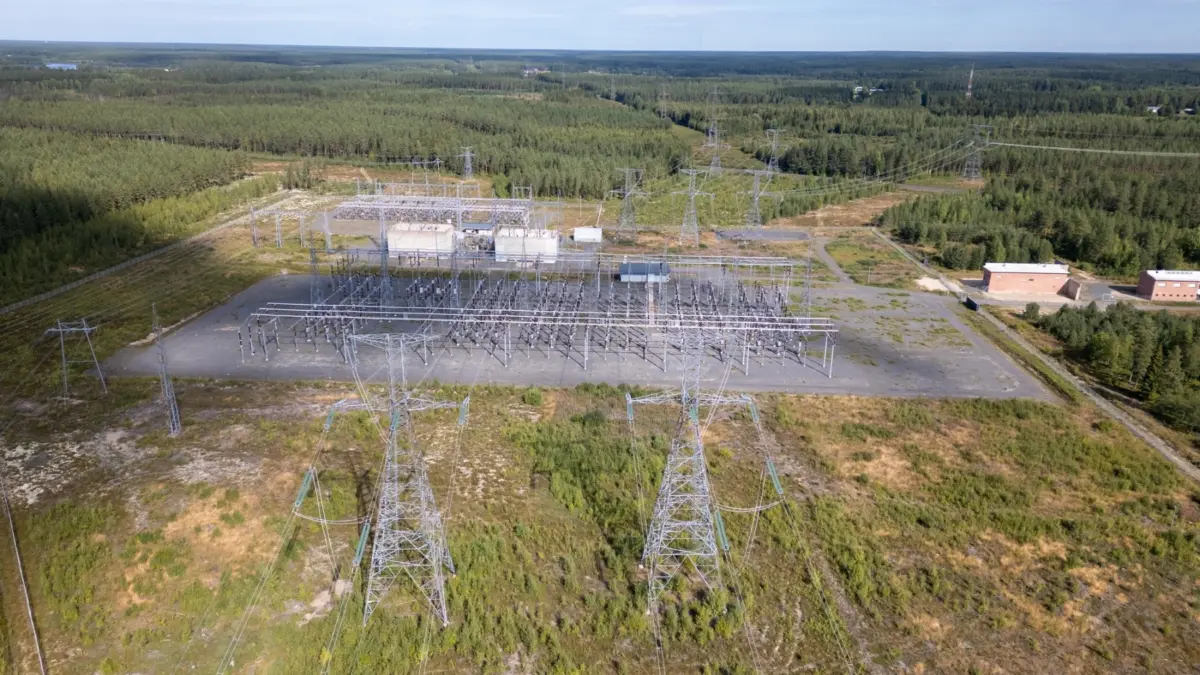
- Power Substations and Transformers: Uninterrupted power supply (UPS) systems and diesel generators are critical, but the high-voltage step-down transformers connecting the facility to the electrical grid are typically situated in exterior yards. An aerial attack on these nodes can trigger immediate loss of primary power.
- Fuel Storage Facilities: Bulk diesel storage farms maintained for emergency generator backup represent volatile collateral targets if exposed to kinetic impact.
While military-grade platforms pose severe risks in active conflict zones, the democratization of drone technology means that lone bad actors or rogue cells can now achieve localized disruption effects that were once the exclusive domain of nation-states.
Layered Physical and Detection Controls: A Blueprint for Defense
Because absolute prevention of aerial intrusion is virtually impossible across sprawling multi-acre facilities, modern data center security must embrace a doctrine of layered defense. This approach blends practical physical hardening, multi-sensor detection networks, and streamlined response workflows.
1. Physical Drone Defenses and Infrastructure Hardening
Physical modifications must protect vulnerable components without compromising the thermodynamic performance of the facility. Key strategies include:
- Airflow-Safe Protective Screening: Installing heavy-gauge, high-tensile steel mesh or ballistic-rated louvers over vulnerable air intakes, cooling towers, and exhaust fans. These screens must be engineered to prevent kinetic debris or drone frame penetration while maintaining the static pressure and airflow required for cooling.
- Shielding Electrical Infrastructure: Constructing reinforced concrete blast walls or overhead protective canopies around exterior transformers, switchgear yards, and fuel storage farms.
- Strict Regulatory Compliance: All structural additions must strictly comply with local building codes, fire safety regulations, and equipment performance thresholds to ensure they do not inadvertently choke airflow or violate environmental noise ordinances.
2. Redundancy, Resiliency, and Blast-Radius Limiting
Even the most sophisticated hardening measures cannot guarantee total immunity. Operators must treat aerial threats as an inevitable operational contingency, much like earthquakes, cyber-attacks, or grid failures.
- Geographically Distributed Availability Zones: Ensure that critical enterprise workloads are distributed across isolated geographic zones with independent mechanical and electrical loops, preventing a single localized drone strike from taking down an entire regional service catalog.
- Micro-Segmentation of Mechanical Systems: Avoid single points of failure in cooling and power distribution by utilizing decentralized, modular chiller arrangements rather than massive, centralized yards.
3. Multi-Sensor Detection Workflows
Early awareness is critical to mitigating damage. Security teams must deploy integrated detection arrays that combine:
- Radio Frequency (RF) Scanners: To detect command-and-control signals between the drone and its operator.
- Acoustic Sensors: To identify the distinct acoustic signature of multirotor blades, particularly in low-visibility or night-time conditions.
- Optical and Thermal Cameras: AI-powered computer vision systems capable of autonomously tracking small, fast-moving objects against complex backgrounds and alerting human security operators in real-time.
Airspace Restrictions, Regulatory Challenges, and Community Coordination
One of the most complex hurdles facing data center operators is the legal and regulatory gray area surrounding airspace defense. In most jurisdictions, private property rights extend only a limited distance upward; the airspace itself is strictly governed by national aviation authorities (such as the FAA in the United States or EASA in Europe).
The Limits of Private Interdiction
Data center security guards generally cannot legally shoot down, hack, seize, or electronically jam unauthorized drones flying over their facilities. Doing so can violate federal aviation laws, breach telecommunications regulations, cause collateral damage to civilian bystanders if the drone crashes uncontrollably, and expose the enterprise to severe civil and criminal liabilities.
Collaborative Airspace Security
Rather than attempting to establish illegal, informal "no-fly zones," data center operators must engage in proactive public-private coordination:
- Establishing Official Flight Restrictions: Work directly with national aviation authorities to petition for permanent or temporary Flight Restricted Zones (FRZs) or specialized Notice to Air Missions (NOTAMs) over critical hyperscale clusters.
- Unmanned Traffic Management (UTM) Integration: Engage with commercial drone service providers and UTM platform operators to ensure that automated commercial drones are programmatically geofenced away from sensitive data center perimeters.
- Local Law Enforcement Partnerships: Build robust, pre-established communication channels with local police departments, counter-terrorism units, and emergency management agencies. Ensure local authorities understand the facility’s critical infrastructure status and have pre-scripted response protocols ready when intrusion alerts are triggered.
Future Outlook: The New Baseline for Mission-Critical Facilities
The spring 2026 drone strikes on AWS facilities in the Persian Gulf mark a watershed moment for the data center industry. They serve as definitive proof that physical security risks have expanded vertically into the skies.
As compute demands continue to surge—driven heavily by power-hungry artificial intelligence and machine learning workloads—hyperscalers and colocation providers are expanding their footprints into increasingly diverse geographic regions. This expansion inevitably exposes facilities to varying geopolitical risk profiles.
Moving forward, the strongest operational posture is one of comprehensive resilience:
- Harden exposed mechanical, cooling, and electrical infrastructure against kinetic impact.
- Deploy multi-sensor detection systems that provide early warning without relying on illegal interdiction methods.
- Formalize detection-to-response operational workflows with local law enforcement and aviation regulators.
- Design for radical redundancy and fault isolation, ensuring that a localized physical disruption remains just that—localized.
The era of ignoring the sky is over. By embracing a proactive, resilient security framework, the data center industry can successfully navigate this new threat landscape, safeguarding the digital infrastructure upon which the modern world depends.