For the past several years, the artificial intelligence landscape has been driven by the intoxicating rush of the five-minute demo. On stage and in controlled lab environments, foundation models have repeatedly dazzled investors, executives, and technologists alike with instantaneous text generation, hyper-realistic image synthesis, and complex multimodal reasoning. Yet, as the initial novelty fades and the hard realities of enterprise software deployment set in, a profound chasm has opened between what AI can promise in a slide deck and how it performs in the trenches of day-to-day business operations.
When customers finally integrate AI applications into their workflows, they quickly stress-test the technology in ways developers rarely anticipate. They demand unyielding reliability, seamless security, strict compliance, and—above all—proof that the tool solves a problem significant enough to warrant permanent adoption rather than becoming yet another abandoned corporate pilot.
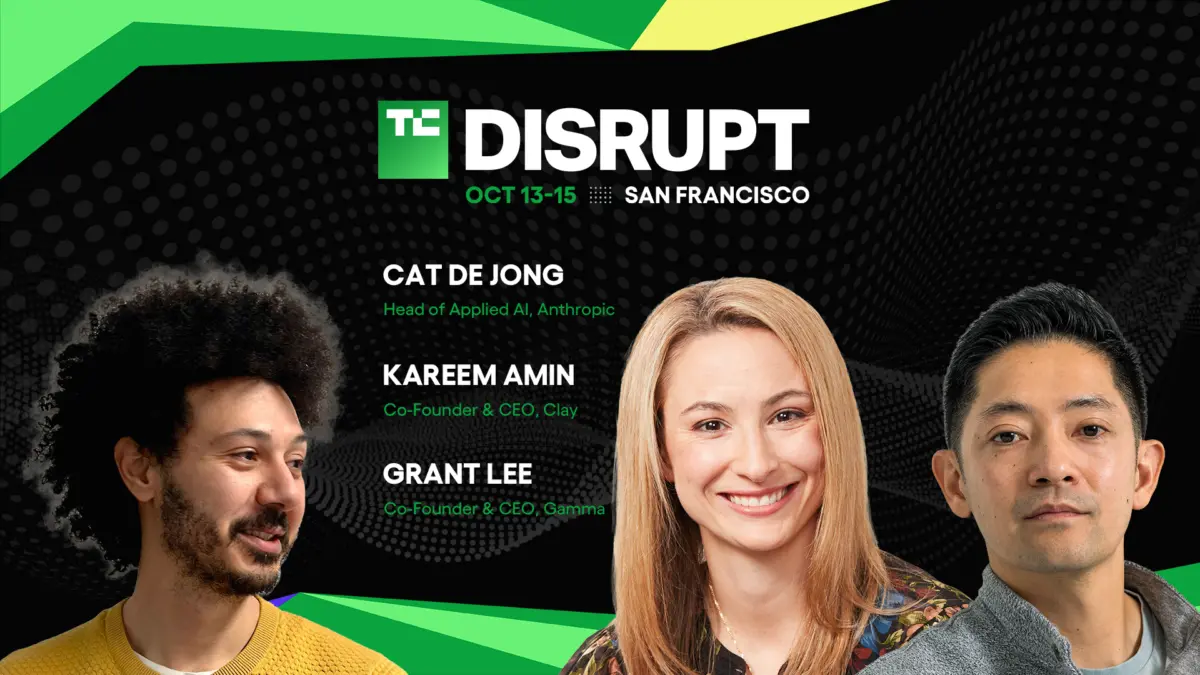
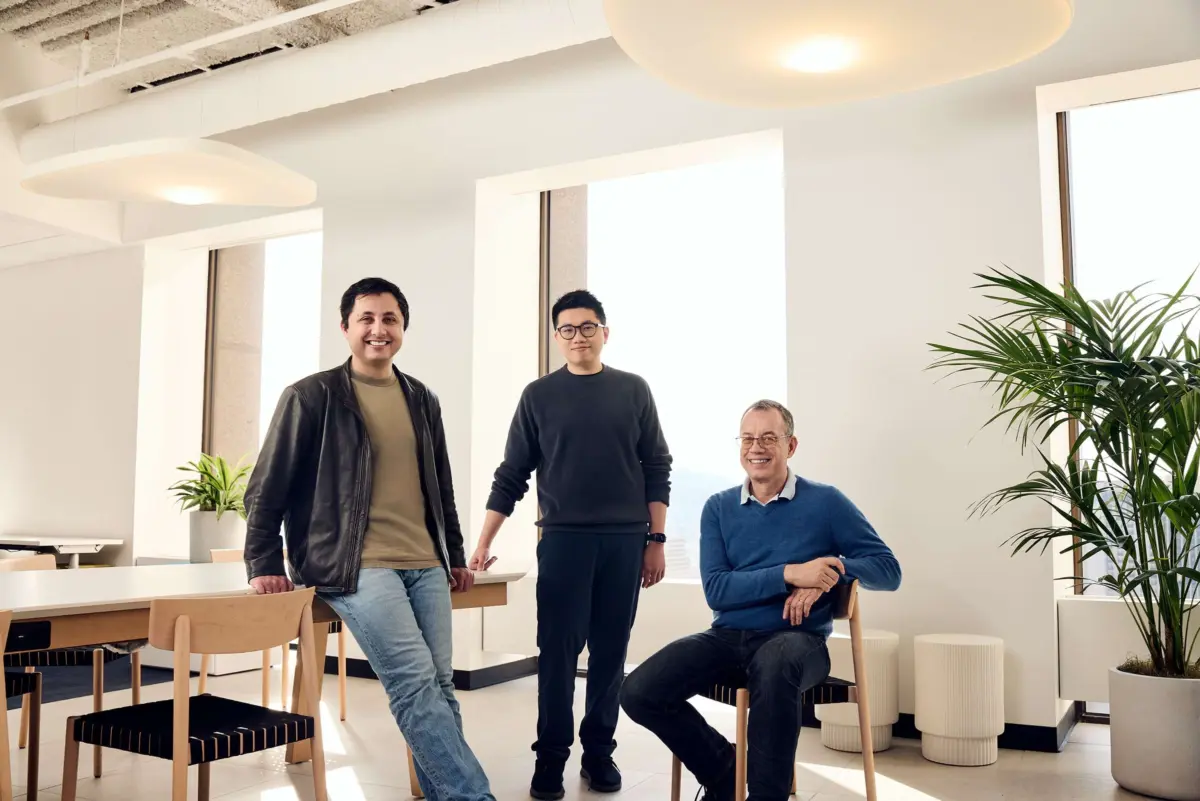
To unpack this high-stakes transition from experimentation to production, TechCrunch Disrupt 2026 is convening an elite panel on its premier AI Stage. Titled “What Anthropic Sees When Enterprises Actually Deploy Claude,” the session will bridge the macro-level patterns observed by model providers with the micro-level, frontline experiences of founders building generation-defining products. Featuring Cat de Jong, Head of Applied AI at Anthropic; Grant Lee, Co-founder and CEO of Gamma; and Kareem Amin, Co-founder and CEO of Clay, this masterclass will explore the brutal realities of enterprise AI adoption, dissecting the friction points that cause some implementations to stall while others become mission-critical infrastructure.
Detailed Chronology: The Evolution from AI Novelty to Enterprise Backbone
The trajectory of enterprise artificial intelligence over the last 36 months has moved through distinct phases of excitement, disillusionment, and eventual pragmatism. Understanding how the industry arrived at the doorstep of TechCrunch Disrupt 2026 requires examining this rapid evolution.
Phase 1: The Era of Unfiltered Experimentation (2023–2024)
Following the widespread public release of generative AI tools, enterprises scrambled to establish "AI task forces." The primary objective during this period was exploratory: organizations wanted to test the waters. APIs were spun up rapidly, proof-of-concept projects multiplied across departments, and developers experimented with prompt engineering to see how models like Anthropic’s Claude could summarize documents, draft emails, or write boilerplate code. However, these pilots largely existed in silos, isolated from core enterprise data infrastructure and legacy systems. Security guardrails were often reactive rather than proactive, and success metrics were loosely defined around novelty rather than clear return on investment (ROI).
Phase 2: The Integration and Workflow Friction (2025)
As organizations attempted to move generative models from isolated sandboxes into actual production workflows, the limits of pure conversational AI became painfully obvious. Enterprises discovered that raw foundation models, while intellectually flexible, lacked the contextual awareness, deterministic reliability, and specialized connectors required for complex, multi-step business processes. This was the year of "workflow friction." Hallucinations that were amusing in a demo environment became costly liabilities in customer service automation, financial modeling, and legal compliance. Companies realized that deploying AI meant reimagining underlying business processes, demanding deeper integrations, tighter latency controls, and robust feedback loops.
Phase 3: The Maturation of Agentic Systems and Specialized Infrastructure (2026)
By 2026, the market had bifurcated. Organizations stuck in perpetual pilot purgatory—often paralyzed by data governance concerns or a lack of clear use cases—began to scale back their unstructured spending. Conversely, companies that successfully integrated AI evolved past basic text-in, text-out paradigms. They embraced agentic workflows, deterministic guardrails, and deeply embedded workplace tools.
This maturation is precisely where Anthropic, Gamma, and Clay intersect. Anthropic’s continuous refinement of Claude, paired with its integration of interactive workplace utilities (such as Clay’s inclusion as a launch app in early 2025), signaled a fundamental shift: AI was no longer just a standalone chat window; it was becoming the operational tissue connecting disparate enterprise applications. Gamma’s aggressive push into automated visual content generation and Clay’s rise as a dominant go-to-market (GTM) data infrastructure layer demonstrated that sustainable AI products must live natively where work actually happens.
Supporting Context & Metrics: The Anatomy of Enterprise Adoption
To truly grasp the gravity of the upcoming panel at TechCrunch Disrupt 2026, one must examine the quantitative and qualitative data shaping the current enterprise software economy.
Bridging the Gap Between Pilots and Production
Industry surveys consistently highlight a stark disconnect in corporate AI adoption: while upwards of 70% to 80% of enterprise executives report experimenting with generative AI, fewer than 20% claim to have successfully scaled these initiatives into core production workflows yielding measurable bottom-line impact. This persistent "pilot purgatory" is driven by several recurring bottlenecks:
Data Readiness and Hygiene: Enterprises frequently discover that their internal data silos are too fragmented, unstructured, or insecure to feed securely into large language models without extensive preprocessing.
Reliability and Determinism: Software engineering relies on deterministic outcomes. Probabilistic AI models introduce variables that require entirely new paradigms of quality assurance, exception handling, and human-in-the-loop oversight.
Change Management: Technology is rarely the hardest part of digital transformation; human habits are. Employees accustomed to legacy software often resist modifying their daily routines unless the AI utility is frictionless and undeniably superior.
Scaling Milestones Among the Panelists
The organizations represented on the Disrupt AI Stage have each charted unique paths through these adoption hurdles:
Anthropic and Enterprise Deployments: Through its Applied AI initiatives spearheaded by leaders like Cat de Jong, Anthropic has secured a massive footprint in highly regulated sectors—including finance, healthcare, and enterprise software—by emphasizing constitutional AI, security, and nuanced context windows. Claude’s architecture has increasingly been tailored to handle complex, multi-step enterprise reasoning rather than superficial text generation.
Gamma’s Visual Communication Expansion: Gamma has redefined how professionals build presentations, memos, and visual assets. By continuously expanding its AI-powered generation tools to compete in broader creative and enterprise domains, Gamma crossed a monumental milestone, approaching 100 million users as reported by TechCrunch in March 2026. This meteoric growth underscores a core truth: when an AI tool drastically reduces the friction of producing polished, professional artifacts, user adoption follows naturally.
Clay’s GTM Data Infrastructure: Clay has established itself as an indispensable engine for modern go-to-market teams, enabling companies to aggregate data from thousands of sources, orchestrate complex agentic workflows, and execute hyper-personalized outreach. Its integration directly into Claude’s workspace interface in early 2025 cemented its role as foundational infrastructure for modern sales and marketing operations.
Official Statements & Industry Perspectives
The convergence of Anthropic, Gamma, and Clay at TechCrunch Disrupt 2026 provides a rare multi-angle lens on the state of commercial AI. Here is what industry leadership emphasizes regarding the transition from hype to execution:
Cat de Jong on the Realities of Enterprise Deployment
As Head of Applied AI at Anthropic, Cat de Jong sits at ground zero for corporate implementations. Her work involves observing why certain enterprise deployments of Claude achieve hyper-growth within organizations while others stall indefinitely.
"An AI demo can look brilliant in five minutes," notes the foundational thesis guiding the Disrupt panel. "Then customers start using the product. They push it into workflows you didn’t anticipate. They expect it to work reliably. And they quickly find out whether it solves a big enough problem to become part of how they work — or becomes another AI experiment they tried and abandoned."
De Jong’s insights offer enterprise buyers and software vendors a clear roadmap: understanding the subtle differences between organizations that successfully operationalize intelligence and those that merely run endless, unproductive experiments.
Grant Lee on Building Products People Actually Keep Using
For Grant Lee, Co-founder and CEO of Gamma, the challenge has always been designing an interface that abstracts away the underlying complexity of generative models while delivering immediate, tangible utility to non-technical professionals.
As Gamma expanded its platform to challenge traditional software boundaries in visual design and marketing assets, Lee observed firsthand how end-users subvert intended product use cases. At Disrupt, Lee will address the core product questions of our era:
What transforms an impressive AI capability into a sticky, indispensable habit?
How do product teams design for the chaotic reality of human workflow rather than the idealized paths shown in marketing demos?
Kareem Amin on Embedding AI into Mission-Critical Workflows
Kareem Amin, Co-founder and CEO of Clay, approaches the AI revolution through the lens of data infrastructure and operational execution. Clay’s platform empowers sales, recruiting, and operations teams to build automated workflows that pull in disparate data points and execute complex GTM plays.
Having integrated Clay directly into Claude’s interactive workspace ecosystem, Amin understands the exact friction points that occur when multiple AI systems and data pipelines interact in real time. His perspective highlights how modern software must evolve from static tools into dynamic agents capable of executing multi-layered business logic without breaking down.
Future Outlook: What Lies Ahead for Enterprise AI
As we look past the horizon of TechCrunch Disrupt 2026, the enterprise AI landscape is bracing for its next major transformation. The era of brute-force scaling—where simply throwing more parameters and compute at a model solved every problem—is giving way to an era of architectural precision, efficiency, and deep workflow integration.
1. The Rise of Deterministic-Probabilistic Hybrids
Future enterprise applications will increasingly blend the creative flexibility of large language models with the rigid reliability of traditional relational databases and deterministic code. The winners of the next technological wave will not be the companies with the biggest standalone chat bots, but those whose systems can execute multi-step workflows with zero tolerance for error.
2. The Shift from "Features" to "Autonomous Agents"
We are moving rapidly past the point where "adding AI" means slapping a text box onto an existing software product. As demonstrated by the ecosystems being built around Claude, Gamma, and Clay, the future belongs to agentic systems that can perceive context, make autonomous decisions across multiple enterprise applications, and execute complex business processes with minimal human intervention.
3. Consolidation and ROI Accountability
Corporate purse strings are tightening. Enterprise buyers are no longer willing to fund vague, open-ended AI explorations. Vendors must prove immediate, quantifiable value, seamless integration with existing tech stacks, and airtight data security. Those that cross this threshold will become the permanent bedrock of the modern enterprise; those that remain trapped in the demo phase will fade away.
Join the Conversation at TechCrunch Disrupt 2026
If you want to move beyond the superficial hype and understand what it truly takes to build, deploy, and scale artificial intelligence products that survive contact with real-world customers, you cannot afford to miss this session.
TechCrunch Disrupt 2026 takes place from October 13–15 at San Francisco’s Moscone West. Over three high-intensity days, more than 10,000 founders, investors, operators, and tech leaders will converge to experience:
200+ expert-led sessions across six specialized industry stages, interactive roundtables, and deep-dive breakouts.
250+ world-class speakers, including visionaries from Anthropic, Gamma, and Clay.
300+ exhibiting startups showcasing the bleeding edge of software, hardware, and AI innovation.
Unmatched networking, curated matchmaking, and invaluable peer connections.
Special Ticket Offer: Insightful sessions like “What Anthropic Sees When Enterprises Actually Deploy Claude” are designed to be experienced alongside colleagues, partners, or industry peers. Secure your pass to Disrupt today and save 50% on a second pass of the same type.
Disclaimer: When you purchase tickets through links in our articles, TechCrunch may earn a small affiliate commission. This independent monetization model in no way influences our rigorous editorial independence.