Executive Overview
The global artificial intelligence boom has spawned a new lexicon, characterized by astronomical figures and headline-grabbing capacity claims. Yet beneath the corporate press releases promising gigawatts of computational potential lies a sobering engineering reality: a megawatt is only as valuable as the electrical grid behind it.
As the race to train and deploy next-generation large language models accelerates, digital assets and data center infrastructure firm Galaxy Digital is betting its future on a more disciplined philosophy. Rather than chasing speculative energy numbers—what Galaxy’s leadership terms "bragawatts"—the company is building a multi-gigawatt platform centered on securing ultra-reliable power, rigorously validating upstream transmission systems, and deploying the heavy mechanical and electrical infrastructure required to turn raw electricity into high-performance AI computing space.
This strategic positioning comes at a pivotal moment for the energy markets. In June alone, the Electric Reliability Council of Texas (ERCOT) tracked more than 438 gigawatts (GW) of large-load interconnection requests, with data centers accounting for an astonishing 89% of that total. To manage this unprecedented influx, regulatory bodies are stepping in; the Public Utility Commission of Texas (PUCT) recently approved ERCOT’s "Batch Zero" process to systematically evaluate large-load requests of 75 megawatts (MW) or more.
Amid this regulatory tightening and grid saturation, Galaxy is pioneering a landlord-operator model. By owning and operating the physical buildings and electrical infrastructure while leasing turnkey facilities to top-tier computing tenants, the company is bridging the widening chasm between the power industry and the tech sector.
Detailed Chronology: From Crypto Mines to AI Mega-Campuses
Galaxy’s evolution into a formidable player in AI infrastructure is rooted in early market foresight and a dramatic pivot in its operational playbook.
Mid-2024: The Silicon Valley Reconnaissance
The company’s journey into the AI infrastructure space began in mid-2024. A dedicated team from Galaxy traveled to Silicon Valley to conduct an on-the-ground assessment of the scale and trajectory of enterprise AI demand. The findings were unambiguous: AI developers were preparing to deploy unprecedented clusters of compute, but the vast majority completely lacked the power pipelines required to energize them.
Recognizing that a massive bottleneck was forming across power generation, high-voltage transmission, and grid interconnection, Galaxy began securing ERCOT interconnections well before state regulators formalized processing frameworks like Batch Zero.
The Helios Blueprint: Converting "Tier 0" to Enterprise Standards
Galaxy’s flagship 1.63-GW Helios campus in West Texas served as the proving ground for this strategy. Originally conceived and operated as a Bitcoin mining facility, Helios was engineered around computational loads that could tolerate sudden power interruptions—a standard Austin Storms, Galaxy’s co-head of data centers, characterizes as effectively a "Tier 0" environment.
Recognizing that commercial AI workloads demand absolute uptime, concurrent maintainability, and vastly superior availability standards, Galaxy initiated a sweeping modernization of the facility.
The transformation yielded tangible commercial traction. CoreWeave signed on as the primary tenant for Helios, committing to 800 MW of gross power capacity across three distinct development phases, translating to 526 MW of critical IT load. Phase I successfully delivered approximately 200 MW of gross power capacity and 133 MW of critical IT load under a 15-year lease. Building on this momentum, Galaxy priced $3.507 billion in senior secured notes in July to finance two additional Helios buildings featuring eight data halls, 400 MW of utility capacity, and 260 MW of critical IT capacity.
Expanding the Footprint: McGregor and Beyond
Building upon the Helios template, Galaxy acquired a 500-acre site in McGregor, Texas, designed to scale according to transmission availability. The initial phase targets 74 MW, with subsequent multi-hundred-megawatt expansions contingent on ongoing upgrades to local transmission topology. Furthermore, the company is actively expanding outside of Texas, securing a prospective site in the continental Midwest with approximately 300 MW of utility capacity.
Supporting Context & Metrics: Decoding the Power Grid
To understand Galaxy’s operational edge, one must examine how the company differentiates between raw electrical capacity and usable data center power.
The Illusion of "Bragawatts"
As Storms points out, the data center industry is flooded with inflated metrics. A nominal or utility-approved megawatt figure often represents theoretical capacity under optimal conditions, offering zero insight into energization timelines, ramp rates, or system stability during grid stress.
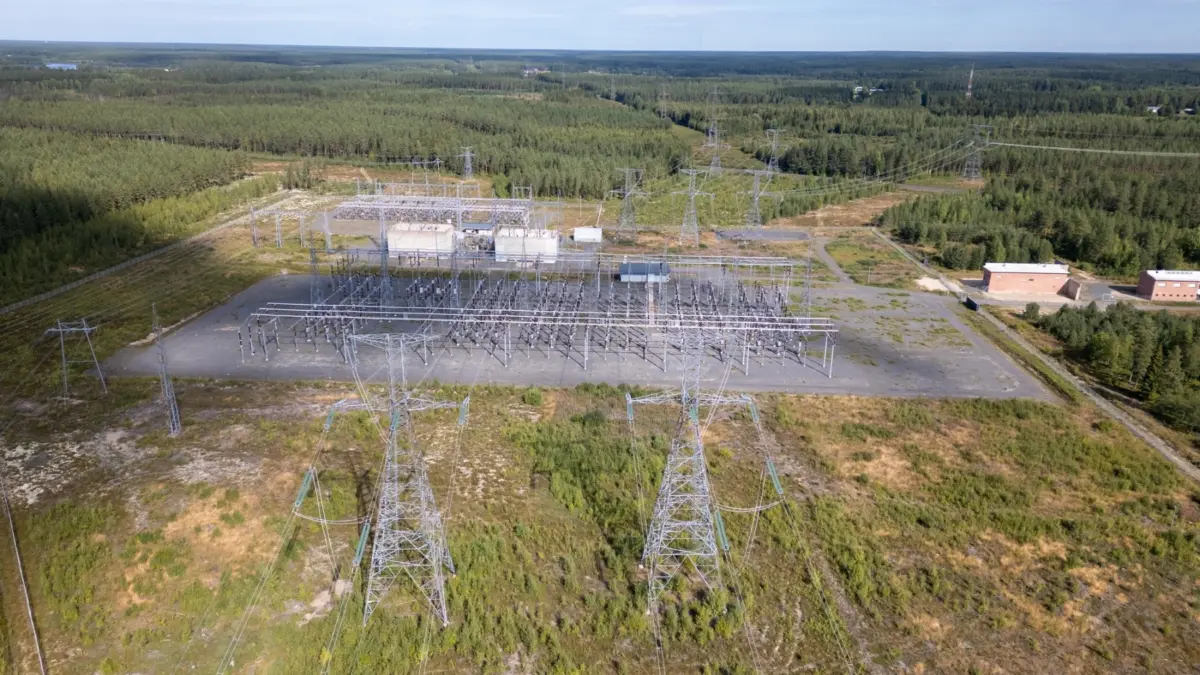
Neil Osnato, founder of Persistence Analytics Group, emphasizes that modern AI hyperscalers are not simply purchasing a point of interconnection. "A large AI campus does not buy a point of interconnection," Osnato explains. "It buys exposure to an entire upstream electrical system."
.jpg?disable=upscale&width=1200&height=630&fit=crop)
To illustrate this vulnerability, consider a hypothetical 500-MW data center campus situated at the tail end of a weak 138-kilovolt (kV) radial transmission system. While the raw capacity figure might match a facility backed by a redundant grid topology, the operational reality is drastically different. A weak radial configuration exposes the campus to severe contingency risks, high restoration times, and potential voltage instability, often forcing developers to offset grid deficiencies with costly onsite generation.
"I would not value 500 MW at the end of a weak radial the same way I would value 500 MW supported by a robust, redundant transmission configuration," Osnato notes. "The number of megawatts may be identical. The infrastructure value is not."
Mitigating Risk Through Internal Expertise
To avoid falling into these capital traps, Galaxy has integrated specialized power systems engineering directly into its site-selection framework. By employing former ERCOT transmission modelers and power systems engineers, the company evaluates prospective sites against a rigorous multi-criteria rubric before any project reaches the investment committee.
This technical oversight evaluates:
- Transmission Topology: Assessing the redundancy and independence of electrical paths supplying the campus.
- Contingency Performance: Modeling how the upstream system reacts under N-1 or N-2 failure scenarios.
- Energization Schedules: Correlating utility commitments with real-world equipment delivery timelines.
- Upstream Reinforcements: Identifying required substation configurations and regional grid upgrades.
Official Statements and Industry Insights
Galaxy’s leadership is candid about the structural realities of building out physical infrastructure in an overheated market.
"We want to be the owner and operator of the buildings, the mechanical and electrical infrastructure, as landlord to a variety of tenants," Austin Storms told Data Center Knowledge, outlining the core of the company’s real estate strategy.
While Storms acknowledges that Galaxy ultimately operates a multi-tenant business model, the firm prefers a single-tenant approach for each individual campus. This operational design choice simplifies power allocation, eliminates inter-tenant electrical interference, and mitigates the contractual complexities that arise when multiple hyper-scale customers share the same upstream utility infrastructure. "We want a multi-tenant business," Storms stated. "But the best and easiest way to scale this today for our own growth is single-tenant campuses within a multi-tenant business."
On the subject of industry execution, Storms maintains that while data center construction has become relatively commoditized, the true differentiator lies in power procurement and timeline discipline. "Building data centers is a tough business," Storms said, "but it’s fairly commoditized at this point. Our differentiation is sourcing highly available, reliable power and delivering physical infrastructure on schedule and on budget."
Future Outlook: Labor Constraints, Market Expansion, and Regulatory Standardization
As Galaxy looks toward the horizon, the hurdles facing data center development are shifting from supply chain bottlenecks to human capital and regulatory harmonization.
The Construction Labor Crunch
While global supply chain pressures for electrical transformers and switchgear have eased compared to peak deficits 18 to 24 months ago, skilled labor has emerged as the primary gating factor for mega-scale development. The nationwide rush to construct multi-gigawatt AI campuses has severely strained the pool of qualified electrical and mechanical tradespeople.
This labor shortage directly dictates Galaxy’s geographic expansion. For instance, while a remote site in Wyoming might offer exceptional wind and solar generation profiles, it could ultimately fail Galaxy’s screening process if the company cannot reliably mobilize hundreds of skilled construction workers to complete the buildout on schedule. This realization drove Galaxy to build an extensive workforce-development hub adjacent to its Helios campus, featuring housing capacity for up to 1,600 beds.
The Push for a Unified Regulatory Framework
Looking beyond regional markets, Galaxy is advocating for systemic regulatory reform. With independent system operators (ISOs) and regional transmission organizations (RTOs) across the country—including ERCOT, PJM, MISO, and SPP—adopting disparate approaches to managing large computational loads, developers face a fragmented regulatory landscape.
"The biggest thing that Galaxy needs and the industry needs more broadly, from utilities and independent system operators or regional transmission operators, is a fully formed framework and rule set for how these types of facilities interconnect to the existing grid," Storms emphasized. Establishing a standardized, nationwide rulebook would allow developers to deploy uniform high-voltage substation designs and data center architectures across multiple power markets without redundant engineering overhead.
Conclusion: The Race for Viable Compute
Galaxy Digital’s strategy underscores a maturing AI infrastructure market. The era of securing speculative power on weak grids is giving way to a more sophisticated era of utility due diligence, risk-adjusted power valuation, and workforce management. By treating every megawatt as a function of the entire electrical ecosystem, Galaxy is establishing a resilient template for how the physical foundation of the AI revolution will be built, financed, and operated for decades to come.