The landscape of application security is undergoing a seismic shift. As generative artificial intelligence and autonomous models accelerate both the discovery of software flaws and the creation of sophisticated exploits, traditional DevSecOps workflows are rapidly hitting their limits. In response to this compounding operational strain, ProjectDiscovery has officially announced the general availability of Neo 1.0, an autonomous security testing platform built upon an open-source AI testing framework.
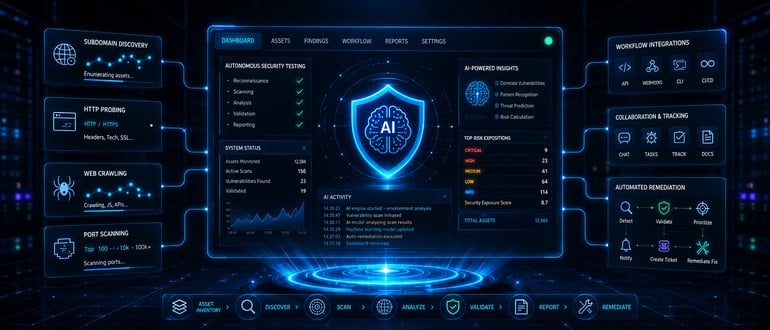
Designed to fundamentally alter the economics of application security, Neo aims to detect, validate, and route vulnerabilities at a significantly lower total cost than legacy testing frameworks. According to company leadership, version 1.0 of the Neo platform is now accessible via a flexible, consumption-based cloud service model. This pay-as-you-go architecture democratizes advanced security testing, allowing DevSecOps teams of all sizes to run continuous tests, conduct deep security investigations, and seamlessly integrate automated validation into their existing pipelines.
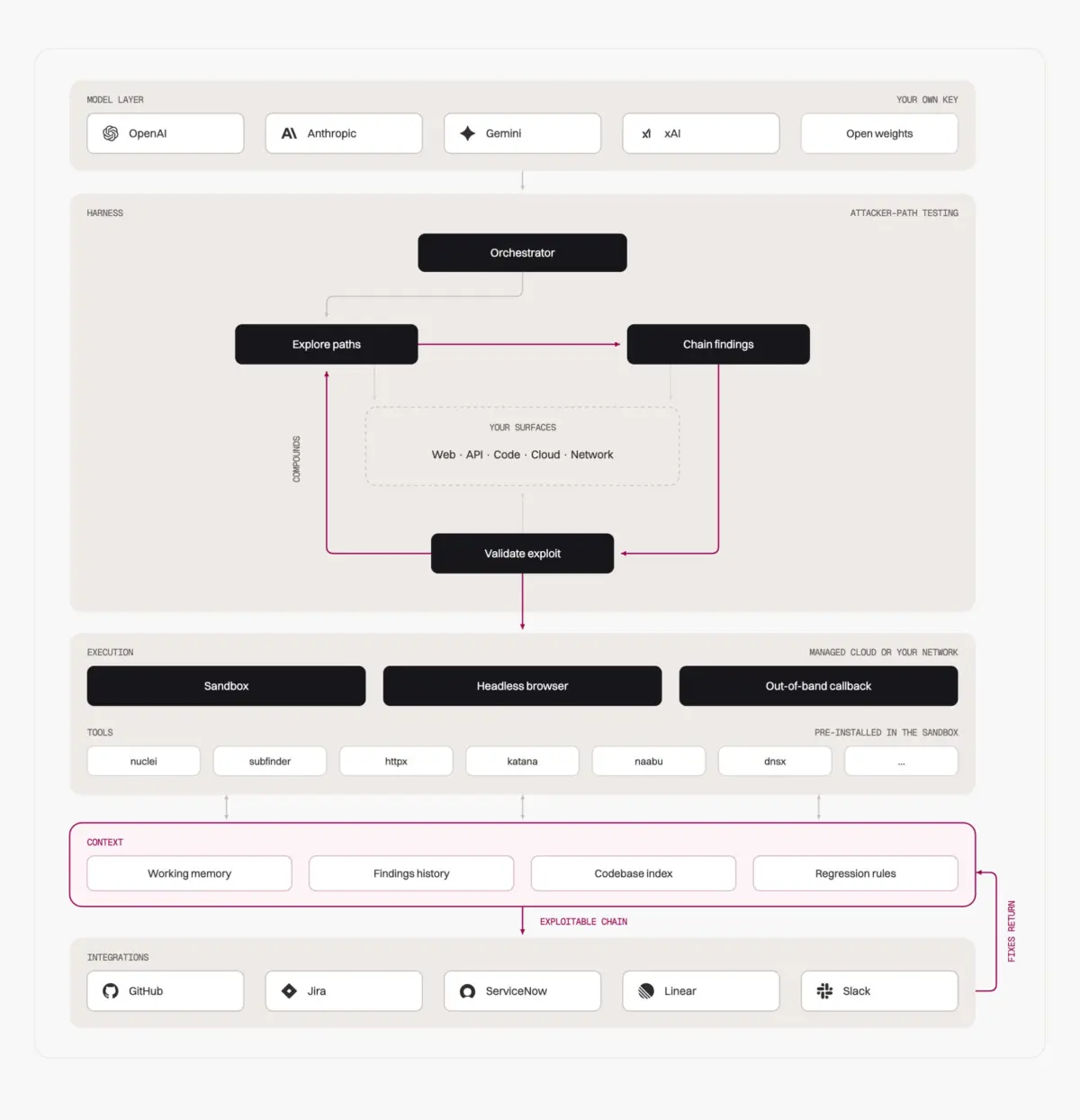
Beyond pure cost efficiency, Neo 1.0 introduces a robust suite of native integrations with modern DevOps and collaboration tools—including GitHub, Jira, Confluence, Slack, Linear, standard application programming interfaces (APIs), webhooks, and the Model Context Protocol (MCP). By anchoring its capabilities in ProjectDiscovery’s widely adopted open-source ecosystem—which already boasts a community of more than 100,000 security practitioners—Neo bridges the widening gap between rapid AI-driven software development and sluggish, manual security triage.
Detailed Chronology & Technological Evolution
To understand the engineering breakthrough represented by Neo 1.0, one must examine the evolution of ProjectDiscovery’s tooling ecosystem. Over the years, the organization has built a formidable reputation among offensive security professionals and defenders alike by releasing a modular suite of open-source utilities designed for modern infrastructure mapping and vulnerability assessment.
The Foundation of the Ecosystem
Before the advent of Neo, ProjectDiscovery established its footprint through specialized, high-performance command-line utilities:
Nuclei: An open-source vulnerability scanner driven by highly customizable YAML templates, empowering engineers and security teams to detect misconfigurations, known exposures, and active exploits at scale.
Subfinder: A passive subdomain discovery tool that utilizes deep source enumeration to map organizational attack surfaces.
httpx: A fast, multi-purpose HTTP toolkit that allows security engineers to run probes, capture screenshots, and analyze web service configurations across massive IP blocks.
Katana: A next-generation web crawling and spidering framework designed to extract deep endpoint maps from complex modern web applications.
Naabu: A fast port-scanning utility engineered to reliably discover open ports and services with minimal network footprint.
The Evolution to Autonomous Validation
While these individual tools gave practitioners unprecedented visibility into their perimeter and internal application assets, they also contributed to a well-known industry bottleneck: the deluge of alerts. Security teams were routinely overwhelmed by thousands of raw vulnerability findings, forcing engineers to spend countless hours manually triaging false positives.
Neo represents the logical next step in this evolution. Rather than merely acting as another scanner that dumps thousands of theoretical vulnerabilities onto developers, Neo leverages an open-source AI testing framework to autonomously validate whether a discovered flaw is actually reachable and exploitable in a live environment. By automating the validation phase, Neo ensures that only genuine, high-risk security issues are routed directly to the developer responsible for the affected code repository.
Furthermore, the introduction of consumption-based cloud pricing in Neo 1.0 removes the prohibitive capital expenditure barriers that have historically prevented smaller organizations from adopting enterprise-grade, AI-assisted security testing frameworks.
Supporting Context & Metrics: Overcoming the False-Positive Crisis
The timing of Neo 1.0’s release aligns with a critical tipping point in software engineering. As AI models become increasingly sophisticated at autonomously uncovering zero-day vulnerabilities and synthesizing complex exploit chains, the traditional "scan-and-fix" development cycle is proving dangerously obsolete.
Mitch Ashley, vice president and practice lead for software lifecycle engineering at the Futurum Group, highlights the core systemic failure of legacy security practices:
"The truth is there has never been a shortage of vulnerability findings. DevSecOps teams drown in them and burn triage time sorting real threats from noise. Neo validates what it finds, then routes the exploitable issues to the developer who owns the code. The scan-and-fix cycle was built for human code at human speed. AI writes and exploits faster than weekly scans keep up, so testing now has to run where code gets created."
The True Cost of Alert Fatigue
For years, application security has suffered from a signal-to-noise ratio problem. Traditional static application security testing (SAST) and dynamic application security testing (DAST) tools frequently generate massive volumes of alerts. Industry metrics consistently show that security engineers spend upwards of 30% to 40% of their operational hours investigating alerts that ultimately turn out to be false positives or theoretical risks that cannot be exploited in production.
When artificial intelligence is introduced into the equation without adequate contextual validation, the problem threatens to compound exponentially. Generative AI code assistants help developers ship features faster than ever before, but they also introduce subtle logic errors and architectural vulnerabilities at scale. If DevSecOps teams rely solely on raw code-scanning tools that lack environmental context, the sheer volume of AI-generated alerts will soon paralyze engineering organizations.
Neo’s architecture directly addresses this crisis by shifting the paradigm from identification to verification. By testing whether an identified vulnerability can be actively abused within the specific context of the application’s deployment architecture, Neo filters out the noise, preserving developer trust and reducing burnout.
Official Statements & Architectural Philosophy
ProjectDiscovery CEO Rishi Sharma has been vocal about the broader philosophical shift required for organizations operating in the AI era. According to Sharma, securing modern software infrastructure requires more than simply deploying automated scripts or asking a general-purpose large language model (LLM) to review source code snippets.
"Organizations need to realize that application security in the AI era is not just a technical issue, but more importantly requires new processes to be defined and embraced that go beyond simply asking an AI model to identify vulnerabilities in source code," Sharma explained during the platform launch.
Moving Beyond Simple Code Scanning
Sharma emphasizes that relying exclusively on traditional code-scanning tools is no longer viable. Modern software supply chains are composed of complex webs of microservices, third-party APIs, cloud infrastructure configurations, and rapid continuous integration/continuous deployment (CI/CD) pipelines. Protecting this dynamic surface requires an integrated toolchain that operates continuously.
Key architectural pillars highlighted by ProjectDiscovery for the Neo platform include:
Continuous Real-Time Monitoring vs. Scheduled Spans: While legacy scanners rely on weekly or monthly batch jobs, Neo is engineered to generate real-time alerts or execute automated tests at scheduled intervals closely tied to the velocity of code commits.
Ecosystem Integration: By natively connecting with platforms like GitHub, Jira, Confluence, Slack, Linear, and modern protocols like MCP, Neo embeds itself directly into the existing workflows of developers. Security ceases to be a separate, antagonistic checkpoint and instead becomes an automated, invisible feedback loop.
Lowering the Total Cost of Ownership (TCO): By utilizing an open-source AI testing core paired with a pay-as-you-go consumption model, ProjectDiscovery ensures that autonomous security testing is no longer restricted to Fortune 500 enterprises with massive cybersecurity budgets.
Future Outlook: Preparing for the Impending Vulnerability Crisis
As the technology industry looks toward the horizon, the intersection of autonomous AI testing and cybercriminal adoption of generative models presents a sobering outlook. Industry analysts and security veterans warn that DevSecOps teams are rapidly running out of time to address accumulated technical debt.
The Accelerating Threat Landscape
Within a matter of weeks, threat actors will possess widespread access to advanced, specialized AI models capable of autonomously discovering and weaponizing software vulnerabilities at machine speed. When cybercriminals harness automated exploit generation tools against enterprise networks, organizations relying on manual code reviews and legacy vulnerability management platforms will find themselves severely outmatched.
This impending reality forces executive leadership and DevOps teams to make difficult strategic choices. Organizations must aggressively evaluate their legacy application portfolio:
Remediation vs. Replacement: Engineering teams will need to systematically calculate the rate at which they can patch vulnerabilities in existing legacy applications versus the strategic imperative of rewriting or replacing those legacy systems with modern, securely architected microservices.
Process Redesign: Adopting autonomous testing platforms like Neo is only part of the solution. Corporate culture and engineering processes must evolve to treat security validation as an immediate, non-negotiable step in software delivery.
Preparing for the Worst-Case Scenario
While DevSecOps practitioners naturally hope for smooth digital transformations, current trajectories dictate a mandatory shift toward defensive resilience. Organizations are strongly advised to audit their current toolchains, eliminate blind spots across their cloud and API perimeters, and integrate validation-focused platforms into their CI/CD pipelines before the broader AI cyber threat landscape fully matures.
The launch of ProjectDiscovery Neo 1.0 marks a crucial milestone in this defensive evolution. By combining open-source community intelligence, consumption-based cloud accessibility, and rigorous autonomous vulnerability validation, Neo provides a viable blueprint for how engineering teams can survive—and secure—the AI-driven future of software development.