






SAN FRANCISCO — With the global technology ecosystem eagerly watching the calendar, just five days remain until the doors swing open at Moscone West for TechCrunch Disrupt 2026. Kicking off at 8:00 a.m. PT on October 13, this year’s flagship summit promises to be a watershed moment for the industry, convening over 10,000 founders, investors, engineers, and enterprise leaders. As ticket prices prepare to shift upward with the arrival of opening day, organizers have emphasized that final discounted rates—offering savings of up to $100, alongside strategic bundle pricing—are still available for a very limited window.
For more than a decade, Disrupt has served as the ultimate crucible for emerging technology, venture capital deal-making, and high-stakes discourse. As the 2026 edition approaches, the event arrives at a critical juncture for the global economy—one defined by the rapid maturation of generative and agentic artificial intelligence, structural shifts in enterprise funding, and the urgent need for sustainable, deep-tech solutions in the physical world.
Executive Overview: Navigating the 2026 Tech Landscape
The technology sector in late 2026 occupies a fascinating paradox. While macroeconomic headwinds and shifting regulatory frameworks continue to challenge traditional growth models, the velocity of innovation has never been higher. Breakthroughs in foundational AI architectures, physical robotics, decentralized financial rails, and next-generation computing infrastructure are rewriting the rules of engagement across nearly every vertical.
TechCrunch Disrupt 2026 has been meticulously engineered to capture this dynamism. Rather than offering a monolithic conference experience, the event spans six dedicated thematic stages and hosts more than 200 distinct sessions. This multi-faceted approach allows attendees—ranging from bootstrapped solo founders to managing partners at Tier-1 venture capital firms—to curate a personalized itinerary that speaks directly to their strategic imperatives.
Beyond the headlining keynotes, the event serves as a massive marketplace of ideas. The sprawling Expo Hall will feature upwards of 300 cutting-edge companies showcasing their products, while the legendary Startup Battlefield 200 competition will once again put early-stage disruptors under the microscope as they vie for venture backing, media spotlight, and ultimate industry validation.
Detailed Chronology: What to Expect Across the Six Stages
The multi-track agenda for Disrupt 2026 is designed to address both the macro-level trajectories of the digital economy and the micro-level tactical challenges faced by modern operators. Here is a breakdown of how the programming across the six core stages unfolds:
1. The Disrupt Stage: Macro Visions and High-Stakes Battles
Serving as the emotional and intellectual epicenter of the conference, the Disrupt Stage hosts the most consequential conversations in technology. Attendees will hear visionary perspectives from industry luminaries such as Max Hodak of Science Corporation, Garrett Langley of Flock, and Andrew Feldman of Cerebras Systems.
In a testament to the increasing intersection of mainstream entertainment, culture, and high-growth venture creation, the stage will also feature a special appearance by actor and entrepreneur Mark Wahlberg. Furthermore, the Disrupt Stage houses the climactic showdowns of the Startup Battlefield 200, where the world’s most promising early-stage companies pitch live to a panel of expert judges and investors.

2. The Builders Stage: The Tactical Playbook for Scale
For founders and operators navigating the treacherous waters of early-to-mid-stage growth, the Builders Stage functions as a massive, multi-day masterclass. Programming zeroes in on the operational mechanics of building a resilient enterprise, featuring deep dives into:
- Creative and strategic fundraising in a cautious capital market.
- Talent acquisition, retention, and organizational scaling.
- Achieving and measuring true product-market fit.
- Go-to-market (GTM) execution and enterprise sales frameworks.
Sessions on this stage are anchored by operational leaders and executives hailing from tech heavyweights including Nvidia, Uber, Google Cloud, and Lovable.
3. The AI Stage: Beyond the Hype of Generative and Agentic Systems
Artificial intelligence continues to dominate venture capital deployment and enterprise strategy. The AI Stage moves past baseline conceptual discussions to interrogate the new business models, deployment paradigms, and architectural shifts being driven by generative and agentic AI.
Discussions will be led by foundational researchers, product architects, and executive leaders from organizations at the forefront of the movement, including Anthropic, OpenAI, AWS, and Luma. Topics will range from autonomous agent workflows and reasoning models to data governance and safety guardrails.
4. The Real World AI Stage: Robotics and Physical Deployment
While software-based AI commands massive headlines, the Real World AI Stage explores how machine learning, computer vision, and autonomous systems are transforming the physical world. This track features high-energy live robotics demonstrations alongside visionary panels examining the integration of AI into legacy industries.
Key contributors to this stage include leaders from General Motors, Agility Robotics, and Waabi, offering deep insights into autonomous logistics, supply chain automation, and the robotics revolution.
5. The Smart Money Stage: Fintech, Stablecoins, and Financial Rails
The financial technology sector is undergoing a profound structural evolution, driven by shifting monetary policies, the maturation of digital asset infrastructure, and the global demand for instantaneous cross-border payments. The Smart Money Stage tackles these transformations head-on, focusing on:
- The integration of stablecoins into mainstream enterprise finance.
- The next generation of payment rails and embedded finance.
- Regulatory landscapes and fintech compliance.
Discussions are shaped by top-tier executives from Robinhood, Airwallex, American Express, and other leading financial institutions.

6. The Smart Systems Stage: Energy, Data Centers, and Automation
Powering the future of artificial intelligence and advanced computation requires unprecedented amounts of energy and sophisticated hardware infrastructure. The Smart Systems Stage explores the intersection of data center engineering, grid stability, clean energy innovations, and deep-tech automation.
Attendees can expect forward-looking panels featuring pioneers from Helion, Ambrosia Energy, and Inertia, addressing how the technology sector plans to sustainably power the next century of innovation.
Supporting Context & Metrics: The Scale of the Ecosystem
To truly understand the gravity of TechCrunch Disrupt 2026, one must examine the quantitative and qualitative metrics that define the gathering:
- Attendance: An estimated 10,000 tech leaders, investors, and builders will converge on Moscone West.
- Exhibitors: More than 300 innovative companies will populate the Expo Hall, offering hands-on demonstrations of hardware, software, and deep-tech platforms.
- Content Density: Over 200 distinct sessions are scheduled across the five-day event lifecycle, ensuring minimal thematic overlap and maximum educational value for diverse professional profiles.
- Startup Representation: The Startup Battlefield 200 cohort represents a carefully vetted cross-section of early-stage ingenuity, spanning sectors from biotechnology and climate tech to enterprise SaaS and consumer hardware.
Interactive Formats and Networking
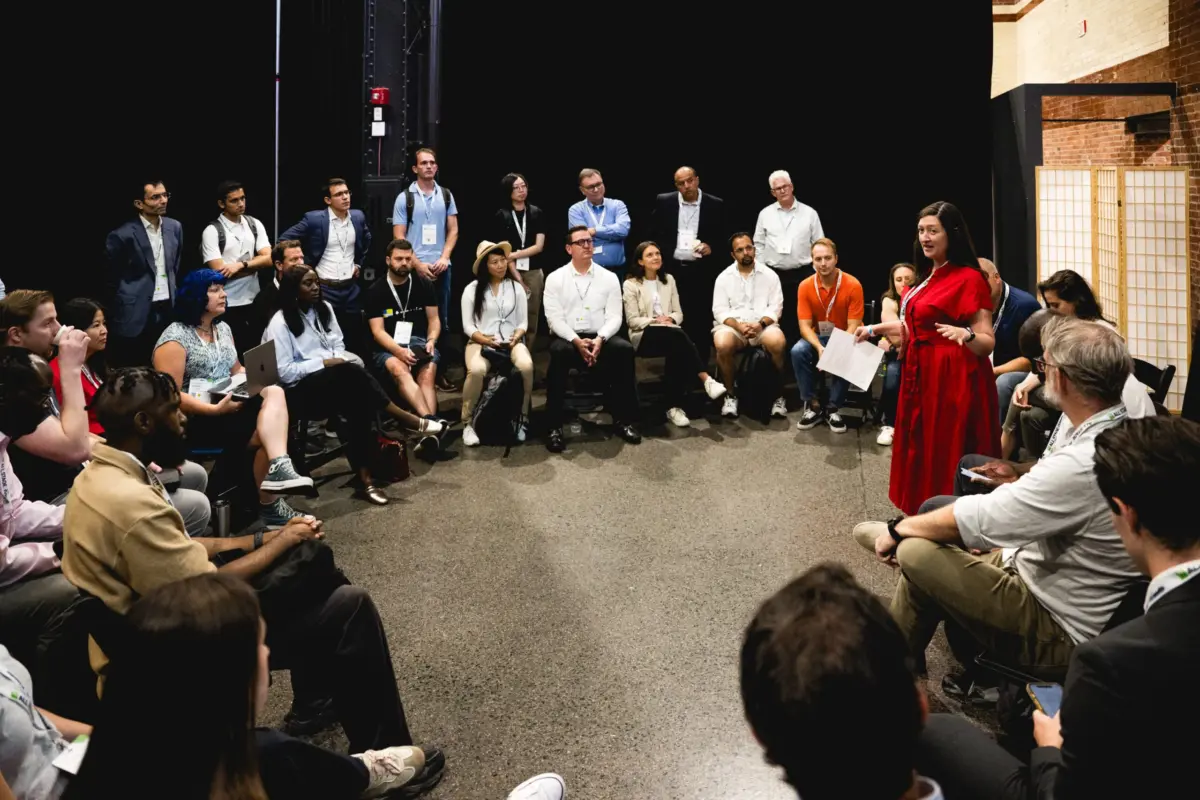
In addition to traditional keynote presentations and panel discussions, Disrupt 2026 introduces structured interactive roundtables and Q&A breakout sessions. These formats are specifically designed to dismantle the barriers between passive attendees and active speakers, fostering intimate environments for peer-to-peer knowledge exchange and targeted mentorship.
Furthermore, the Expo Hall serves as an organic networking nexus. Beyond corporate booths, it provides a dedicated environment for early-stage founders to pitch live, receive spontaneous feedback from passing venture capitalists, and forge cross-industry partnerships that defy traditional networking silos.
Official Statements and Industry Perspective
As the final preparations are finalized at Moscone West, event organizers and returning participants alike have underscored the unique cultural and economic role that Disrupt plays within the technology sector.
"TechCrunch Disrupt has always been more than a conference—it is a barometer for the entire technology ecosystem," notes a senior programming coordinator for the event. "In a year where the pace of disruption across artificial intelligence, robotics, and financial infrastructure is accelerating exponentially, bringing 10,000 of the brightest minds together under one roof in San Francisco is not just beneficial; it is essential for charting what comes next."
Industry veterans frequently point to the serendipitous nature of the conference floor as its highest-value attribute. Whether it is an engineer finding their next co-founder during a breakout session or a bootstrapping founder securing a term sheet after an impromptu conversation in the Expo Hall, Disrupt consistently delivers outsized career and business catalysts.

Future Outlook: What Disrupt 2026 Portends for the Rest of the Decade
As the curtain rises on October 13, the overarching themes of TechCrunch Disrupt 2026 will undoubtedly echo across the venture capital and enterprise landscapes well into 2027 and beyond.
Key questions facing attendees include:
- Commercializing Agentic AI: How quickly can enterprises transition generative AI proofs-of-concept into autonomous agent workflows that drive measurable bottom-line efficiencies?
- The Energy-Compute Crunch: With data center power demands skyrocketing, how will startups in the smart systems and nuclear fusion spaces collaborate with hyperscalers to solve the impending energy crisis?
- The Resurgence of Hardware and Robotics: As embodied AI matures, will the venture ecosystem shift a larger percentage of capital allocation away from pure-play SaaS and back toward physical-world automation?
The answers to these questions will be debated, tested, and forged on the stages and exhibition floors of Moscone West over the coming days.
Ticket Availability and Final Registration Details
With doors opening on Monday, October 13, at 8:00 a.m. PT, time is running out for prospective attendees to secure their passes before final door pricing takes effect.
- General Passes: Discounted individual passes start at $299, with savings of up to $100 available ahead of the opening bell.
- Bring-a-Friend Discount: Attendees purchasing passes in pairs can take advantage of 50% off a second pass of the same type. Additional volume discounts remain available for groups of four or more.
- Community Support: In recognition of recent labor market shifts within the technology sector, organizers continue to offer specialized Expo+ Layoff tickets priced at $75, ensuring that displaced professionals retain access to vital networking, educational, and employment opportunities.
To explore the complete agenda, review speaker biographies, or secure your pass before prices increase, visit the official TechCrunch Disrupt 2026 ticketing portal.
Disclaimer: When you purchase through links in our articles, TechCrunch may earn a small commission. This independent monetization standard does not affect our editorial independence or journalistic integrity.