








Executive Overview
In the boardrooms of global enterprises, a quiet realization has turned into an urgent alarm: despite amassing petabytes of structured and unstructured information, enterprise artificial intelligence systems are suffering from a critical, paradoxical deficiency—a profound lack of knowledge.
While modern large language models (LLMs) and autonomous agents can ingest millions of data points per second, summarize dense financial statements, and generate complex code on demand, they frequently stumble when asked to reason about the nuanced, highly specific operational realities of the organizations they serve. In the fast-moving landscape of enterprise technology, data is abundant, but knowledge—the deep, contextual understanding of what that data actually means within the singular ecosystem of a business—is scarce.
Without this vital layer of context, enterprise AI agents are prone to hallucination, flawed decision-making, and operational unreliability. According to groundbreaking new research published by MIT Technology Review Insights in collaboration with Neo4j, this knowledge gap is the primary culprit preventing agentic AI use cases from ever making the leap from experimental sandboxes to live production environments.
The stakes could not be higher. Driven by relentless competitive pressures, organizations are racing to deploy and scale agentic AI projects to capture the massive productivity and efficiency gains promised by the technology. However, falling short carries a dual penalty: companies risk squandering millions in sunk capital on stalled proofs-of-concept (PoCs) while simultaneously ceding valuable market ground to agile rivals who have successfully operationalized their agents.
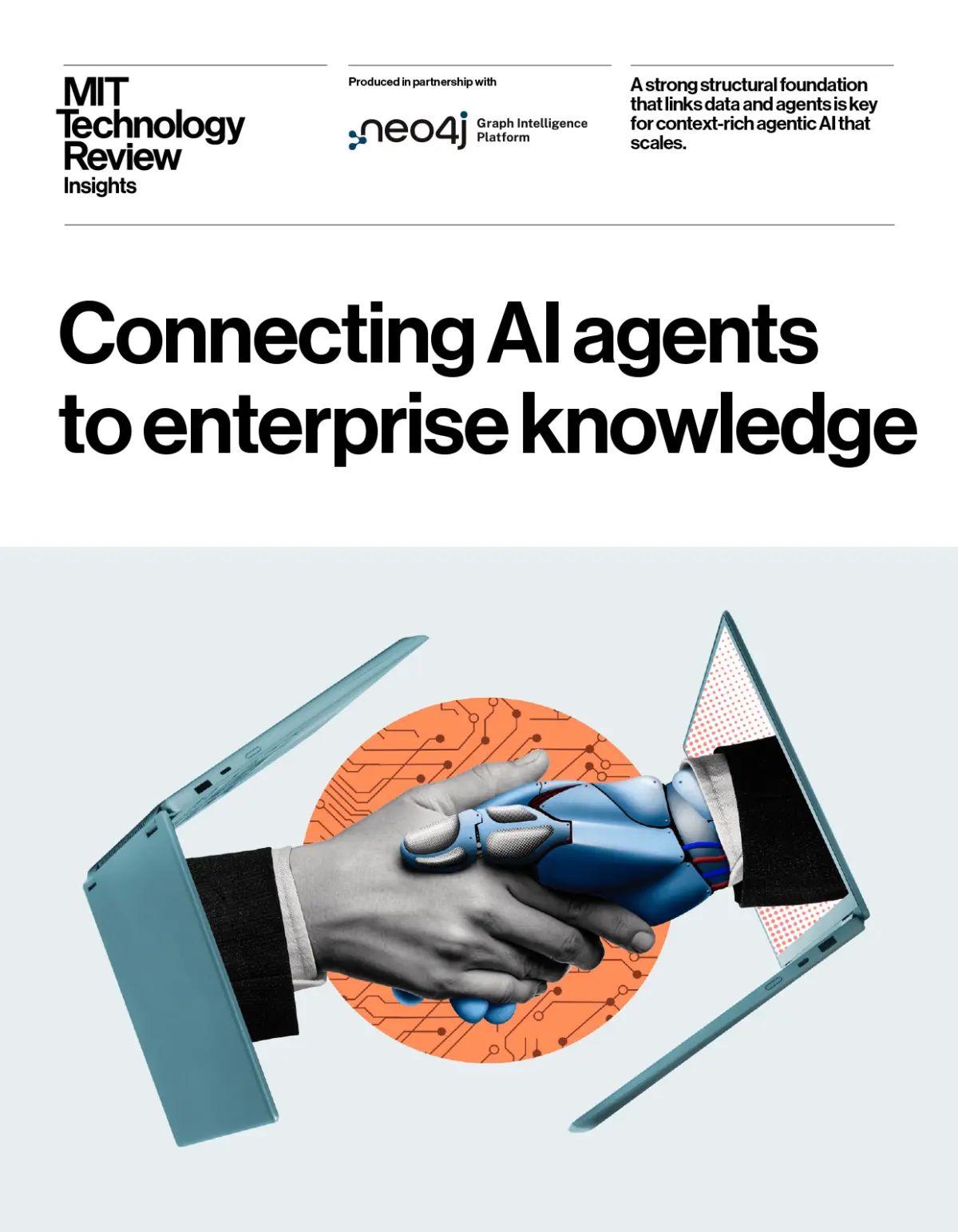
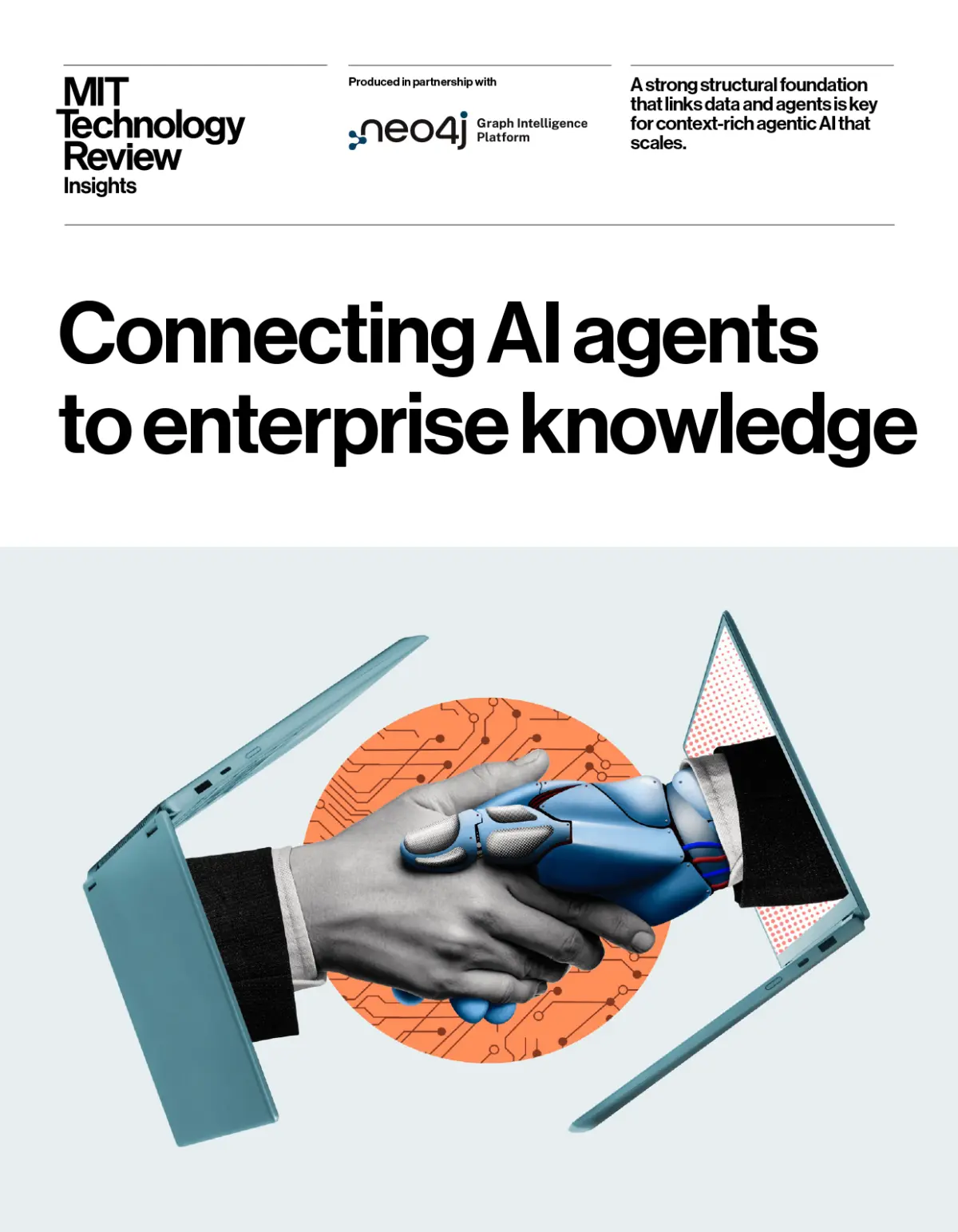
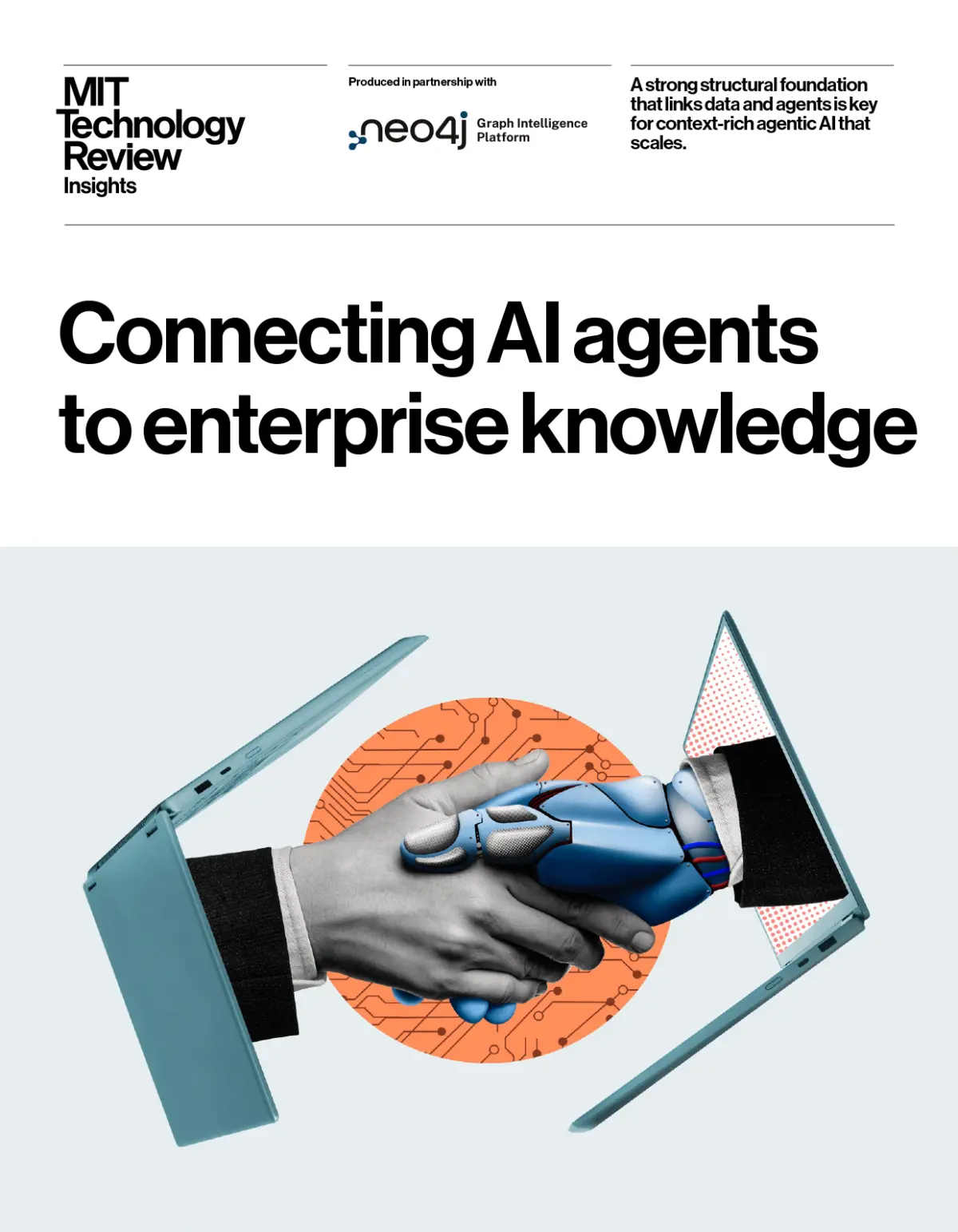
Based on a comprehensive global survey of 300 data, AI, and technology executives, the newly released report—titled The Knowledge Layer: Powering Enterprise AI Agents—delves deep into the mechanics of agentic knowledge capabilities. It examines semantic understanding, episodic memory, and procedural execution, while mapping out the formidable hurdles organizations face and the strategic investments required to overcome them.
Detailed Chronology: The Evolution of Enterprise AI and the Rise of the Agentic Bottleneck
To understand how enterprises arrived at the current precipice of the "agentic bottleneck," one must trace the rapid, often chaotic evolution of enterprise AI over the past half-decade.
Phase 1: The Generative AI Gold Rush (2022–2023)
When generative AI burst into the mainstream consciousness, the initial corporate response was characterized by unbridled enthusiasm and a rush to experimentation. Companies across every vertical—from financial services and healthcare to retail and manufacturing—stood up internal task forces. They procured enterprise-grade LLMs, hooked them up to internal document repositories via basic Retrieval-Augmented Generation (RAG) pipelines, and marveled at the models’ ability to draft emails, summarize meeting transcripts, and answer ad-hoc employee queries.
During this phase, success was measured largely by technological novelty. Proving that an AI could read a PDF and answer questions about it was enough to secure executive sign-off and budget expansions.
Phase 2: The Shift to Autonomy and Agents (2024–2025)
As the novelty faded, enterprise leaders demanded tangible returns on investment. Basic chatbots were no longer sufficient; organizations wanted autonomy. This gave rise to the era of the AI agent—autonomous or semi-autonomous software entities capable of chaining multiple thoughts together, executing multi-step workflows, interacting with external APIs, and making independent business decisions.
Unlike static LLMs that simply predict the next token, enterprise agents are designed to act. They are deployed to resolve customer support tickets end-to-end, optimize supply chain logistics in real time, reconcile complex financial ledgers, and orchestrate cybersecurity incident responses.
Phase 3: The Production Wall (2025–Present)
As organizations attempted to transition these agentic architectures from isolated test environments into core enterprise workflows, they hit a metaphorical brick wall. The raw data that powered simple conversational bots proved wholly inadequate for autonomous agents.

An agent cannot simply "read a document" to make a high-stakes decision; it must understand complex hierarchies of corporate policy, compliance mandates, customer relationship histories, and fluctuating inventory constraints. Without a robust systemic understanding of how these variables interlock, agents began making erratic, unreliable, and sometimes catastrophic errors.
The MIT Technology Review Insights research captures this friction point with startling clarity: on average, only 34% of enterprise agentic AI projects successfully make it into production. The remaining 66% languish indefinitely in pilot purgatory, victims of the widening chasm between raw data availability and contextual knowledge access.
Supporting Context & Metrics: Inside the MIT Technology Review Insights Research
To quantify the state of agentic AI readiness, the research surveyed 300 senior data, artificial intelligence, and technology executives. The findings paint a sobering picture of the current enterprise landscape, while illuminating clear pathways blazed by a vanguard of high-performing organizations.
+-----------------------------------------------------------------------------------+
|                        THE AGENTIC PRODUCTION BOTTLENECK                          |
|                                                                                   |
|  [========================== 34% ==========================]                      |
|   Proportion of enterprise agentic AI projects that successfully make             |
|   it into production (Industry Average).                                          |
|                                                                                   |
|  [=========================================================== 61% ================]
|   Proportion of agentic projects advancing past pilot among Production            |
|   Leaders (Organizations with advanced knowledge capabilities).                   |
+-----------------------------------------------------------------------------------+
1. Data and Knowledge Weaknesses Stall Progress
The survey reveals that technical hurdles are heavily concentrated around foundational infrastructure. While legacy data systems, security protocols, and privacy mandates remain perennial headaches, the absolute core point of failure is a lack of deep organizational knowledge and context.
When an AI agent lacks a structured comprehension of corporate semantics—such as knowing that "Q3 revenue" in the North American retail division carries different accounting caveats than in European operations—its reasoning collapses.
2. The Elite "Production Leaders"
A vital takeaway from the research is the identification of a distinct subset of respondents labeled as Production Leaders. These organizations boast an average production success rate of 61% for their agentic AI projects—nearly double the global average.
What separates these leaders from the pack? The research shows that production leaders possess vastly superior agentic knowledge capabilities across three distinct dimensions:
- Semantic Knowledge: The ability to map concepts, synonyms, and relational data structures so that the AI understands the true meaning behind industry terminology, corporate acronyms, and relational databases.
- Episodic Memory: The capacity of the agent to retain, recall, and learn from past interactions, decisions, and outcomes over extended periods, preventing repetitive mistakes.
- Procedural Knowledge: A comprehensive understanding of how things are done within the organization—the step-by-step business logic, workflows, compliance guardrails, and operational rules governing specific tasks.
3. The Fragmentation Dilemma vs. The Security Paradox
When executives were asked to identify the primary challenges standing in the way of expanding their agents’ access to knowledge, data fragmentation emerged as the undisputed frontrunner, cited by 55% of respondents. Data fragmentation—the siloing of critical operational data across disconnected legacy systems, cloud buckets, and departmental spreadsheets—starves AI agents of the holistic view they require.
Interestingly, however, the response profile shifts dramatically when looking specifically at Production Leaders. Among this elite group, 72% cited security and privacy concerns as their primary hurdle. This divergence reveals a mature evolutionary curve: mainstream enterprises are still fighting the foundational battle of getting their scattered data to talk to each other, whereas production leaders have largely solved integration and are now grappling with the governance, data leakage, and compliance challenges of exposing sensitive knowledge bases to autonomous agents.
Official Statements & Expert Analysis
The report’s findings underscore a fundamental philosophical shift in how enterprise architects view the relationship between data storage and artificial intelligence. For decades, the tech industry focused almost exclusively on data volume, velocity, and variety. Today, the conversation has pivoted decisively toward semantic structure and contextual retrieval.
Industry analysts and researchers interviewed for the report emphasize that plugging an ungrounded LLM into an enterprise data lake is akin to hiring a brilliant, highly educated graduate student, locking them in a room with 10 million untagged corporate documents, and asking them to run the accounting department without any training on company policy. The inevitable result is hallucination, confusion, and operational failure.

To bridge this gap, technical experts are rallying around the concept of a dedicated "Knowledge Layer."
+-------------------------------------------------------------------+
|                     THE ENTERPRISE KNOWLEDGE LAYER                |
|                                                                   |
|   +-----------------------------------------------------------+   |
|   |                  Autonomous AI Agents                     |   |
|   +-----------------------------------------------------------+   |
|                                 |                                 |
|                                 v                                 |
|   +-----------------------------------------------------------+   |
|   |                    THE KNOWLEDGE LAYER                    |   |
|   |     (Knowledge Graphs, Semantic Models, Ingestion APIs)   |   |
|   +-----------------------------------------------------------+   |
|                                 |                                 |
|                                 v                                 |
|   +-----------------------------------------------------------+   |
|   |               Raw Enterprise Data Sources                 |   |
|   |         (Legacy DBs, Data Lakes, Documents, APIs)         |   |
|   +-----------------------------------------------------------+   |
+-------------------------------------------------------------------+
"Strengthening the structural foundation between an organization’s raw data and its AI agents is the single most impactful step executives can take to improve agentic decision-making," notes the report. Rather than relying on brute-force vector searches over flat text chunks—which often miss the invisible threads connecting disparate business units—enterprises are discovering that they must build an intermediate semantic architecture that explicitly defines relationships, rules, and context.
Future Outlook: Investment Priorities and the Road Ahead
As organizations recalibrate their technology roadmaps to address the knowledge deficit, capital allocation is shifting toward specific infrastructure categories designed to give AI agents a rich, contextual worldview.
1. Retrieval Technologies and Advanced RAG
Basic vector databases are evolving into sophisticated retrieval ecosystems. Enterprises are heavily investing in robust ingestion pipelines, AI-ready application programming interfaces (APIs), and advanced Retrieval-Augmented Generation (RAG) frameworks that do not just retrieve text snippets, but pull contextualized, verified facts directly into the agent’s working memory.
2. Knowledge Graphs
At the center of the emerging Knowledge Layer are knowledge graphs. By mapping entities (such as customers, products, transactions, and regulatory policies) and the explicit relationships between them, knowledge graphs provide AI agents with a structural map of the enterprise. This allows agents to reason deterministically across complex paths, eliminating the guesswork inherent in probabilistic text generation.
3. AI Evaluation Agents
To ensure that agents operate safely and reliably at scale, organizations are deploying secondary "evaluator" agents. These oversight mechanisms continuously audit the reasoning paths and outputs of primary agents against established business rules, safety guardrails, and compliance frameworks, catching errors before they manifest in production workflows.
Conclusion: Crossing the Chasm
The message from the MIT Technology Review Insights and Neo4j research is unequivocal: the era of naive AI deployment is over. As enterprises transition from passive generative experimentation to active, autonomous agentic workflows, success will not be determined by who has the most data, but by who possesses the best-structured knowledge.
Organizations that successfully construct a robust Knowledge Layer will unlock unprecedented levels of efficiency, scaling their agentic AI initiatives far beyond the 34% production baseline. Those that fail to bridge the context chasm risk watching their heavy AI investments stall out permanently, sidelined by a fundamental inability to teach their digital workforce what the data actually means.
To explore the complete findings, methodologies, and detailed survey breakdowns, you can access and download the full MIT Technology Review Insights and Neo4j report here.