







Executive Overview
In an era defined by algorithms prioritizing viral reach, engagement pods, and an escalating tide of generative artificial intelligence content, professional networking giant LinkedIn is shifting its sights backward to move forward. The Microsoft-owned platform has officially launched a new trial run for an alternative interface: the Network tab.
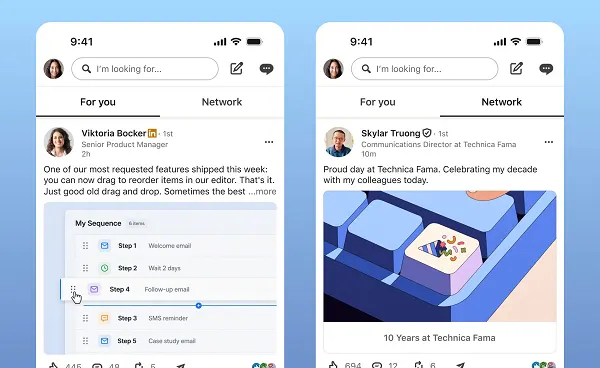
Announced by Chief Product Officer Hari Srinivasan late last week, this experimental feature introduces a dedicated, streamlined feed comprised exclusively of updates, posts, and conversations from individuals a user has explicitly followed or connected with. By stripping away algorithmic recommendations, trending topics, and unsolicited viral posts from distant connections of connections, LinkedIn is attempting to carve out a quiet corner for genuine, human-centric professional dialogue.
This initiative is far from a mere cosmetic update. It represents a calculated strategic response to profound user fatigue. Over the past several years, users across the platform have voiced increasing frustration over the "consumerization" of LinkedIn—a phenomenon where the professional network increasingly mirrors the noise, superficial metrics, and polarization of traditional consumer social media networks. By combating the proliferation of automated "AI slop" and cracking down on coordinated engagement rings, LinkedIn is under mounting pressure to preserve the core utility that made it indispensable in the first place: authentic career networking.
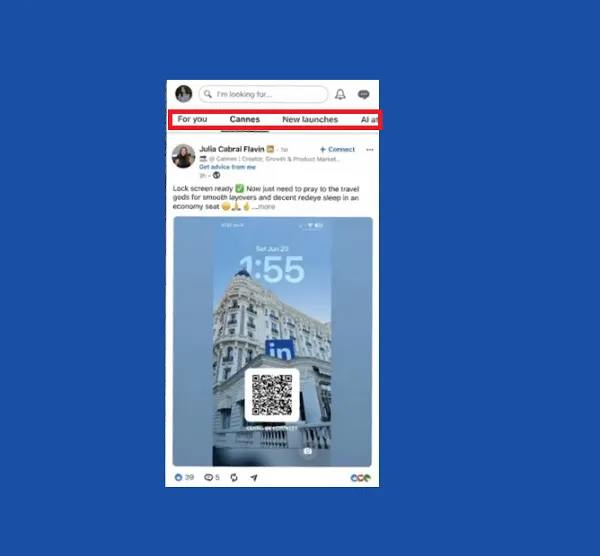
However, historical precedent suggests that alternative feed rollouts on LinkedIn face an uphill battle. Previous experiments with topic-based suggested feeds and varied algorithmic tabs failed to secure widespread adoption, quietly fading into the background as users defaulted to the familiar algorithmic main feed. Whether the new Network tab can break this cycle and genuinely alter user behavior remains one of the most closely watched UX experiments in the modern professional social landscape.
Detailed Chronology: The Evolution of LinkedIn’s Algorithmic and Interface Tests
To understand the significance of the new Network tab, one must examine the iterative journey LinkedIn has undertaken regarding its content delivery mechanisms over the past two years. The platform has long wrestled with a fundamental tension: how to balance the engagement metrics driven by viral, broad-appeal content with the targeted, high-utility networking value sought by career-focused professionals.
The Shift Toward Alternative Feeds (2023–2024)
As user acquisition plateaued and the desire for deeper platform interaction grew, LinkedIn initiated a series of exploratory UI/UX modifications. Throughout late 2023 and into 2024, the platform began experimenting with various alternative feed structures. These tests were designed to expand app usage by categorizing content into distinct thematic pillars, allowing users to pivot away from a monolithic home feed.
The rationale was straightforward: give users customized avenues to discover niche communities, industry updates, and localized conversations without overwhelming their primary dashboard. Yet, these early iterations struggled with discoverability. Users accustomed to scrolling a single, frictionless stream found switching tabs to be an unnecessary friction point.
The Topic-Based Feed Experiment (June 2025)
By mid-2025, LinkedIn doubled down on content categorization by rolling out a test for topic-based suggested feeds. This feature aimed to connect users directly with trending professional conversations, industry-specific breakthroughs, and macro-economic discussions happening in real-time across the platform.
While the topic-based approach offered a compelling way to surface macro-trends and thought leadership, it inadvertently widened the aperture of the user’s feed rather than narrowing it. Instead of bringing users closer to their core network, it exposed them to a broader spectrum of public commentary from second- and third-degree connections. Ultimately, these topic-centric feeds did not see an expanded global rollout, quietly being shelved or scaled back as internal metrics revealed limited long-term retention compared to the default feed.
The Introduction of the Network Tab (Late 2025)
Recognizing that users were suffering from content fatigue driven by generalized topic exploration, LinkedIn pivoted its strategic direction toward hyper-personalization rooted in direct human relationships.
On a Friday announcement, CPO Hari Srinivasan detailed the launch of the Network tab trial. Accessible directly from the top navigation or share interface of the mobile application, the tab isolates a user’s professional ecosystem. It filters out algorithmic injections, advertisements disguised as thought leadership, and viral detritus from outside the user’s explicit relational circle. This represents a pendulum swing away from broadcast-style social media mechanics and back toward private, peer-to-peer professional correspondence.
Supporting Context & Metrics: The Crisis of Authenticity on Professional Networks
LinkedIn’s latest UI experiment does not happen in a vacuum. It is a direct tactical intervention designed to address systemic ailments that have degraded user trust and content quality across the ecosystem.

The Scourge of Engagement Pods
For years, power users, growth hackers, and self-proclaimed influencers have utilized "engagement pods"—private, coordinated groups where members artificially inflate each other’s post visibility by instantly liking, commenting on, and sharing content upon publication. This practice exploits the platform’s recommendation algorithms, tricking the system into treating mediocre or purely promotional content as high-value discourse.
The consequences for the platform have been severe. Genuine professional insights frequently get buried beneath an avalanche of manufactured engagement, leaving everyday users disillusioned. LinkedIn has implemented increasingly aggressive countermeasures to detect and suppress engagement pods, but technological fixes alone are rarely sufficient. Providing an alternative feed like the Network tab—where algorithmic manipulation holds significantly less sway—offers users a manual override to bypass the pod-driven noise entirely.
The "AI Slop" Epidemic
Compounding the challenge of artificial engagement is the explosion of generative artificial intelligence content. The rapid democratization of large language models has empowered millions of users to flood LinkedIn with generic, highly polished, but profoundly hollow thought-leadership essays, robotic comments, and uninspired listicles.
Often referred to pejoratively in tech circles as "AI slop," this automated content generation has clogged user feeds, turning what was once a dynamic exchange of industry knowledge into a repetitive echo chamber of algorithmic platitudes. LinkedIn recently introduced reporting options specifically targeted at AI-generated spam, signaling executive recognition of the crisis.
However, reporting mechanisms are reactive. A dedicated Network tab provides a proactive solution: by restricting the feed to individuals the user has consciously chosen to follow or connect with, the platform drastically reduces the probability of encountering random, AI-generated spam propagated by distant network connections seeking viral impressions.
Official Statements and Platform Vision
In unveiling the Network tab, LinkedIn’s leadership has framed the experiment not merely as a feature update, but as a philosophical realignment with the platform’s foundational mission.
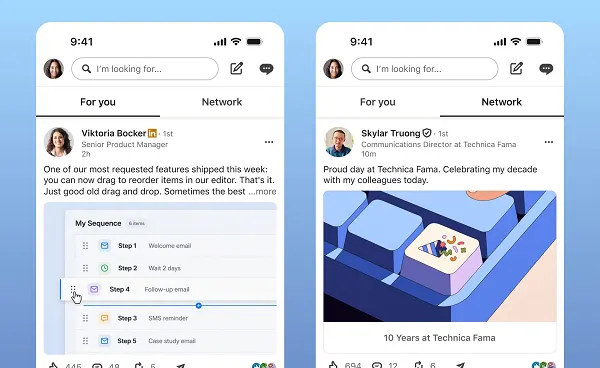
"The Network tab helps you stay connected to your network, i.e., the people you have explicitly connected or followed," stated Hari Srinivasan, Chief Product Officer at LinkedIn, during the initial product launch announcement. "We all want more real connection with real people, and we hope this plays a small part in rebuilding that world."
This sentiment underscores a broader cultural shift within tech product design. Platforms that once chased maximum "time-on-site" metrics through outrage-driven algorithms are increasingly forced to reckon with the mental fatigue and alienation experienced by their user bases. By emphasizing "real connection with real people," LinkedIn is leaning into its unique value proposition: it is not Twitter, TikTok, or Instagram; it is a professional utility.
Industry analysts note that LinkedIn’s pivot reflects a mature platform recognizing the limits of hyper-growth. When a social network scales to over a billion users, the default feed inevitably becomes a noisy public square. Carving out walled gardens—such as the Network tab—allows power users and professionals seeking signal-over-noise to curate their digital environments more effectively.
Future Outlook: Will the Network Tab Stick?
As LinkedIn evaluates the performance of the Network tab trial, the central question facing product strategists is whether users will alter deeply entrenched browsing habits.
The Challenge of User Inertia
Human behavior on social media is notoriously habitual. Users open LinkedIn, automatically scroll the primary algorithmic feed, consume whatever high-performing content the machine serves up, and close the application. Convincing a critical mass of users to actively click over to a secondary "Network" tab requires a clear, undeniable value proposition that the default feed fails to provide.
Furthermore, content creators and B2B marketers who rely on LinkedIn’s algorithmic reach to generate leads, brand awareness, and thought leadership will monitor this rollout closely. If a significant percentage of active users migrate away from the main feed and toward the Network tab, organic reach metrics for public posts could experience a dramatic shift. This could force content creators to rethink their distribution strategies, placing a higher premium on direct messaging, newsletters, and community building rather than broad algorithmic broadcasting.
The Verdict on Alternative Feeds
Given LinkedIn’s historical track record with alternative feeds—specifically the quiet discontinuation or downscaling of last year’s experimental layouts and the mid-2025 topic-based feeds—skepticism is warranted. Users often express a desire for simplicity and chronological feeds in focus groups, yet continue to engage heavily with algorithmically optimized content in practice.
Nevertheless, the Network tab possesses a distinct advantage that its predecessors lacked: emotional resonance. By explicitly addressing user anxieties surrounding AI spam and engagement pods, LinkedIn has tied this feature directly to authenticity and trust. If the Network tab successfully delivers a cleaner, more intimate view of professional updates without sacrificing engagement utility, it just might become a permanent fixture of the LinkedIn interface.
For now, the trial run serves as an intriguing litmus test for the future of professional social media. As algorithms continue to saturate digital spaces with synthetic noise, LinkedIn’s bet on the power of human curation may well point the way forward for an industry searching for authenticity.