Executive Overview
For years, Apple’s Mac mini has occupied a coveted sweet spot in the consumer computing landscape, celebrated as the ultimate utilitarian desktop: compact, reliable, efficiently cooled, and—most importantly—unbelievably affordable. When Apple debuted the redesigned M4 Mac mini, it felt like a paradigm shift. Starting at an aggressive $599, it offered a masterclass in price-to-performance ratio, delivering desktop-class silicon to millions who didn’t want to invest in an all-in-one iMac or a high-end Mac Studio.
Enter the new M6 Mac mini. Powered by Apple’s next-generation M6 processor, the machine brings sweeping architectural changes, including a fascinating hybrid mix of performance, efficiency, and newly minted "Super" CPU cores, alongside a boost in base GPU and Neural Engine capabilities. The performance metrics are, by all accounts, deeply impressive.
Yet, any praise for the machine’s internal advancements is immediately dampened by its new price tag. Starting at a staggering $899 for the base specification of 16GB of RAM and 256GB of storage, the M6 Mac mini marks a harsh $300 price hike compared to its predecessor. Driven by an unprecedented memory crunch affecting global semiconductor manufacturing, this sudden adjustment disrupts Apple’s traditional value proposition. The M6 Mac mini is undoubtedly a brilliant piece of hardware, but whether it deserves a place on your desk depends entirely on whether you can swallow Apple’s most painful price correction in years.
Detailed Chronology: The Evolution of Compact Desktop Power
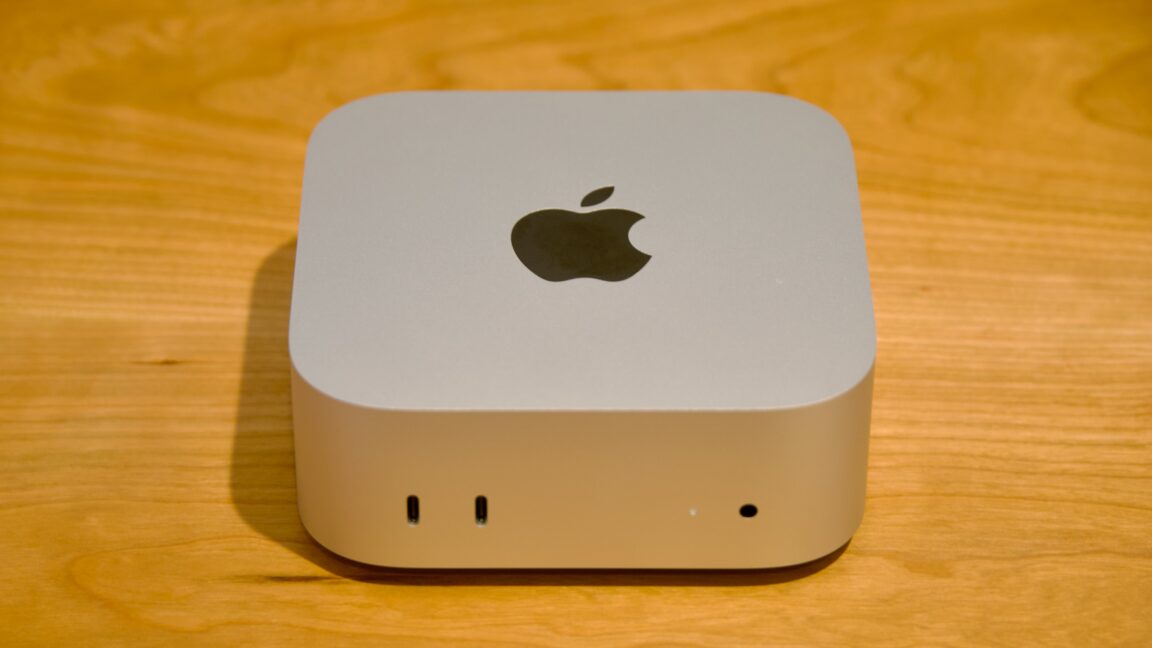
To understand the weight of the M6 Mac mini’s pricing strategy, it helps to examine how the product line has evolved. The M4 Mac mini served as a monumental milestone, representing the machine’s first complete structural redesign in nearly a decade and a half. Shrinking its footprint down to a tidy 5×5 inches while growing slightly taller to accommodate active thermal management, the M4 generation proved that desktop computers didn’t need to occupy a massive volume to handle intensive workloads.
When Apple mapped out the timeline for its silicon iterations, the industry anticipated a standard, frictionless generational handoff. Historically, Apple Silicon updates have followed a predictable cadence: consumers receive a year or two of technological enhancements for the exact same baseline price point established by the previous generation.
Unfortunately, global macroeconomic factors and a severe memory crunch upended this standard operating procedure. By the time Apple locked in the specifications and supply chains for the M6 generation, component costs had surged. Rather than absorbing these expenses or scaling back specifications, Apple passed the burden directly to the consumer. The base model’s entry barrier was unceremoniously pushed from $599 to $899, invoking memories of the vintage M1 era where 16GB memory upgrades came with punishingly steep a la carte penalties.
Supporting Context & Metrics: Under the Hood of the M6 Architecture
Despite the bitter pill of its retail price, the M6 chip itself is a triumph of semiconductor engineering. It represents the most radical internal shake-up for Apple’s baseline silicon since the introduction of efficiency cores.
The New Tri-Core CPU Layout
At the heart of the M6 is an innovative CPU configuration featuring 12 total cores: 2 Super cores, 4 standard Performance (P) cores, and 6 Efficiency (E) cores. To put this in perspective:
- M1, M2, M3: 4 P-cores / 4 E-cores (8 total)
- M4: 4 P-cores / 6 E-cores (10 total)
- M5: 4 Super cores / 6 E-cores (10 total)
- M6: 2 Super cores / 4 P-cores / 6 E-cores (12 total)
This marks the first time Apple has combined three distinct classes of CPU cores onto a single die. To prevent scheduling chaos at the operating system level, macOS treats the chip through a simplified lens. Built-in system utilities like powermetrics bundle the 2 Super cores and 4 P-cores into a unified 6-core cluster known as the "PS cluster," sharing a generous 20MB pool of L2 cache (an upgrade from the M5’s 16MB). The 6 E-cores remain grouped in their own efficient cluster, backed by an expanded 8MB L2 cache.
Graphics, Neural Engines, and Bandwidth
The GPU also receives its first core-count expansion since the M2 era, leaping from 10 cores to 12 cores. These graphics cores integrate advanced neural accelerators designed to accelerate machine learning workloads, ray-tracing, and MetalFX upscaling. Furthermore, the Neural Engine core count doubles from 16 to 32 cores (marketed by Apple as a "Dual 16-core Neural Engine").
Memory bandwidth sees a tiered structure:
- 16GB Base Model: 153 GB/s (matching the M5)
- 24GB & 32GB Models: 170 GB/s (an 11% improvement, enhancing local AI processing and graphics rendering speeds)
Benchmark Performance
In real-world testing, the architectural changes pay off. The M6’s single-core CPU performance is roughly 8 to 10 percent faster than the M5 family and 20 to 30 percent faster than the M4. Graphics performance tracks a similar 10 percent year-over-year bump, while multi-core benchmarks surge roughly 20 percent ahead of the M5.
When stacking the M6 against the older M4 Mac mini, the generational leap is undeniable: multi-core and graphics performance skyrocket by 50 to 80 percent depending on the workload. In tests like Blender, the baseline M6 chip nearly matches the computing output of older M4 Pro configurations, heavily aided by its updated GPU neural accelerators.
Port Selection and Ergonomics
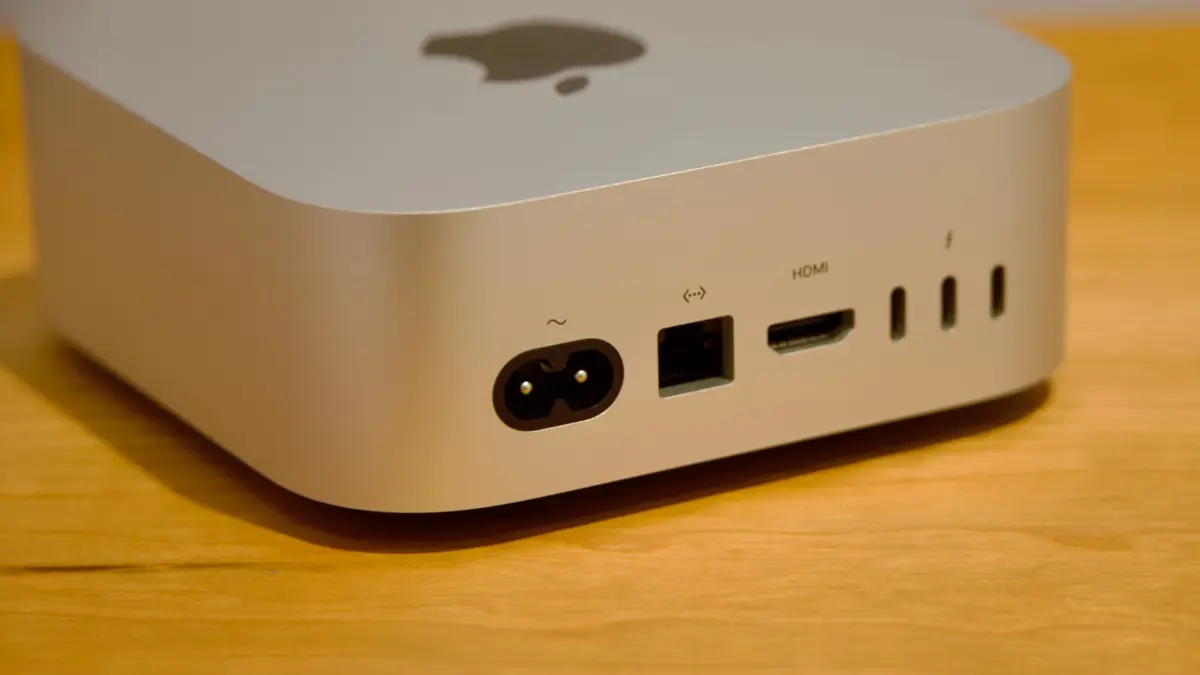
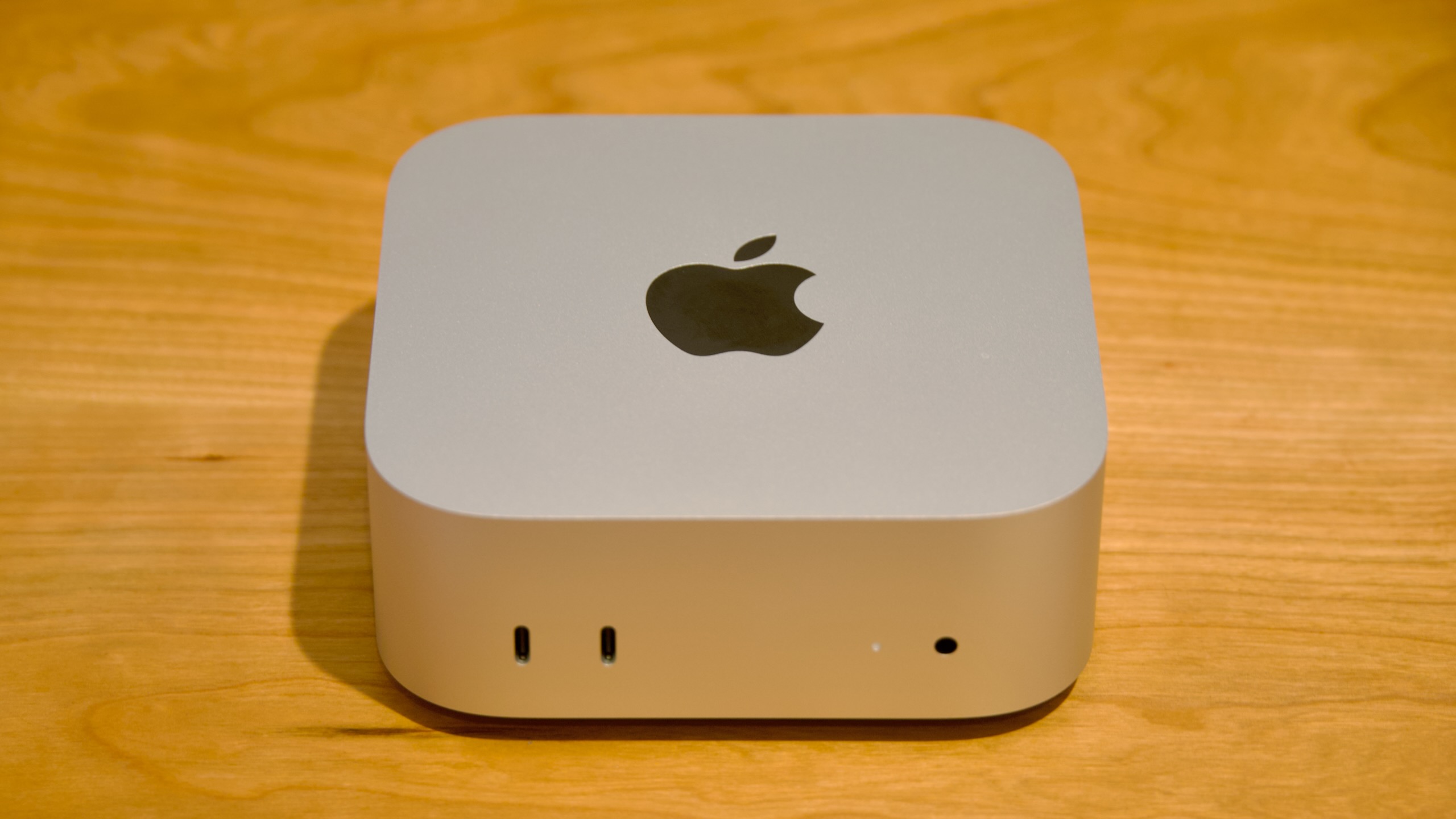
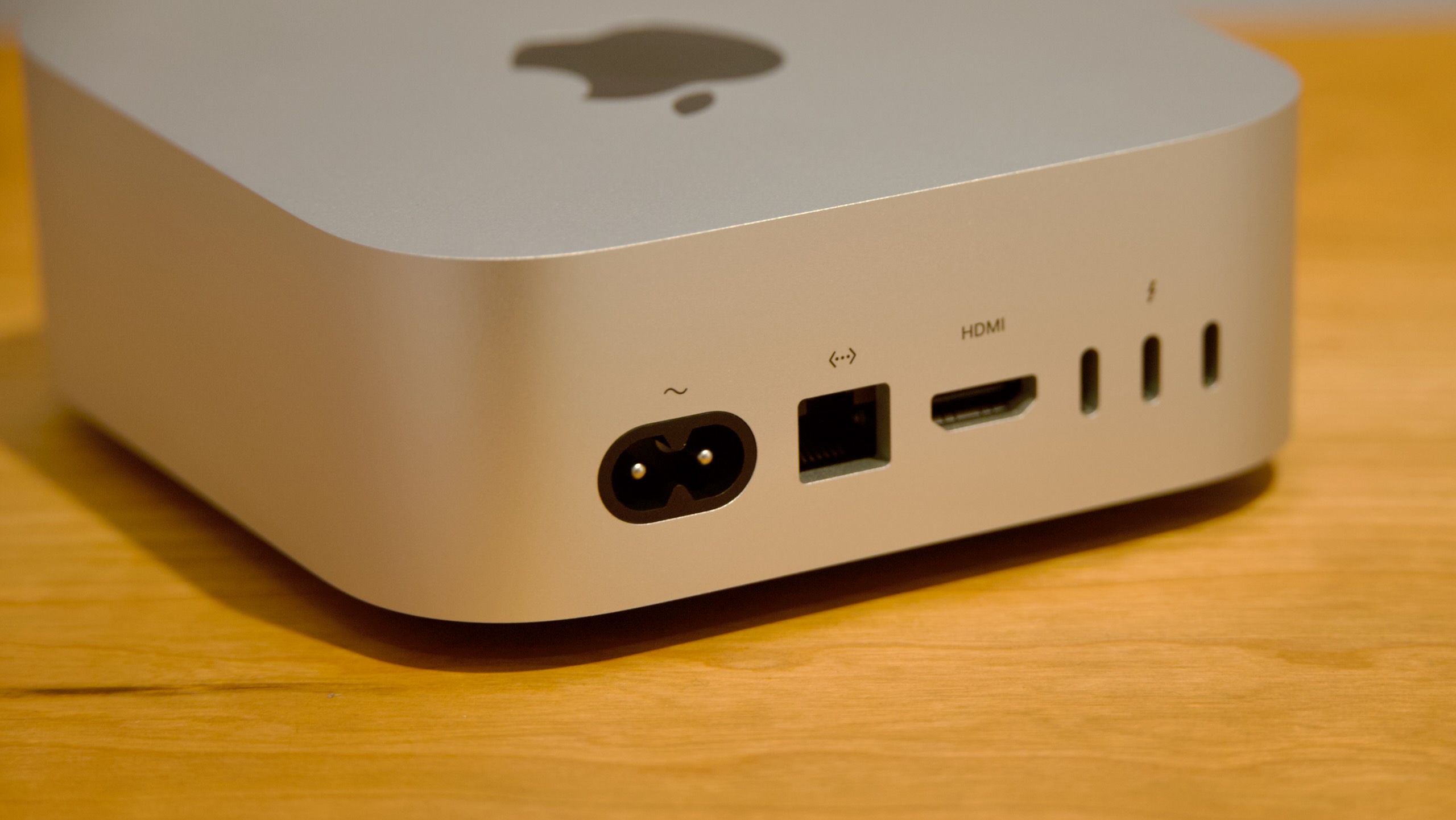
Externally, the M6 Mac mini retains the sleek, compact footprint introduced by its predecessor. It features two 10 Gbps USB-C ports and a headphone jack conveniently mounted on the front. The rear houses a default 2.5 Gbps Ethernet port (upgradable to 10 Gbps), an HDMI output, and three Thunderbolt ports.
Notably, the M6 mini relies on Thunderbolt 4 (topping out at 40 Gbps), whereas the more expensive M5 Pro variant steps up to Thunderbolt 5 (supporting up to 120 Gbps). While few everyday desktop workflows saturate Thunderbolt 4 bandwidth—especially given Apple’s continued lack of external GPU support—power users interested in daisy-chaining multiple computers into a unified compute cluster will want to weigh the limitations of the base M6 ports.
One persistent ergonomic grievance carries over: the power button remains awkwardly positioned on the bottom-rear chassis. While most users rely on sleep modes rather than daily full shutdowns, the placement proves frustratingly counterintuitive when paired with a Touch ID-equipped external keyboard, occasionally requiring a manual double-tap of the physical chassis button to re-engage biometric sensors.
Official Statements and Industry Outlook
Apple’s product positioning for the M6 generation reflects a broader industry trend toward staggered hardware rollouts. Mirroring the launch strategies of prior Mac Studio tiers, Apple has decoupled the baseline M6 Mac mini from its higher-end sibling, the M5 Pro Mac mini.
Industry analysts, including Bloomberg’s Mark Gurman, suggest that the M6 might remain a solitary baseline chip for this cycle. Apple is reportedly contemplating skipping an entire M6 Pro/Max/Ultra generation to transition its heavier professional lineups directly to anticipated M7 branding. This strategic pivot is largely attributed to the nascent state of TSMC’s bleeding-edge 2nm manufacturing process. Following three generations built on various iterations of 3nm nodes, Apple is likely conserving 2nm wafer allocations for high-margin, complex professional silicon, leaving the baseline M6 as a streamlined, efficient bridge.
Regarding the elephant in the room—the pricing controversy—Apple executives have largely pointed toward systemic supply chain shifts and component scarcity. However, market reaction has been mixed. While enterprise buyers and creative professionals accustomed to high-tier hardware budgets will view the M6 mini as a minor line item, individual consumers and budget-conscious enthusiasts feel alienated.
Future Outlook: Who Is the M6 Mac Mini For?
The M6 Mac mini exists in a strange philosophical dichotomy. Technically, it is a magnificent piece of engineering. It delivers blistering single-core speeds, robust multi-core capabilities, and local AI processing power that easily handles mainstream chatbots and image-generation models. For anyone upgrading from an aging Intel Mac or a base M1 machine, the performance delta will feel revolutionary.

Yet, context is everything. The M4 Mac mini was universally adored because it democratized high-end desktop computing at a disruptive $599 price point. At $899, the M6 Mac mini invites direct comparison with aggressively priced Windows mini-PCs and custom builds that undercut Apple’s margins significantly.
If you require a compact, actively-cooled desktop ecosystem right now and prioritize long-term Apple Silicon support, the M6 Mac mini remains the most affordable entry point into current-generation macOS hardware. But for those currently sitting on an M4 Mac mini, the M6 generation is an easy pass. Apple has proven that it can build a faster, more capable machine; the challenge for the next hardware cycle will be figuring out how to make consumers want to pay for it.