





Executive Overview
As enterprise artificial intelligence transitions from speculative pilot projects into mission-critical operational production, the competitive battlefield for cloud infrastructure has fundamentally shifted. Top-tier enterprise organizations are no longer evaluating vendors solely on the raw capabilities of individual large language models (LLMs). Instead, purchasing decisions are now governed by a platform’s holism—specifically, how seamlessly silicon, cloud infrastructure, data governance, application frameworks, and operational developer tools function as a unified, tightly integrated system.
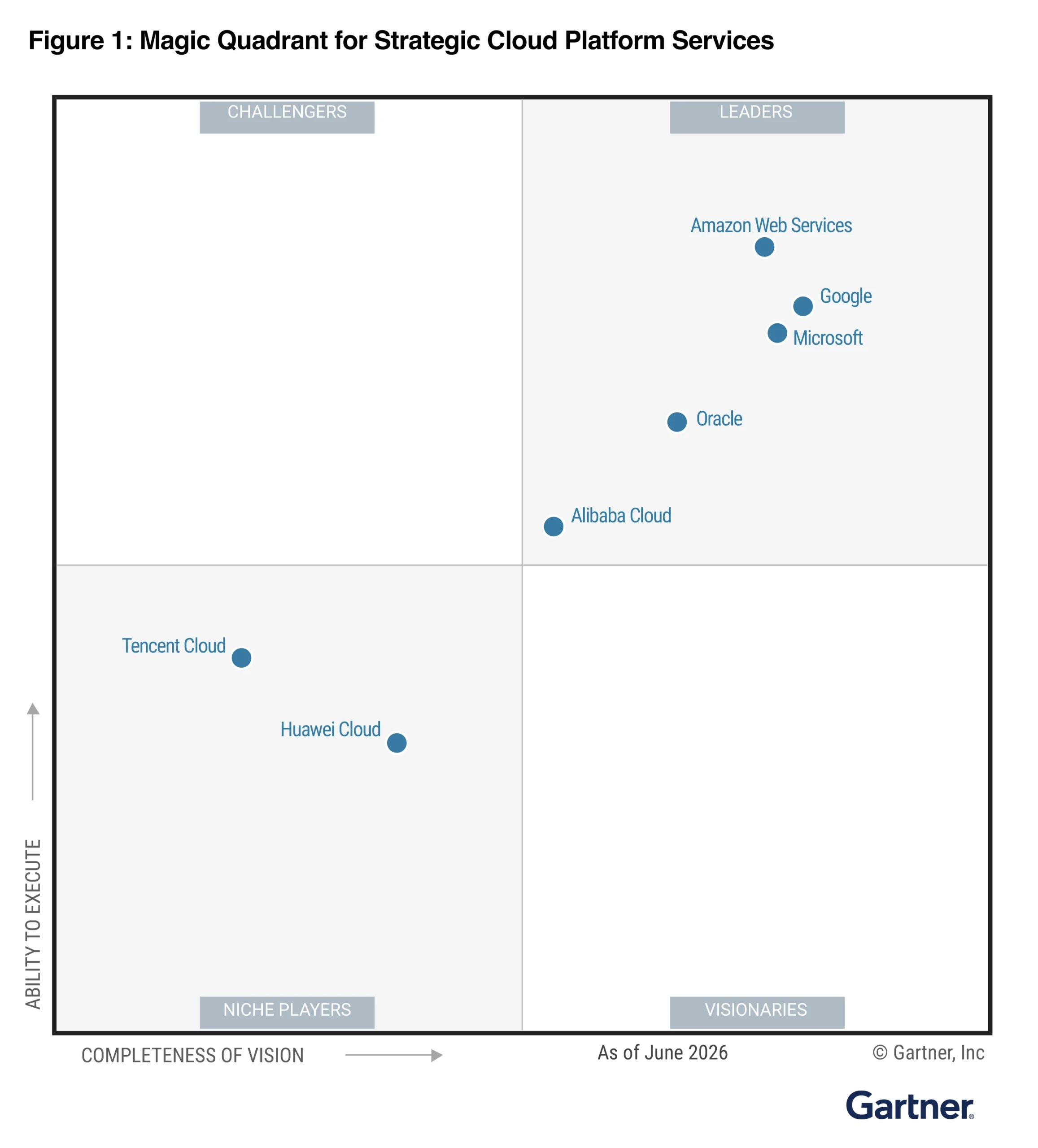
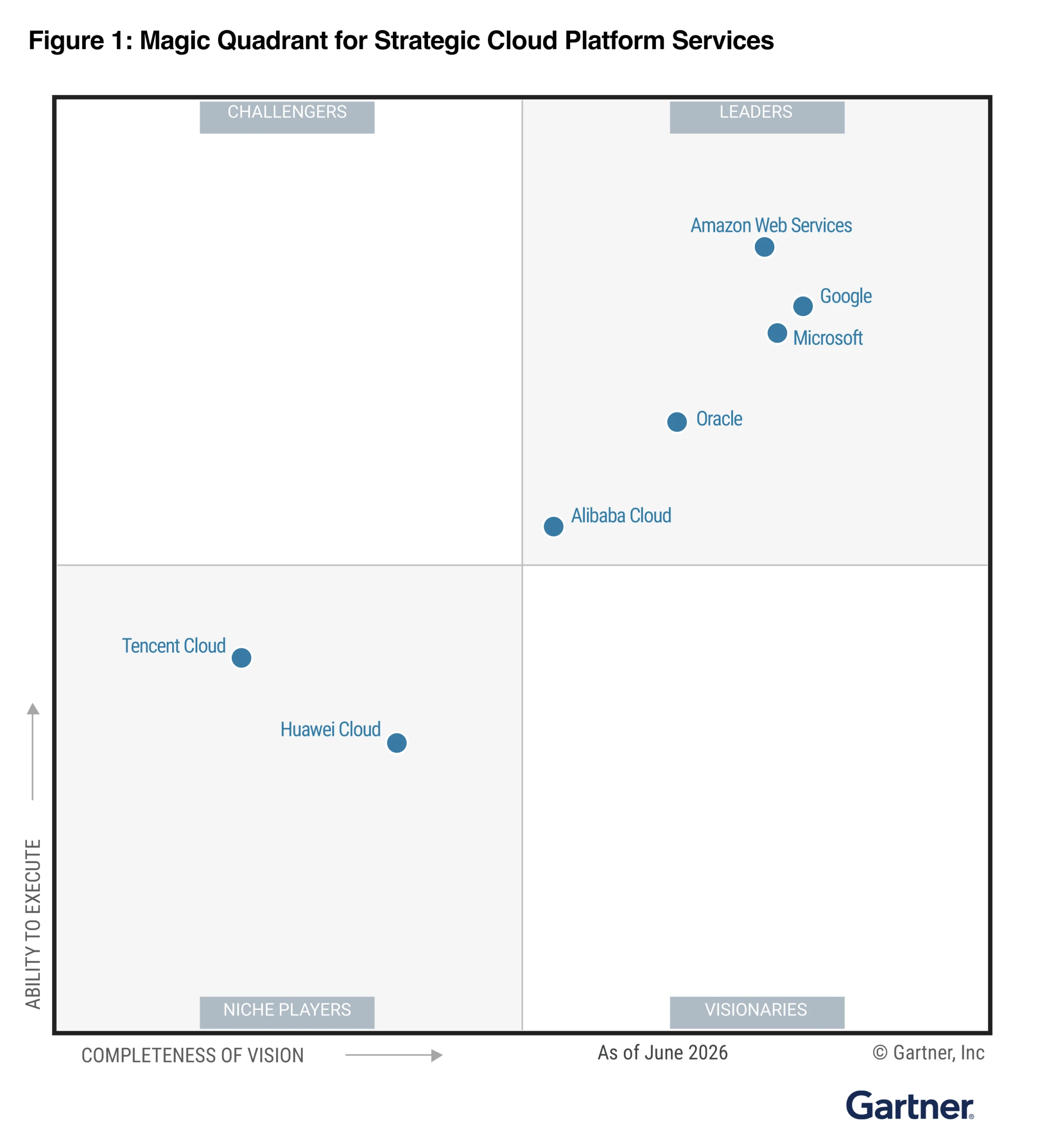
This strategic evolution was recently underscored by independent industry evaluations. In September 2026, global research firm Gartner positioned Microsoft as a Leader in its 2026 Magic Quadrant for Strategic Cloud Platform Services, extending Microsoft’s uninterrupted streak in the Leader quadrant following accolades in 2023, 2024, and 2025. Concurrently, analyst firm Forrester named Microsoft a Leader in The Forrester Wave™: Public Cloud Platforms, Q3 2026, highlighting Azure’s core strategy as a vertically integrated, end-to-end system.
The dual recognition reflects a broader market reality: modern enterprises are rapidly adopting multi-model architectures. Rather than relying on a single monolithic AI model, organizations are deploying frontier models for high-reasoning tasks alongside smaller, specialized, open-weight models designed for cost efficiency and strict local control. Azure’s technical stack—anchored by Microsoft Foundry, Microsoft Fabric, and agentic software modernization tools—is engineered to remove the friction of stitching together disparate hybrid infrastructure, enabling enterprises to scale AI safely, predictably, and cost-effectively.
Detailed Chronology: The Architectural Evolution from Cloud to AI-Native System (2023–2026)
The shift toward integrated enterprise AI platforms represents the culmination of a multi-year migration across the cloud landscape. Traceable back to the initial generative AI boom, the infrastructure landscape has undergone three distinct phases:
+-----------------------------------------------------------------------------------+
|                            THE 3-STAGE AI EVOLUTION                               |
+-----------------------------------------------------------------------------------+
|  Phase 1: 2023–2024   | Point-Solution Experimentation                           |
|                       | Organizations raced to deploy standalone frontier models  |
|                       | across isolated sandbox environments.                      |
+-----------------------+-----------------------------------------------------------+
|  Phase 2: 2025        | Operational Friction & Fragmentation                      |
|                       | Fragmented vendor tools created data silos, security      |
|                       | gaps, unmanageable API costs, and governance failures.    |
+-----------------------+-----------------------------------------------------------+
|  Phase 3: 2026        | Full System Integration                                   |
|                       | Market demands unified architectures connecting customized|
|                       | silicon to enterprise data fabrics and agentic software.  |
+-----------------------------------------------------------------------------------+
The 2023–2024 Infrastructure Boom
During the early wave of commercial generative AI adoption, organizations primarily sought access to raw API endpoints hosting state-of-the-art foundation models. Hyperscalers competed largely on raw compute reservation and exclusive hosting partnerships. However, these early deployments operated largely in isolation from core enterprise data platforms and operational application logic.
The 2025 Operational Friction
By 2025, as IT departments attempted to move generative applications into high-volume production, systemic barriers emerged. Custom-building connections between third-party security layers, disparate vector databases, legacy application interfaces, and multi-vendor model APIs introduced untenable maintenance overhead, elevated operational risk, and unpredictable cost structures. Enterprise technology buyers increasingly demanded consolidated platform approaches capable of managing heterogeneous workloads uniformly.
The 2026 Vertical Integration Milestone
On September 1, 2026, Gartner published its annual evaluation of the Strategic Cloud Platform Services market, authored by analysts Alessandro Galimberti, Carolin Zhou, Douglas Toombs, Dennis Smith, Ed Anderson, Tobi Bet, and Chuck Lawton. The report confirmed Microsoft’s positioning in the Leaders quadrant for the fourth consecutive year.
Simultaneously, Forrester published The Forrester Wave™: Public Cloud Platforms, Q3 2026. The report evaluated vendors on current market offerings and forward-looking corporate strategy. Forrester explicitly cited Microsoft’s clear vision of Azure as a "single, vertically integrated system"—a key differentiator as enterprises move away from isolated software experiments toward fully production-ready, agentic operations.
Supporting Context & Core Technical Metrics
To understand why platform-level integration has surpassed individual model benchmark scores in strategic importance, it is necessary to examine the architectural components driving enterprise AI performance across four key dimensions: multi-model optimization, data gravity, legacy application refactoring, and silicon-to-agent integration.
                  +-----------------------------------+
                  |      AGENTIC APPLICATIONS &       |
                  |     GITHUB COPILOT WORKFLOWS      |
                  +-----------------+-----------------+
                                    |
                  +-----------------v-----------------+
                  |         MICROSOFT FOUNDRY         |
                  | (Multi-Model & Operations Control)|
                  +-----------------+-----------------+
                                    |
                  +-----------------v-----------------+
                  |   DATA & INTELLIGENCE FOUNDATION  |
                  | (Fabric, Purview, Cosmos DB, IQ)  |
                  +-----------------+-----------------+
                                    |
                  +-----------------v-----------------+
                  |   AZURE HYPERSCALE INFRASTRUCTURE |
                  |   (Custom Silicon, Compute, Edge) |
                  +-----------------------------------+
1. The Multi-Model Paradigm & Silicon-to-Agent Architecture
Modern enterprise architectures are explicitly multi-model. High-value, complex reasoning workflows (such as advanced legal analysis or intricate biochemical modeling) rely on parameter-heavy frontier models. Conversely, low-latency or privacy-sensitive operational tasks (such as edge-level document processing or routine customer service workflows) are routed to smaller, domain-specific, open-weight small language models (SLMs).
The administrative challenge lies in managing these heterogeneous models without multiplying operational complexity. Microsoft Foundry addresses this by providing a unified management and orchestration plane layer where developers can:
- Evaluate model latency, accuracy, and operational cost across diverse model families.
- Apply unified identity, access control, and zero-trust security policies regardless of whether a model is proprietary or open-weight.
- Monitor runtime telemetry, model drift, and safety guardrails across multi-cloud, edge, and on-premises deployments through a single pane of glass.
Underneath this orchestration layer sits Azure’s infrastructure, spanning custom hardware acceleration, optimized network topologies, and high-density compute clusters designed to scale down compute overhead while maintaining high throughput.
2. Data Gravity, Unified Context, and Governance
A fundamental reality of enterprise computing is that while AI models frequently cycle through innovation loops, institutional data remains static. As industry analysts note, "Models come and go; data has gravity."
Extracting real-world value from AI requires connecting foundation models directly to operational data stores without creating unmanaged data copies or compromising regulatory compliance. The Microsoft data ecosystem manages this through a multi-tiered architecture:
- Microsoft Fabric: Serves as a unified analytics engine that consolidates enterprise data lakes, data warehouses, and operational stores into a single logical platform.
- Microsoft Purview: Enforces automated, end-to-end data governance, risk management, and compliance tagging across heterogeneous data estates.
- Azure SQL & Azure Cosmos DB: Deliver enterprise-grade operational data access, incorporating native vector indexing capabilities to support low-latency Retrieval-Augmented Generation (RAG) pipelines.
- Microsoft IQ: Acts as a centralized enterprise intelligence layer, supplying AI applications and autonomous agents with consistent, real-time context across corporate knowledge graphs, operational workflows, and active business communications.
3. Application Modernization as the Fuel for Agentic AI
Enterprise software systems typically contain decades of domain-specific business logic, deeply embedded operational policies, and custom procedural code. Rather than discarding these legacy assets to adopt modern AI, organizations are modernizing their existing code bases so that autonomous AI agents can interact securely with legacy backend systems.
To streamline this transition, Microsoft introduced agentic application modernization tools built directly into GitHub Copilot. These agentic workflows assist engineering teams by:
- Automatically parsing legacy codebases (specifically targeting enterprise .NET and Java applications).
- Refactoring procedural code, generating automated tests, and surfacing architectural dependency mapping.
- Exposing internal business logic via secure, standardized API endpoints that can be safely accessed by autonomous AI agents.
This end-to-end modernization strategy addresses a common operational bottleneck noted by Gartner: organizations can update critical legacy systems incrementally without disrupting ongoing operations or exposing underlying core logic to unnecessary risk.
Official Statements & Enterprise Implementation Case Studies
Industry leadership is ultimately measured by measurable business impact across complex operational environments. Two contrasting industry case studies—in healthcare and retail—illustrate how system-level integration enables practical enterprise transformation.
Case Study 1: UNC Health
- Sector: Healthcare & Medical Research
- Operational Challenge: Managing sprawling, siloed clinical and administrative data assets under strict HIPAA regulatory oversight and stringent patient privacy mandates.
- System Deployment: UNC Health implemented Microsoft Fabric and Microsoft Purview to establish a modernized, fully governed analytics and data architecture.
- Business Outcome: By consolidating operational data without compromising regulatory standards, UNC Health created a secure environment capable of supporting predictive clinical research, optimizing operational throughput, and powering next-generation patient care models.
"By modernizing its analytics infrastructure, UNC Health created a governed environment capable of supporting clinical care, backend operational efficiency, and medical research under strict compliance guidelines—laying the mandatory foundation required before enterprise AI can be responsibly applied at scale."
Case Study 2: Levi Strauss & Co.
- Sector: Global Consumer Retail & Apparel
- Operational Challenge: Modernizing legacy global supply chain management platforms and administrative business systems without disrupting active retail operations.
- System Deployment: The historic apparel brand executed an infrastructure modernization strategy utilizing Azure Migrate to transfer legacy workflows onto Azure hyperscale infrastructure. Subsequently, the company deployed Microsoft Foundry to build, evaluate, and orchestrate specialized AI agents across its operational teams.
- Business Outcome: Levi Strauss & Co. established a resilient, modern computing baseline that allowed its teams to automate supply chain decision-making, simplify internal administrative workflows, and accelerate market responsiveness—all while maintaining its underlying core operational software systems.
"A heritage enterprise did not need to abandon its operational core to adopt AI; it modernized that infrastructure on Azure and built forward using agentic capabilities."
Analyst Findings Summary
| Evaluation Standard | Industry Body | Strategic Focus Areas | Primary Vendor Strengths Identified |
|---|---|---|---|
| Magic Quadrant for Strategic Cloud Platform Services (2026) | Gartner | IaaS, PaaS, Application Lifecycle, Developer Tooling | Integrated software development lifecycle (SDLC), pragmatic application modernization workflows, broad platform depth. |
| The Forrester Wave™: Public Cloud Platforms (Q3 2026) | Forrester | Execution Capability, Corporate Strategy, Platform Vision | Vertically integrated architecture, strong data gravity solutions, high customer rating for migration and modernization expertise. |
Future Outlook: The Agentic Enterprise and Next-Generation Cloud Systems
As enterprise cloud computing approaches the late 2020s, the battle for platform supremacy will depend heavily on which provider can offer the most manageable, secure environment for autonomous, multi-agent systems.
+-----------------------------------------------------------------------------------+
|                        FUTURE CLOUD ARCHITECTURE SHIFTS                           |
+-----------------------------------------------------------------------------------+
|  Deterministic APIs  --->  Autonomous Agent Frameworks                           |
|  Monolithic LLMs    --->  Heterogeneous Multi-Model Orchestration                 |
|  Data Silos         --->  Unified Data Gravity (Fabric/Purview/IQ)               |
|  Manual Refactoring --->  Agentic Legacy Code Modernization (GitHub Copilot)      |
+-----------------------------------------------------------------------------------+
Strategic Implications for Enterprise IT Leaders
- Prioritizing Platform Interoperability Over Isolated Benchmarks: As foundational AI models achieve relative performance parity across core benchmarks, long-term Return on Investment (ROI) will be determined by platform agility—specifically, how easily an enterprise can swap underneath models without rebuilding underlying data connections, access controls, or user interfaces.
- Data Governance as an AI Prerequisite: The deployment of autonomous enterprise agents requires precise data governance. Organizations must invest in robust data lakehouse architectures and unified governance controls (such as Microsoft Fabric and Purview) to prevent agents from hallucinating, leaking confidential data, or accessing unauthorized internal records.
- Continuous Application Modernization: The rapid rise of agentic AI makes application modernization an ongoing operational requirement rather than a static project. Leveraging AI-assisted tools like GitHub Copilot to continually refactor legacy Java and .NET environments will separate industry leaders from legacy-encumbered competitors.
The Emerging Cloud Paradigm
The evaluations published by Gartner and Forrester in late 2026 reflect a fundamental reality: the market has moved beyond the initial novelty phase of isolated generative AI features. The next decade of cloud computing belongs to platforms capable of unifying hardware silicon, hybrid cloud infrastructure, operational data fabrics, agentic modernization workflows, and comprehensive security controls into a single, cohesive operating system.
By building an architecture that emphasizes structural integration over isolated features, Microsoft Azure has positioned itself at the center of this transition, helping global enterprises navigate the transition from initial AI experimentation to secure, large-scale production execution.