








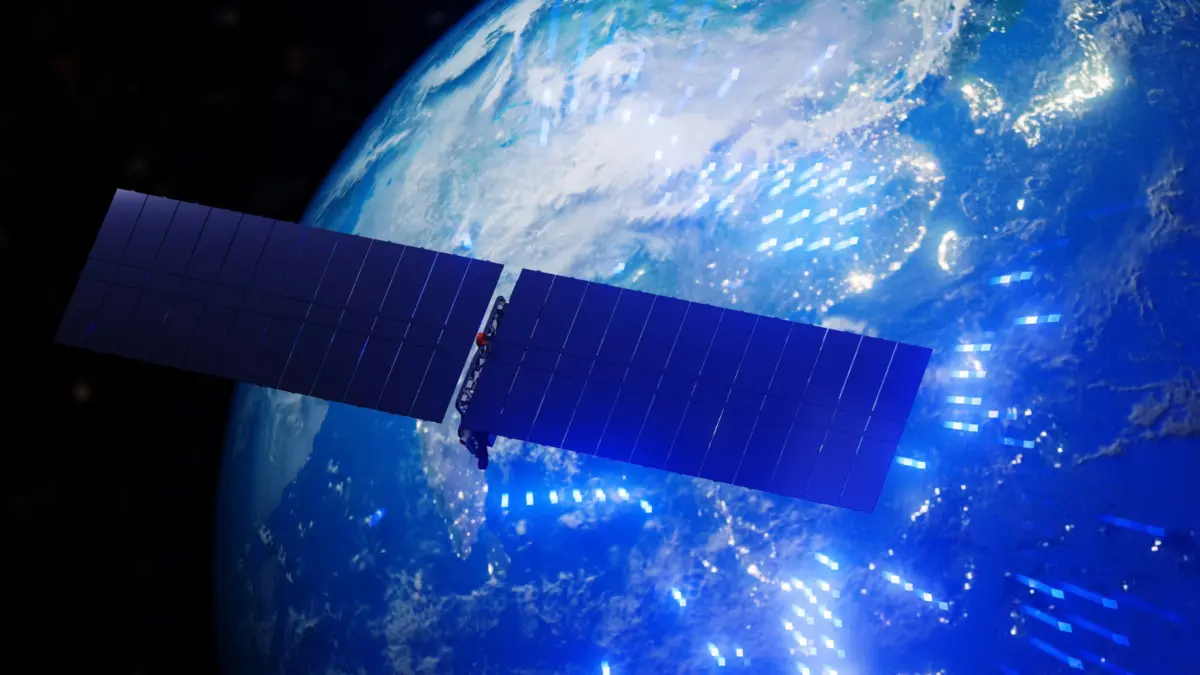
SANTA CLARA, Calif. — As the artificial intelligence boom strains terrestrial power grids, stretches local water supplies, and triggers fierce community pushbacks across the globe, the technology sector is increasingly turning its gaze upward. The concept of orbital data centers—massive, AI-ready computing facilities operating in low Earth orbit (LEO)—is rapidly transitioning from science fiction to a tangible, albeit distant, engineering reality.
However, according to industry pioneers, aerospace executives, and government defense leaders who gathered at the recent AI Infra Summit in Santa Clara, moving the cloud to the cosmos is far from simple. The three-day conference (held September 15–17) laid bare the stark reality of the undertaking: while the long-term vision of space-based compute is compelling, the industry must first scale staggering technical, infrastructural, and economic walls before the first orbital supercluster can blink online.
Executive Overview: The High-Stakes Race for Off-World Compute
The convergence of explosive AI workloads and terrestrial infrastructure bottlenecks has forced a profound re-evaluation of where computation should physically live. On Earth, data centers are consuming unprecedented amounts of electricity, leading to controversies over grid stability, carbon footprints, and land use. Proponents argue that space offers an infinite vacuum for passive cooling, unfiltered solar radiation for limitless power, and total insulation from terrestrial zoning laws and local protests.
Yet, enthusiasm must be tempered by engineering pragmatism. As highlighted during the summit’s high-profile panel discussions, building data centers in microgravity introduces an entirely unprecedented set of variables. From extreme thermal dissipation limits and exorbitant rocket payload costs to the fundamental absence of commercial and defense readiness, the journey from a single-GPU satellite prototype to a gigawatt-scale orbital facility requires a methodical, incremental "crawl, walk, run" strategy.
Detailed Chronology of the Summit Discussions: September 15–17
The dialogue surrounding space-based infrastructure unfolded dynamically across the three-day AI Infra Summit, culminating in a rigorous panel session on Thursday, September 17, that dissected the mechanics, bottlenecks, and commercial viability of orbital computing.
Setting the Stage: The Physics of Space (Day 1 & 2)
As AI hardware manufacturers continue to pack billions of transistors into dense accelerators like NVIDIA’s H100 and upcoming architectures, thermal design power (TDP) has skyrocketed. Early summit sessions focused heavily on how physical laws change outside Earth’s atmosphere. Without air to facilitate convection, systems cannot rely on traditional fans or liquid-to-air heat exchangers.
The Deep-Dive Panel (September 17)
The climax of the space-compute discourse occurred during a dedicated panel on Thursday afternoon. Industry stakeholders—representing satellite communications, in-space energy utilities, startup launch providers, and military defense—spelled out the hard truths of LEO deployment.
Sumeet Singh, Chief Data and AI Officer at Viasat, opened the technical cross-examination by identifying the tripartite barrier of thermal management, bandwidth limitations, and launch economics. Following Singh, Joe Yaffe of Cowboy Space Corp. detailed how his firm is rethinking rocket architecture to bypass traditional payload limitations. Camille Bergin of Star Catcher outlined futuristic power-beaming solutions, while U.S. Air Force CIO Deepak Sachdeva brought a sobering, operational defense perspective to the conversation, emphasizing that military use cases require ironclad reliability that current orbital tech cannot yet guarantee.
Supporting Context, Metrics, and Engineering Hurdles
To understand why orbital data centers remain in their infancy, one must examine the hard metrics governing aerospace engineering and digital telecommunications.
1. Thermal Management and the Weight Dilemma
In the vacuum of space, conduction and radiation are the only methods available to shed heat. Systems must rely on massive external radiators.
- The Catch-22: Radiators must scale in surface area proportional to the heat load they dissipate. Larger surface areas mean more mass.
- The Metric: "Weight is a huge currency when you think about orbital data centers," noted Viasat’s Sumeet Singh. Every additional kilogram demands exponentially more fuel to lift past the gravity well, compounding the cost of the mission.
2. Launch Economics and Payload Costs
Getting heavy computing gear into low Earth orbit remains prohibitively expensive for standard enterprise data center deployment.
- The Current Baseline: Launching payloads to LEO currently hovers around $2,500 to $3,000 per kilogram.
- The Economic Threshold: According to industry consensus, launch costs must plunge to roughly $200 to $500 per kilogram before orbital data centers can achieve parity with terrestrial operational budgets.
3. The Launch Monopoly Bottleneck
The commercial space sector has historically relied on a heavily concentrated market of launch providers. Joe Yaffe, COO and Chief Legal Officer of Cowboy Space Corp., emphasized that reliance on a single dominant satellite launch provider has created a systemic industry bottleneck. Cowboy Space is actively developing its own proprietary launch vehicles to counteract this, utilizing the rocket’s second stage directly as the orbital data center housing unit.
4. Bandwidth and Optical Links
Moving massive datasets up to and down from orbit requires unprecedented throughput. Traditional radio frequency (RF) spectrums are congested and legally constrained.
- The Solution: Optical (laser-based) communications. Cowboy Space and other innovators are heavily banking on laser links for uplinks and downlinks. "We’re believers that data transmission needs to take place optically… in order to move what will be increasingly larger amounts of data," Yaffe stated.
5. Power Solutions in Orbit
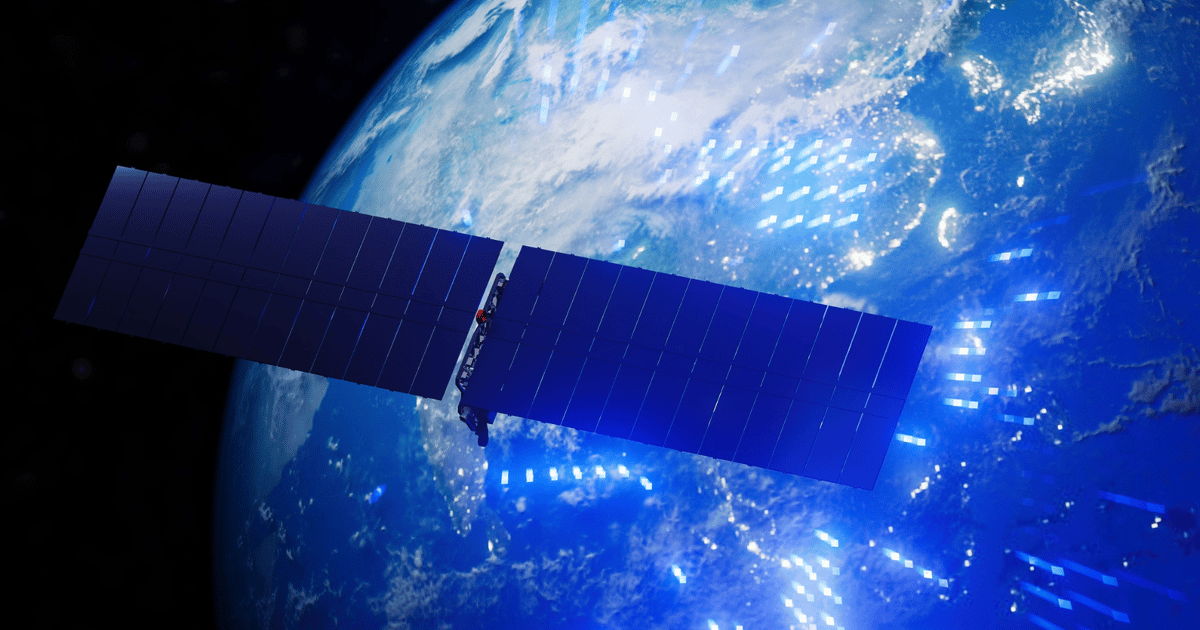
While solar arrays are standard in space, traditional designs struggle to supply the megawatt-to-gigawatt demands of modern AI training clusters. Camille Bergin, CMO of Star Catcher, revealed that her firm is actively developing laser-based power-beaming technologies. This system aims to supplement standard solar arrays by beaming energy directly to orbiting nodes, potentially increasing power delivery tenfold.
Official Statements and Industry Perspectives
The summit featured frank assessments from leaders spanning defense, satellite operations, and space energy utilities, highlighting a cautious optimism tempered by rigorous operational requirements.
The Military View: Operational Readiness Deficits
Deepak Sachdeva, Chief Information Officer of the U.S. Air Force, offered a vital reality check regarding defense adoption. While consumer applications might find space-based compute acceptable today, military applications operate under vastly stricter parameters.
"From a consumer-to-consumer level, I think it’s ready. But from an operational need, which is global in its nature, I think there is still some work to be done," Sachdeva remarked.
He stressed that the military prioritizes operational effectiveness, real-time (or near-real-time) latency, resilience, and security. Because orbital technology has not yet proven itself robustly across these domains, Sachdeva advocates for a stepped approach: "The best approach, in my view, is to do some sort of proof of concept."
The Incrementalist Manifesto: Crawl, Walk, Run
Echoing the need for incremental validation, Viasat’s Sumeet Singh pointed to upcoming milestones—such as StarCloud’s planned November 2025 launch of a satellite equipped with an NVIDIA H100 GPU—as positive indicators. However, he issued a warning against premature scaling.
"We suddenly talk about megawatt- and gigawatt-class data centers. I think we need intermediate proof points… something in between where you have 100- to 500-kW-class compute," Singh explained. Beyond technical proofs, he emphasized that the industry must prove commercial viability—demonstrating definitively that enterprise customers are willing to buy compute delivered from the stars.
Camille Bergin of Star Catcher reinforced this philosophy, cautioning against starry-eyed idealism in the aerospace community:
"There are a lot of people in this industry who have a tendency to just say, ‘This is the thing that we’re going to build, and it’ll just happen,’" Bergin noted. "How do we get from operating at 5% to 10% on a single H100 as a prototype to a megawatt-class, gigawatt-class data center? We can’t just design something in space because we think it’s cool… There has to be a real need and a real business model."
Solving Terrestrial Friction
Beyond technical novelty, Bergin highlighted a profound sociological advantage to moving data centers off-planet: escaping earthly friction.
"All of us are super-familiar with the fact that people don’t like these data centers. They don’t want them in their communities. They are super-problematic… So space is offering a solution if we can get there."
Future Outlook: When, Not If
Despite the formidable hurdles—ranging from multi-thousand-dollar payload costs and complex laser-interlink networking to extreme thermal physics and unproven defense utility—the prevailing sentiment at the AI Infra Summit was not one of skepticism, but of inevitability.
The question facing the engineering community is no longer whether data centers will be deployed in low Earth orbit, but precisely when the economic and technological step functions will align to make it happen. As startups like Cowboy Space and Star Catcher execute their early prototypes, and as established giants like Viasat build out foundational communications layers, the roadmap to orbital computing is slowly being written.
For now, the industry must resist the siren song of immediate gigawatt-scale orbital clusters and instead focus on the unglamorous, incremental steps required to build a sustainable off-world digital infrastructure. As Sumeet Singh aptly summarized: "This isn’t a question of if it would happen. I think this is more of a question of the step function. When would this happen?"