







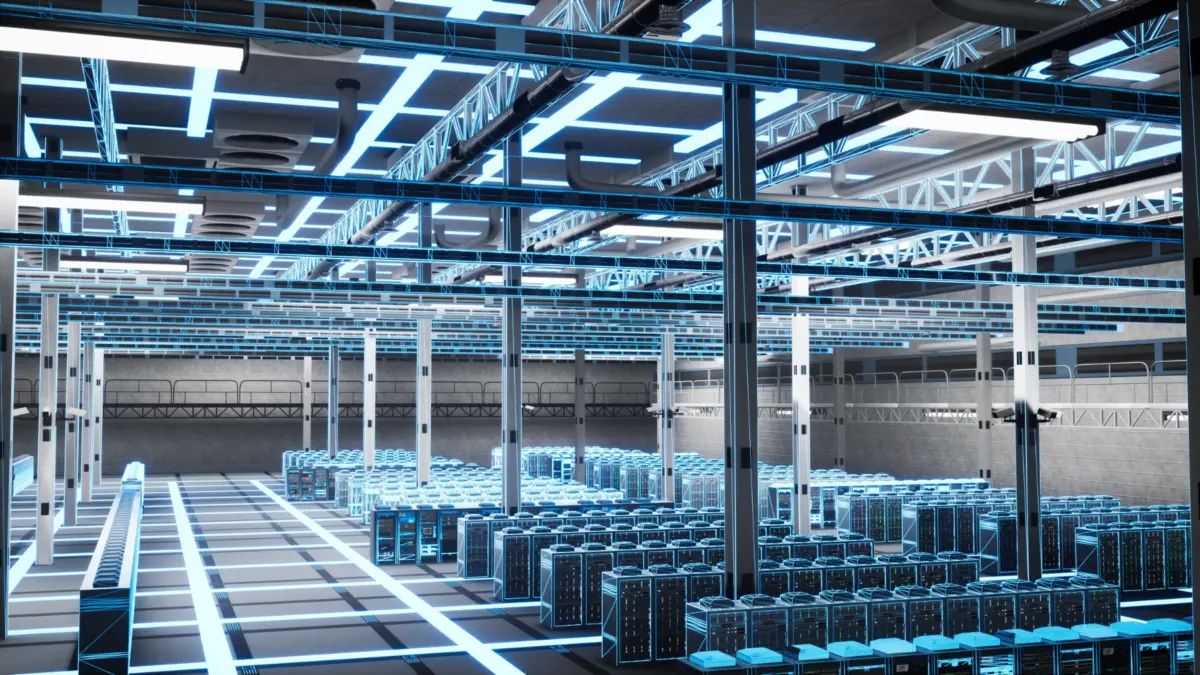
As global demand for artificial intelligence workloads surges, data center operators find themselves caught in a high-stakes paradox. They are racing to build massive amounts of physical and computational capacity to feed power-hungry generative AI models, while simultaneously deploying those very same AI technologies to run their own facilities more efficiently.
What began merely a few years ago as exploratory pilot programs has firmly transitioned into production-grade deployment across the industry. Today, artificial intelligence is reshaping how data centers manage cooling systems, optimize electrical distribution, execute predictive maintenance, and respond to critical incidents.
While fully autonomous data centers remain largely on the horizon, AI is delivering measurable, quantifiable gains in energy efficiency, uptime, and operational speed. Industry giants and hyperscalers are leading the charge with robust, proprietary in-house toolsets. Meanwhile, mid-sized operators are scrambling to pilot targeted use cases as operational pressures mount, and smaller enterprise environments are gingerly evaluating their adoption strategies.
This deep dive examines how industry pioneers—including Digital Realty, AWS, DPR Construction, and Schneider Electric—are applying AI today, the technological hurdles they face, and where data center operations are headed next.
Executive Overview: The AI Transformation of Critical Infrastructure
The operational landscape of the modern data center is undergoing a profound structural shift. For decades, facility management relied heavily on static threshold alerts, manual oversight, and reactive maintenance routines. Today, the sheer scale, density, and thermal complexity of modern high-performance computing (HPC) environments have rendered traditional management techniques obsolete.
Analysts note that the industry is still in the early developmental chapters of this transformation. Current deployments primarily focus on crunching vast telemetry datasets to predict anomalies before they manifest, dynamically tuning cooling and power footprints, maximizing IT resource utilization, and equipping human technicians with actionable intelligence to resolve issues swiftly. Although select AI systems can resolve minor incidents autonomously, human operators universally retain final decision-making authority over core facility operations.
According to Roy Illsley, chief analyst for IT operations at Omdia, AI is currently being deployed in discrete packages to handle isolated tasks. "AI is being used in discrete packages to do little bits of the work," Illsley observes. While operators harbor long-term ambitions to optimize entire data centers in real-time, that holistic vision is still maturing. "We are going to move to a world where a lot of the specific tasks are done by AI agents, and then the humans will be connecting those tasks and overseeing decisions," he adds.
Chronology of Adoption: From Early Machine Learning to Generative AI
The integration of artificial intelligence into critical infrastructure did not happen overnight. It is the result of a multi-year technological evolution that accelerated dramatically with the advent of generative models and advanced machine learning algorithms.
Phase 1: Predictive Analytics and Basic Automation (2015–2020)
In the mid-2010s, early adopters began experimenting with basic machine learning models. These tools were largely confined to looking at historical logs and spotting recurring equipment failures, laying the groundwork for predictive maintenance. Infrastructure vendors introduced early automation scripts to handle predictable hardware failures, though these systems lacked contextual awareness.
Phase 2: The Generative AI Wave (2021–2023)
With the arrival of large language models (LLMs) and advanced reinforcement learning frameworks three to four years ago, the scope of facility automation widened. Operators began moving beyond simple anomaly detection toward multi-variable optimization. Companies like Digital Realty and AWS scaled their machine learning frameworks into comprehensive, enterprise-wide telemetry pipelines.
Phase 3: Agentic Workflows and Real-Time Orchestration (2024–Present)
Today, the industry is entering the era of "agentic workflows." Instead of merely presenting data on dashboards, AI agents are actively investigating network issues, correlating disparate telemetry sources, writing code configurations, and orchestrating liquid-cooling loops in real time. Vendors and hyperscalers are deploying governed, cloud-based AI platforms that streamline internal business processes alongside physical facility management.
Industry Case Studies: How Leaders Are Deploying AI Today
Digital Realty: OPDaaS, Cooling Optimization, and Measured Savings
Digital Realty, a global colocation and interconnection giant operating more than 300 data centers worldwide, has utilized machine learning for over half a decade and integrated generative AI into its workflows three to four years ago, according to Chief Technology Officer Chris Sharp.
At the core of Digital Realty’s strategy is its proprietary Operational Data as a Service (OPDaaS) platform. This curated set of AI tools ingests sub-second telemetry data from power, cooling, and building management systems into a centralized data store. By exposing this data via APIs, both Digital Realty’s internal systems and its enterprise customers can analyze performance and dynamically adjust power and cooling parameters.
"That’s a huge delta that we couldn’t have achieved without generative AI being inside our systems, monitoring pumps, filters, and the full spectrum of infrastructure." — Chris Sharp, CTO, Digital Realty
Sharp highlights a classic facility hazard: clogged filters in air-cooled systems that force fans to run unnecessarily at or near 100% capacity. Proactively scheduling filter maintenance using AI diagnostics can yield double-digit percentage efficiency gains. Furthermore, at its IAD51 facility in Northern Virginia—where Nvidia is a key customer—Digital Realty utilizes Phaidra’s AI platform to gain deep visibility into secondary liquid-cooling loops, ensuring cooling capacity tracks exact compute demand rather than defaulting to maximum output.
Having deployed OPDaaS in over 10 facilities with plans to scale to 30 more by the end of 2026, Digital Realty is seeing tangible results. The company’s 2025 Impact Report revealed a 34% portfolio growth while water usage increased by a mere 3%. Sharp attributes this to AI-driven optimization, noting that the company saved an impressive 17,800 MWh of energy in 2025 alone.
AWS: AI Agents for Network Operations and Stranded Power Reduction
At Amazon Web Services (AWS), generative AI-powered software is deployed to optimize server rack placement, directly combating "stranded power"—usable electrical capacity that goes unutilized due to physical or thermal layout constraints.
Zak Islam, director of network observability and automation at AWS, explains that the company leverages AI and agentic workflows across its vast network operations to manage massive infrastructure scale. While AWS networks are heavily automated, complex anomalies routinely escalate to human engineers. To streamline this, AI agents autonomously investigate, collect, and correlate data across disparate monitoring sources.
During incident response, these AI agents diagnose root causes in seconds rather than minutes by correlating telemetry across multiple monitoring systems. For routine operational issues spanning compute, networking, and core services, AI ingests incoming trouble tickets, evaluates historical resolution patterns, and frequently resolves problems without human intervention. Additionally, AWS employs AI to monitor fiber-optic infrastructure, automatically engaging vendors to accelerate repairs, flag configuration errors during network buildouts, and enable engineers to query network telemetry via natural language prompts.
DPR Construction: AI-Driven Pre-Construction and Site Robotics
AI’s footprint in the data center ecosystem extends well beyond operational facilities into the construction phase. DPR Construction, a national contractor based in Santa Clara, California, leverages AI to enhance decision-making across complex data center builds, notes Max Lares, a DPR project executive.
For the past two to three years, DPR has utilized AI analytics during early pre-construction planning. By analyzing historical benchmarking data—including site conditions, cost models, and construction sequencing—the company predicts staffing requirements, project durations, and optimal construction sequencing for new builds. Simulations help project teams determine whether to sequence builds from the center outward or from one end to the other across structural, mechanical, electrical, and fire protection systems.
To keep tabs on active jobsites, DPR pilots autonomous robots that patrol facilities overnight. These machines capture high-resolution site photographs when no workers are present, providing stakeholders with pristine views of construction progress without disrupting daytime labor crews.
Schneider Electric: Digital Twins, DCIM, and Governed AI at Scale
As a premier supplier of critical power, cooling, and infrastructure management hardware, Schneider Electric integrates AI across both its commercial product portfolio and internal enterprise operations.
Data center operators utilize Schneider Electric’s ETAP electrical power system modeling software and AVEVA industrial operations software, powered by Nvidia technology, to construct comprehensive digital twins. These virtual replicas allow operators to simulate facility behavior and predict thermal or electrical responses before executing real-world modifications. Furthermore, the company’s EcoStruxure IT software suite provides continuous infrastructure monitoring, employing AI for remote diagnostics, predictive maintenance, and proactive recommendations.
On the enterprise side, Schneider Electric has scaled its internal AI initiatives rapidly. Jennifer Swem, vice president of operational excellence and AI, notes that an agentic system deployed to process customer quote requests slashed the workflow from 62 steps to just 14, cutting turnaround times by roughly 95%. All internal AI tools operate within a centrally governed cloud platform subject to strict risk management oversight by the company’s chief AI officer.
Supporting Context & Performance Metrics
| Organization | Primary AI Application / Platform | Key Operational Metric / Impact | Human-in-the-Loop Status |
|---|---|---|---|
| Digital Realty | OPDaaS & Phaidra (Liquid Cooling) | Saved 17,800 MWh in 2025; 34% portfolio growth with only 3% water increase. | Human oversight; gradual shift toward autonomous control planned. |
| AWS | Generative AI agents for network telemetry & stranded power | Diagnoses network root causes in seconds; resolves routine tickets automatically. | Escalates complex anomalies to human engineers. |
| DPR Construction | Pre-construction analytics & autonomous site robots | Optimizes construction sequencing, staffing, and project duration. | Humans retain strict accountability for all final decisions. |
| Schneider Electric | ETAP/AVEVA digital twins & EcoCare service dispatch | Quote processing turnaround reduced by 95% (62 steps cut to 14). | Human dispatchers make final technician assignments. |
Future Outlook: IT/OT Convergence and the Quest for Autonomy
Looking ahead, industry experts point toward a critical architectural milestone: the convergence of Information Technology (IT) and Operational Technology (OT) data layers.
Historically, IT domains (servers, storage, applications) and OT domains (power distribution, chillers, pumps, generators) operated in strict silos. IT infrastructure has long benefited from advanced AIOps tools that ingest logs, traces, and telemetry to isolate signals from noise. Meanwhile, OT infrastructure is catching up, with vendors embedding AI into Data Center Infrastructure Management (DCIM) platforms to monitor physical cooling and power loops.
According to Zoe Roth, senior research analyst at S&P Global’s 451 Research, a new class of "agentic analytic" startups is bridging this divide. Companies like Phaidra are deploying reinforcement learning agents that ingest telemetry from both IT workloads and building management systems simultaneously. This dual-awareness allows cooling infrastructure to react dynamically to shifting compute demands rather than relying on blunt, static thresholds.
Will Data Centers Ever Become Fully Autonomous?
Despite breathtaking advancements in agentic workflows and algorithmic optimization, analysts agree that fully autonomous data centers remain a distant prospect—not because the technology lacks capability, but due to a deficit of operational trust.
"Would the AI be fully capable of running a data center? Almost certainly—yes," says Omdia’s Roy Illsley. "But would we trust it? Probably not."
However, exceptional use cases may force the issue. Dan Thompson, research director at 451 Research, notes that remote facilities situated in inaccessible locations—such as the North Slope of Alaska or proposed space-based data centers—will necessitate a high degree of autonomy because deploying human intervention is wildly impractical.
For the average terrestrial data center operator, however, human accountability remains non-negotiable. As Thompson summarizes, the typical operator currently wants to be armed with superior intelligence and actionable recommendations rather than relinquishing total control. As Illsley bluntly puts it: "You are responsible and accountable for that data center, not the AI agent that’s flying around at 5 million miles an hour."