Executive Overview
The Formula 1 paddock is rarely a quiet place, but the recent Spanish Grand Prix at the newly minted Madrid street circuit—widely dubbed the "Madring"—has escalated tensions to a boiling point. Delivering a race weekend defined by Processional racing, widespread driver dissatisfaction, and sudden high-level political maneuvering from the governing body, the event has laid bare the ongoing friction between circuit design, modern F1 car dimensions, and regulatory consistency.
While drivers universally condemned the Spanish capital’s layout as nearly impossible for overtaking, race organizers are already forced to scramble for costly layout modifications ahead of next year’s event, backed by a sprawling multi-year deal. Compounding the on-track controversy, off-track governance took a bizarre turn when FIA President Mohammed Ben Sulayem publicly admitted to overriding standard developmental protocols to offer Aston Martin a bespoke technical lifeline following a casual chat with Fernando Alonso.
This comprehensive report examines the structural failures of the Madrid circuit, the championship ramifications of the race itself, and the growing unease surrounding top-down political favoritism within the halls of the FIA.
Detailed Chronology: The Madrid Grand Prix Weekend
Friday Practice: The Writing on the Wall
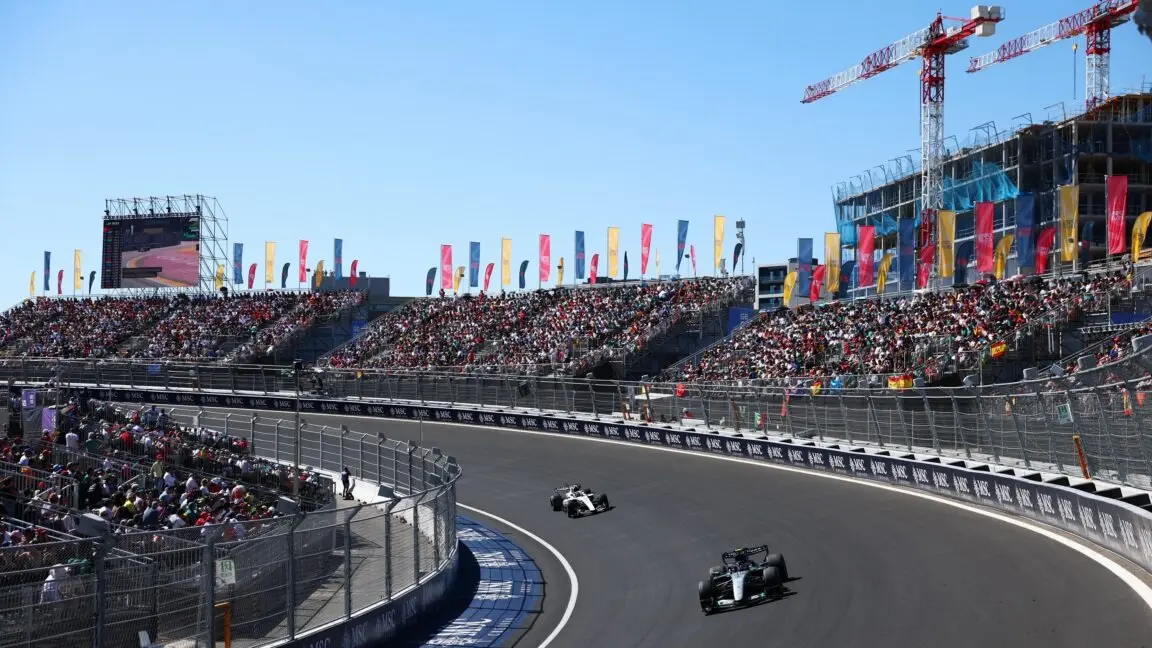
From the moment the pit lane opened for Free Practice 1, whispers quickly turned into vocal protests regarding the technical layout of the Madring. Designed to combine the thrill of a stadium-style venue with the backdrop of Madrid, the circuit quickly proved to be fundamentally misaligned with the realities of modern ground-effect Formula 1 cars.
Drivers returning to the paddock were blunt. Haas’s Oliver Bearman did not mince words when addressing the media, stating, "You only have to look at the layout, and it’s quite clear that it’s going to be a poor track for racing."
His sentiments were echoed throughout the grid. McLaren’s Oscar Piastri, fighting at the sharp end of the championship, offered a grim historical comparison: "I think the only track more difficult to overtake on is Monaco, so it’s not ideal."
The core issue stemmed from the track’s relentless sequence of technical, medium-speed corners that demand sustained trail-braking. While such a layout might provide an exhilarating hot-lap challenge for a time trial or a qualifying simulator session, it fails completely when translated into television-friendly, wheel-to-wheel combat. The reliance on sweeping, single-line configurations meant that the dirty air generated by the 2026-spec cars left followers entirely devoid of aerodynamic options.
Sunday’s Procession: Track Design in Action
The fears of the drivers were fully realized on Sunday afternoon. The race devolved into a high-speed procession where passing was less a matter of skill and bravery and more a result of strategic fortune or forced pit-lane errors.
Red Bull’s Max Verstappen encapsulated the driving reality of the Madring after successfully defending his position. "Around here, if you just drive a little bit in the middle, then you can’t pass," Verstappen explained. By keeping his RB26 precisely in the center of the racing line, he rendered Lando Norris’s McLaren entirely powerless, holding off the Briton for a crucial second-place finish.
The race dynamics were heavily punctuated by a Virtual Safety Car (VSC) period, which neutralized gaps and handed strategic lifelines to a select few. Among the beneficiaries was Antonelli, whose masterful navigation through the VSC chaos and flawless defensive driving secured him yet another victory.
Antonelli’s triumphant drive in Madrid marked his eighth win of the ongoing season, further solidifying his grip on the Drivers’ World Championship. With this latest haul of maximum points, Antonelli extends an imposing 81-point lead over his Mercedes teammate, George Russell. While the championship battle at the very top remains heavily one-sided, the broader narrative of the weekend belonged entirely to the structural inadequacies of the venue.
Supporting Context & Metrics: Anatomy of a Flawed Circuit
To understand why the Madring failed to deliver the dynamic racing Formula 1 management desperately wanted, one must look at the circuit metrics and geometric philosophy. Modern F1 cars are wider, heavier, and far more sensitive to aerodynamic turbulence than their early-2000s predecessors. Introducing a new street circuit without wide-entry braking zones and multiple racing lines is a recipe for a tactical stalemate.
[Main Straight] ---> [Tight Trail-Braking Complex] ---> [Single-File Narrow Sector] ---> [Processional Finish]
                                 |
         (Identified Bottleneck: Turns 5-6, 13, and 20 targeted for 2027)
The circuit’s layout forces drivers into continuous trail-braking phases. Trail-braking—the technique where a driver gradually releases the brake pedal as they turn into a corner—requires high levels of front-end stability and clean air. When a chasing car attempts to follow closely through these transitional zones, the loss of downforce destroys the front tires, forcing the driver to back off to prevent overheating.
Furthermore, the lack of heavy-braking hairpins following long straightaways eliminates the traditional "slipstream-and-dive" overtaking maneuver that has defined modern F1’s most memorable moments. The circuit layout fundamentally penalizes aggressive setups, rewarding defensive positioning above all else.
The 2027 Remediation Plan
Realizing that a nine-year commitment to a processional circuit would be an unmitigated disaster for the sport’s broadcast value and fan engagement, circuit designers and FIA officials have already mapped out emergency interventions.
Plans are officially underway to overhaul key sections of the Madring ahead of the 2027 Grand Prix. Engineers are targeting Turns 5-6, 13, and 20 for significant geometry changes. The primary goal of these modifications is to widen the corner entries following heavy braking zones, creating tangible passing windows. Whether these eleventh-hour civil engineering updates can successfully rewrite the DNA of a tight street circuit remains one of the sport’s most pressing questions.
Official Statements and the Aston Martin Controversy
While the on-track racing at Madrid drew criticism for being stagnant, the off-track governance sparked an altogether different kind of firestorm—one concerning regulatory integrity, institutional fairness, and direct political intervention.
On the eve of the Spanish Grand Prix, startling revelations emerged regarding FIA President Mohammed Ben Sulayem and a direct, unorthodox conversation he held with local hero Fernando Alonso. Aston Martin has endured a dismal campaign, leaving the two-time world champion floundering at the back of the grid despite massive infrastructure investments and heavy expectations.
Rather than relying on the sport’s established governance frameworks—such as aerodynamic testing restriction (ATR) sliding scales or legally regulated engine development tokens—Ben Sulayem admitted to bypassing the rulebook entirely after a personal appeal from Alonso.
In a remarkably candid statement, Ben Sulayem detailed the genesis of the intervention:
"I said, Fernando, I understand that it’s not acceptable that you are coming to your own country and then now, after two times the world champion, and you are [in] the last [place]. We did something earlier, in May, legally, for the team towards the engine to go and improve. And then I said to him, I’m not going to tell you what we are going to do, please tell me what you want, because you are the driver, come and tell me what do you want us to do to improve these results? Suddenly, you see everything change. And then I get a call, and then I had a meeting yesterday. We are here also to support."
The Implications of Presidential Fiat
This direct admission has sent shockwaves through the Formula 1 pit lane. For years, the governing body has painstakingly constructed an intricate web of sporting regulations designed to maintain competitive equilibrium. The sliding scale of wind tunnel time and CFD resources—whereby the lowest-ranked team in the Constructors’ Championship receives more development time than the leader—is meant to be the exclusive mechanism for aiding struggling outfits.
By openly acknowledging that he solicited a driver’s wishlist and initiated bespoke regulatory assistance outside of established legal channels, Ben Sulayem has reignited long-standing fears regarding arbitrary rule enforcement and political favoritism.
Rival team principals are privately questioning where the line is drawn. If the president of the FIA can alter development trajectories based on personal conversations with legendary drivers racing in their home countries, the foundational principle of a level playing field is severely compromised. It suggests a dangerous precedent: that political leverage and marquee names carry more weight than institutional governance.
Future Outlook: Navigating the Road Ahead
As the Formula 1 circus packs up its freight and departs the Spanish capital, the sport finds itself grappling with two distinct, high-stakes crises that threaten its credibility both on and off the asphalt.
1. The Circuit Credibility Crisis
The Madring’s disastrous debut proves that the commercial allure of hosting races in major metropolitan centers must not overshadow the core engineering requirements of competitive racing. With nine years remaining on its lucrative contract, the circuit’s promoters cannot afford a repeat of the 2026 procession. The success of the planned 2027 layout changes at Turns 5-6, 13, and 20 will be heavily scrutinized. If the engineers fail to carve out viable passing zones, Madrid risks becoming an annual procession remembered more for its nightlife and paddock glamour than for actual motorsport spectacle.
2. The Governance and Transparency Crisis
Simultaneously, the FIA faces a growing storm regarding administrative oversight. The revelation that presidential fiat can circumvent formal legislative processes to bail out a struggling, high-profile team like Aston Martin undermines the collective trust of the entire grid. Transparency and strict adherence to the Concorde Agreement and sporting regulations are the glue holding the multi-billion-dollar F1 ecosystem together.
If the governing body is seen as a tool for personal favors rather than an impartial referee, the resulting fallout could permanently fracture relationships between the teams, the FIA, and commercial rights holder Liberty Media.
As the championship heads into the final stretch of the season, all eyes will be locked on Antonelli’s march toward the title—but the boardroom battles and circuit blueprints for 2027 will undoubtedly dictate the true future of the sport.