










Executive Overview
The race to deploy artificial intelligence at scale has collided head-first with the harsh reality of grid capacity limits. Across the United States, traditional electrical grids are buckling under the exponential power demands of hyper-scale artificial intelligence data centers. In regions like Texas, navigating the Electric Reliability Council of Texas (ERCOT) interconnection queue has become a labyrinth of delays, rigorous new credibility tests, and escalating cost allocations.
Enter Prometheus Hyperscale, a forward-thinking data center developer proposing a radical solution: bypass the local utility grid entirely.
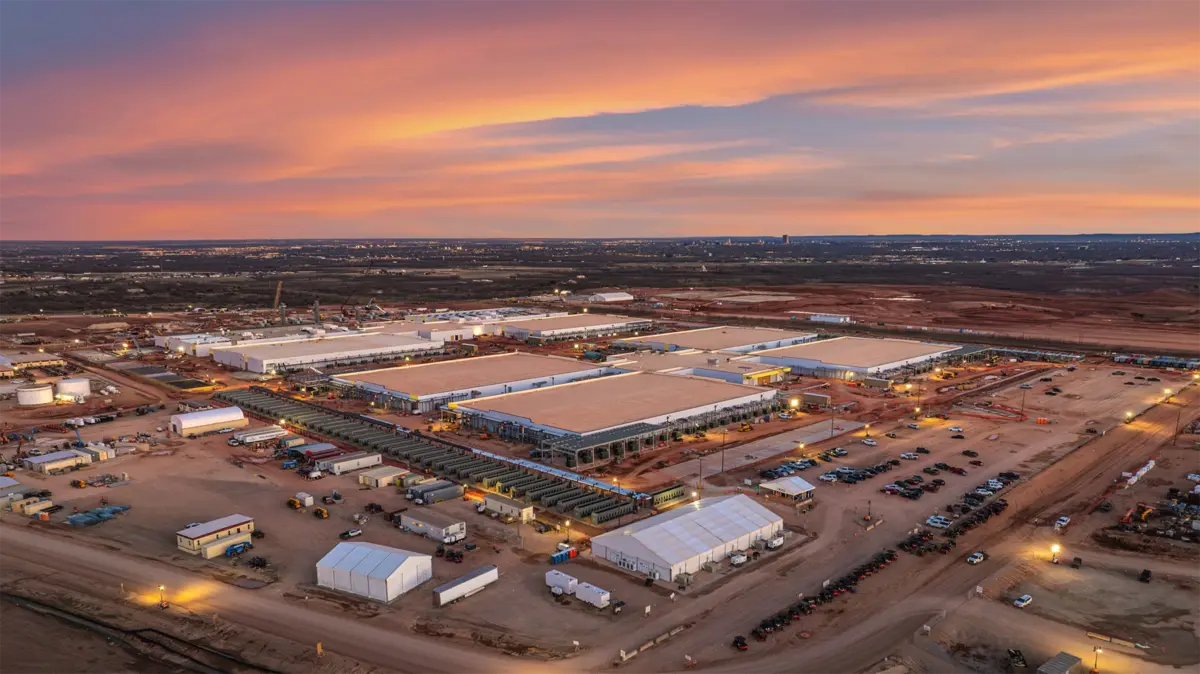
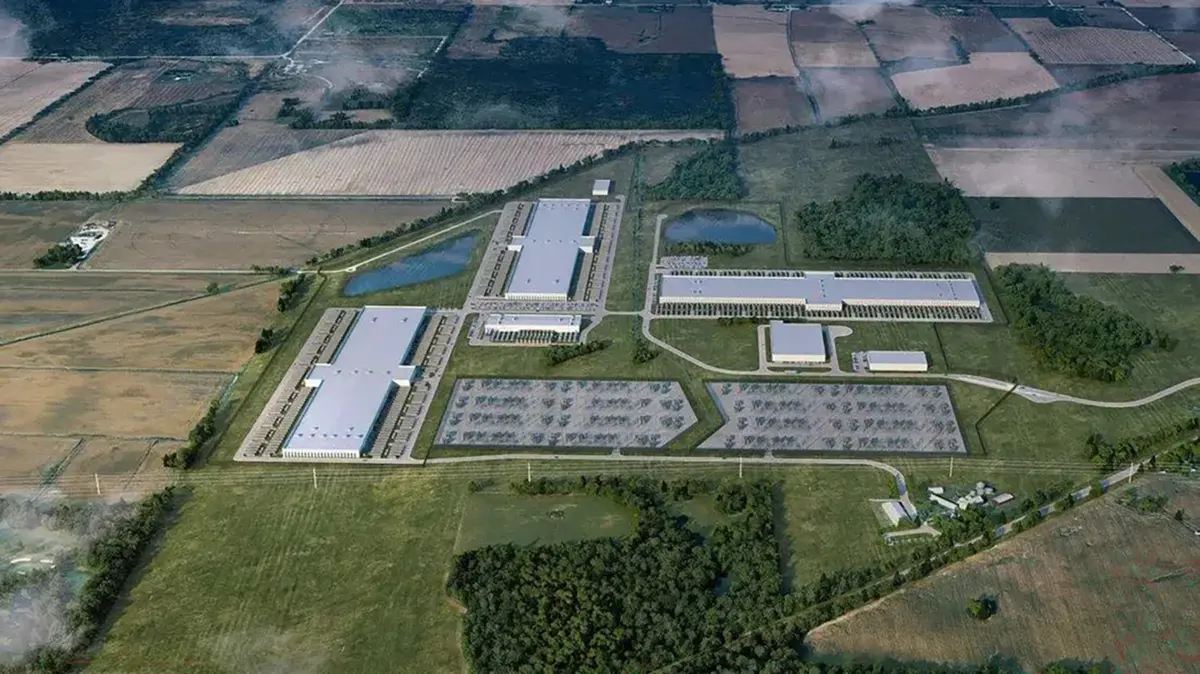
Prometheus is laying the groundwork for a massive 1.5-gigawatt (GW) data center campus situated in Pecos, Reeves County, West Texas. Designed with an ultimate expansion path of up to 2.5 GW, the campus intends to rely on a completely "islanded" generation system—a self-contained, behind-the-meter power network fueled initially by pipeline natural gas and augmented by ethane. By disconnecting from the ERCOT grid from day one, Prometheus aims to sidestep the notoriously slow interconnection process, providing prospective AI tenants with unprecedented deployment velocity and long-term cost certainty.
However, this strategy of going it alone comes with heavy trade-offs. While avoiding the regulatory and timeline bottlenecks of ERCOT, Prometheus and its future tenant must assume responsibilities typically shouldered by seasoned utility providers. These include direct management of multi-gigawatt generation fleets, firm fuel supplies, complex air permitting, continuous maintenance, operational redundancy, and immense project financing.
As the demand for high-performance computing (HPC) and graphic processing unit (GPU) clusters reaches a fever pitch, the Pecos project serves as a high-stakes litmus test for the viability of off-grid, utility-scale campus development. If successful, Prometheus could pioneer a new paradigm for powering the AI revolution. If burdened by the mechanical stress of continuous generation or capital shortfalls, it highlights the immense hurdles of independent power production.
Detailed Chronology of the Pecos Project
The genesis and projected trajectory of the Prometheus Pecos campus reflect the urgent, compressed timelines demanded by the artificial intelligence sector. Developing a gigawatt-scale data center requires navigating a precise sequence of technical, regulatory, and commercial milestones.
Phase 1: Conceptualization and Site Selection
Prometheus targeted Reeves County in West Texas due to its proximity to abundant fossil fuel infrastructure, vast land availability, and favorable economic development profiles. Recognizing the growing bottlenecks within the ERCOT queue, the developer formulated its "islanded" architecture strategy. By severing the reliance on an external utility transmission network, the company determined it could control its own destiny regarding power availability.
The 2027 Deployment Horizon
The timeline for bringing the first phase of the campus online is aggressively compressed. According to Adam Mirick, Prometheus’ Chief Energy and Business Officer, the company is actively engaged in discussions with multiple prospective tenants.
The feasibility of an operational milestone in 2027 hinges entirely on a timely customer commitment.
- The October Threshold: Mirick noted that if a binding customer agreement is secured by October, Prometheus could theoretically bring online between 100 megawatts (MW) and 150 MW of compute capacity by 2027.
- Modular Construction Necessity: Meeting this 2027 window is impossible using traditional construction methodologies. Prometheus plans to utilize modular data centers (MDCs). While a conventional, custom-designed ("stick-built") data hall would likely push the first operational date out to mid-2028, modular deployment allows the company to rapidly integrate smaller blocks of compute capacity as equipment is delivered.
The 2028 Fuel Transition
While the initial blocks of generation will run entirely on pipeline natural gas, the project’s fuel strategy evolves significantly in 2028. Istmo Energy’s co-located fractionation facility—currently under construction adjacent to the site—is scheduled to enter service in the first quarter of 2028. Once operational, this facility will recover ethane from mixed natural gas liquids streams, providing Prometheus with a reliable, localized secondary fuel source.
Supporting Context & Metrics: Power, Fuel, and Engineering
To fully comprehend the scale of the Prometheus Pecos project, one must examine the underlying mechanics of its proposed power generation, thermal management, and fuel architecture.
Power Generation and Capacity Calculations
It is vital to distinguish between IT load and total facility generation capacity. The headline 1.5 GW figure represents the campus’s planned IT load.
To power this massive computational infrastructure, Prometheus is leaning heavily toward rich-burn reciprocating engines for its initial generation blocks. According to Mirick, rich-burn engines offer superior operational flexibility, accommodating variable fuel compositions far better than lean-burn alternatives. As the campus expands toward its 2.5 GW ceiling, larger turbine units may be introduced.
The mathematics of powering a 1.5 GW data center off-grid require substantial overbuilding to ensure fault tolerance:
- PUE Assumptions: Assuming a preliminary Power Usage Effectiveness (PUE) of 1.3, a 1.5 GW IT load translates to roughly 1.95 GW of total facility electrical demand.
- Redundancy Overbuild: Operating an isolated microgrid demands robust redundancy. Prometheus indicates that an initial reciprocating-engine configuration could require roughly 30% more installed generation capacity than the underlying facility load to maintain an N+1 or higher reliability standard.
- Total Installed Generation: Applying this illustrative 30% overbuild metric brings the potential installed generation capacity to approximately 2.5 GW.
Fuel Diversity and Dual-Pipeline Redundancy
A major vulnerability of any off-grid power plant is fuel supply interruption. Prometheus has engineered a resilient fuel system designed around a baseline split of 85% natural gas and 15% ethane, once the Istmo Energy fractionation facility comes online in 2028.
To mitigate pipeline failure risks, the campus plans to establish two separate methane pipeline connections equipped with firm transportation contracts. Furthermore, the site will feature on-site storage for ethane and potentially propane.
- The Checkdown Protocol: In the event of a disruption in the primary methane supply, the generation fleet can seamlessly transition to 100% ethane. Conversely, should an issue arise with the ethane supply, the system can pivot back to full natural gas operation.
Water Conservation via Closed-Loop Cooling
In arid West Texas, water scarcity is a critical environmental and operational concern. Prometheus has addressed this by committing to a closed-loop cooling architecture rather than traditional water-intensive evaporative cooling towers.
The cooling system will initially be charged with a mixture comprising approximately 75% water and 25% food-grade propylene glycol. Once the loop is filled, makeup water requirements during normal operations will be exceptionally minimal. While final engineering designs are still underway, preliminary estimates suggest that the combined water consumption for both the power generation fleet and the data halls will remain remarkably low—equivalent to the daily usage of roughly 100 residential households. Crucially, the campus anticipates zero wastewater discharge during normal operations.
Official Statements and Industry Insights
The audacious nature of the Pecos project has drawn significant attention from industry executives and energy experts alike, highlighting both the commercial logic and the operational pitfalls of going off-grid.
The Prometheus Perspective: Unlocking Capital and Bypassing Utility Friction
Adam Mirick, Chief Energy and Business Officer at Prometheus, emphasizes that the decision to island the campus is fundamentally driven by the need for speed and predictability.
"We’re building an island because the island is what allows us to deliver the speed, the reliability that’s required," Mirick explained in an interview with Data Center Knowledge.
While acknowledging the administrative hurdles of handling power generation internally, Mirick contrasts this with the traditional utility model: "Grid is easy. You basically toss the problems over the fence to the utility."
By bringing power production behind the meter, Prometheus believes it can offer prospective tenants something the strained public grid cannot: long-term price stability. Mirick estimates the levelized cost of islanded generation at roughly $100 to $125 per megawatt-hour (MWh), calculated against a natural gas price baseline of $3.50/MMBtu.
"Putting in behind-the-meter, you know what your capex is going to be for power," Mirick noted. "You know what your rate’s going to be for power for 15 years."
However, Mirick is candid about the prerequisite for breaking ground: tenant commitment. "The tenant commitment is really the magic that unlocks the capital and gets everything moving."
Academic and Technical Warnings: The Mechanical Toll of Continuous Operation
While private generation offers autonomy, energy analysts urge caution regarding the long-term wear and tear on equipment designed traditionally for backup duty.
Joshua D. Rhodes, a research scientist at the University of Texas at Austin and a non-resident fellow at Columbia University, points out the unique engineering stressors associated with running reciprocating engines 24/7.
"One of the things we’ve seen with running what used to be backup generation full-time is that it increases mechanical stress, and the systems can wear out two to three times as fast," Rhodes warned.
Rhodes suggests that incorporating utility-scale battery energy storage systems (BESS) could act as a vital buffer between the highly volatile power draws of modern AI workloads and the onsite generation units, thereby mitigating excessive mechanical degradation.
Furthermore, building an off-grid power plant of this scale means Prometheus must independently satisfy strict environmental regulations. The company will be required to utilize Best Available Control Technology (BACT) and secure comprehensive air quality permits from regulators—a compliance burden traditionally managed by utility-scale independent power producers.
Future Outlook: The New Frontier of AI Infrastructure
The Prometheus Hyperscale project in Pecos, Reeves County, is more than a localized real estate venture; it is a bellwether for the future intersection of artificial intelligence and energy infrastructure.
As hyperscalers and frontier AI labs face multi-year wait times for public grid interconnections across major US power markets, the temptation to secede from the grid will only grow. Prometheus is already looking beyond Pecos, pursuing additional projects in the Dallas area targeting 2027 deployments, alongside developments in Wyoming slated for 2028.
Yet, the ultimate success of the Pecos campus will not be determined by blueprints, renderings, or even the avoidance of ERCOT red tape. The true test of Prometheus’ thesis lies in its execution:
- Can a data center developer successfully morph into an independent power producer and utility-grade operator?
- Will prospective AI tenants accept the operational risks of behind-the-meter generation in exchange for deployment speed?
- Can the project maintain its aggressive 2027 timeline amid global supply chain constraints for reciprocating engines and modular data infrastructure?
If Prometheus can successfully finance, permit, fuel, and continuously operate a multi-gigawatt islanded microgrid in the West Texas desert, it will establish a potent blueprint for the future of digital infrastructure. If it stumbles, it will serve as a sobering reminder that while the public grid may be slow and bureaucratic, the alternative—going it entirely alone—requires mastering an immensely complex industrial domain.