The digital commerce ecosystem is undergoing a profound structural evolution, driven by the rapid maturation of generative artificial intelligence, autonomous logistics, and borderless payment orchestration. As merchants face heightened consumer expectations for personalization, speed, and frictionless transactions, technology providers are racing to deploy sophisticated tooling that addresses these demands.
The latest wave of platform releases, funding rounds, and strategic partnerships highlights a decisive shift away from fragmented point solutions toward unified, agent-driven ecosystems. From the skies—where autonomous drone delivery is transitioning from experimental trials to federally certified operations—to backend warehouse automation and intelligent front-end discovery, the parameters of online retail are being aggressively rewritten.
This report provides an exhaustive analysis of the primary service updates and technological introductions shaping the ecommerce landscape. By examining developments across supply chain logistics, AI-native marketing, site search, and cross-border payments, this analysis unpacks how contemporary merchants can leverage these innovations to optimize operational efficiency, scale internationally, and capture shifting consumer mindshare.
Detailed Chronology of Platform Releases and Strategic Integrations
The pace of deployment across the software-as-a-service (SaaS) and logistics sectors reflects an industry in hyper-drive. The following chronological ledger outlines the key product announcements and corporate integrations introduced to the market.
Creative Content and Asset Optimization
Wink Expands Creative Toolkit (July 31): Wink introduced an upgraded ecosystem combining AI video and photo enhancement with automated content cleanup. Designed to establish a continuous, publish-ready workflow, the platform allows creators and retail brands to refine visual assets, correct imperfections, and strip unwanted background elements without requiring external editing suites.
On-Site Search and User Experience
FunnelWon Launches SearchUs Plugin (Late July): Marketing and growth firm FunnelWon deployed SearchUs, an advanced WordPress site search platform and plugin tailored for content-heavy and WooCommerce-driven sites. The tool indexes dynamic web pages, blog posts, product inventories, PDFs, and rich media, while introducing intent-matching, synonym recognition, 404-error recovery, and bespoke ranking controls.
Onton Debuts Ontology 1 (July 29): Onton unveiled its proprietary trust-and-authenticity AI model designed for agentic commerce. Ontology 1 evaluates product attributes alongside the reliability of surrounding data, interpreting user preferences and visual inputs to generate verified purchasing recommendations.
Supply Chain, Shipping, and Fulfillment
UPS Releases SMB Digital Tools (July 30): United Parcel Service rolled out a suite of platform enhancements aimed at small-and-medium-sized businesses (SMBs). The updates feature a unified dashboard for scheduling, managing, and tracking pickups, a streamlined single-screen label creation interface, and a redesigned mobile application.
Unit Raises $12 Million (Late July): Warehouse automation developer Unit secured a $12 million funding round co-led by Prologis Ventures, Dynamo Ventures, and Ground Up Ventures. The capital will scale commercial deployments of its predictive D2C inventory and returns software, enabling item-level storage and retrieval without facility overhauls.
Flytrex and Nash Partner (July 29): Autonomous drone delivery pioneer Flytrex integrated its fleet with Nash’s intelligent logistics platform. Operating in Dallas-Fort Worth, the partnership uses real-time conditional routing to dispatch lightweight orders via drone while routing traditional orders to ground couriers.
DoorDash Air Certified (Late July): DoorDash secured Part 135 air carrier certification from the Federal Aviation Administration (FAA), officially launching DoorDash Air. Part of the company’s in-house Labs division, the certification authorizes commercial drone delivery operations for local merchants.
Goflow Launches USPS Direct Integration (Early August): Multichannel operating system Goflow introduced native USPS integration, allowing merchants to access commercial shipping rates, label generation, and tracking directly within their pre-existing operational workflows.
Payments, Fintech, and Cross-Border Commerce
Manny Pay Global Launches Platform (August 3): Founded by boxing icon Manny Pacquiao, Manny Pay Global launched its global payment facilitator platform in partnership with iMerchant and Adyen. The infrastructure provides fast merchant onboarding, multi-currency settlement, intelligent routing, and localized fraud mitigation.
Ebanx and Pagaleve Introduce Pix 4x (Late July): Digital cross-border platform Ebanx partnered with Brazilian fintech Pagaleve to deploy Pix 4x. Powered by AI risk-assessment algorithms, the tool integrates buy-now-pay-later (BNPL) functionality into Brazil’s instant payment system, Pix.
PayPal and Amazon Launch BNPL in Germany and Austria (July): PayPal and Amazon expanded their financial partnership, allowing eligible consumers on Amazon.de and the Amazon mobile application to utilize PayPal Ratenzahlung for structured payment installments ranging from 3 to 48 months.
MarketLeap Expands U.S. Operations (July 28): Marketplace accelerator MarketLeap expanded its North American footprint to help domestic consumer brands scale across European digital marketplaces such as Walmart, eBay, and TikTok Shop, acting as the seller of record to manage compliance, logistics, and localized advertising.
Marketing, Advertising, and Platform Partnerships
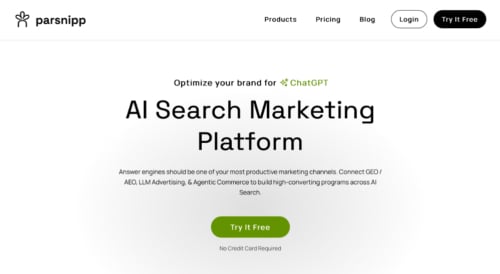
Parsnipp Introduces Smart LLM Ads (July 28): Parsnipp released Smart LLM Ads, an integrated search marketing solution designed to bridge gaps in generative AI discovery platforms, connecting organic visibility metrics directly with programmatic campaign generation.
Netcore Rebrands to Netcore.ai (Late July): Netcore Cloud transitioned into Netcore.ai, establishing an agentic marketing platform powered by seven distinct AI agents capable of autonomously orchestrating lifecycle marketing campaigns across global markets.
WP Engine and Commerce Partner (Late July): WP Engine announced a strategic partnership with Commerce (parent company of BigCommerce) to launch WP Engine Commerce Connect, a specialized framework intended to help mid-market enterprises scale content-driven commerce operations.
Supporting Context, Market Metrics, and Industry Dynamics
To fully understand the weight of these technological introductions, one must examine the underlying macroeconomic and consumer behavioral shifts driving them. The modern ecommerce stack is no longer defined merely by aesthetic storefronts or basic checkout carts; it is defined by algorithmic efficiency and ecosystem connectivity.
The Rise of Agentic Commerce and Generative Discovery
For over two decades, search engine optimization (SEO) and keyword-based PPC campaigns governed customer acquisition. However, the proliferation of large language models (LLMs) and conversational search interfaces has radically altered product discovery. Consumers increasingly rely on conversational agents, zero-visibility AI platforms, and intelligent discovery engines (such as Onton’s Ontology 1 and Parsnipp’s Smart LLM Ads) to unearth goods based on complex intent rather than rigid keyword matching.
Simultaneously, marketing automation is transitioning from rule-based workflows to fully autonomous agents. Platforms like Netcore.ai’s deployment of multi-agent systems signify a movement where software does not just suggest actions—it plans, executes, and self-optimizes full-funnel marketing campaigns with minimal human intervention.
Autonomous Delivery Moves Past the Pilot Phase
Logistics has historically been the primary bottleneck and cost center for digital retailers. The FAA’s issuance of Part 135 air carrier certification to DoorDash for DoorDash Air, coupled with Flytrex and Nash’s multi-modal delivery partnership, marks a critical inflection point. Drone delivery is transitioning from localized, heavily restricted experimental runs to scalable commercial frameworks. By pairing autonomous aerial fleets with intelligent ground-routing software (such as Nash’s decision layer), logistics providers are effectively eliminating the "last-mile" penalty for lightweight, high-urgency goods.
Concurrently, backend warehousing is receiving an algorithmic overhaul. Unit’s $12 million funding injection underscores investor appetite for non-disruptive warehouse automation. Traditional fulfillment centers required massive capital expenditure and complete structural redesigns to incorporate robotics. Modern software-first solutions empower direct-to-consumer (D2C) brands to optimize picking, packing, and returns processing within existing real estate footprints.
The Sophistication of Cross-Border Fintech
As domestic markets saturate, brands are increasingly looking outward, making cross-border infrastructure a top-tier priority. However, international expansion introduces severe friction regarding localized payment preferences, compliance, and currency settlement.
The launch of Manny Pay Global—utilizing iMerchant’s framework and Adyen’s acquiring infrastructure—demonstrates the push toward turn-key payment facilitation. Furthermore, fintech collaborations such as Ebanx and Pagaleve introducing "Pix 4x" in Brazil, alongside PayPal and Amazon scaling BNPL options across Germanic markets, highlight that conversion optimization is deeply tied to localized financing structures. Offering frictionless installment plans via domestic rails (like Brazil’s Pix) dramatically increases total addressable markets by servicing unbanked or credit-averse demographics.
Official Statements and Industry Insights
Key executives and industry leaders have shared strategic perspectives regarding these transformative releases, shedding light on the vision behind their respective platforms.
Regarding the evolution of product discovery and AI accountability, Netcore.ai leadership emphasized the transition from passive software to accountable infrastructure:
"The industry has spent years accumulating data without accountability. By moving to an agentic marketing framework where autonomous models share direct accountability for customer revenue and growth, brands can eliminate operational noise and focus purely on lifetime value creation."
On the logistics front, the integration of multi-modal delivery models has redefined service level agreements. Commenting on the Flytrex and Nash collaboration, supply chain strategists noted:
"True autonomous logistics cannot rely on a single medium. By dynamically evaluating order size, weather conditions, and proximity against both aerial drone fleets and ground courier networks, modern logistics platforms ensure optimal cost-to-speed ratios for every single transaction."
Addressing the complexities of international trade and payment orchestrations, representatives from Manny Pay Global stated:
"Global merchants shouldn’t have to navigate a fragmented labyrinth of localized acquirers, compliance mandates, and high fraud rates. By embedding powerful orchestration layers directly into foundational acquiring networks, we provide a unified gateway that turns cross-border complexity into localized simplicity."
Future Outlook: What Merchants Must Anticipate
As we look toward the remainder of 2026 and into 2027, several clear trajectories emerge for ecommerce merchants, platform developers, and supply chain operators.
Consolidation of Point Solutions into Unified Ecosystems: Merchants are increasingly experiencing "software fatigue." Platforms that successfully bridge disparate operations—such as WP Engine and Commerce connecting content management directly with enterprise ecommerce engines, or Goflow embedding native USPS logistics workflows—will capture disproportionate market share. Monolithic, closed ecosystems will face severe pressure from open, modular architectures.
The Optimization for AI Search (AIO): Traditional SEO is insufficient in an era dominated by LLM-driven discovery. Brands must adapt their metadata, visual assets, and content structures to be read, interpreted, and recommended by autonomous agents. Tools like Onton’s trust models and Parsnipp’s Smart LLM Ads are early precursors to an advertising landscape where visibility is dictated by algorithmic trust and context rather than auction-based bidding alone.
Frictionless, Alternative Financing as Standard: BNPL and instant digital installment methods are no longer supplementary check-out features; they are primary conversion drivers. As seen with Pix 4x in Latin America and PayPal Ratenzahlung expansion in Europe, failure to integrate localized, instant-credit mechanisms will severely cap international conversion rates.
Operational Agility Through Automation: With labor markets remaining volatile and shipping expectations tighter than ever, SMBs and enterprise merchants alike must adopt machine-learning inventory management and autonomous fulfillment pathways. Those failing to automate backend returns, inventory allocation, and multi-modal dispatch will struggle to maintain operational margins.
In summary, the Q3 2026 digital commerce updates demonstrate that the future belongs to the agile, the automated, and the authentic. Merchants who successfully integrate these next-generation tools into cohesive, omnichannel strategies will be uniquely positioned to thrive in an increasingly complex and competitive global marketplace.