Executive Overview
In the fast-paced world of video game journalism and digital marketing, a "leaked" trailer is rarely an accident. More often than not, it is a calculated public relations maneuver designed to generate organic buzz without the friction of traditional approval pipelines. However, rarely has a confessed marketing stunt taken nearly two decades to come to light.
Seventeen years after the gaming community first caught wind of a high-gloss, cinematic teaser for Valve’s Left 4 Dead 2, a foundational piece of gaming lore has officially been rewritten. Former Valve writer Chet Faliszek has confirmed that the iconic 2009 "leak"—which media outlets at the time praised as looking straight out of a Hollywood action blockbuster—was not an accidental slip or an insider breach. It was a deliberate, clandestine inside job orchestrated by Valve itself.
The motive behind this covert operation? Bureaucratic censorship. In 2009, the Entertainment Software Rating Board (ESRB) exerted immense, highly restrictive control over promotional materials, maintaining advertising guidelines that banned the public distribution of trailers containing "graphic and/or excessive depictions" of violence, gore, and crude language. Faced with an imminent marketing standstill that threatened to bottleneck the rollout of one of the most anticipated sequels of the decade, Valve chose subversion over compliance.
This deep-dive investigation examines the mechanics of Valve’s 2009 subterfuge, the rigid and often arbitrary regulatory environment of the early digital gaming era, and the historical cat-and-mouse game played between AAA developers and the video game industry’s self-regulatory gatekeepers.
Detailed Chronology: The Anatomy of a Covert Marketing Campaign
To fully understand the gravity of Faliszek’s recent revelation, one must rewind the clock to the autumn of 2009. The gaming industry was in a transitional phase: digital distribution platforms like Valve’s own Steam were rapidly gaining momentum, yet physical retail presence remained the undisputed king of profitability. To secure coveted real estate on the shelves of major brick-and-mortar retailers like GameStop, Walmart, and Best Buy, publishers had to submit their software—and every single piece of promotional media associated with it—to the ESRB for rigorous content evaluations.
The Standoff of October 2009
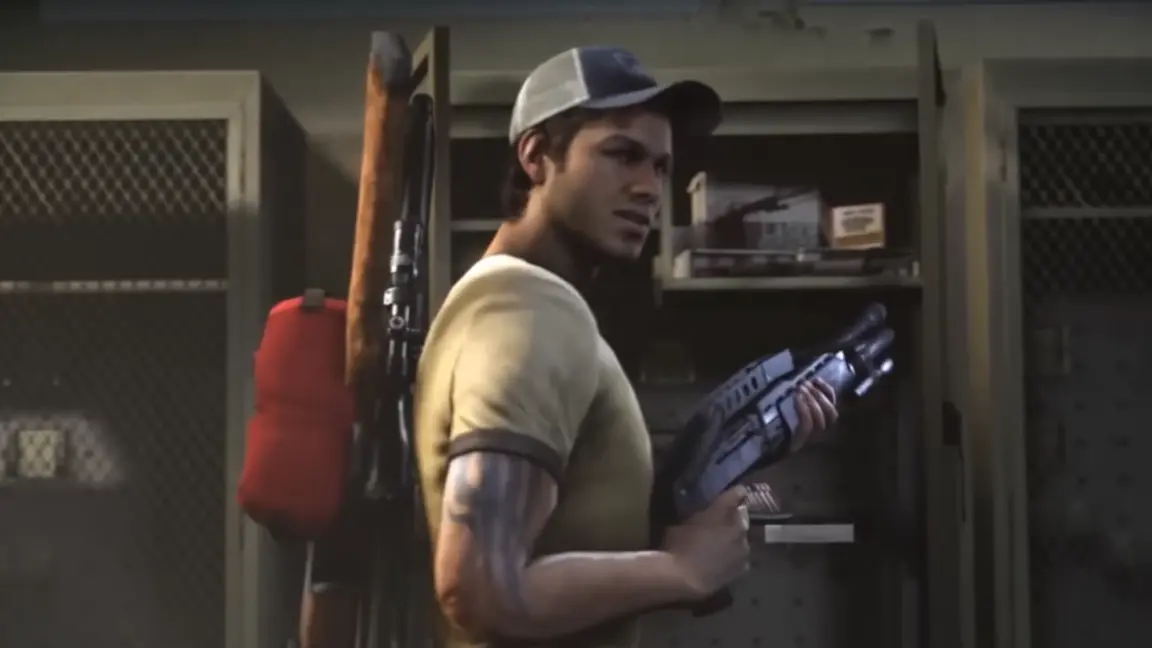
In October 2009, Valve was preparing to ramp up its marketing machine for Left 4 Dead 2, the aggressive, fast-paced zombie shooter slated for a November release. The developer had assembled a stunning, cinematic trailer that showcased the game’s brutal cooperative mechanics, visceral melee weapons (including the fan-favorite chainsaw), and hordes of infected.
According to Faliszek, who revealed the true origins of the footage in a newly published retrospective video focusing on cut lines from the game, Valve hit a brick wall during the ESRB approval process. Simply put, the board refused to let them officially release the trailer through standard, sanctioned channels.
Faliszek’s blunt admission—"for Left 4 Dead 2 with the ESRB… we leaked our trailer ahead of time because they wouldn’t let us release the trailer"—pulls back the curtain on a daring act of corporate defiance. Rather than shelving the expensive, highly effective promotional asset or submitting to protracted negotiations that would have delayed their marketing timeline, Valve’s internal communications and marketing teams executed an alternative strategy: the simulated leak.
The "Leak" and Media Reception
By dropping the trailer through unofficial, anonymous channels to gaming forums and video-sharing platforms, Valve bypassed the watchful eyes of the Advertising Review Council (ARC), a specialized arm of the ESRB.
At the time, major outlets scrambled to cover the footage. Outlets like Ars Technica and Wired reported on the video as an unauthorized leak, with journalists noting that the footage "looks like it’s straight from a high-gloss action movie." Gamers shared the video voraciously across early social media and message boards, completely unaware that they were functioning as unwitting accomplices in a corporate jailbreak. The strategy worked brilliantly: the embargoed material achieved viral status, driving massive pre-release awareness without Valve suffering direct regulatory penalties from official publishing partners.
Supporting Context & Metrics: Navigating the ESRB’s Iron Grip in the Late 2000s
To appreciate why Valve felt compelled to leak its own property, one must examine the regulatory climate enforced by the ESRB during the late 2000s. Established in 1994 in the wake of congressional hearings over titles like Mortal Kombat and Night Trap, the ESRB functioned as the video game industry’s self-regulatory shield against government censorship. However, by the mid-to-late 2000s, the board’s purview had expanded aggressively into the realm of marketing and advertising ethics.
The Advertising Review Council (ARC) Guidelines
Under the governance of the ARC, publishers were bound by strict codes of conduct regarding trailer distribution. The guidelines explicitly prohibited trailers containing:
- Excessive or gratuitous displays of gore and blood.
- Prolonged, explicit violence involving firearms and melee weapons.
- Crude, profane, or offensive dialogue deemed likely to cause "serious offense to the average consumer."
Even as video games matured into cinematic, adult-oriented artistic mediums capable of rivaling Hollywood blockbusters, promotional standards remained anchored to a hyper-conservative baseline. This created a paradoxical ecosystem where a game could legally contain extreme violence upon purchase, yet marketing materials previewing that exact gameplay could be legally barred from public view.
The Finger Incident: A Precedent of Absurdity
Valve’s 2009 trailer leak did not happen in a vacuum; it occurred amidst an ongoing bureaucratic war between the developer and the ratings board. Earlier that year, Valve submitted a promotional box art concept for Left 4 Dead 2 featuring a human hand with three gnawed-off fingers, leaving two intact digits to cleverly spell out the Roman numeral "II" for the sequel.
The ESRB balked, requesting a formal modification to the image. In a move that highlighted the sometimes arbitrary nature of content policing, the board apparently took severe issue with the severed digits, while turning a blind eye to the core premise of the game. As journalists at the time wryly noted: “Faliszek pointed out that this is a game where people are torn apart using a chainsaw. But bitten off fingers on the logo? That’s crossing some line.”
To appease the board and secure box art approval, Valve complied with malicious compliance. They shot a revised version of the promotional image featuring the two fingers restored to the hand, albeit awkwardly curled downward to maintain the "II" silhouette, which eventually made its way onto retail boxes worldwide. This frustrating encounter proved to Valve that logical reasoning would not sway the board, setting the stage for the clandestine trailer leak later that fall.
Official Statements and Historical Precedents
The tension between the ESRB and publishers over promotional trailers was not unique to Valve. The regulatory body had previously demonstrated its willingness to crack down on post-approval distribution tactics, asserting that digital safety measures did not exempt publishers from core advertising guidelines.
The 2007 Precedent: Dark Sector and The Darkness
Two years prior to the Left 4 Dead 2 incident, the ESRB flexed its regulatory muscle in a high-profile crackdown on trailers for D3 Publisher’s Dark Sector and 2K Games’ The Darkness. Both titles had released promotional trailers that were subsequently shared widely across the web, typically sequestered behind standard age-verification gates on major gaming portals.
In response, the ESRB demanded the removal of the promotional clips. Patricia Vance, speaking on behalf of the ESRB, issued a definitive statement that clarified the board’s sweeping jurisdiction over digital spaces:
"The mere presence of an age gate does not permit a publisher to simply put whatever content it wishes into the trailer. All trailers must still conform to [the Advertising Review Council’s] Principles and Guidelines, which prohibit the display of excessively violent content or any content likely to cause serious offense to the average consumer."
This hardline stance made it abundantly clear to publishers like Valve that traditional digital workarounds—such as placing age gates on websites—would not protect them from regulatory penalties if an official trailer crossed arbitrary thresholds of gore or profanity. Consequently, the only way to ensure the Left 4 Dead 2 cinematic trailer saw the light of day without incurring the wrath of the ARC was to pretend the company had nothing to do with its release.
Future Outlook: The Evolution of Game Censorship and Marketing
Reflecting on the Left 4 Dead 2 trailer leak from a modern vantage point reveals just how drastically the video game industry marketing landscape has shifted over the past seventeen years.
The Shift Toward Direct-to-Consumer Marketing
Today, the traditional gatekeepers of physical retail and rigid broadcast censorship have largely ceded control to direct-to-consumer digital ecosystems. Platforms like YouTube, Twitch, X (formerly Twitter), and independent digital storefronts allow developers to communicate directly with their audiences without routing promotional assets through third-party ratings boards for marketing approval.
While the ESRB still assigns age ratings to games themselves, modern publishers routinely debut unedited, highly graphic trailers during massive digital showcases like Summer Game Fest, The Game Awards, and dedicated developer livestreams. The fear of a trailer being permanently blocked by a ratings board due to excessive blood or crude language is largely a relic of the physical retail era.
A Legacy of Creative Defiance
Chet Faliszek’s casual revelation serves as a delightful historical footnote, cementing Valve’s reputation as an organization willing to bend—and occasionally break—bureaucratic rules to protect its creative vision. What was once perceived by fans and journalists as an accidental leak of a high-gloss action trailer is now properly understood as a tactical masterstroke of guerrilla marketing.
As the gaming industry continues to evolve into an era of decentralized, digital-first media consumption, the tale of the Left 4 Dead 2 trailer stands as a testament to a bygone era of industry censorship—and the clever developers who refused to let their work be silenced.