









Executive Overview
The convergence of artificial intelligence and energy infrastructure has reached a dramatic new milestone. Texas-based data center infrastructure developer Lancium has announced a sweeping strategic partnership with chipmaking giant Nvidia to deploy state-of-the-art "AI factory" technology across a sprawling regional portfolio. Backed by financial heavyweight Blackstone and anchored by high-profile developments like the Abilene AI data center—a cornerstone of the massive Stargate project—the collaboration aims to reshape how massive compute loads interface with regional power grids.
Under the agreement, Lancium will integrate Nvidia’s DSX reference designs and advanced power-management technologies across its extensive real estate footprint. This footprint, according to the developer, currently encompasses 4 gigawatts (GW) of leased capacity and more than 15 GW of powered land in various stages of development. Nvidia is also making an undisclosed strategic equity investment in Lancium, cementing a partnership designed to provide cloud providers, hyperscalers, and enterprise AI companies with unprecedented access to gigawatt-scale, power-ready infrastructure.
However, industry analysts urge caution beneath the headline-grabbing metrics. While the partnership promises to bring full-stack AI factory platforms—including accelerated computing, high-performance networking, and advanced software—to Lancium’s "clean campuses," experts point out a critical distinction between speculative land holdings and executable, grid-connected capacity. As data center developers race to secure scarce power and real estate years ahead of actual deployment, the success of the Lancium-Nvidia alliance will ultimately be measured by its ability to turn ambitious announcements into operational reality.
Detailed Chronology: Building the Gigawatt Pipeline
To understand the magnitude of the Lancium-Nvidia partnership, it is necessary to examine the rapid evolution of Lancium’s real estate and energy strategy across Texas. Over the past several years, the infrastructure developer has systematically positioned itself as a premier landlord for the power-hungry AI era, pairing large tracts of land with inventive energy solutions.
Laying the Groundwork in Abilene
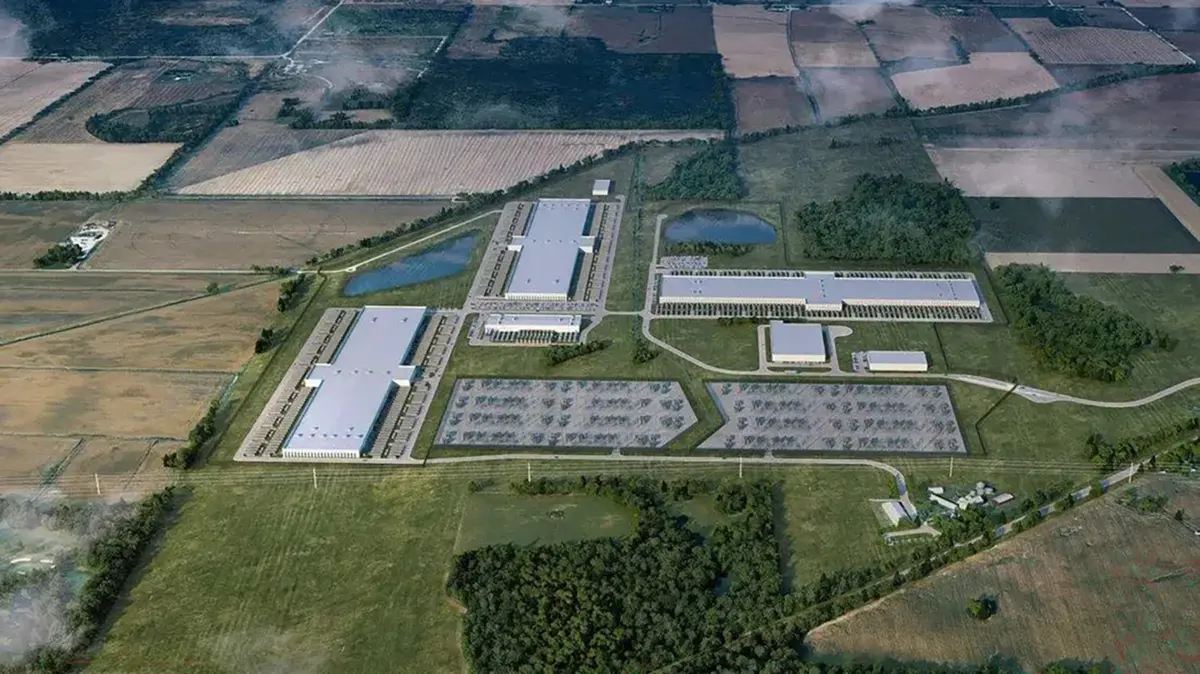
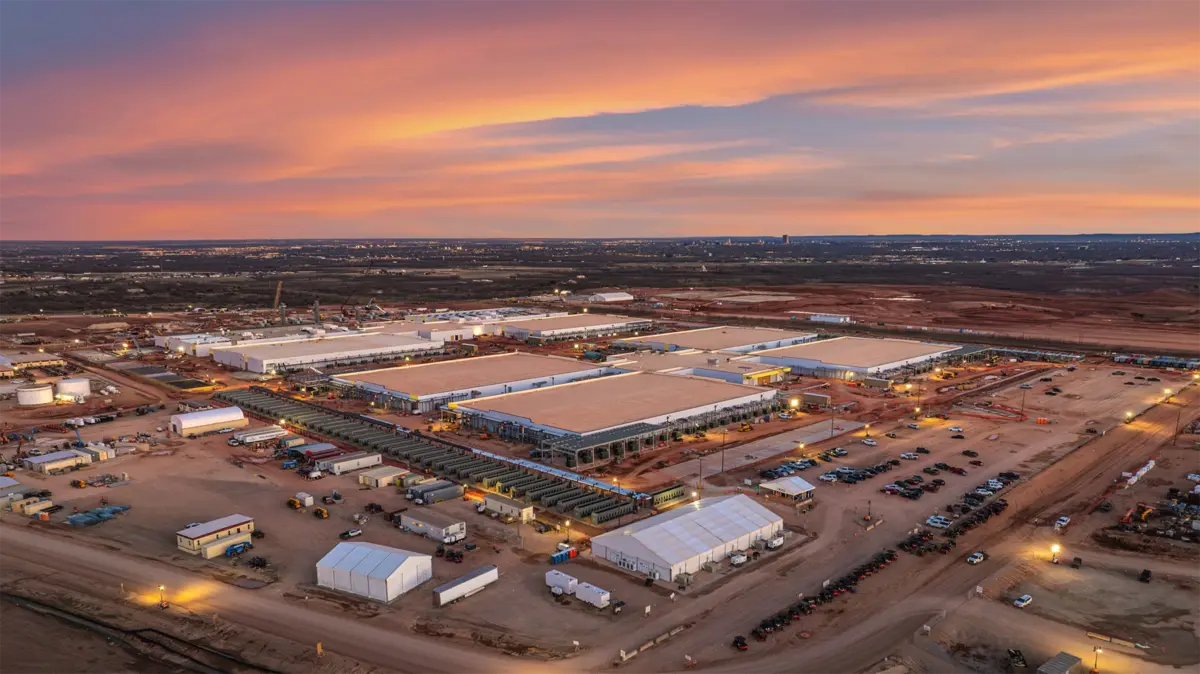
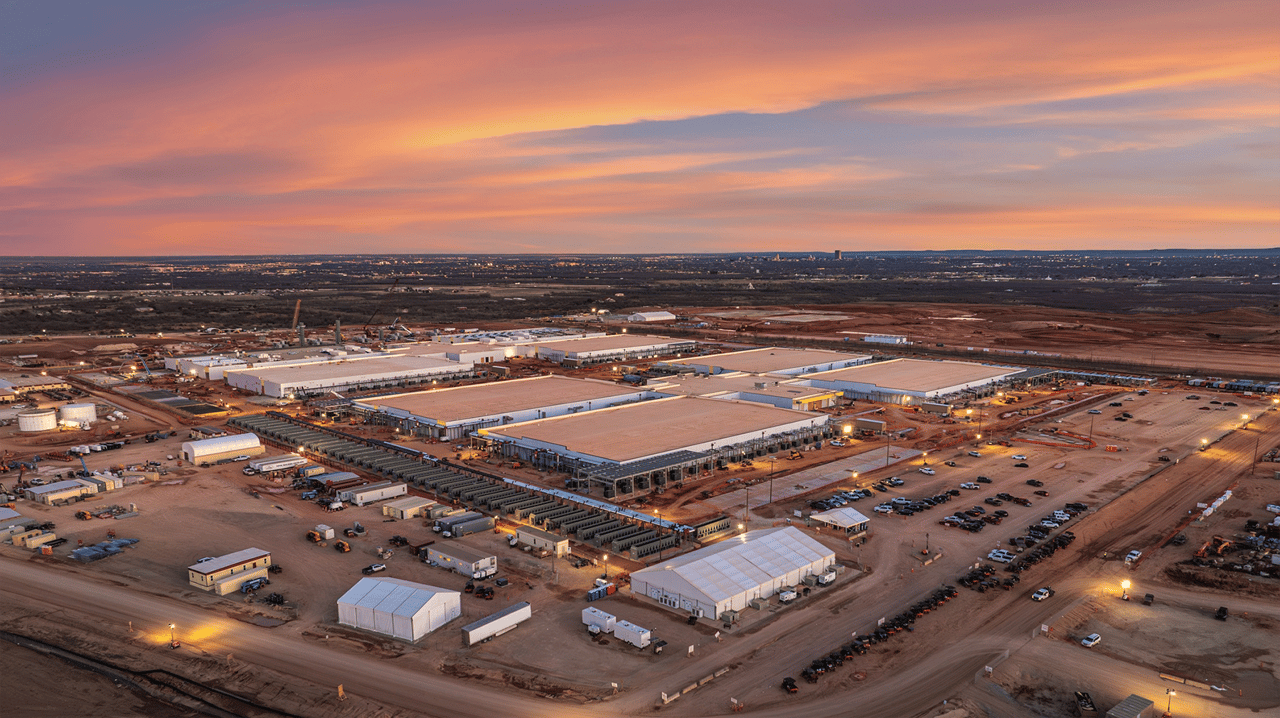
The most visible anchor of Lancium’s portfolio is its Clean Campus in Abilene, Texas. Serving as a primary site for the Stargate initiative, the Abilene project has drawn substantial capital and heavy-hitting partners. In 2024, a joint venture involving Crusoe, Blue Owl Capital, and Primary Digital Infrastructure established a massive $3.4 billion funding vehicle dedicated to developing more than 200 megawatts (MW) of build-to-suit data center capacity directly on the Lancium campus.
Building on this momentum, Lancium secured a $600 million debt financing package in early 2025. This capital injection was specifically earmarked to accelerate its Clean Campus strategy, beginning with expansions in Abilene and laying the groundwork for subsequent multi-gigawatt rollouts.
Scaling Up: Childress County and Hall County
Beyond Abilene, Lancium’s footprint has expanded rapidly across rural Texas, where vast spaces and proximity to energy generation assets offer unique advantages for mega-scale data centers.
- Childress County: Lancium partnered with Crusoe once again to conceptualize and develop a 1 GW campus designed to host next-generation AI workloads.
- Hall County (Turkey, Texas): In another landmark arrangement, Lancium teamed up with QTS Data Centers to design, build, and operate data center facilities near Turkey. According to project disclosures, the Hall County campus alone is expected to inject more than $10 billion in capital investment into the local region.
Crucially, Lancium retains ownership of the underlying campuses, acting as the master architect for electrical and civil infrastructure. At the Hall County site, Lancium and QTS have committed to funding all necessary energy infrastructure improvements independently. Rather than relying entirely on traditional utility transmission upgrades, Lancium plans to supplement grid power by bringing its own behind-the-meter generation assets—predominantly solar arrays and large-scale battery energy storage systems (BESS)—directly to the site.
Supporting Context & Metrics: Unpacking the 4 GW vs. 15 GW Divide
While the partnership with Nvidia brings world-class hardware and software design to the table, industry observers emphasize the importance of scrutinizing the numbers driving Lancium’s growth narrative. The developer’s portfolio boasts two headline figures—4 GW of leased capacity and more than 15 GW of powered land in development—which represent vastly different stages of commercial and technical maturity.
The Reality of "Powered Land"
Neil Osnato, founder of Persistence Analytics Group, highlights the critical gap between speculative development and committed commercial load.
"Four gigawatts described as ‘under lease’ suggests a materially stronger commercial commitment than 15+ GW of ‘powered land in development,’" Osnato explains.
In the high-stakes world of AI infrastructure, developers frequently acquire vast acreage, secure preliminary generation resources, and submit interconnection queue requests years before a single server rack is plugged in. While land acquisition and preliminary queue positioning establish a strong strategic footprint, they do not automatically equate to 15 GW of executable, grid-ready load.
For the larger pipeline figure to translate into reality, several hurdles must be cleared:
- Interconnection Path: How much capacity has an executed interconnection study actually granted?
- Transmission Infrastructure: What upstream grid upgrades are required, and who will pay for them?
- Energization Timelines: When can each specific tranche of power realistically come online?
- Customer Commitment: How much verifiable customer demand is financially backed behind each megawatt?
Without answers to these questions, market analysts advise treating multi-gigawatt development pipelines as long-term strategic options rather than immediate, guaranteed supply.
Power Management and GPU Efficiency
To maximize the value of the power it does secure, Lancium will incorporate Nvidia’s DSX reference designs and power-management technologies—specifically tools like the Nvidia DSX MaxLPS.
Matt Kimball, vice president and principal analyst for data center technologies at Moor Insights and Strategy, explains that these systems address a fundamental inefficiency in traditional data center design: the practice of provisioning power based on a GPU’s maximum rated consumption.
"If a GPU is rated at 1 kilowatt but typically uses 600 watts for standard workloads, conventional power allocation leaves 400 watts of capacity sitting idle," Kimball notes. By utilizing software-driven power allocation, Nvidia’s technology can dynamically adjust power budgets based on real-time workload requirements. This allows data center operators to pack more GPUs into the same physical power envelope.
While marketing materials often cite performance gains "up to 40%," Kimball clarifies that this represents an ideal-case ceiling rather than a guaranteed baseline. Nevertheless, even a conservative 10% to 20% improvement in power utilization across a gigawatt-scale campus represents 100 MW to 200 MW of reclaimed capacity—enough to power tens of thousands of additional AI accelerators without drawing an extra megawatt from the local utility.
Official Statements and Industry Perspectives
The formal announcement of the alliance brought forward key stakeholders from both companies, eager to emphasize the transformative nature of the collaboration.
"AI factories are the essential infrastructure of this new industrial era," stated Nico Caprez, Nvidia’s vice president of global AI infrastructure growth. By embedding Nvidia’s full-stack AI factory platform—spanning accelerated computing, high-performance networking, and orchestration software—into Lancium’s campuses, the partnership seeks to streamline the deployment timeline for hyperscale clients.
Michael McNamara, CEO and co-founder of Lancium, underscored the years of groundwork required to reach this milestone. "We have spent years assembling the power, land, and infrastructure expertise needed to develop AI data centers at gigawatt scale," McNamara said. "Partnering with Nvidia allows us to offer our customers a seamless, turnkey solution that combines clean, flexible power with the world’s most advanced AI infrastructure."
However, industry experts maintain that technological synergy must be matched by grid pragmatism. Osnato points out that while software-driven load flexibility is a powerful tool, grid operators and utilities evaluating mega-scale loads must look closely at operational realities.
"The question is not whether the software can technically move load; it is how much load can move, for how long, how often, under whose control, and what operating constraints remain," Osnato notes. For a utility operating in regions like ERCOT (Electric Reliability Council of Texas), a genuinely flexible gigawatt-scale customer changes long-term capacity planning—provided the promised flexibility is measurable, dependable, and capable of weathering real-world grid emergencies.
Future Outlook: The Road Ahead for Lancium and Nvidia
As the ink dries on this strategic partnership and equity investment, the true test for Lancium and Nvidia lies in execution. The race to build AI infrastructure has exposed deep strains in global energy grids, supply chains, and construction markets.
For Lancium, moving projects from the drawing board through interconnection, construction, and commercial energization will determine whether its ambitious 4 GW leased portfolio and 15 GW land bank fulfill their economic promise. If the company successfully merges behind-the-meter clean energy assets, battery storage, and Nvidia’s grid-responsive power management software, it could establish a new blueprint for sustainable, ultra-dense AI data center development.
Ultimately, the market will demand proof over promises. As Osnato concludes, "Announced capacity is not executable capacity, and technically flexible load is not the same as dependable grid capacity." The coming years will reveal whether the Lancium-Nvidia alliance can bridge the gap between grand vision and operational reality, setting a new standard for the infrastructure driving the artificial intelligence revolution.